Camp Nou Barcelona: The Complete Guide to the FC Barcelona Museum and the Rebuilt Stadium

Short Answer
Camp Nou — officially the Spotify Camp Nou since 2022 — is FC Barcelona’s stadium in Les Corts, at Carrer d’Arístides Maillol 12, and for most of its life it has been the largest football stadium in Europe. It opened in 1957 with a capacity that grew to around 120,000, settled at 99,354 in its modern form, and closed in the summer of 2023 for the Espai Barça rebuild, a €1.5 billion transformation that will wrap it in a full roof and raise it to 105,000 seats. The team played at Montjuïc’s Olympic Stadium while the work went on, then came home in phases: the first match back was played on 22 November 2025 in front of 45,401 people, and a March 2026 licence (Phase 1C) lifted the permitted crowd to 62,652, with the third tier and the roof still to come and works expected to run into 2027. For visitors, the classic Camp Nou Experience tour — dressing rooms, tunnel, pitch — is suspended until the stadium is finished. What you can visit now is the club’s story, told very well: the Barça Immersive Tour, the FC Barcelona Museum in a purpose-built 2,400 m² space beside the stadium, with 18 interactive installations, the trophy rooms, a space devoted to Johan Cruyff, the 360º Spotify Camp Nou Live room and a viewpoint over the construction. The simplest way to book it is the Barça Immersive Tour ticket, sold with an audio guide in 13 languages. Allow an hour and a half to two hours — and if there is a match during your stay, treat a match ticket as a separate, very worthwhile hunt.
Table of Contents
- The Short Version
- More Than a Club: Why This Stadium Matters
- The Giant of 1957: The Old Camp Nou
- The Museum and the Barça Immersive Tour
- Spotify Camp Nou Live and the Construction Viewpoint
- The Rebuild: Espai Barça and the Road to 105,000
- Going to a Match in a Half-Built Stadium
- Practical Info
- Tickets and Booking
- Opening Hours
- Getting There
- When to Go
- How Long You Need
- Tips for Visiting
- What to See Nearby
- Final Thoughts
The Short Version
Most stadium tours are a wander through somebody else’s workplace. Camp Nou, even in pieces, is something else: the civic cathedral of a member-owned club, in a neighbourhood — Les Corts — otherwise so quiet that first-time visitors are startled by the scale of the thing rising between the apartment blocks. Go now for two sights in one: a superb, modern museum visit that works perfectly well while the cranes are up, and the once-in-a-lifetime spectacle of Europe’s biggest stadium being rebuilt around its own history. When it is finished — 105,000 seats under the largest stadium roof in Europe — the best things to do in Barcelona will have their giant back. Until then, this guide tells you exactly what is open, what it costs and what to expect.
More Than a Club: Why This Stadium Matters
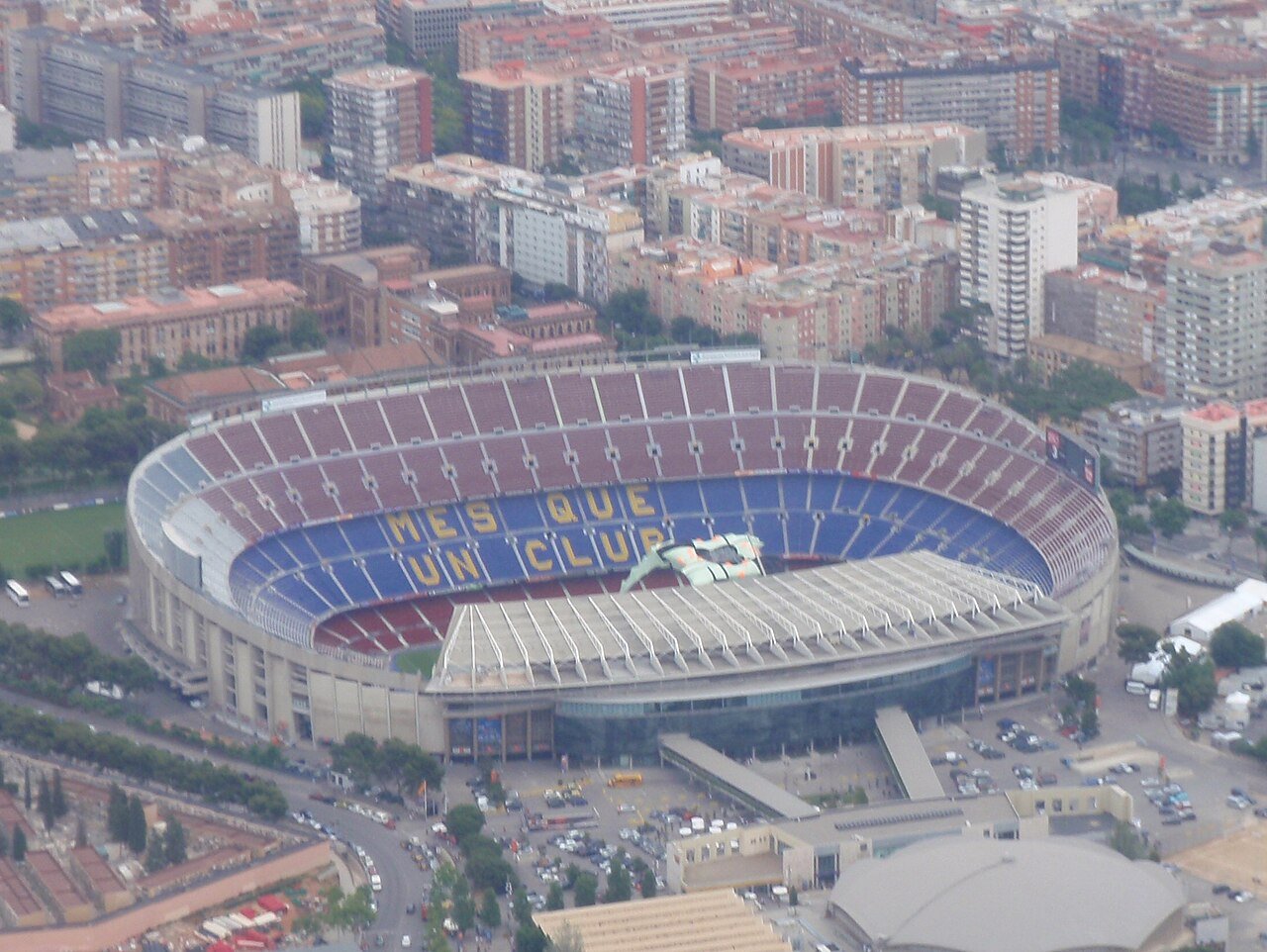
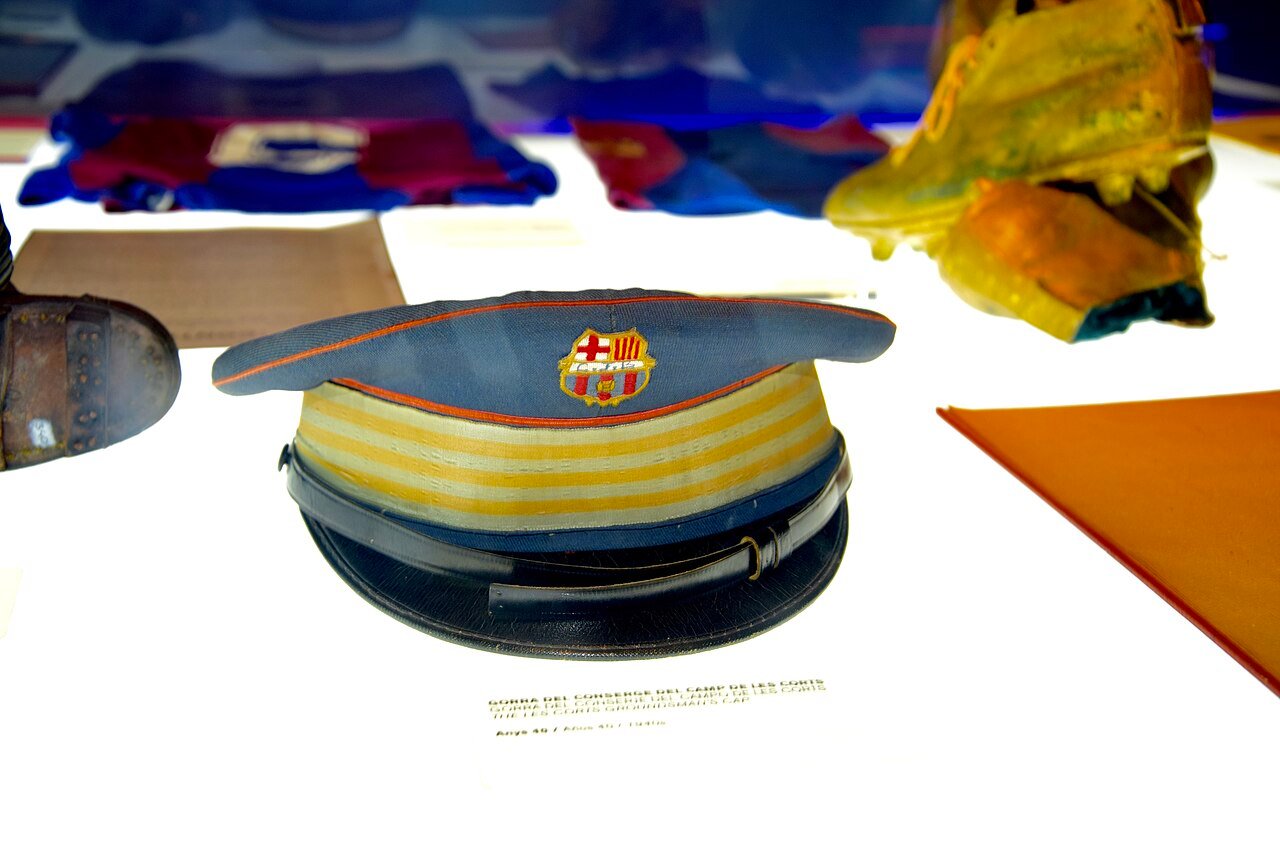
FC Barcelona was founded on 29 November 1899 by the Swiss Hans “Joan” Gamper and a group of Swiss, English and Catalan footballers, and it became, across the 20th century, far more than a sports club: under the Franco dictatorship, when Catalan language and symbols were suppressed, the stadium was one of the few public places where Catalonia could gather as itself. The motto Més que un club — “more than a club” — was coined in a 1968 speech by president Narcís de Carreras and has been written across the seats ever since. The club is still owned by its members, the socis, who elect its president. Its first great home was Les Corts (1922), but the signing of the Hungarian star László Kubala in 1950 made even that ground too small: the crowds who came to watch Kubala effectively demanded a bigger stadium, and the club obliged.

The Giant of 1957: The Old Camp Nou
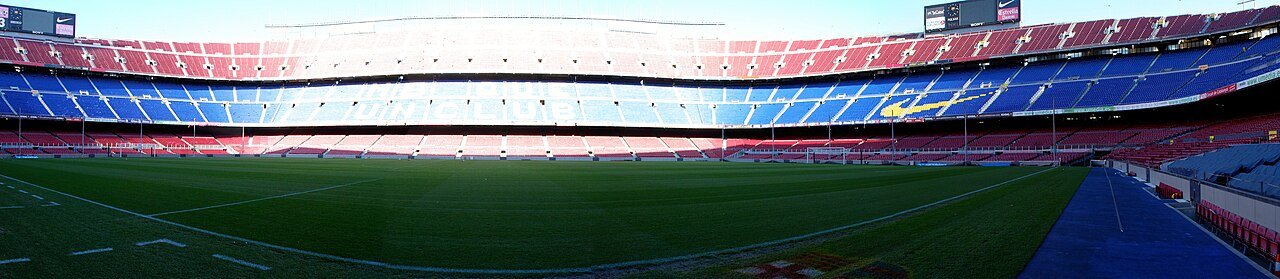
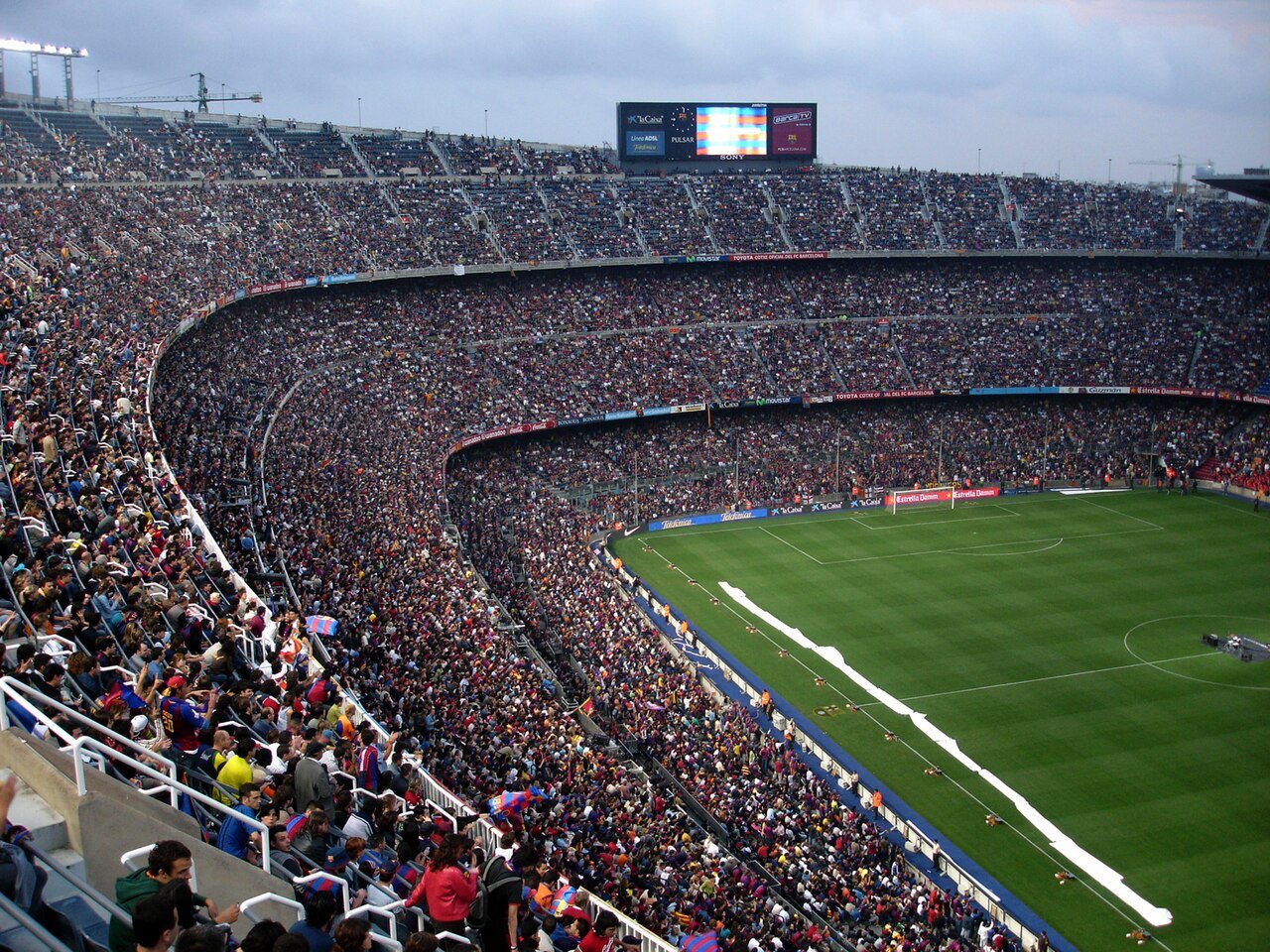
The new stadium — camp nou is simply Catalan for “new ground” — opened on 24 September 1957, designed by Francesc Mitjans, Josep Soteras and Lorenzo García-Barbón, and inaugurated with a friendly against a Warsaw select side. It grew in stages: for the 1982 World Cup, when it hosted the opening match, a third tier took capacity to around 120,000; standing areas later became seats, and by the 2010s it held 99,354 — still the biggest stadium in Europe. Its biography is written in finals: the 1982 World Cup, the 1992 Olympic football final, and the 1999 Champions League final, when Manchester United scored twice in injury time a few metres from where the museum now stands. The club museum, opened in 1984 as the Museu President Núñez, became for years the most visited museum in Catalonia — ahead of every art museum in the region — which is why, when the bulldozers came in 2023, the collection was never going to be locked away.
The Museum and the Barça Immersive Tour
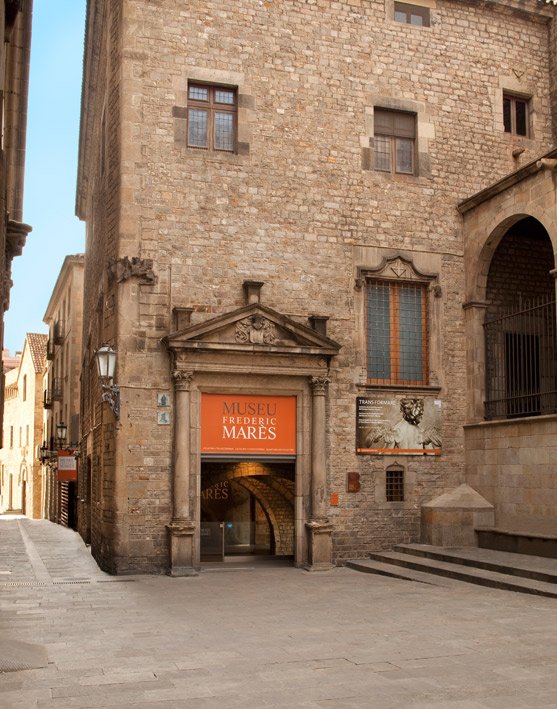
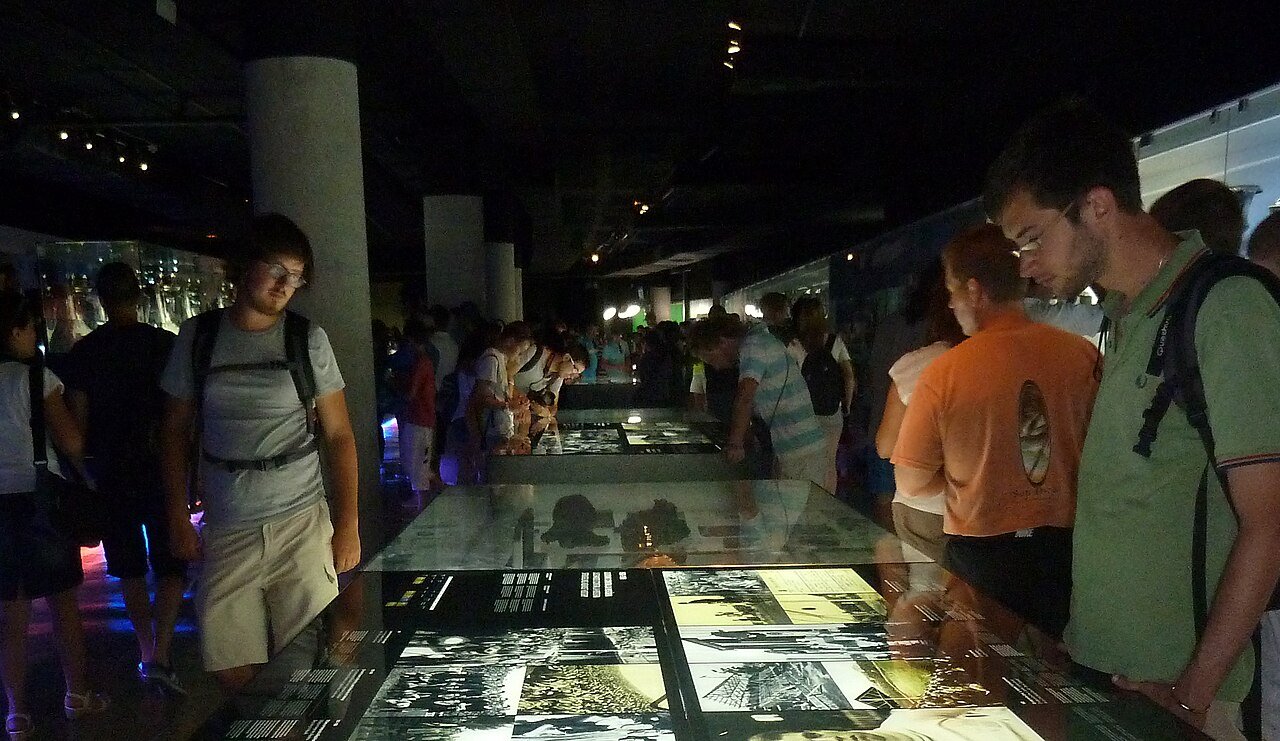
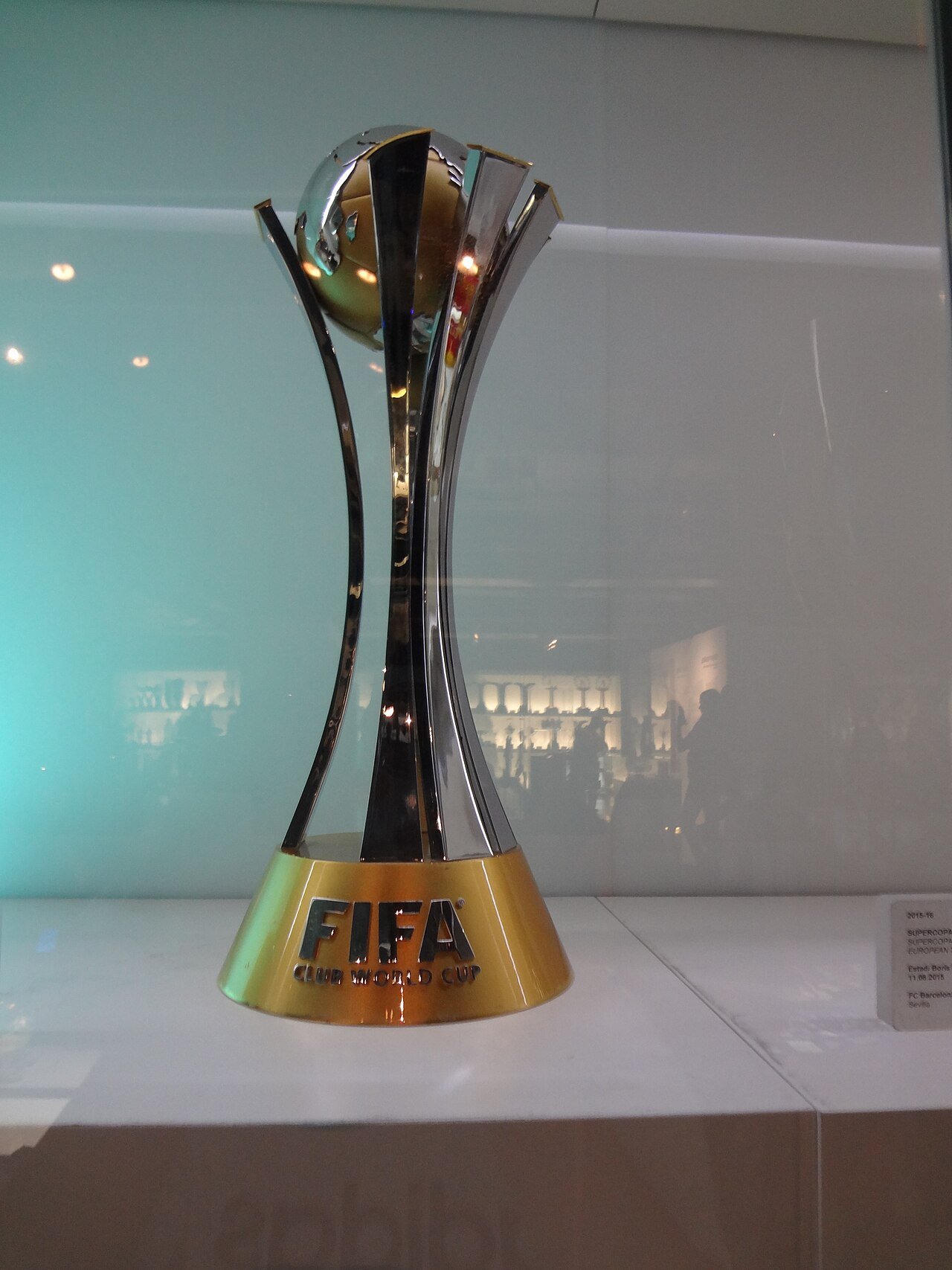
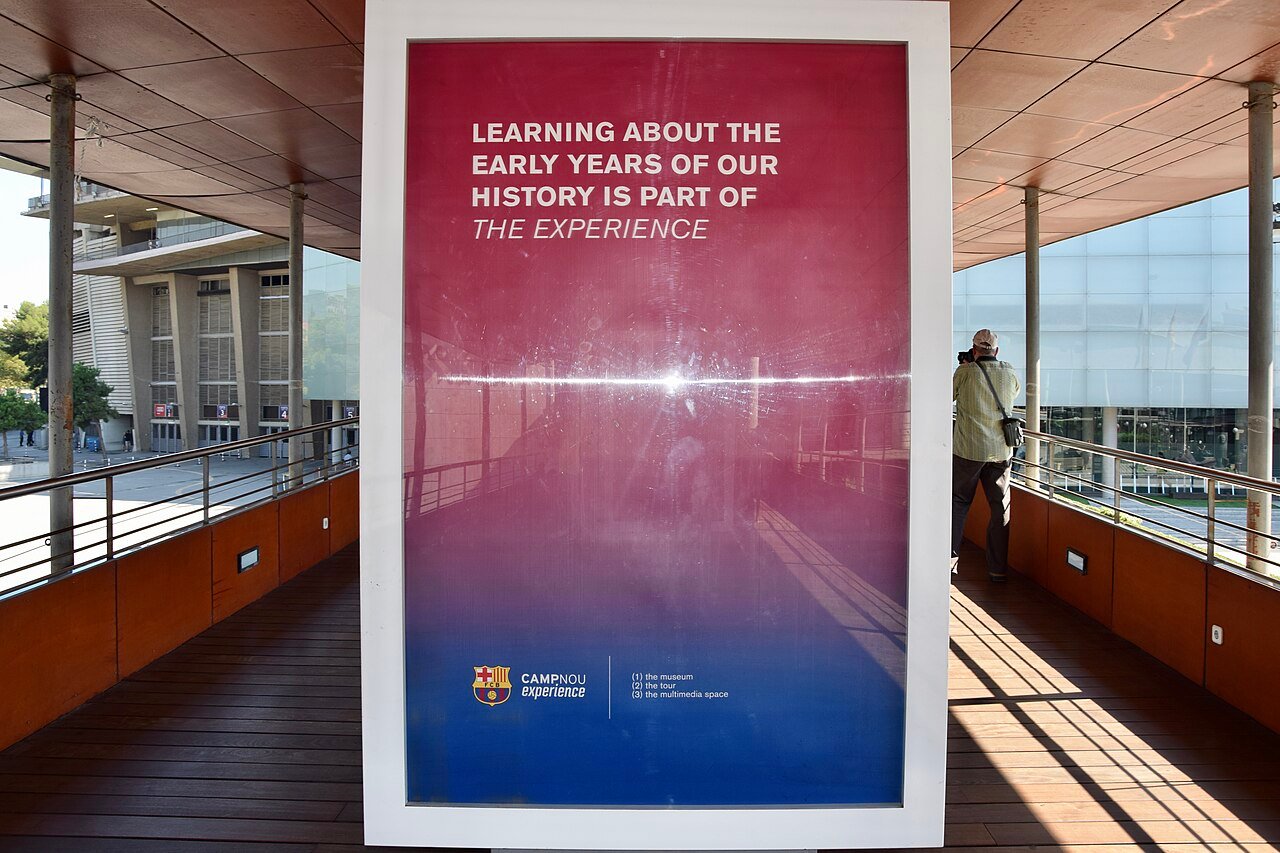
Since June 2023 the museum has lived in a specially adapted 2,400 m² space on the stadium site, entered between the Barça Store and the Barça Café on Arístides Maillol, rebuilt as an experience rather than a cabinet of curiosities. The Barça Immersive Tour threads 18 interactive and audiovisual installations through the club’s past, present and future: a “We are history” tunnel of photographs and objects, a dedicated space honouring Johan Cruyff, the trophy gallery — where the silverware of the men’s, women’s and other sections fills case after case — and the Espai Barça room, where models and film present the finished stadium rising outside. A digital audio guide (13 languages) carries the stories: Gamper, Kubala, Cruyff, Guardiola’s treble-winners, the Femení’s rise to the top of the European game. Book the Barça Immersive Tour ticket for a timed entry and go at your own pace — once you are in, the museum is yours until closing.

Spotify Camp Nou Live and the Construction Viewpoint
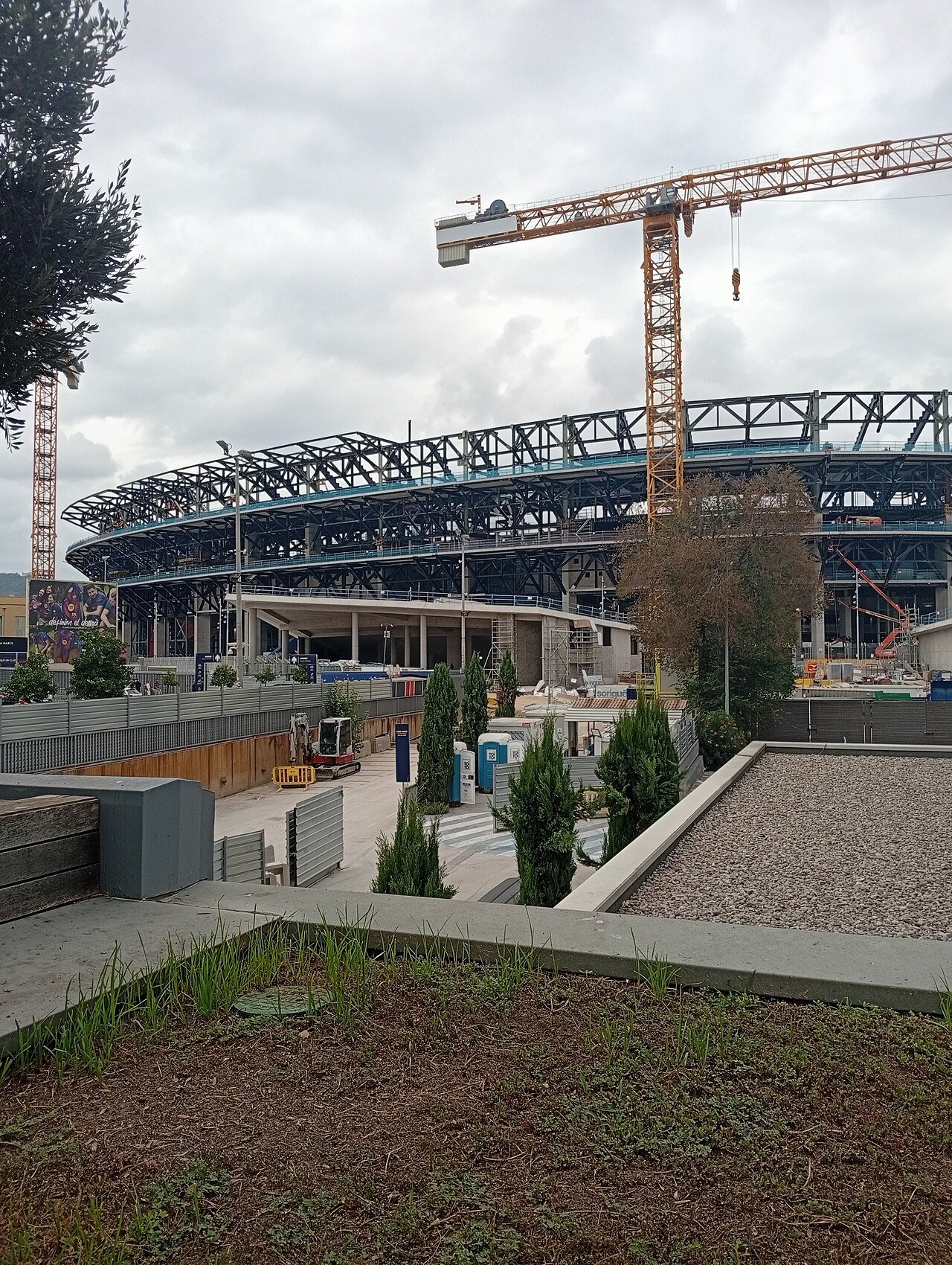
The tour’s set piece is Spotify Camp Nou Live, a 360º immersive room that puts you at the centre of the pitch on a great night — crowd noise, floodlights, the roar arriving from every direction at once — and for many visitors it is the emotional peak of the visit, the stadium experienced whole while the real one is in scaffolding. From there the route leads to the construction viewpoint, where the future stadium spreads out in front of you: the new third tier climbing, the roof structure advancing, cranes swinging loads across the bowl. It is a strange and compelling sight — part building site, part time-lapse made real.
The Rebuild: Espai Barça and the Road to 105,000
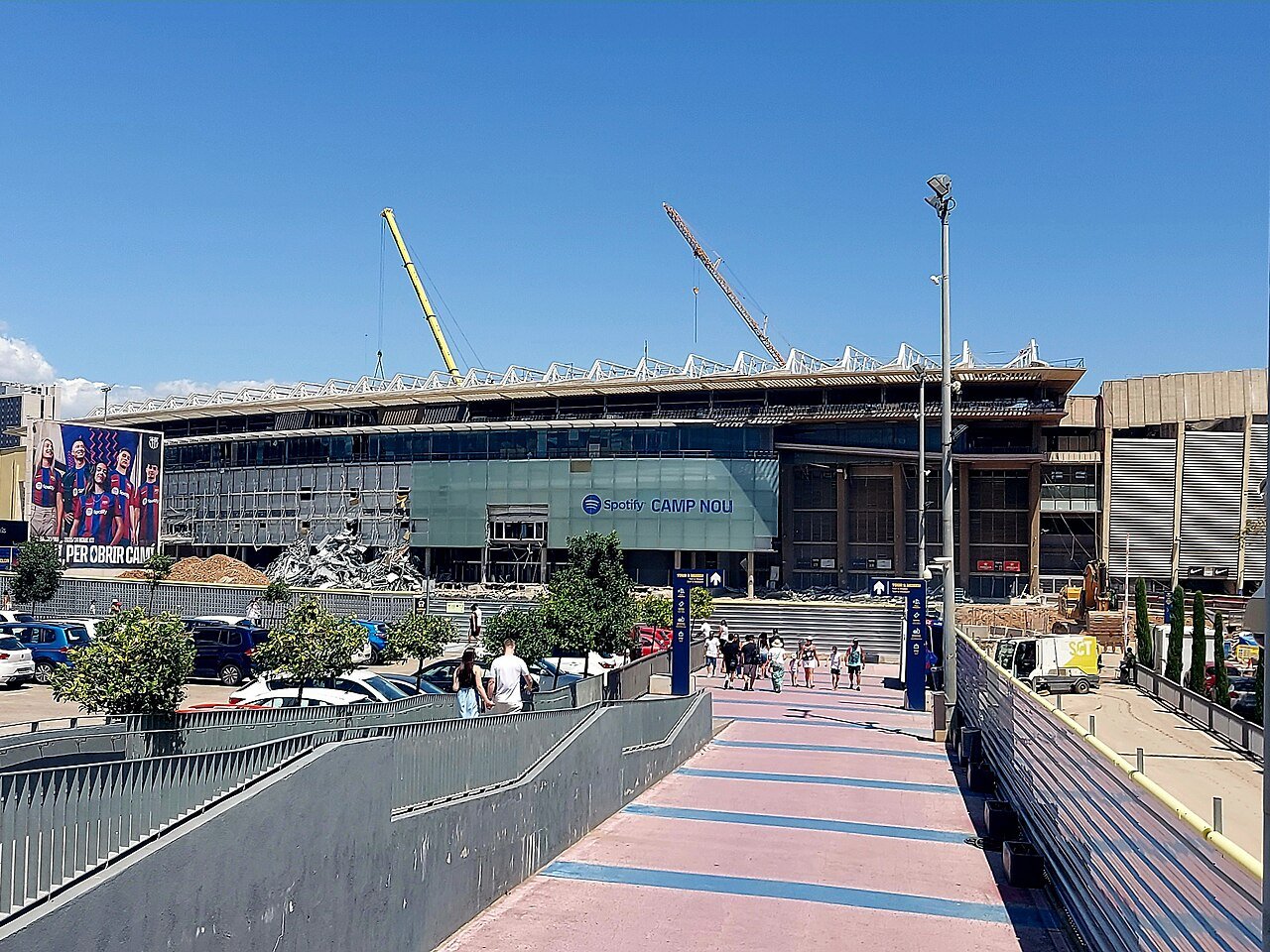
Espai Barça is the €1.5 billion project to transform the whole Les Corts campus: a new Palau Blaugrana arena, club offices, green space — and at its centre, a stadium rebuilt inside its own skin. The design keeps the 1957 structure’s famous open bowl but adds a complete roof over every seat (the largest stadium roof in Europe when finished), a 360º walkway near the top, and a final capacity of 105,000. Works began in June 2023; the club decamped to the Estadi Olímpic on Montjuïc for two seasons; and the return has been deliberately phased, each section opening as the city licenses it — 45,401 seats for the emotional first match back on 22 November 2025 (a 4–0 win over Athletic Club), then 62,652 under the Phase 1C licence of March 2026. The third tier and roof follow, with work expected to run into 2027. Every figure in this section will keep moving — which is, in its way, the point of visiting now.
Going to a Match in a Half-Built Stadium
If your trip coincides with a home game, go. A phased Camp Nou is still Camp Nou: 60,000-plus Catalans, the Cant del Barça rolling down unfinished tiers, and a building visibly becoming the biggest in Europe around the match itself. Practicalities differ from a normal season. Capacity is confirmed fixture by fixture under the licence in force, so some areas — including much of the third tier — are simply not on sale. Tickets are digital and personalised through the club’s app, and ID can be requested at the gate. Match tickets are entirely separate from the museum: neither includes the other, and on home matchdays the museum’s hours shrink or the tour is cancelled altogether, so never plan both for the same day without checking the club calendar first. If you are looking for somewhere to sleep within walking distance of the ground, our guide to hotels near Camp Nou covers the Les Corts options.
Practical Info
Address: Carrer d’Arístides Maillol 12, 08028 Barcelona — in Les Corts, in the west of the city. The museum entrance is between the Barça Store and the Barça Café.
What it is: the home of FC Barcelona — a stadium under phased reopening (62,652 seats licensed as of March 2026; 105,000 when complete) and, for visitors, the Barça Immersive Tour: the FC Barcelona Museum in its interim 2,400 m² home, with the Spotify Camp Nou Live 360º room and a construction viewpoint. The classic dressing-room-and-tunnel stadium tour is suspended until the rebuild is finished.
| Best for | Football fans first — but the museum is genuinely good on Catalan history, and the construction viewpoint fascinates even the football-indifferent |
| Entry | Barça Immersive Tour from €28–31 for adults (date-dependent); €21 for ages 6–13 and seniors 65+; €20 students with card; under-6s free. Spotify Camp Nou Experience (adds a first-tier panorama) from €69 |
| Time needed | 1½–2 hours for the Immersive Tour; add an evening for a match |
| Nearest metro | Collblanc or Badal (L5); Palau Reial or Maria Cristina (L3) — all about 10 minutes on foot |
| Don’t miss | The Spotify Camp Nou Live 360º room, the construction viewpoint, and the Cruyff space |
Tickets and Booking
Buy from the club (fcbarcelona.com) or through a major reseller — the Barça Immersive Tour ticket on GetYourGuide is the same official product with a timed slot and the 13-language audio guide included. Prices are dynamic: the Immersive Tour is advertised from €28 and rises to around €31 on busy dates; children 6–13 and seniors pay €21, students €20 with a valid card, and under-6s are free. The Spotify Camp Nou Experience, from €69, adds a guided look inside the first tier; the Total Experience adds the virtual-reality piece and the Robokeeper challenge. Note the Immersive ticket is non-refundable on reseller channels, and it is a museum ticket only — it never includes a seat for a match. Match tickets, when released, are sold fixture by fixture through the club, are personalised, and can require ID matching the ticket at entry.
Opening Hours
The museum opens daily except 25 December and 1 January, but its hours are date-sensitive in a way most Barcelona museums are not: the season, special events and above all home matchdays all move them. On a home matchday the museum typically closes early — in the current published pattern, last admission can be as early as midday — and the tour is cancelled on La Liga and Copa del Rey matchdays at the stadium. The honest advice is the club’s own: choose your date on the official calendar first, then plan the rest of the day around it. Outside matchdays, expect a long daily window, roughly morning to evening, with the last entry an hour or so before closing.
Getting There
Camp Nou is one of the easiest big sights in Barcelona to reach. By metro, line L5 to Collblanc or Badal and line L3 to Palau Reial or Maria Cristina each leave you about ten minutes’ walk away; the L9 Sud station at Zona Universitària is also used on matchdays. Trams T1, T2 and T3 stop at Avinguda Xile, five minutes from the museum entrance. Buses run along Travessera de les Corts and Avinguda Diagonal. Do not drive: Les Corts’ streets are residential, parking is scarce and expensive, and on matchdays the whole district is a pedestrian tide. The museum entrance is on Carrer d’Arístides Maillol, between the Barça Store megastore and the Barça Café — arrive there, not at a stadium gate.
When to Go
For the museum, a weekday morning is the sweet spot: the school groups have not yet peaked, the Live room runs without a queue building behind you, and the construction viewpoint catches the works in full swing. In the phased-reopening era there is a second calendar to consult — the fixture list. A matchday transforms the district (and shortens the museum), so decide which Camp Nou you want: the quiet museum-and-building-site of a Tuesday, or the 60,000-voice version on a Saturday night.
How Long You Need
Give the Immersive Tour an hour and a half, two hours if you read everything and take the viewpoint slowly — the club itself suggests about an hour for the core route, but the trophy gallery repays lingering. Add fifteen minutes for the megastore if shirts are on your list. A match is an evening: arrive an hour early to watch the district fill and the stadium light up.
Free Barcelona travel guide
Planning a trip to Barcelona? Get our free one-page Barcelona checklist: what to book ahead, what to skip, and the Gothic Quarter corners most visitors walk straight past.
Tips for Visiting
- Check the fixture list before you book anything. A home matchday shortens or cancels the museum tour and floods the district — wonderful if you have a match ticket, frustrating if you only wanted the museum.
- Your museum ticket is not a match ticket, and vice versa. They are separate products, sold separately, and neither substitutes for the other at any gate.
- Buy the timed slot online. The Immersive Tour is non-refundable on reseller channels and prices rise on busy dates — booking ahead locks both the time and the lower price band.
- Bring ID for matches. Match tickets are personalised and digital; the club can and does check that the name matches.
- Do not expect the tunnel. The dressing rooms, players’ tunnel and pitch-side dugouts belong to the suspended classic tour and return only when the stadium is finished. What you get now — museum, 360º room, viewpoint, first-tier panorama on the Experience ticket — is a different, genuinely good product; buy it for what it is.
- Look up from the viewpoint. The best photograph of your visit is the half-built bowl itself — a sight that will not exist once the roof closes over it in 2027.
What to See Nearby
Les Corts is a working neighbourhood, not a tourist quarter, which is part of the pleasure. Beside the ground, the Jardins de la Maternitat hide a peaceful modernista pavilion complex — the classic pre-match picnic spot. The Barça Store megastore at the stadium does a brisk trade in everything blaugrana. Fifteen minutes uphill, the Monestir de Pedralbes — a serene 14th-century Gothic convent founded by Queen Elisenda — is the cultural counterweight to the stadium’s roar, and from the Collserola heights above it, Tibidabo looks down over both.
Travel insurance, sorted
Whether it is a two-week holiday or a longer move, travel insurance is not the most glamorous part of a trip — but it is the one booking you want to have in place before a trip, and while you are already away. Get a quote from SafetyWing
Final Thoughts
Every generation of Barcelona has rebuilt this stadium in its own image: Kubala’s crowds demanded it in 1957, the World Cup stretched it in 1982, and the members voted to roof it and raise it to 105,000 for the century to come. Visiting during the rebuild is not a compromise version of the trip — it is the one moment in seventy years when you can watch the cathedral being built and its museum telling you why it matters, on the same ticket, on the same afternoon. Go for the trophies and the 360º roar; stay for the cranes. When the roof closes and the third tier fills, this strange, scaffolding-wrapped Camp Nou will be gone — and you will be able to say you saw it rise. ¡Buen viaje!

Photo credits: Luis Miguel Bugallo Sánchez (Lmbuga), Oh-Barcelona.com, Ank Kumar, Ivan Mlinaric, Tab59, Dr Salvus, SimpleObjects-9ei, Rukola2 and Mutari, via Wikimedia Commons.