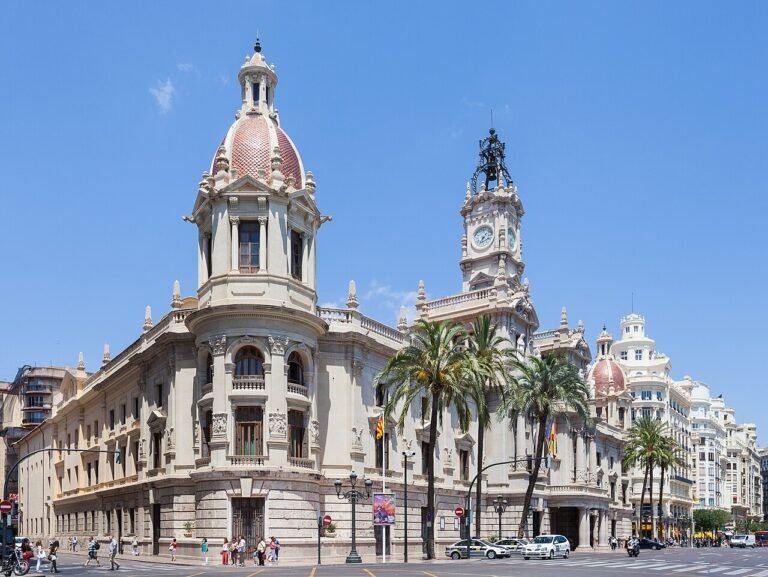
Valencia Markets: The Complete Guide to the City’s Food Halls and Neighbourhood Markets
Valencia runs on its markets the way other cities run on their metro. This is the city that invented paella, grows its rice in a lagoon ten kilometres south, presses its oranges into the breakfast juice of half of Europe and eats lunch later and more seriously than almost anywhere in Spain — and nearly all of that food culture passes, every morning, through a dozen municipal market halls. Two of them are modernista masterpieces that belong on any sightseeing list. The rest are working neighbourhood institutions where the city’s real shopping gets done, stall by stall, queue by queue, on first-name terms.
This guide covers the nine markets worth your time: the great Central, the gourmet Colón, and seven barrio markets that between them show you how Valencia actually eats — the fishermen’s market at the Cabanyal, the rainbow-fronted market of Ruzafa, the little hall in El Carmen, the village market at Nazaret. None of them charges entry. All of them reward an early start, and most visitors, who give the Central twenty minutes on the way somewhere else, miss the best of them entirely.
If you do one organised thing with this guide, make it the experience that starts inside the greatest of these halls: Valencia: Paella Cooking Class with Central Market Tour You meet near Plaza de la Virgen, walk the Mercado Central with a guide buying the ingredients stall by stall, then cook a proper Valencian paella at your own station with a professional chef — tapas and wine while it rests, your own paella as the main event — over 3 to 3.5 hours, rated 5.0/5 from 1,243 reviews, from $78.51, with free cancellation up to 24 hours in advance. One timing tip that matters: the Central closes on Sundays, so book a Monday-to-Saturday date if the market stroll is half the point for you. Everything else in this guide you can do alone, basket optional.
Table of Contents
- The Quick Verdict
- How Valencia’s Markets Work: Mornings, Queues and the Sunday Rule
- 1. Mercado Central: The Cathedral of Food
- 2. Mercado de Colón: The Gourmet Hall
- 3. Mercado de Ruzafa: The Rainbow Market
- 4. Mercado del Cabanyal: The Fishermen’s Market
- 5. Mercado de Algirós: The Locals’ Market by Mestalla
- 6. Mercado de Rojas Clemente: The Little Market With the Flamingos
- 7. Mercado de Mossén Sorell: El Carmen’s Reborn Market
- 8. Mercado de Torrefiel: The Market the North Shops At
- 9. Mercado de Nazaret: The Village Market by the Port
- Which Market Suits You?
- What a Market Morning Costs
- Final Thoughts
- FAQs: Valencia Markets

The Quick Verdict
Short on time? Do the two great halls and one barrio market. One morning, first trip: the Mercado Central at 9am, coffee and a pastry standing at a market bar, then the Mercado de Colón for horchata under the iron arches — sightseeing and breakfast in a single loop. Want the real city? Add Ruzafa on a weekday morning and eat where the neighbourhood eats. Cooking, or travelling with a kitchen? The Cabanyal for fish, Algirós for everything else, and buy rice at the Central like you mean it. One splurge: the paella class that starts with a guided shop at the Central — the market tour alone is worth it, and you leave able to cook the city’s dish properly. The other six markets are for the second visit, the long stay, or the traveller who has started, correctly, to plan trips around lunch.
How Valencia’s Markets Work: Mornings, Queues and the Sunday Rule
Three facts organise a Valencia market morning. The first is that these are morning institutions, and morning means morning. The food markets open around 7.30am and close at 3pm, Monday to Saturday — the Central included — and the day’s arc is fixed: fish and the best produce go early, the aisles peak between ten and twelve, and by two the stallholders are hosing down and arguing about football. Arrive at noon for your first visit and you will still enjoy it; arrive at nine and you will understand it. The one great exception to the hours is the Mercado de Colón, which long ago stopped being a food market in the daily sense and now keeps leisure hours, cafés and restaurants running into the evening.
The second fact is the Sunday rule: on Sundays every food market in this guide is shut, Colón’s cafés aside. It is the single most common Valencia planning error — a Sunday-morning market visit pencilled into an itinerary by someone who assumed markets work like museums. They don’t; they work like the city’s kitchen, and the kitchen rests on Sunday. Plan your market morning for any other day, and treat Saturday as the big one: busiest, fullest, every stall open, the whole city shopping at once.
The third fact is that the queue is the quality mark. Valencians queue at specific stalls with the loyalty of football supporters — one stall for cheese, another for salt cod, a third for the chicken — and the correct technique is to join the longest queue and order what the person in front of you orders. Prices are chalked up by the kilo, tasting before you buy is normal for cheese, olives and cured meats, and the market bars around the edges — coffee, a bocadillo, a glass of something cold at eleven in the morning — are not a break from the market. They are the market’s second act, and locals call the whole ritual by its name: this is a city that built a word, esmorzaret, for the sacred mid-morning snack.
A word on the practicalities. Cards are accepted almost everywhere now, but small cash still moves fastest at single-item stalls, and a reusable bag marks you out as competent — stallholders will fill it without being asked. A little Valencian goes a long way and is genuinely appreciated: bon dia for good morning, a smile when your turn comes, and no touching the produce — you point, they pick, and their pick will be better than yours. Photography is fine in the halls generally, but ask at a stall before photographing the people working it. And note that each market hall in this guide sits inside a wider market life: the weekly street markets, the mercadillos, that set up around several of them — clothes, shoes, plants and household goods on the surrounding pavements — are listed in the sections where they matter most.
1. Mercado Central: The Cathedral of Food
Start where Valencia starts. The Mercado Central, on the Plaça de la Ciutat de Bruges in the old town, is one of the largest fresh-food markets in Europe: a modernista palace of iron, glass and ceramic opened in 1928, designed by Alejandro Soler March and Francisco Guardia Vial, with close to a thousand stalls under a soaring nave and a 30-metre central dome. On top of that dome sits the market’s mascot, a gilt weathervane parrot — la cotorra del Mercat — and underneath it, every morning except Sunday, the city does its shopping in a building beautiful enough to charge admission, which it doesn’t.
Walk the aisles by department, as the locals do. The fish section is a harbour in a hall — prawns from the Valencian coast, tellinas and clams, eels for all i pebre, squid, cuttlefish and whatever the boats argued about that morning. The meat halls hold the makings of the true paella valenciana: chicken, rabbit, and the two beans that are not negotiable — flat green ferraúra and the big white garrofó. Then come the rice stalls, where Bomba rice from the Albufera is sold with denominación de origen pride; the pickle and salt-cod counters; the spice stalls selling saffron by the gram; and at the centre, under the dome, the fruit and vegetable stalls of the huerta, Valencia’s market-garden plain, stacked with oranges that were on the tree two days ago.
Eat something while you’re here. The market bars on the perimeter serve coffee and bocadillos to a standing crowd of shoppers and stallholders, and the famous Central Bar, run by the two-Michelin-starred chef Ricard Camarena, serves a market breakfast worth queuing for at the centre of the hall. Our dedicated Mercado Central guide walks the hall stall by stall. But the essential Central experience needs no plan at all: come at nine, walk slowly, buy an orange, and watch a city feed itself. It is also where the Valencia: Paella Cooking Class with Central Market Tour begins — the guided shop through these aisles, gathering chicken, rabbit, beans and rice with someone who knows which stall and why, is the fastest education in Valencian food there is.
Give the building itself its minute, too. It stands on the Plaça del Mercat, the square that has been the city’s trading floor for centuries, facing the silk exchange of La Lonja across the way — market and merchant hall, the two halves of old Valencia’s food economy, still staring at each other. The ceramic panels on the Central’s exterior, all oranges and huerta produce, the ironwork, the stained glass and that great tiled dome make it as much a sightseeing stop as the cathedral two streets north; it simply happens to be full of fish. If you only photograph one interior in Valencia, photograph this one at nine in the morning, when the light comes through the glass and the whole hall is at work.
2. Mercado de Colón: The Gourmet Hall
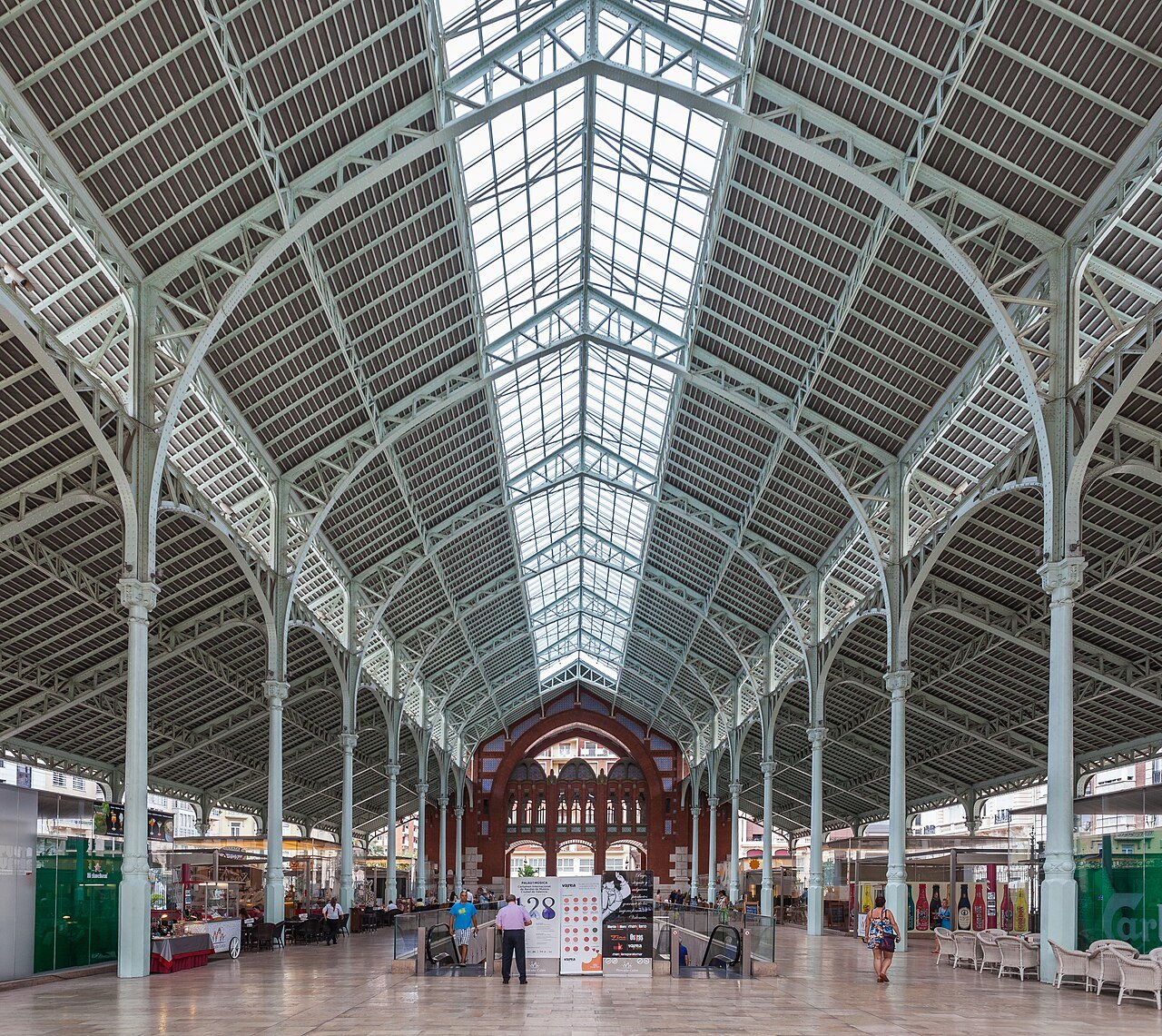
Sixteen minutes’ walk east, in the grid of the Ensanche, stands the Central’s beautiful younger sibling — and its opposite. The Mercado de Colón, inaugurated in 1916 to a design by Francisco Mora Berenguer, is the other great modernista market hall of Valencia: a basilica of iron and glass fronted by a vast brick arch crusted with ceramic mosaics of oranges, flowers and farm produce. But where the Central still works for a living, Colón retired gracefully decades ago. Its stalls today are gourmet shops, florists, cafés and restaurants, arranged along a cool, light-flooded nave built for lingering rather than shopping.
So use it the way Valencians use it: as the city’s drawing room. Come for breakfast or the mid-morning pause — this is one of the classic addresses for orxata, horchata, the sweet tiger-nut drink Valencia drinks by the litre, served with fartons for dunking at the horchatería inside the hall. Come back at aperitif hour for vermouth and a plate of clóchinas, the small, intense Valencian mussels, when they’re in season. The basement level hosts a changing cast of food stalls and events, the flower stalls by the entrances do a permanent spring, and the whole building — airy, elegant, faintly pleased with itself — is the easiest hour in Valencia to spend.
Colón is also the exception that proves this guide’s rule about hours: because it lives on cafés and restaurants now, it opens every day and runs into the evening, which makes it the one market you can put on a Sunday. Our Mercado de Colón guide covers its shops and history in full. Think of the pairing like this: the Central is where Valencia cooks; Colón is where Valencia sits down.
It helps to know what Colón replaced in the city’s affections. The hall stands on Carrer de Jorge Juan, in the middle of the Ensanche’s golden shopping grid — the streets of Colón, Sorní and Don Juan de Austria around it are Valencia’s luxury mile — and the market was built for the prosperous households of that new bourgeois district, which is why it was always the prettiest of the city’s halls. Today the flower stalls at its doors, the gourmet food shops in its basement and the terraces under its arches serve the same role for the same streets: this is the market as salon, and a slow coffee here, watching the district go by, is a legitimate piece of sightseeing.

3. Mercado de Ruzafa: The Rainbow Market
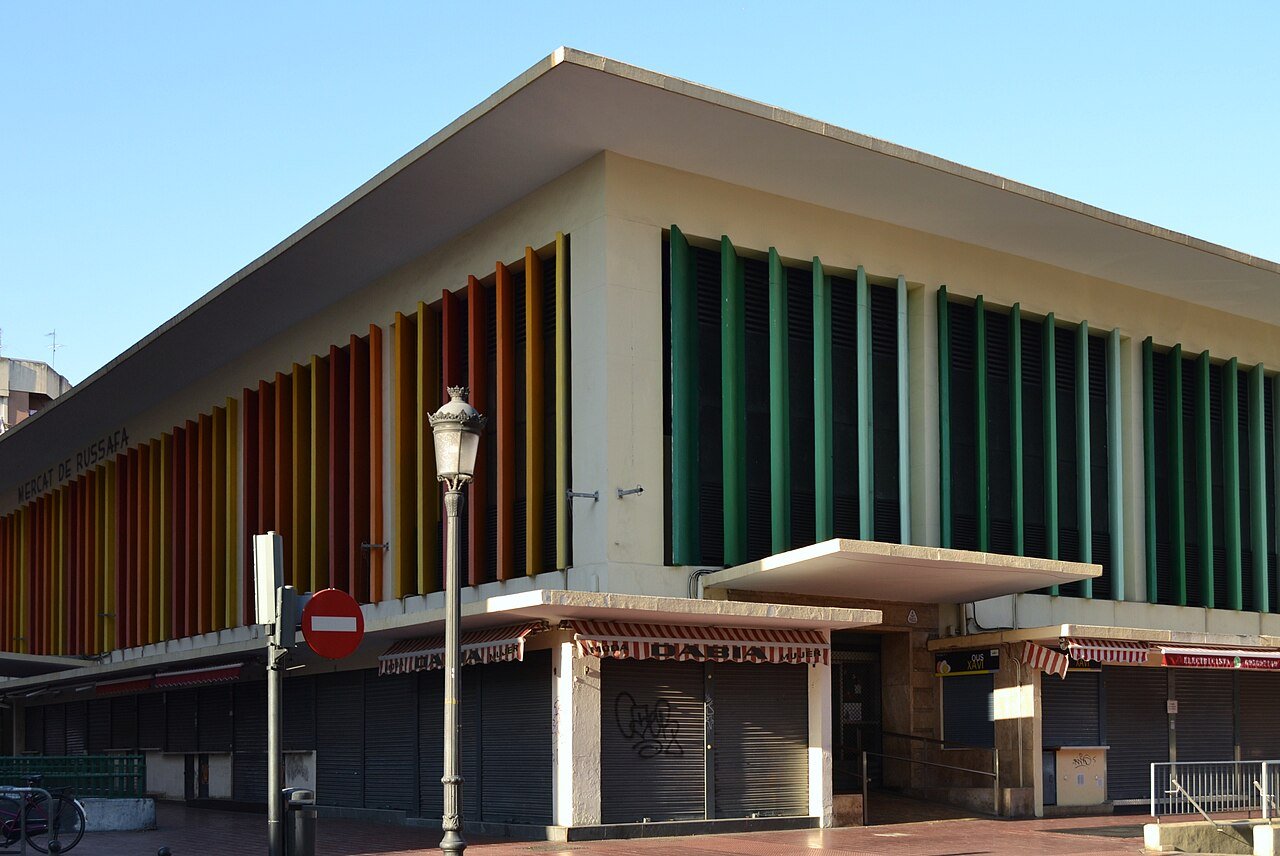
Every great market city has the hall the neighbourhood would riot for, and in Valencia it stands in Ruzafa — Russafa in Valencian, the grid of streets south of the centre that has become the city’s creative, café-lined, gallery-dotted quarter. The market announces itself before you reach the door: the building, opened in 1962, wears a façade of vertical louvres painted in long bands of colour, yellows and reds on one side, greens on the other, so that the whole block looks like a beached rainbow. Inside, it is all business — a compact, serious food market of produce stalls, butchers, fishmongers and bakers that serves the barrio first and visitors second, which is exactly its charm.
Ruzafa is the market to choose if you are staying in the quarter, cooking for yourself, or simply want to see the daily machine without the Central’s sightseeing layer. The produce is huerta produce, the fish counter is small and excellent, the prices are neighbourhood prices, and the surrounding streets complete the picture: bakeries, coffee bars, and on the pavements outside, the overflow stalls and the morning crowd. Afterwards, Ruzafa does the rest — it is the best bar-and-terrace district in the city for the post-market vermouth, and its vintage shops and galleries fill the afternoon if you let them.
The practical note: Ruzafa keeps the standard food-market hours, roughly 7.30am to 3pm, closed Sundays, and it is at its best on weekday mornings when the barrio is shopping for lunch. If the Central is Valencia’s cathedral of food, Ruzafa is its parish church — smaller, plainer inside, and full of the faithful.
Shop here the way the barrio shops: produce first, from the stalls along the central aisles where the huerta’s week is laid out in season — artichokes and broad beans in winter, tomatoes and peppers through the summer, oranges always — then the fish counter, then the baker for the bread, then out into the surrounding streets for coffee. Ruzafa’s other gift to the visitor is that nothing needs planning: the market, the cafés, the bookshops and the bars form one continuous morning, and the quarter’s famous terrace scene at lunchtime is the natural second act to a market shop.
4. Mercado del Cabanyal: The Fishermen’s Market
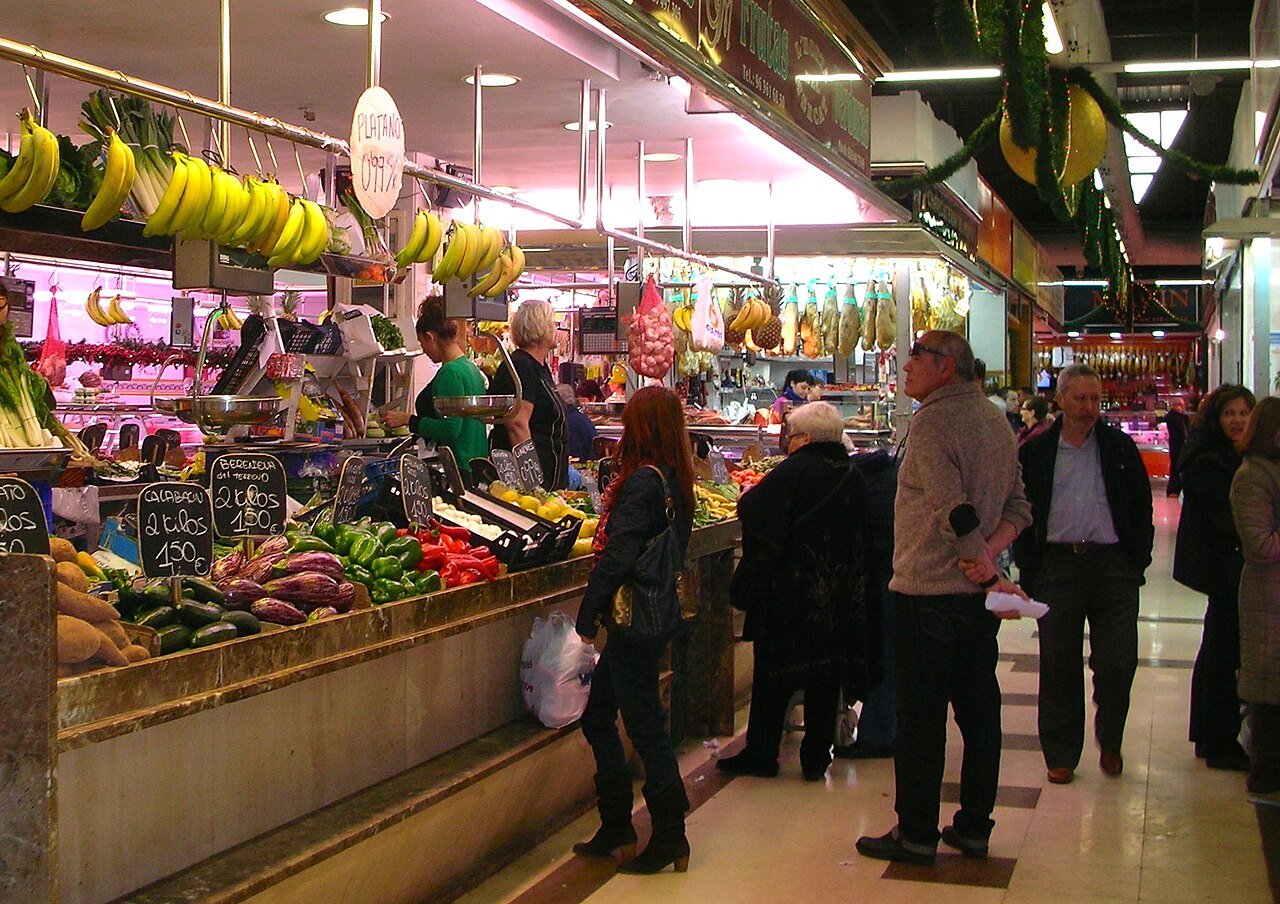
Down by the sea, in the old fishing quarter of El Cabanyal — a grid of tiled, low-rise streets that was a separate fishermen’s town within living memory — the market still smells of the port. The Mercado del Cabanyal is the city’s fish market in spirit and largely in fact: the counters here groan with the Mediterranean — sole and monkfish, red prawns, squid and cuttlefish, tellinas, clams, and the eels and snails that Valencian cooking demands — alongside the full run of produce, meat and deli stalls that a working district needs. The shoppers are the district: grandmothers with wheeled trolleys, restaurant buyers doing serious business at the fish counters, and nobody in a hurry to be anywhere else.
The Cabanyal rewards those who treat it as a morning out rather than a sight. Walk the tiled streets first — the quarter’s modernista fishermen’s houses, faced in coloured tiles, are a small architectural marvel that most Valencia visitors never see — then do the market, then eat fish for lunch in one of the old restaurants between the market and the beach, where the rice dishes run to the maritime end of the Valencian repertoire: arroz a banda, arroz del senyoret, fideuà. Much of what lands on those plates — and the rice, and the eels for all i pebre — ties back to the lagoon and rice fields of the Albufera just south of the city.
Time it for a Thursday if you can: on Thursday mornings the streets around the market fill with one of the largest street markets in the city, clothes and household goods running for block after block, with the food hall at its centre. It is the loudest, fullest morning in the maritime districts — and the most Valencian.

5. Mercado de Algirós: The Locals’ Market by Mestalla
Ask a Valencian where they actually shop and, if they live east of the centre, the answer is Algirós. The market stands in the district of the same name, a short walk from Valencia CF’s Mestalla stadium and the Aragón edge of the Turia riverbed, and it is the complete neighbourhood market at full strength: long aisles of produce stalls with chalked prices, hanging bananas and pyramids of peppers; fishmongers with a devoted following; butchers, charcuterie, bakeries, and the low hum of a place where the stallholders know the customers’ names, orders and grandchildren.
Algirós makes this list not for its architecture — it is a functional hall, not a monument — but because it is the best place in Valencia to watch the city’s food culture at working temperature, unperformed. The stalls sell what the huerta and the coast produced that week; the seasonal calendar is written on the counters, in artichokes, broad beans, clóchinas, cherries, persimmons and citrus as the year turns; and the shoppers are shopping for lunch, not for photographs. If you are renting an apartment anywhere on this side of the city, this is your market, and a week of breakfasts bought here will teach you more Valencian than a phrasebook.
Combine it with the riverbed: the market sits minutes from the Turia Gardens, so a market shop followed by a walk down the green spine of the city towards the old town — or east towards the City of Arts and Sciences — makes one of the great free mornings of Valencia. Standard hours apply: mornings to 3pm, closed Sundays, Saturday at full roar.
6. Mercado de Rojas Clemente: The Little Market With the Flamingos
The smallest market in this guide hides in El Botànic, the quiet district between the old town and the riverbed, a few minutes from the Quart towers and the Botanical Garden. Rojas Clemente is a single-aisle, one-of-everything market: a butcher, a fishmonger, a greengrocer or two, a baker, an organic shop — perhaps three dozen stalls in all — serving a neighbourhood that treats it as an extension of its own kitchen. Nothing here is performed for visitors, because almost no visitors come; what you get instead is the Valencian market reduced to its essence, friendly and unhurried.
Its one flourish is on the outside wall: a huge street-art mural of two pink flamingos against an Albufera sunset, painted across the market’s flank — the lagoon’s most famous residents advertising the city’s food culture in a quiet side street. It has become the market’s unofficial sign, and it tells you something true about Rojas Clemente: a little place, proud of where its food comes from.
Come here if you’re staying in El Botànic or the west of the old town, or pair it with the Botanical Garden and the Quart towers for a gentle morning well off the circuit. It keeps the usual hours, mornings only, closed Sundays — and at this scale, it is wise to come before one, while every stall is still open.

7. Mercado de Mossén Sorell: El Carmen’s Reborn Market
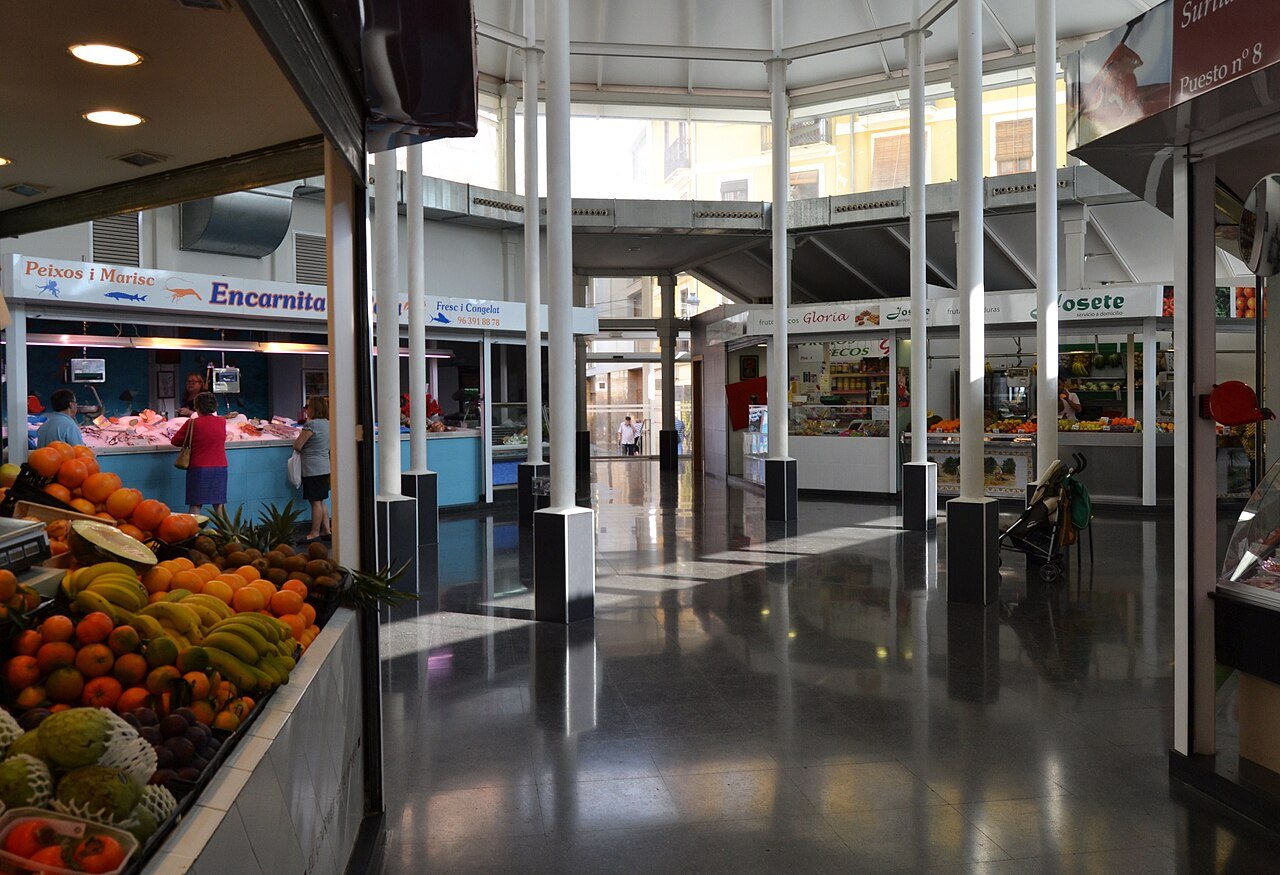
The old town’s own neighbourhood market stands in the middle of El Carmen, on the little square that gives it its name — and it is the comeback story of Valencia’s markets. The Mercado de Mossén Sorell serves the oldest quarter of the city, and after years in which the district’s original market was demolished and its traders worked from temporary quarters, it reopened in a bright new hall: white columns, a glassy roof, polished floors and a tidy ring of stalls — fish at the Encarnita counter, fruit and vegetables, meat, deli and bakery — scaled to a dense old quarter rather than a whole city.
What Mossén Sorell offers a visitor is proportion. The Central, ten minutes away, can overwhelm; this is the same culture in miniature, on a human scale, wrapped in the best wander in Valencia — the market sits among the lanes, bars and street art of El Carmen, with the Torres de Serranos and the riverbed at one end of the quarter and the cathedral at the other. It is the natural market of anyone staying in the old town: buy breakfast here, picnic supplies here, the oranges for the train here.
Hours are the standard market pattern — mornings, closed Sundays — and because several of its neighbours are small local shops rather than stalls, the square outside extends the market into the street. Do what the quarter does: shop small, then take coffee on the square and watch El Carmen wake up.

8. Mercado de Torrefiel: The Market the North Shops At
North of the riverbed, in the working-class districts of Orriols and Torrefiel that most itineraries never reach, stands the market that feeds Valencia’s north. Torrefiel is a big, plain, serious hall — the largest of the purely neighbourhood markets — where the shopping is done in bulk and in earnest: butchers with queues out of the stall, grocers stacked with the store-cupboard goods of three continents, produce at some of the keenest prices in the city. The Argentine butcher’s counter, its board chalked with picaña and milanesas, tells its own story of the district: this is where Valencia’s Latin American communities shop, alongside everyone else.
No visitor needs Torrefiel, and that is the recommendation. It is the market with the least sightseeing value and the most everyday truth in this guide — the place to come if you want to see what a Spanish city market is for, once the architecture and the tourists are stripped away. Prices reward the trip if you’re stocking a rental kitchen in the north of the city, and the surrounding streets, all local commerce and no souvenir shops, complete the picture of a Valencia that exists entirely for its residents.
Practicalities are standard: morning hours, closed Sundays, busiest on Saturdays. Come before noon, bring a bag, and don’t be surprised to be the only visitor in the building — at Torrefiel, that’s the point.
9. Mercado de Nazaret: The Village Market by the Port
The list ends where Valencia began as a port: Nazaret, the old fishing village at the southern edge of the harbour, absorbed by the city but never quite digested by it. Nazaret still keeps its village scale — low houses, a church square, a slow pace — and its Mercat Municipal is a village market: a modest pink-tiled hall on the Carrer de Dalt de la Mar, a handful of stalls covering fish, meat, produce and bread, and a clientele that arrives on foot and stays to talk. The fish here has the shortest journey of any in this guide; the port is at the end of the street.
Nazaret pairs with the maritime morning: the beach and promenade of Las Arenas and La Malvarrosa run north from here, the harbour and the old Grao are next door, and the whole southern waterfront — the part of the coast where Valencians themselves swim, stroll and eat rice on Sundays — is within a short walk or one tram stop. The market itself takes twenty minutes; the neighbourhood takes the morning, happily.
The village deserves its context. Nazaret grew up as a fishing settlement beside the old port, close to the lazaretto from which it takes its name, and it kept a separate identity — its own streets, its own accent, its own devotion to the sea — long after the city surrounded it. That separateness is its charm for a visitor now: this is the one market in the guide where you are not fitting into a city’s routine but a village’s, and where the walk from the tram stop to the market door passes front doors, workshops and bars that have nothing to do with tourism at all.
It keeps village hours too — mornings, closed Sundays, quiet by early afternoon — and it is the gentlest possible end to a market tour of Valencia: no crowds, no spectacle, just a small hall feeding a small district by the sea, as it has always done.
Which Market Suits You?
Here for two days? The Central and Colón, in that order, on the same morning — the working cathedral, then the beautiful café-hall — and you’re done, happily. Staying a week with a kitchen? Make Algirós or Ruzafa your local and shop like a resident; your cooking will improve out of recognition. Fish is the mission? Cabanyal on a weekday morning, lunch in the quarter afterwards. Travelling on a budget? The neighbourhood markets undercut the centre — Torrefiel and Algirós will fill a bag for the price of a snack at a sightseeing café. Sunday in Valencia? Every food market is shut; Colón’s cafés are your one market address, or take the day to the beach and do the Central on Monday. Want to learn, not just look? Book the class that starts in the Central’s aisles. And for what to do with everything you’ve bought — the dishes, the drinks, the order to eat them in — our guide to the best food in Valencia is the sequel to this one.
What a Market Morning Costs
Valencia’s markets charge no entry, and the economics are firmly on your side. A market breakfast — coffee and a bocadillo or pastry at a market bar — runs to a few euros; horchata with a farton at Colón costs about the same. A bag of oranges from the huerta, bread, cheese, olives and tomatoes for a picnic lunch for two can come in under €10 at a neighbourhood market, and even at the Central, where prices carry a small fame premium, the raw ingredients of a serious paella — chicken, rabbit, the two beans, Bomba rice, saffron — cost a fraction of the restaurant version. The one splurge in this guide is the experience that uses the Central as its classroom: the Valencia: Paella Cooking Class with Central Market Tour at from $78.51 — a guided market shop, a chef-led class, tapas, wine and the paella you cooked, with free cancellation up to 24 hours in advance. Set against a restaurant paella for two plus a food tour booked separately, it earns its place.

Mercado Central Valencia: The Complete Food Lover’s Guide
Travel insurance, sorted
Whether it is a two-week holiday or a longer move, travel insurance is not the most glamorous part of a trip — but it is the one booking you want to have in place before a trip, and while you are already away. Get a quote from SafetyWing
Final Thoughts
Other cities put their food culture in restaurants and charge you to watch it. Valencia keeps hers in a dozen public halls, open to anyone who walks in before three, priced for the people who live around them. The Central alone would justify the trip — a modernista cathedral where the city’s real business, feeding itself, still happens at full volume every morning. But the fuller picture is in the set: the gourmet calm of Colón, Ruzafa’s rainbow wall, the fish counters of the Cabanyal, a mural of flamingos on the smallest market in the city. Do the great hall first, by all means. Then pick a barrio, any barrio, and go and stand in its queue. That’s where Valencia is.
FAQs: Valencia Markets
What is the best market in Valencia?
The Mercado Central, by scale, beauty and range — it is one of Europe’s great food halls and the essential visit. Colón is the best for eating and drinking in, and Ruzafa and the Cabanyal are the best for unfiltered neighbourhood life. Most visitors should do the Central plus one of the others.
Are Valencia’s markets open on Sundays?
No — the Central and every neighbourhood food market in this guide close on Sundays (and public holidays). The Mercado de Colón is the exception: its cafés, restaurants and gourmet shops open daily into the evening. Plan any food-market visit for Monday to Saturday.
What time should you visit a Valencia market?
Between 9am and 11am. The markets open around 7.30am and close at 3pm; early morning is when the fish is best and the stalls are fullest, late morning is when the aisles and market bars are at their liveliest. By 2pm many stalls are packing up.
What should you buy at a Valencia market?
Oranges and other huerta produce, Bomba rice with its Albufera denominación de origen, the garrofó and ferraúra beans for a true paella valenciana, saffron, salt cod and pickles, and clóchinas — the small Valencian mussels — in their roughly May-to-August season. Tiger nuts and horchata are the city’s signature drink purchase.
Can you eat inside Valencia’s markets?
Yes. The Central has market bars around its edges and the celebrated Central Bar at its centre, and stall-side snacking is normal everywhere. Colón is designed for it — its nave is lined with cafés and restaurants. In the neighbourhood markets, the bars on the surrounding streets do the same job.
Which Valencia market is best for fish and seafood?
The Mercado del Cabanyal, in the old fishing quarter, with the Central’s fish section a close second. Go early — the best of the catch sells first — and on Thursdays the Cabanyal visit can be combined with the huge street market that fills the surrounding streets.