Archivo de Indias Seville: The Complete Visitors’ Guide
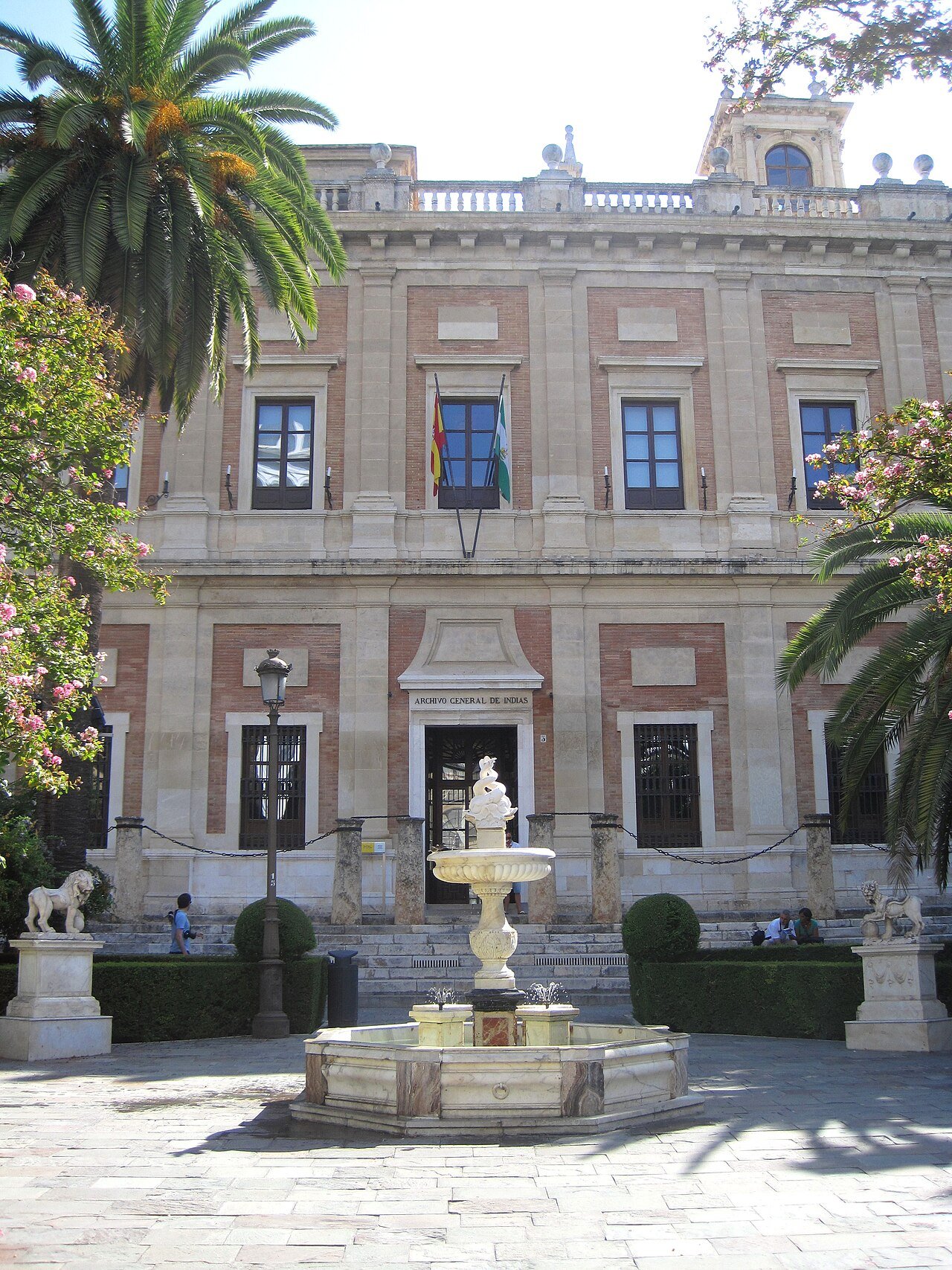
Stand on the Avenida de la Constitución at midday and Seville is queuing. The Cathedral has its ticket lines, the Alcázar has its timed-entry crowds — and between the two of them, raised on its platform of stone steps, stands a long, calm, red-brick-and-stone building that almost nobody is entering. This is the Archivo General de Indias, the General Archive of the Indies, and inside it, in perfect order, sits the paperwork of an empire: some 43,000 files of documents, nine kilometres of shelving, holding the letters, maps, accounts and court cases of Spain’s three centuries in the Americas and the Philippines. The names on the bundles are the names from the history books — Columbus, Magellan, Cortés, Pizarro — filed.
This guide tells you what the building is and how to read it: the merchants’ exchange it began as, the great courtyard and marble staircase inside it, the galleries where its exhibitions run, and the documents themselves — what is really here, and what you will actually see of it. It also gives you the practical picture, because the Archivo plays by different rules from its famous neighbours: there is no ticket to book and no queue to beat, entry is completely free, and most visitors walk straight past it on their way to somewhere louder. It belongs on the same morning as the two giants beside it — it sits high in our Best Things to Do in Seville guide precisely because it is the pause between them, an hour of cool, quiet, astonishing paper.
The Short Answer
Yes — the Archivo de Indias is absolutely worth an hour of your Seville morning, entry is completely free, and you do not need to book anything. This is the third member of the city’s UNESCO World Heritage trio, standing between the Cathedral and the Royal Alcázar, and it is by far the quietest of the three: no timed slots, no advance tickets, just a security check at the door and then the run of two floors of galleries around a magnificent Renaissance courtyard. Inside is a working national archive, and the visit works like a free museum — a rotating exhibition drawn from its holdings, portraits and maps, the merchants’ great strong chest, and the building itself, which is half the show. Give it 45 minutes to an hour, ideally sandwiched between the Cathedral and the Alcázar, when its air-conditioned calm feels like a gift. If you want the whole monumental quarter tied together with the stories told properly, a guided GetYourGuide – Seville old town guided walking tour will walk you through all three buildings; but the Archivo is the one sight in the trio you can simply wander into, free, whenever the door is open.
Table of Contents
- The Short Answer
- The Story in Brief: An Exchange, an Empire and Nine Kilometres of Paper
- What to See: The Building and Its Façades
- What to See: The Main Courtyard and the Great Staircase
- What to See: The Galleries and the Exhibitions
- What to See: The Documents Themselves
- Practical Info
- Tips for Visiting
- Final Thoughts
The Story in Brief: An Exchange, an Empire and Nine Kilometres of Paper
The building was not built for paper. It was built for merchants, and it began with a complaint. In the sixteenth century Seville held the monopoly of Spain’s trade with the Americas, and its merchants did their dealing where merchants always had — outdoors, on the steps (the gradas) around the Cathedral, near the Fuente del Hierro. When it rained, they simply moved inside the Cathedral and closed their bargains between the pillars, and the Cathedral chapter, scandalised, chained off the steps and hired guards to keep the pack animals out. Philip II’s answer was the obvious one: build the merchants a hall of their own, on the same street, next door to the church. The result, raised between 1584 and 1598 to designs by Juan de Herrera — the architect of El Escorial, the king’s own monastery-palace — and executed under the master builder Juan de Minjares, was the Lonja de Mercaderes, the Merchants’ Exchange: a free-standing square block around a great courtyard, built for contracts, auctions and arguments about cargo.
The lonja’s trading glory lasted a little over a century. As the Guadalquivir silted and the great fleets moved away, the monopoly of American trade was transferred to Cádiz in 1717, and the exchange emptied into a long, miscellaneous afterlife — offices, lodgings, and in the 1660s, charmingly, the painting academy founded by Murillo and his fellow artists, who taught in its upper rooms. The building’s second, greater life began in 1785, when Charles III decided that the scattered records of the overseas empire — piles of them in Simancas, Cádiz and Seville itself — should be gathered into one archive, in one building, and the old exchange was chosen. The historian Juan Bautista Muñoz, the king’s Cosmographer Major of the Indies, organised the gathering; the architect Lucas Cintora adapted the building, giving it the marble staircase you climb today. The Archivo General de Indias was born, and the empire’s paperwork came home to the merchants’ hall.
It has been coming ever since. The archive now holds the records of the Council of the Indies, the Casa de Contratación and the consulates, of viceroys, governors, courts and counting houses across two hemispheres — some 43,000 legajos (the fat tied bundles the documents live in), around 80 million pages and thousands of maps and drawings. In 1987 UNESCO inscribed the building, together with the Cathedral and the Royal Alcázar next door, as a World Heritage Site: church, palace and filing cabinet, the complete machinery of a world empire, standing within a hundred metres of each other.

What to See: The Building and Its Façades
Walk around it first, because the outside is a lesson in Herrera’s manner: severity as a style. The lonja is a perfect square block, two floors high, set on a stepped stone podium — those steps are the direct descendants of the Cathedral gradas where the merchants used to deal, and Sevillians still sit on them. The façades run in a strict, repeating rhythm of bays, and their material is the famous combination: pale stone for the frame — the pilasters, cornices and window surrounds — and warm red brick filling the panels between. It sounds simple and it set a fashion: half the grand buildings of later Seville copied the brick-and-stone marriage from this one. Along the roofline runs a balustrade dotted with stone balls and, at the corners, the stepped pyramid pinnacles that are practically Herrera’s signature. There is almost no carving, no sculpture, nothing to distract from proportion — after the Gothic lace of the Cathedral next door, the restraint is the point. This was a building for business, and it dresses like it.
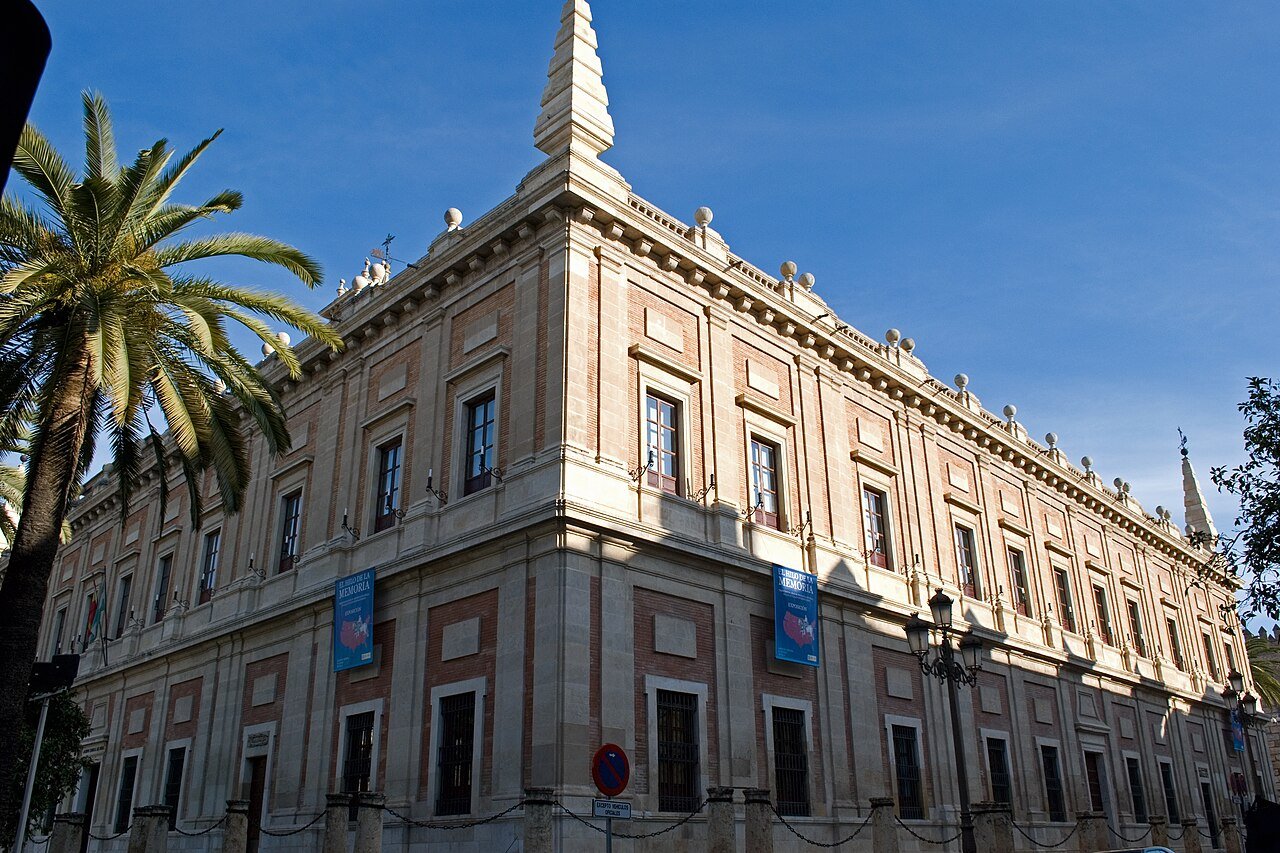
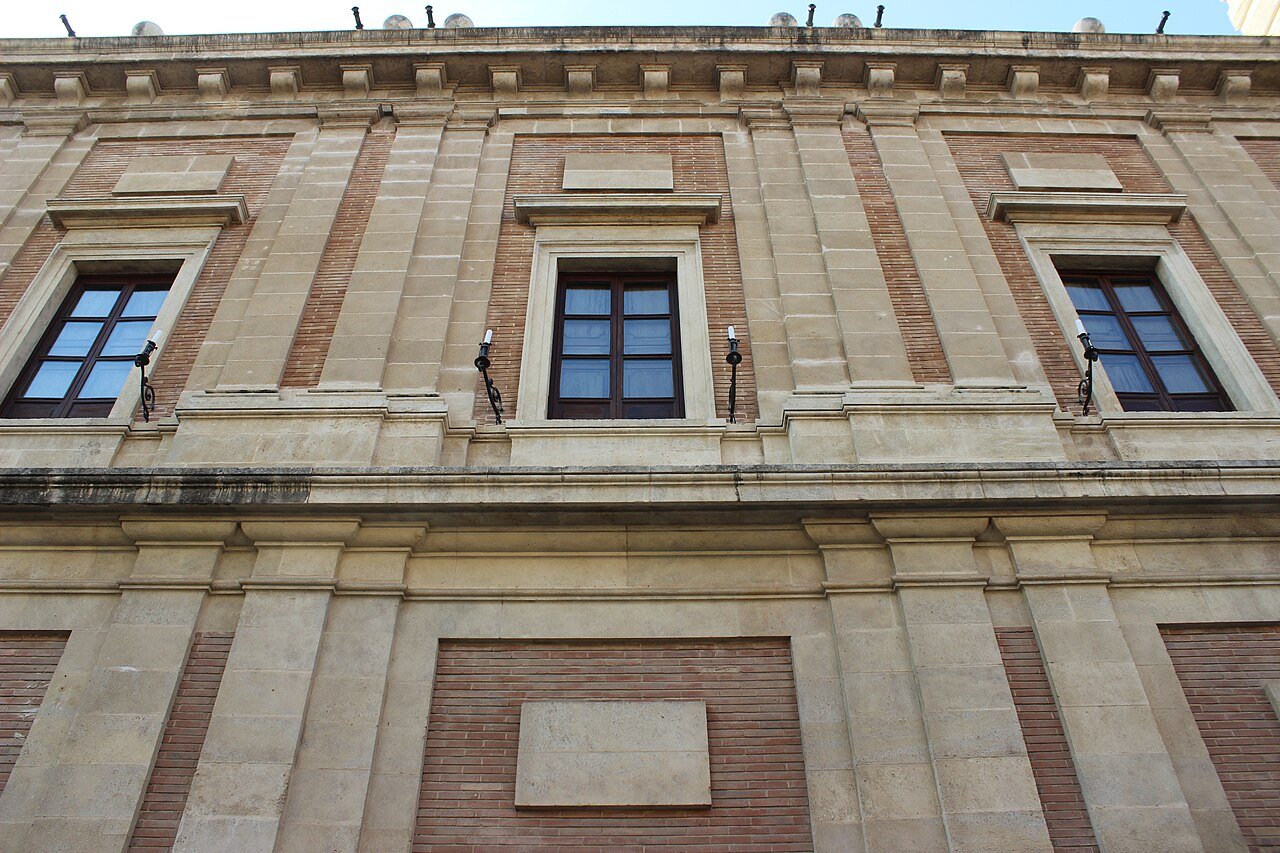
Two details on the outside deserve a hunt. The whole building is ringed at pavement level by stone posts linked with heavy iron chains — the same treatment as the Cathedral’s, and a survival of the lonja’s own legal jurisdiction: within the chains, this was merchant territory, under merchant law. And at the Cathedral end of the building, standing on the steps, is the Cruz del Juramento, the Cross of the Oath, raised in the seventeenth century: merchants swore their contracts before this cross, God as witness to the bargain, which in a world without credit ratings was a serious piece of commercial infrastructure. The second detail is stranger. Scattered across the brick panels of the façade you will find large painted inscriptions, names and flourishes in an old-fashioned hand — vítores, the victory graffiti traditionally painted up by university graduates celebrating their degrees, who used the lonja’s wall as the city’s noticeboard. Students were doing it centuries ago; the faded lettering is still there, names and all, the one piece of permitted vandalism on Herrera’s severe face.


What to See: The Main Courtyard and the Great Staircase
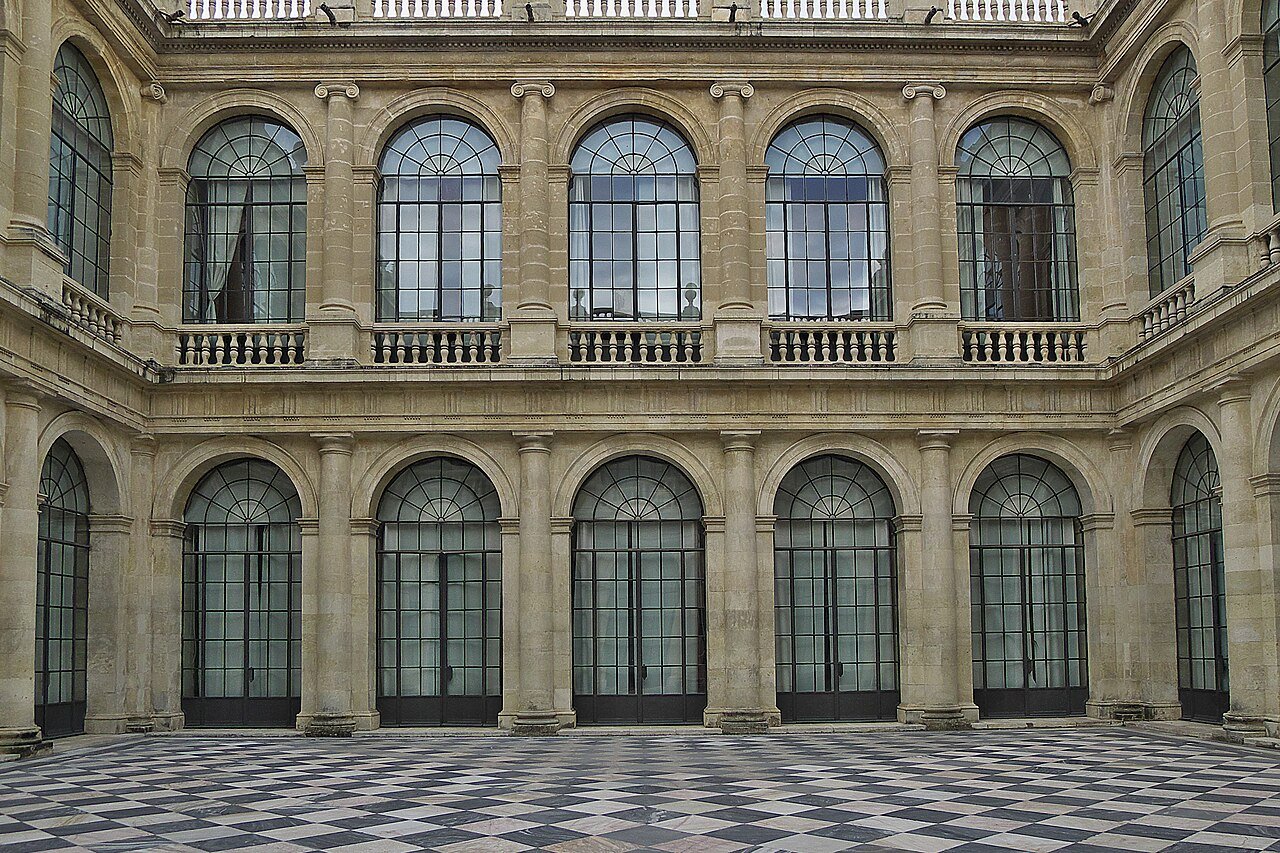
Go in — the entrance is the door on the Avenida de la Constitución side, with the name over it — and the building opens into its great interior fact: the patio. It is an enormous square courtyard, built entirely of stone, with two floors of round arches carried on piers faced with half-columns, running in a calm, exact rhythm around all four sides. Behind the arches, today, run the glazed galleries of the archive; underfoot is a chequered floor of marble laid out like a chessboard the size of a ballroom. The merchants used this court as their trading floor’s overspill — contracts talked through in the shade of the arcades, in all weathers — and it is still the building’s lung: light, air and silence, in the middle of Seville’s busiest monumental hundred metres. Stand in the centre and turn slowly. The Cathedral is over one roofline, the Alcázar over another, and in here, nothing but stone, glass and quiet.
Free Seville travel guide
Planning a trip to Seville? Get our free one-page Seville checklist: what to book ahead, what to skip, and the tapas bars we actually eat in.
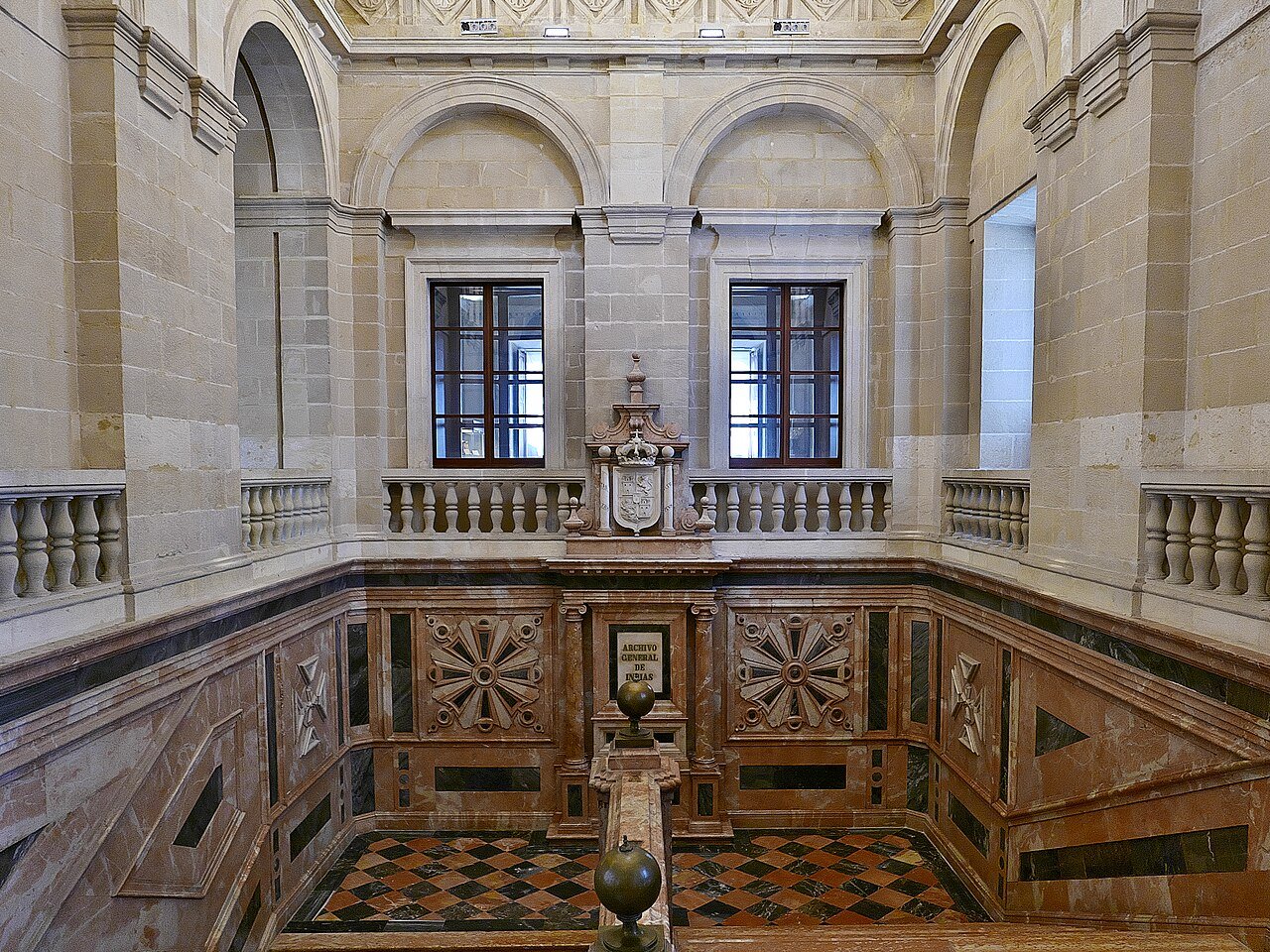
From the courtyard, find the main staircase, and lower your expectations of the word “staircase” — this is a state room that happens to go up. It is not Herrera’s: it belongs to the 1780s conversion, designed by Lucas Cintora, and it is dressed head to foot in polished coloured marble — great panels and geometric inlay of red, black and grey stone brought from the quarries of Málaga, a carved coat of arms above the landing, an inscribed tablet announcing the archive, and a coffered lantern vault overhead pouring in the light. It was built to impress a simple message on every visiting official: the empire’s records were kept in a palace, by a monarchy that meant it. Climb it slowly; the upper galleries, and the exhibition, are at the top — and the marble under your hand is the real reason half the building’s admirers come.
What to See: The Galleries and the Exhibitions
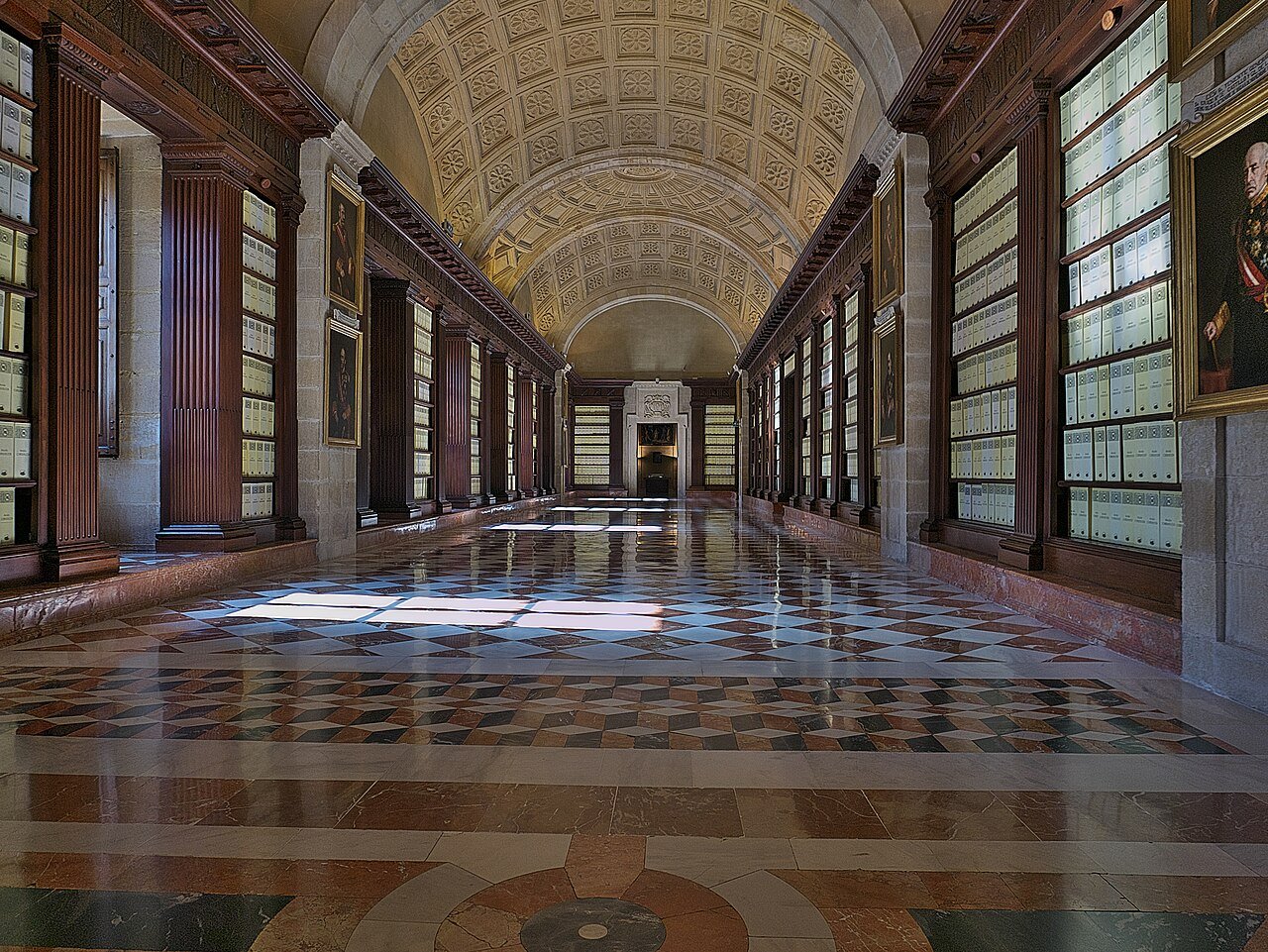
Understand the shape of the visit and you will enjoy it twice as much: the Archivo is a working archive first, and the public visit runs through its galleries — the long vaulted ranges that ring the courtyard on both floors, behind those courtyard windows. The upper galleries are the glory: barrel-vaulted in stone, coffered and carved with geometric reliefs in the Renaissance taste, floored in polished marble chequerwork, and lined along one side with a run of dark-wood shelving made of mahogany and cedar shipped from Cuba, with the file-boxes of the legajos ranked behind glass and portraits of the empire’s protagonists — kings, viceroys, admirals — keeping an eye on you from the walls. It is less like a museum than like walking inside the archive’s own portrait of itself.
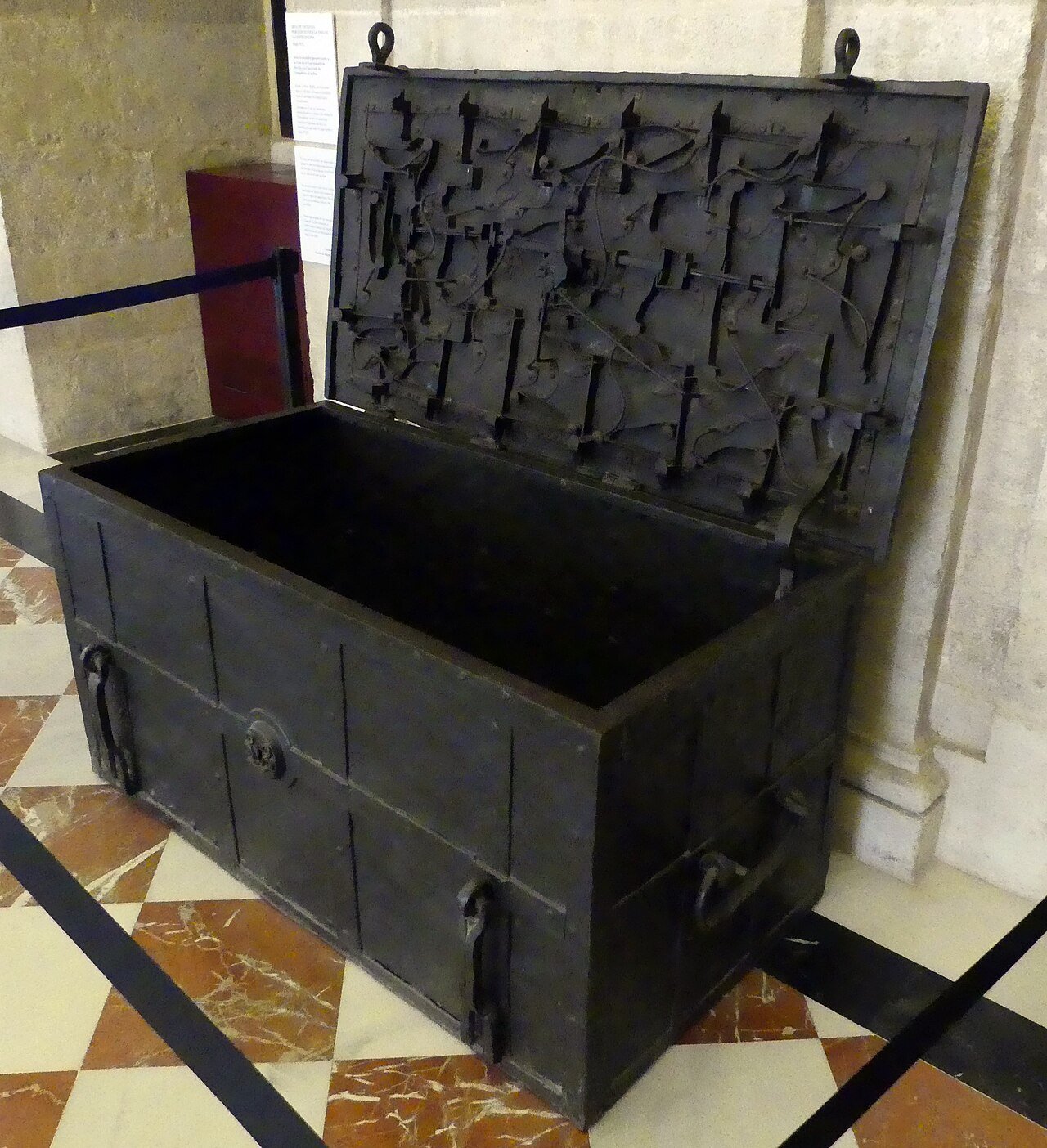
Within the galleries the archive mounts its exhibitions — a rotating programme drawn from its own holdings, usually one substantial show at a time, spread through display cases around the floors. Themes change: a voyage, a centenary, a city, a trial. What you will see is documents — letters, reports, maps, plans, drawings — chosen to tell that show’s story, together with objects the building keeps about itself: the portraits, the great bronze cannon raised from the galleon Nuestra Señora de Atocha, lost with her treasure fleet in 1622 and presented to Spain by the United States in 1976, and the merchants’ own strong chest (more of both in the next section). You will also notice what you are not seeing, because the honesty matters: the bulk of the 43,000 legajos lives in secure, climate-controlled stores, much of it below ground — the vents in the podium steps outside breathe for them — and the reading room upstairs is for accredited researchers with a document order, not for visitors. The exhibition is the archive’s shop window, and it is a superb one; but the shop itself is closed, quiet and doing its real work behind the glass.

What to See: The Documents Themselves
And so to the paper. What, exactly, is in the nine kilometres? The archive’s heart is the Patronato section, the records of discovery and conquest themselves, and its contents read like the index of an age. Here are letters and reports of Christopher Columbus and the paperwork of his voyages and the long lawsuits his heirs fought with the Crown. Here is Spain’s exemplar of the Treaty of Tordesillas of 1494 — the agreement that drew a line down the Atlantic, 370 leagues west of Cape Verde, and divided the non-European world between Spain and Portugal with a ruler, an act of cartographic confidence so complete that both countries’ copies of the treaty are now on UNESCO’s Memory of the World register. Here are the accounts of the Magellan expedition and of Juan Sebastián Elcano, who brought the Victoria home in 1522 to complete the first circumnavigation of the Earth — the muster rolls, the pay lists, the claims of the survivors. And here, in overwhelming, wonderful quantity, is the administrative paper trail of Cortés, Pizarro and the empire they set in motion: royal orders, treasury accounts, maps and plans of American cities drawn within years of their founding, Inquisition files, shipping registers, court cases about everything from lost cargo to mutinies.
One honest calibration before you go in. The archive does not keep its greatest treasures permanently on show under glass, and any given exhibition displays a selection — some pieces original, others shown as fine facsimiles while the originals rest in the dark, because five-hundred-year-old ink does not love the light. Which famous names you will see in the flesh depends on the show that is running when you visit, and the panels (in Spanish, with varying amounts of English) will tell you what you are looking at. None of this dims the place. Stand in the upper gallery under the carved vault — at its centre, worked in stone, are the Columns of Hercules with their scroll, the Plus Ultra device of the Spanish monarchy, the empire’s logo in the empire’s filing cabinet — and consider that the documents in the stores around you are not copies of the Age of Discovery. They are the Age of Discovery, its original paperwork, still filed where the king’s clerks left it. That thought, available free, is the Archivo’s real exhibit.

Practical Info
Price and booking. Entry is completely free, and there is no booking system — no tickets, no timed slots, no online scramble. You simply turn up during opening hours and walk in. For a sight of this calibre between the Cathedral and the Alcázar, that still feels like a clerical error in the visitor’s favour. Take advantage of it.
The door, honestly. There is a security check at the entrance — expect an airport-style scanner for bags and to show ID (a passport or national identity card is what the staff are used to seeing), and larger bags may have to be left or refused. It takes a minute and it is the only formality in the whole visit. Travel light, keep your passport handy, and do not be put off: this is a national archive guarding original documents, not a building being difficult.
Hours. The Archivo keeps museum-style hours rather than archive hours for visitors: as a rule of thumb, mornings through to mid or late afternoon on weekdays and Saturdays, a shorter morning on Sundays and holidays, and closed on Mondays — but exhibition changeovers and public holidays do move things around, so check the current timetable on the official Ministry of Culture page before you build a morning around it. Last admission is typically a little before closing; the galleries take 45 minutes to an hour to do properly, so do not arrive at the final bell.
Comfort and combination. The building is air-conditioned, step-free once you are in (there is a lift), and almost never crowded — in a July or August afternoon it is one of the great refuges of the monumental quarter, an hour of cool stone while the streets outside sit at 40°C. There is no café inside; you are two minutes from the bars of the Avenida and the Santa Cruz lanes when you come out. The natural combination is the whole UNESCO trio in one morning — Cathedral, Archivo, Alcázar — with the Archivo in the middle as the breather: it needs no pre-booked slot, which makes it the flexible joint in the day’s skeleton.
Tips for Visiting
- Do the trio in this order. Cathedral first, at opening, while its queues are shortest; the Archivo second, as the calm between the giants; the Alcázar last, on its booked slot. Our Seville Cathedral & La Giralda guide and Royal Alcázar of Seville guide walk you through the other two.
- Bring your passport, leave the big bag. The door check is quick when you are ready for it. A rucksack day is fine; a suitcase day is not.
- Check what’s on before you go. The exhibition is the visit, and it changes — a glance at the archive’s page the week of your trip tells you which story the documents are currently telling, and whether any gallery is closed for a changeover.
- Look up in the galleries. The coffered vaults, the Plus Ultra columns carved overhead and the Cuban-wood shelving are exhibits in themselves; most visitors read the cases and miss the room.
- Read the outside on your way out. The Cruz del Juramento, the chains and the graduates’ vítores make far more sense after you have seen what the building holds — the façade is the epilogue, not the introduction.
- Finish in Santa Cruz. You exit a hundred metres from the old Jewish quarter’s lanes and their tapas bars; our Barrio Santa Cruz guide picks up exactly where the Archivo leaves off.
Travel insurance, sorted
Whether it is a two-week holiday or a longer move, travel insurance is the one booking not to skip. We point readers to SafetyWing’s Nomad Insurance — cover built for travellers, remote workers and longer stays abroad, on a flexible monthly subscription you can start before a trip or while you are already away. Get a quote from SafetyWing
Final Thoughts
Every empire runs on paper, and this is where Spain’s filed its copy. The Cathedral next door is faith in stone and the Alcázar is power in tile and gold leaf, but the Archivo de Indias is the third, essential verb of the story — the record: who sailed, what they found, what it cost, and what the Crown was owed, bundled, labelled and kept. It is the quietest of Seville’s three World Heritage giants and, for a certain kind of traveller, the most thought-provoking hour in the city — and it is free, unhurried and cool while the queues coil around its neighbours. The honest caveat: if the exhibition running during your visit is a thin one and documents leave you cold, the building will still earn half an hour of anybody’s morning for the courtyard and that marble staircase alone. But go in expecting a filing cabinet and you will come out having stood in the empire’s memory — nine kilometres of it, behind glass, in the merchants’ old hall, exactly where the clerks left it.
¡Buen viaje!
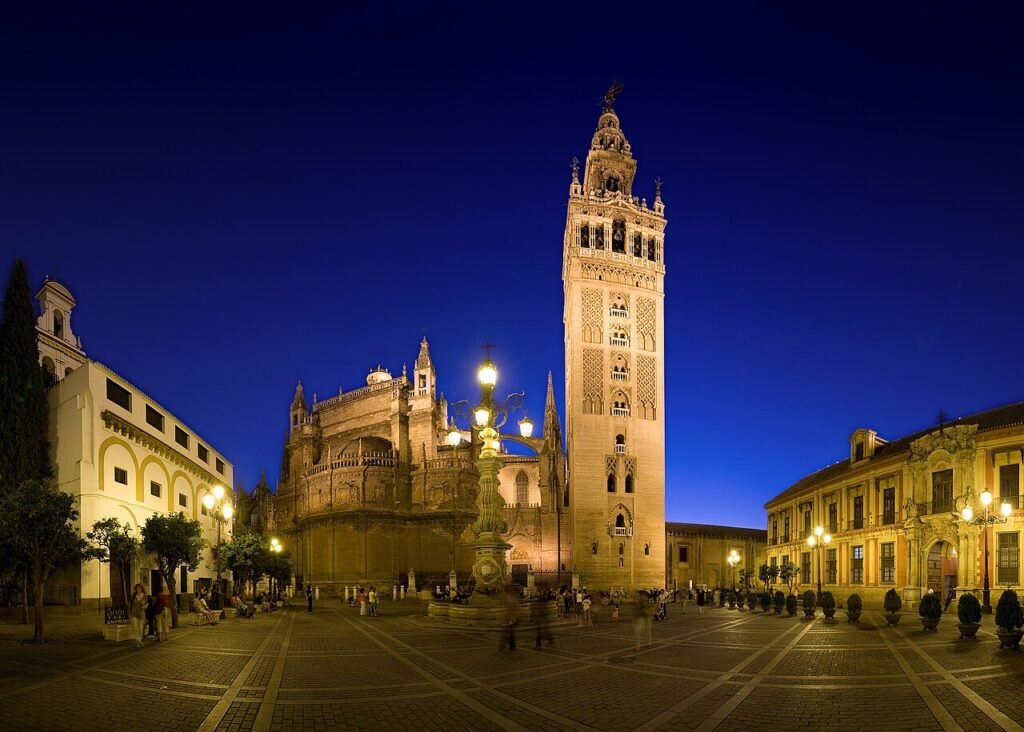
Photo credits: The main façade from the Plaza del Triunfo — Roberto Chamoso G, CC BY-SA 3.0 · The Archivo from above — Anual, CC BY 3.0 · The corner of the lonja — Anual, CC BY 3.0 · The façade in detail — Miguel Hermoso Cuesta, CC BY-SA 4.0 · The Cruz del Juramento — CarlosVdeHabsburgo, CC BY-SA 3.0 · Vítores on the façade — CarlosVdeHabsburgo, CC BY-SA 4.0 · The main courtyard — Jose Luis Filpo Cabana, CC BY 3.0 · The great staircase — Jl FilpoC, CC BY-SA 4.0 · The southern upper gallery — Jl FilpoC, CC BY-SA 4.0 · A ground-floor gallery and the Atocha cannon — Hispalois, CC BY-SA 3.0 · The merchants’ strong chest — CarlosVdeHabsburgo, CC BY-SA 4.0 · The Columns of Hercules in a gallery vault — Adam Jones, CC BY-SA 3.0. All via Wikimedia Commons.


One Comment