Barcelona in February: 12 Things to Do, From Sitges Carnival to the Santa Eulàlia Festival
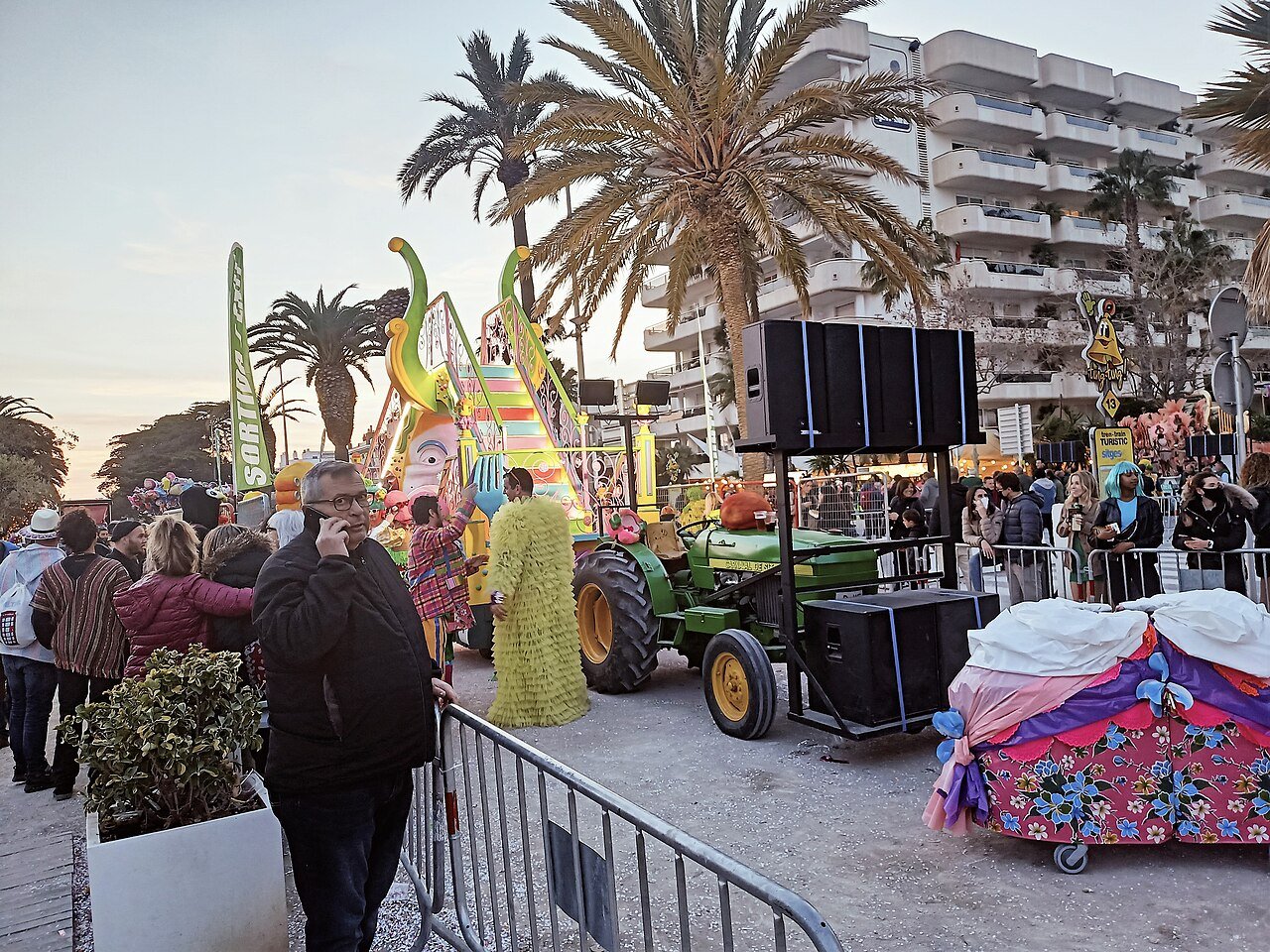
If January is Barcelona at its quietest, February is the month the city starts clearing its throat. It is still low season — the monuments are walk-in, the hotels are cheap, the winter light is the clearest of the year — but the calendar suddenly fills. Carnival takes over the streets twice over: once at home, with a mock king, egg-sausage sandwiches and a funeral for a sardine, and once down the coast at Sitges, where one of Europe’s great carnivals parties for a solid week. The city’s own patroness, Santa Eulàlia, gets her winter festa major of giants, fire-runs and human towers. Poblenou switches on a festival of light art in the dark evenings, forty thousand runners take over the avenues for the half marathon, and in the hills behind the city the almond trees do something quietly miraculous: they blossom, in February, in pink and white. Underneath it all, the calçot season hits its peak and the winter sales hit their final, desperate markdowns.
The month splits neatly into three acts. The first ten days belong to Carnival: Dijous Gras on 4 February opens the feasting, the parades peak on the weekend of 6–7 February, and everything ends with a buried sardine on Ash Wednesday, 10 February. The middle of the month belongs to Santa Eulàlia (her feast day is Friday 12 February) and to the half marathon on Sunday the 14th — which, whatever the card shops say, is not really Valentine’s Day in Catalonia: lovers here wait for Sant Jordi in April. The last week is the connoisseur’s week: blossom, terraces, final-clearance sales and empty museums, with one warning — the Mobile World Congress lands on 1 March, and hotel prices feel it coming days before. Whenever you land, one trip out of the city earns its place in a February itinerary: the Girona and Costa Brava day trip from Barcelona, because Girona’s medieval lanes and the winter-quiet Costa Brava are at their most atmospheric now. These are the twelve things to do in Barcelona in February, in calendar order — carnival first, blossom last.
The Short Version
- Sitges Carnival (4–10 Feb): a week of parades 40 minutes down the coast, peaking with the Rua de la Disbauxa on Sunday 7 February and the Rua de l’Extermini on Tuesday 9th (§1).
- Llum BCN (a February weekend): Poblenou’s free festival of light art turns the district into an open-air gallery for three dark evenings (§2).
- Free-museum Sunday (7 Feb): the first Sunday of the month opens the big museums free — and it lands on Carnival Sunday (§3).
- Santa Eulàlia (around 12 Feb): the city’s winter festa major — giants, castellers, correfocs and the cathedral’s thirteen geese (§4).
- Barcelona’s own Carnival (4–10 Feb): the King arrives on Dijous Gras, the neighbourhoods parade, and a sardine is buried on Ash Wednesday (§5).
- The half marathon (Sun 14 Feb): 40,000 runners on a world-record course — run it if you have a bib, cheer it if you don’t (§6).
- Calçot season at its peak: February is the heart of the calçotada — charred onions, romesco and long lunches (§7).
- The big sights in winter light: low sun through the Sagrada Família’s glass, and the year’s shortest queues (§8).
- Girona in winter: the Onyar’s coloured houses, the Jewish Quarter and a xuixo, 38 minutes by fast train (§9).
- Almond blossom: the Penedès hills turn pink and white weeks before spring officially starts (§10).
- The sales’ last clearance: the rebaixes end the month with their deepest cuts and thinnest rails (§11).
Barcelona Weather in February
February is where Barcelona’s winter quietly turns. Daytime highs average around 15–16 °C (59–61 °F) — a degree or two up on January — and overnight lows hover around 7 °C (45 °F), so mornings are coat weather and afternoons regularly feel like early spring. It is also one of the driest months of the year: expect roughly 30–40 mm of rain spread over three or four days, and long runs of clear, washed-blue skies in between. The real change is the light. The day stretches from about 10 hours at the start of the month to more than 11 by the end; sunrise creeps forward from around 8:00 to 7:27, and sunset drifts from roughly 18:07 to 18:40, which means dinner-hour daylight by the last week and golden evenings on the seafront. The Mediterranean, be warned, is at its coldest of the whole year now — around 13–14 °C — so February’s beach is for walking and terraces, not swimming. Pack layers, a proper mid-weight coat, a scarf for the evenings and sunglasses you will genuinely use. The full month-by-month picture is in our guide to the best time to visit Barcelona.
12 Things to Do in Barcelona in February
Contents
- 1. Party at the Sitges Carnival (4–10 February)
- 2. Watch Poblenou Glow at Llum BCN
- 3. Use the Free-Museum Sunday: 7 February
- 4. Honour Santa Eulàlia at the City’s Winter Festa Major
- 5. Do Carnival the Barcelona Way: a King, an Omelette and a Buried Sardine
- 6. Run — or Cheer — the Half Marathon (14 February)
- 7. Eat a Calçotada at the Peak of the Season
- 8. See the Big Sights in February’s Low, Clear Light
- 9. Take the Train to Girona for a Winter’s Day
- 10. Hunt the First Blossom in the Penedès Hills
- 11. Shop the Winter Sales’ Last Clearance
- 12. Take a Terrace in the First Spring Sun
1. Party at the Sitges Carnival (4–10 February)
Forty minutes down the coast, in a whitewashed seaside town that has never needed an excuse, sits one of the great carnivals of Europe. The Sitges Carnival runs for a full week, from Dijous Gras — Fat Thursday, 4 February 2027 — to Ash Wednesday, 10 February, and in between it packs in more than forty floats, thousands of costumed revellers and crowds that, across the week, run into the hundreds of thousands. It opens on the Thursday with the Arribo, the arrival of Rei Carnestoltes, the King of Carnival, who reads his mocking proclamation and declares a week of licensed misrule. Saturday brings the carnival’s most beloved absurdity, the cursa de llits, a race of decorated beds on wheels hurtling through the old town. And then come the two great night parades that everything else is scaffolding for.
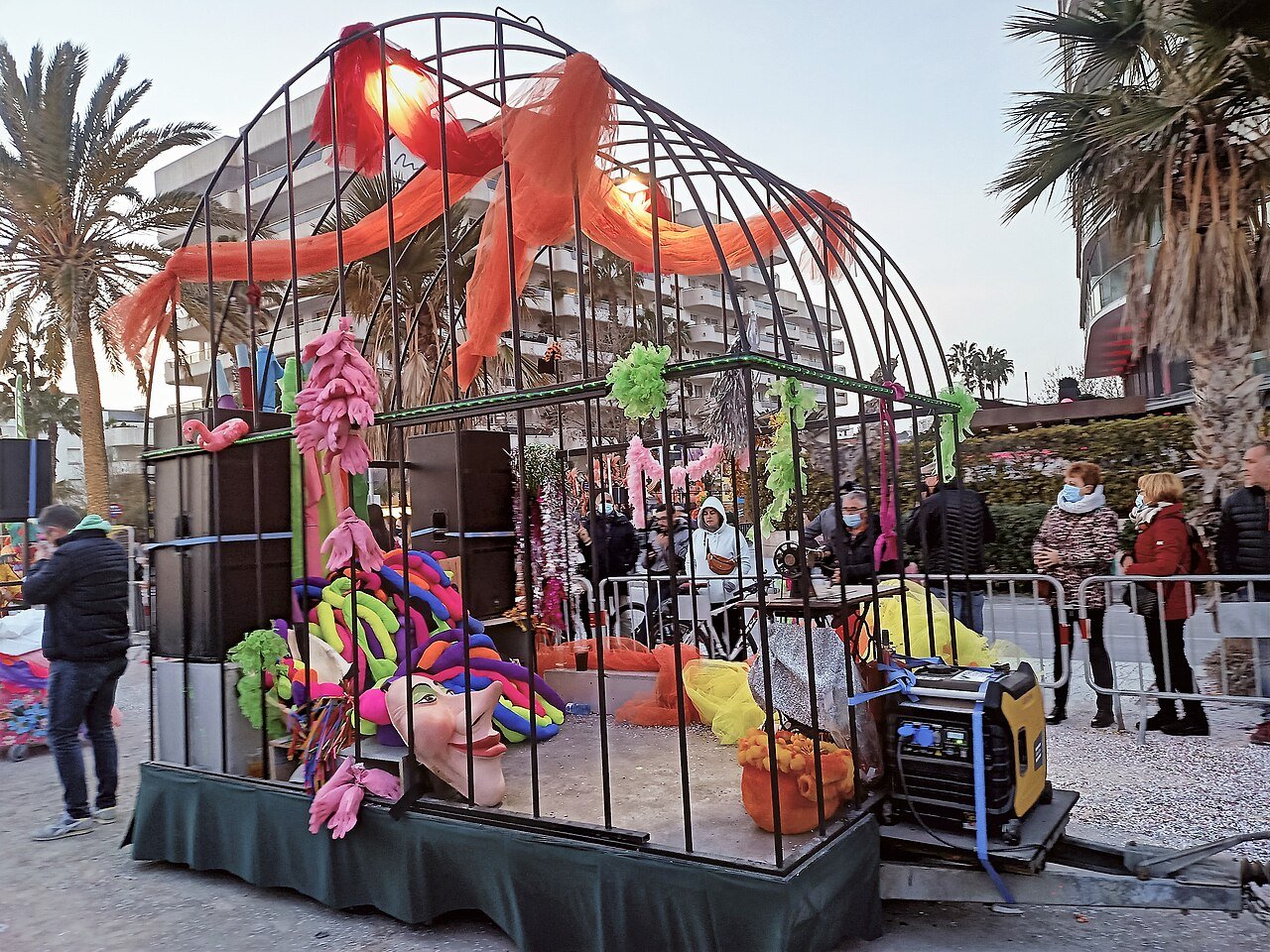
The Rua de la Disbauxa — the Debauchery Parade — rolls on Carnival Sunday, 7 February, and the Rua de l’Extermini closes the show on Shrove Tuesday, 9 February: hours of illuminated floats, feathered colles dancing behind trucks rigged with speaker stacks, and the whole town in costume, both nights starting after dark and running late. Wednesday brings the punchline: the Enterrament de la Sardina, the Burial of the Sardine, a mock funeral procession that carries the King’s effigy — and a giant sardine — down to the beach to mark the start of Lent. ⚠ The week’s skeleton is fixed by the church calendar and those dates are certain; the town publishes the confirmed 2027 programme, parade start times and route details closer to the day. Practicalities: Rodalies trains run from Barcelona Sants and Passeig de Gràcia in about 35–40 minutes and are famously packed on parade nights — go early, expect standing room, and check the extra night services laid on for the return. Sunday afternoon also has a children’s rua, the family-friendly version. Book Sitges accommodation months ahead if you want to sleep there; most visitors day-trip, and honestly, the train ride home at 2 a.m. with a carriage full of glitter is part of the tradition.
2. Watch Poblenou Glow at Llum BCN
For three evenings each February, Barcelona’s old industrial district becomes a laboratory of light. Llum BCN, the city’s festival of light arts, fills the streets, courtyards and factory yards of Poblenou and the Glòries edge with around thirty installations — vast projections on warehouse walls, lasers through smoke, glowing sculptures in forgotten lots — by international artists and by the city’s own design and architecture schools. It is completely free, entirely outdoors, and walked as a route: pick up the map, follow the crowds from piece to piece, and watch a neighbourhood you might never otherwise visit become the most interesting place in the city. Recent editions ran from 19:00 to midnight on the Friday and Saturday and to 23:00 on the Sunday, and drew the whole city out into the February dark.
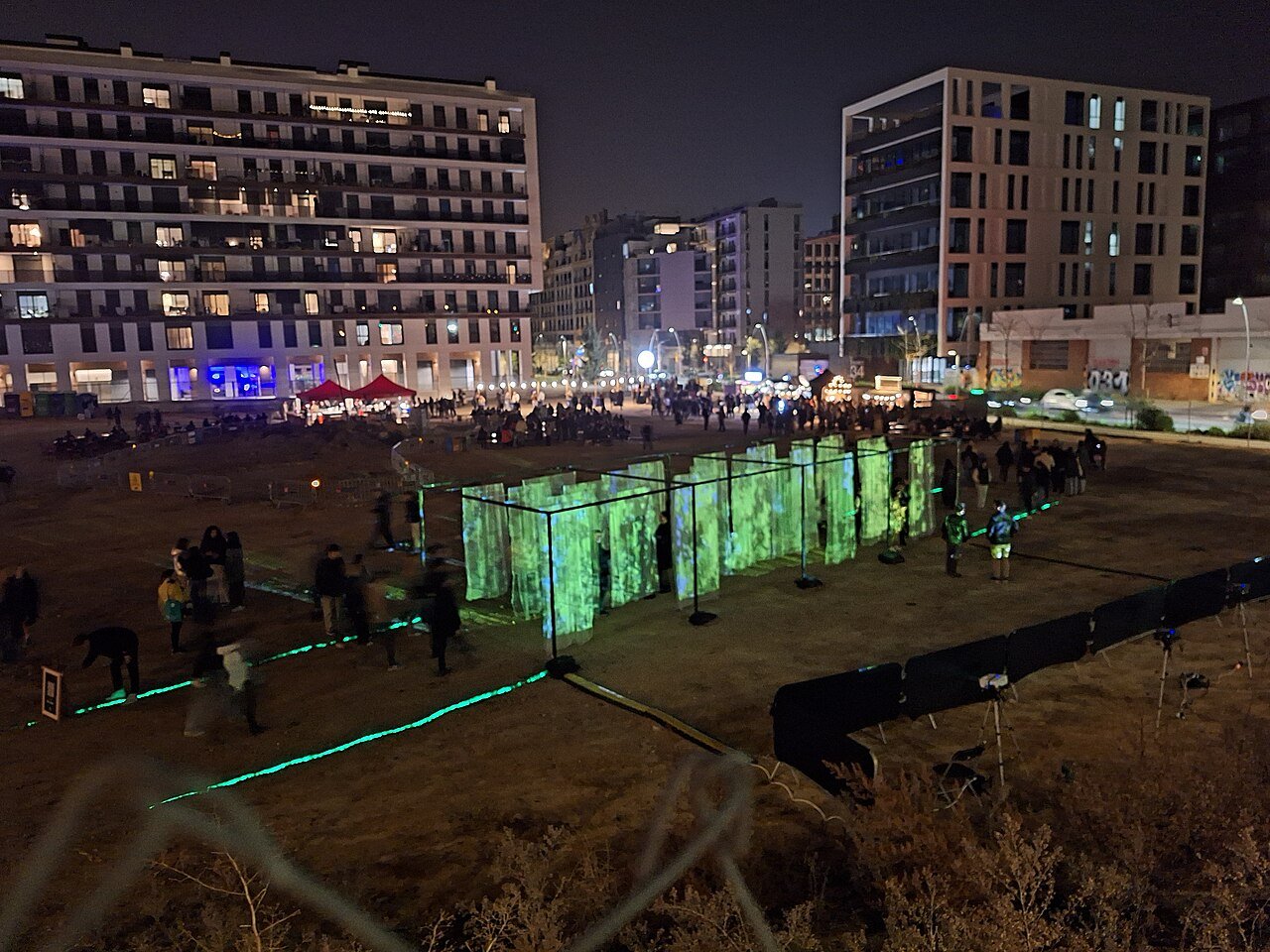
⚠ The 2027 dates and line-up had not been announced when this guide was written. The pattern of recent years — the 2026 edition lit up the weekend of 6–8 February — puts it on a weekend in the first half of the month, close to the Santa Eulàlia festivities, so check the festival site when you book and plan one evening around it. Go on the Friday for the thinnest crowds or accept the Saturday crush as part of the show; wrap up properly, because the installations reward slow walking and the February night is cold by 22:00; and use the metro to Llacuna or Poblenou (L4) rather than fighting for the streets around Glòries. If the month gives you one after-dark plan that is not dinner, this is it — the descendant of the city’s Christmas lights, grown up into an art form.
3. Use the Free-Museum Sunday: 7 February
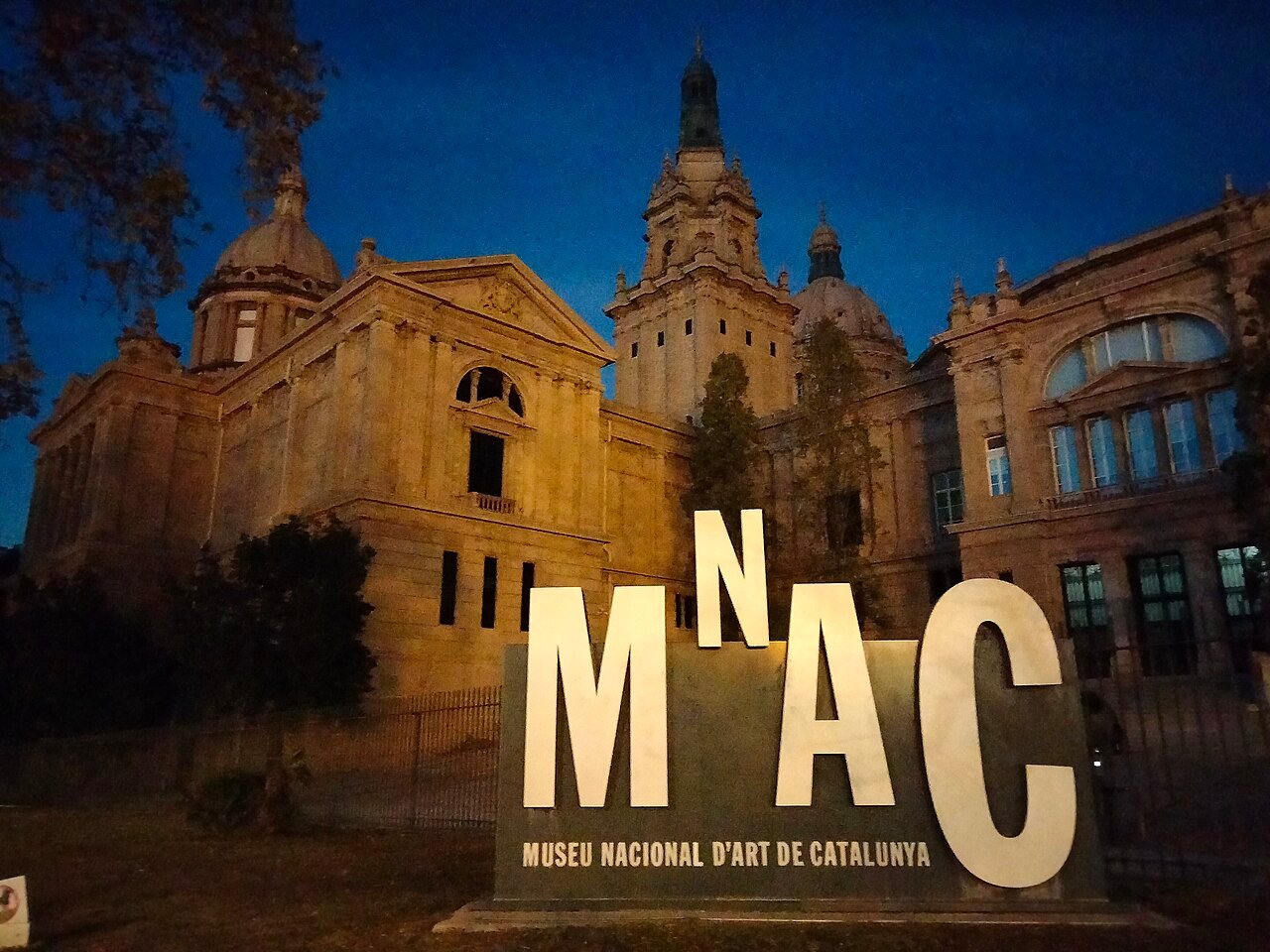
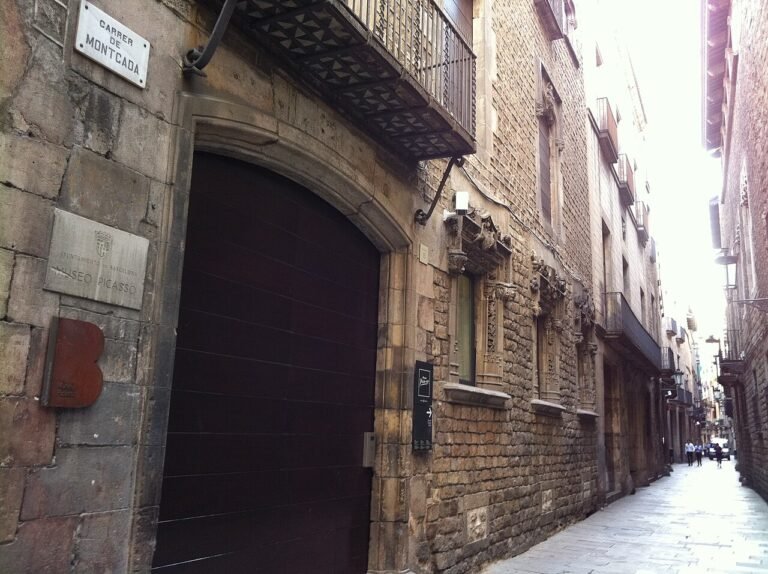
February repeats January’s best trick and adds a twist: the month’s first Sunday falls on 7 February 2027, and many of Barcelona’s biggest museums open free on the first Sunday of every month — but this time the date is also Carnival Sunday, which means half the city is on a train to Sitges and the museums get their quietest free day of the winter. The Museu Picasso leads the list, its Gothic palaces on Carrer de Montcada calm enough in the morning to actually stand in front of the early works; free first-Sunday entry is claimed online in advance, so book the moment places are released rather than queueing on the day. Up on Montjuïc, the Museu Nacional d’Art de Catalunya (MNAC) runs the same first-Sunday pattern, and its terrace cafe has the museum view of the city — February’s clear air makes it one of the great free panoramas going.
Plenty of the municipal museums also open free on Sunday afternoons through the month, which stretches the tactic across every Sunday of your trip. The strategy from January still holds: choose one big museum, arrive at opening, and keep the rest of the day for its neighbourhood — the Born’s lanes after the Picasso, the Montjuïc gardens after the MNAC. Just remember the date’s double life: if you are Sitges-bound for the night parade, do the museum when the doors open and be on a mid-afternoon train; you can be back among the Barri Gòtic’s quiet stones by morning. The full list of the city’s no-cost wins is in our guide to free things to do in Barcelona.
4. Honour Santa Eulàlia at the City’s Winter Festa Major
Every city gets the patroness it deserves, and Barcelona’s is a thirteen-year-old martyr with a festival to match. Santa Eulàlia — La Laia — is the city’s co-patroness, and her feast day, 12 February, anchors the Festes de Santa Eulàlia, Barcelona’s festa major d’hivern: the great winter festival that ranks second only to La Mercè in September. Her relics rest in the crypt of Barcelona Cathedral, in whose cloister thirteen white geese are kept — one for each year of her life — and for the days around her feast the old town fills with the full cast of Catalan popular culture: gegants and capgrossos dancing in the squares, the Àliga, the city’s ceremonial eagle, processing by torchlight, sardana circles in front of the cathedral, castellers building human towers in Plaça de Sant Jaume, and a correfoc sending sparks down the lanes after dark.
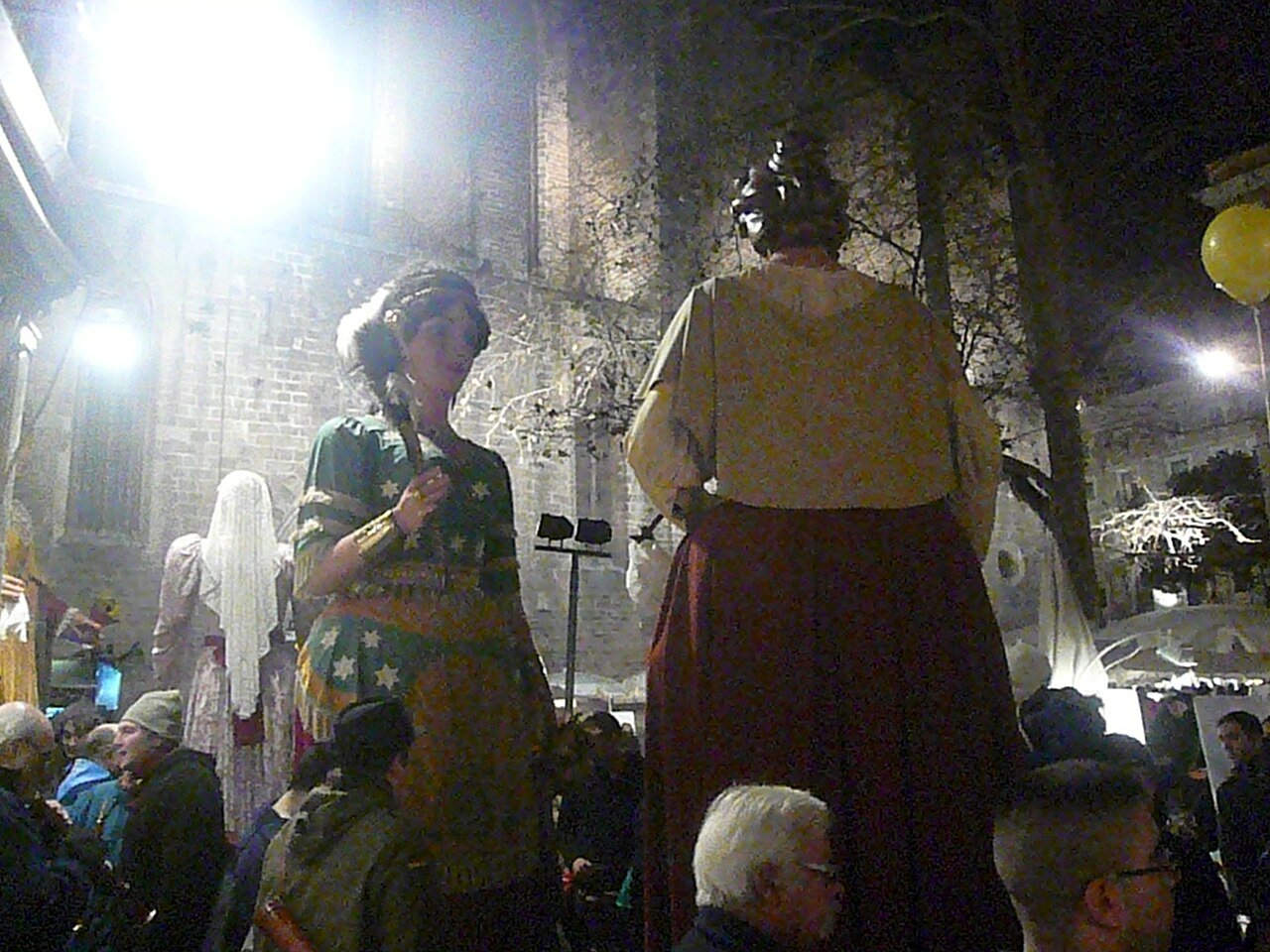
⚠ The 2027 programme was unpublished when this guide was written — the city confirms the running order nearer the day — but the shape of recent editions is reliable: events spread across the days around the 12th, with the biggest weekend programme on the Saturday and Sunday. In 2027 the feast day itself falls on a Friday, so expect the giants’ gatherings, the diada castellera and the fire-run to concentrate on the weekend of 13–14 February. Look out in particular for the Passejada de les Laies, when every giantess named Laia in the city walks together, and for the open days the festival brings: the Ajuntament and several museums and historic buildings traditionally throw their doors open free around the festes. It is the most local weekend of Barcelona’s winter — a festival run by neighbourhoods and colles, aimed at the city’s own children, with tourists a welcome minority. If you do one culturally Catalan thing this trip, plant yourself in Plaça de Sant Jaume when the towers go up.
5. Do Carnival the Barcelona Way: a King, an Omelette and a Buried Sardine
Barcelona does not try to out-party Sitges; it does something older and odder. The city’s own Carnaval opens on Dijous Gras, Thursday 4 February, with the Arribo: Rei Carnestoltes, the King of Carnival — a grotesque, grinning figurehead of appetite — arrives with his entourage to read the edict that suspends good behaviour for a week. Fat Thursday is also a food festival in disguise: the traditional plate is botifarra d’ou, a pale sausage made with egg, alongside tortilla española still warm from the pan and coca de llardons, a sweet, crackling-topped flatbread scattered with pine nuts. Bakeries and market stalls stock all three for exactly one week a year, and eating them is not optional.

Through the weekend the carnival decentralises into the neighbourhoods — Sants, Gràcia, Sarrià, the old town — each with its own rua, its own costumes and its own brass-and-drums soundtrack, smaller and more family-run than Sitges but all the more charming for it; in recent years the King’s arrival itself has been hosted by a neighbourhood rather than the centre, and the parades happen where people actually live. Then, on Ash Wednesday, 10 February, comes the ceremony that gives the week its strange poetry: the Enterrament de la Sardina, the Burial of the Sardine, when a satirical funeral cortege — widows in black veils wailing theatrically over a coffin shaped like a fish — processes to bury the sardine and close the season of indulgence before Lent. Barcelona’s central ceremony traditionally gathers in and around the Parc de la Ciutadella, with neighbourhood burials across the city besides. ⚠ The city publishes the 2027 carnival programme — the Arribo’s venue, the rua times, the sardine’s exact route — with the festive calendar closer to February; the dates themselves are fixed by Lent and do not move. Go to Sitges for the spectacle, by all means — but spend one evening doing carnival where the Barcelonans do it.
6. Run — or Cheer — the Half Marathon (14 February)
On Sunday 14 February 2027, Barcelona hands its grandest avenues to forty thousand runners. The Mitja Marató — officially the Hyundai Mitja Marató Barcelona by Brooks — is one of the fastest half marathons on earth: a flat, single-loop course from Passeig de Picasso beside the Ciutadella, out through the Eixample and up the Diagonal, along the seafront and back through Poblenou, held on streets so quick that in 2025 Jacob Kiplimo ran the world record here, 56:42, the first half marathon ever under 57 minutes. The 2027 race is the 37th edition, a World Athletics Gold Label event, and it starts at 08:30 with the city still in its winter-morning gold. Entries opened in May 2026 and the full 40,000 bibs were gone within days, so if you are reading this without one, the realistic routes are the organisers’ official resale marketplace — or the pavement, which is free and nearly as much fun.

Spectating is a genuine February pleasure: plant yourself on Passeig de Sant Joan under the Arc de Triomf as the field streams through, drift down to the seafront for the fast kilometres along the water, and finish at the Ciutadella for the last stretch, where the crowds thicken and the noise is wonderful. Practical notes: much of the centre is closed to traffic on race morning, the metro is the only sane way to move, and the cafes along the route do their best business of the winter. And a word for the romantics: yes, it is Valentine’s Day — but Catalonia does its lovers’ festival properly, with books and roses, on Sant Jordi’s day, 23 April. The 14th here belongs to the runners.
7. Eat a Calçotada at the Peak of the Season
January opened the calçot season; February is its beating heart. This is the month when the calçots — those long, sweet, earth-mounded spring onions — are at their fattest and sweetest, when every masia restaurant in the Collserola hills and half the neighbourhood associations in the city are running a grill, and when the ritual reaches its full, sooty glory: bundles blackened over open flame, wrapped in newspaper to steam, tipped onto roof tiles, peeled with the fingers, dangled overhead and drowned in romesco — the brick-red salvitxada of roasted peppers, tomato, almond and hazelnut — before the grilled meats, beans and artichokes arrive and the porró of wine starts its rounds. February’s community calçotades, run by local associations in courtyards and civic centres across the city, are the insiders’ version: long trestle tables, paper bibs, everybody’s hands black by the second bundle.

The set-menu route is just as good and easier to book: farmhouse restaurants in the hills and grill houses in town serve the full sequence through the season, typically somewhere around €30–45 a head (⚠ typical published ranges, not a fixed price — every house sets its own). February weekends are the peak of the peak, so reserve several days ahead, and if your trip includes a Sunday, that is the day the whole city seems to be eating outdoors at long tables. Wear something that forgives charcoal, skip the white shirt, and learn the one rule that matters: the calçot is eaten with your fingers, in the air, and nobody at the table is watching their manners. January’s guide sent you to Valls for the season’s opening party; February needs no pilgrimage — the feast has come to you.
8. See the Big Sights in February’s Low, Clear Light
February’s sightseeing argument is about light as much as queues. The sun is still low in the southern sky all day, and inside the Sagrada Família it does in February what it does in no other season: pours through Gaudí’s stained glass at a raking angle, cool blue-green from the eastern windows in the morning and a slow fire of reds and golds from the west in the afternoon, painting the stone forest in colour for hours at a time. The building itself is at its winter quietest — timed tickets bookable at civilised hours, room to stand back in the nave — and the full room-by-room picture is in our guide to inside the Sagrada Família. Park Güell runs the same way: the Monumental Zone (€18 at the official 2026 price, reductions for children and seniors, under-7s free with a ticket) bookable at short notice, the mosaic terrace shared with dozens rather than thousands, and the free outer park at its greenest after the winter rains.
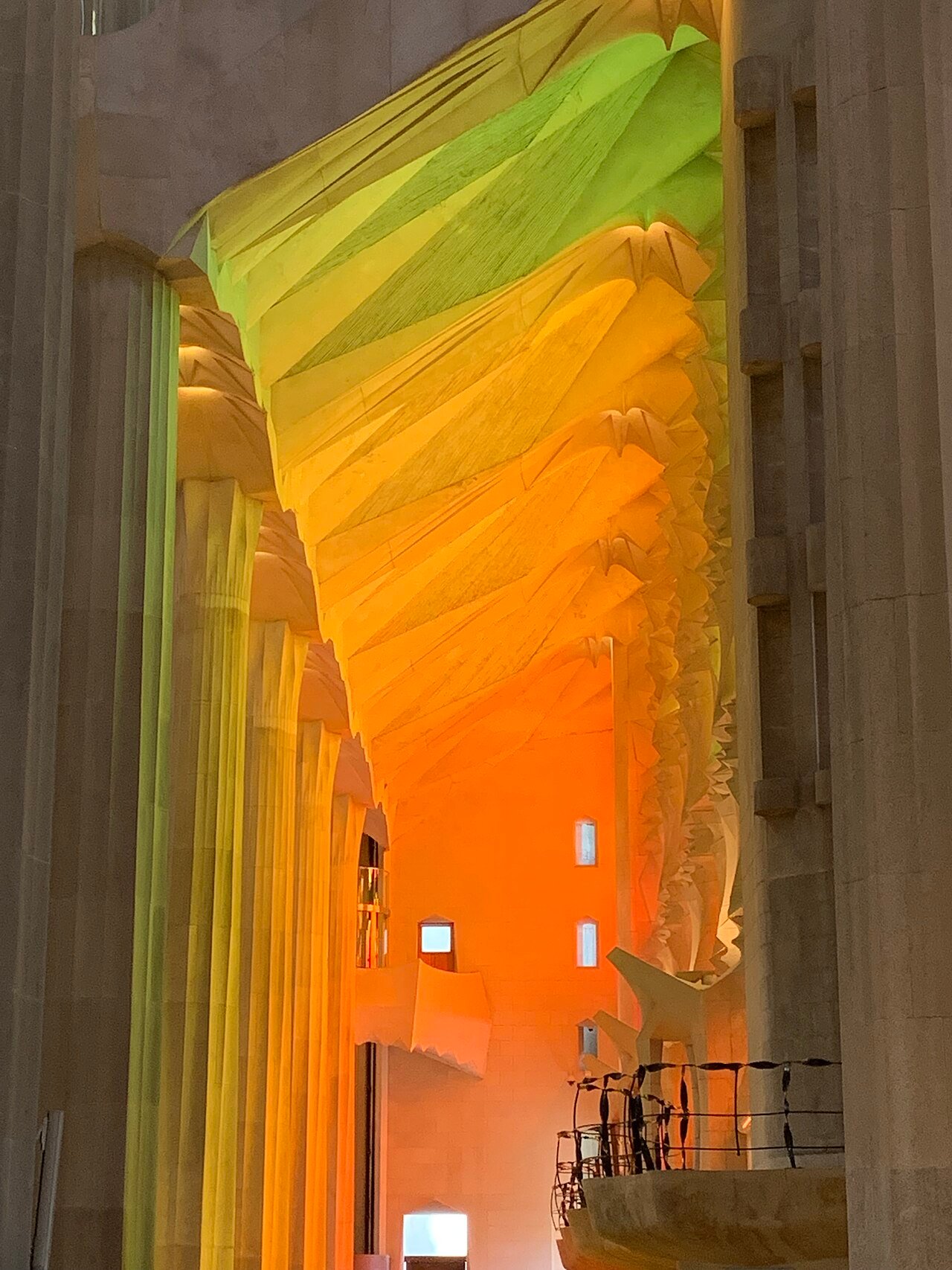
Casa Batlló and Casa Milà, the Gothic Quarter’s museums and the cathedral all breathe the same February sigh of relief. One honest warning: the month has a single busy pulse you should plan around. The Santa Eulàlia weekend and the half marathon coincide with school half-term holidays in parts of northern Europe, and for those few days — roughly 12–15 February — the big sights fill noticeably and the best hotel rates vanish. Either join that weekend knowingly, festival-first, or slide your sightseeing to the month’s first week or its last, when Barcelona empties again and February becomes the cheapest, calmest version of itself. Book the Sagrada Família and Park Güell online ahead in any week of the month; February forgives spontaneity almost everywhere else.
9. Take the Train to Girona for a Winter’s Day
If February gives you one day out of the city, spend it in Girona. Ninety kilometres north, Catalonia’s loveliest small city does winter beautifully: morning mist on the Onyar burning off the rows of ochre and terracotta houses, the cathedral — possessor of the widest Gothic nave in the world — standing over the old town in hard, clear light, and the Call, the medieval Jewish Quarter, at its most atmospheric when its lanes are empty and the stone is cold. Climb to the city walls for the view back over the rooftops, cross the red iron lattice of the Pont de les Peixateries Velles for the postcard shot of the river houses, and order a xuixo, Girona’s sugar-dusted, cream-filled pastry, from the nearest pastisseria before you even think about lunch. Our Girona day trip from Barcelona guide walks the whole day, street by street.

The doing is easy: high-speed trains from Barcelona Sants cover the trip in as little as 38 minutes, with slower regional services for a few euros less. The easy way to add the coast is the trip built for it: the Girona and Costa Brava small-group tour — an 8-hour day with hotel pickup that pairs a guided walk through Girona’s Roman and medieval quarters with the medieval village of Pals and the fishing village of Calella de Palafrugell on the Costa Brava, rated 4.8 out of 5 across 2,115 reviews. In February the Brava is the locals’ version of itself — shuttered beach clubs, empty coves, the Camí de Ronda coastal path all yours — and it is worth the trip precisely because the summer crowds would not recognise it.
10. Hunt the First Blossom in the Penedès Hills
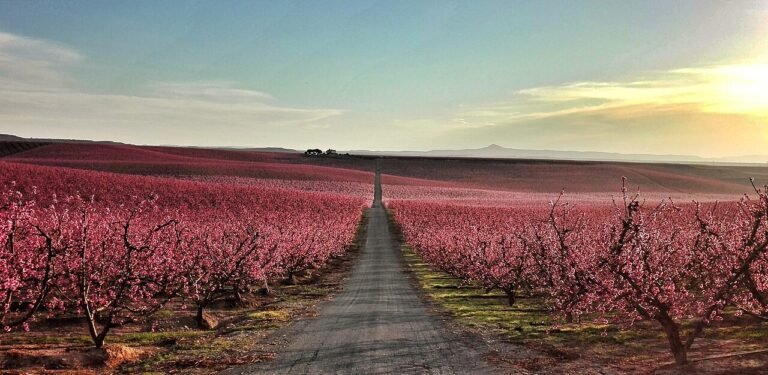
Some time in February — earlier in a mild winter, later in a cold one — the countryside west of Barcelona does the most hopeful thing in the Catalan year: the almond trees blossom. Before a single leaf appears, the bare orchards of the Penedès wine country break into clouds of white and shell-pink, whole hillsides around Torrelles de Foix and Sant Martí Sarroca flowering against a backdrop of vines and the Montserrat ridge. It lasts a few short weeks, it is utterly free, and Catalans treat the first blossom the way northern Europeans treat the first swallow: as documentary proof that winter is ending. The Penedès is an easy run from the city — under an hour by car, or by train towards Vilafranca del Penedès with a local hop — and it pairs naturally with a cava-town lunch in Sant Sadurní d’Anoia on the way home.

⚠ Blossom is weather, not calendar: it follows the winter’s cold, and a mild January can pull the peak forward a fortnight while a cold snap holds it back, so check local reports the week you travel and treat any fixed date — including ours — as an estimate. In the city itself, keep an eye on the almond trees in the gardens of Montjuïc and the park corners of the Eixample, which flower on the same early schedule. And if your trip runs to the very end of the month, the show is already moving west: the peach orchards of Aitona, in the Segrià, begin their famous pink floració on February’s tail, ahead of the March peak. Go for the almond blossom; stay for the feeling that you have caught spring in the act of arriving.
11. Shop the Winter Sales’ Last Clearance
The rebaixes that opened on 7 January end the way all great sales end: in a final, ruthless clearance. Through February the winter sales run down towards their traditional close at the end of the month, and the last fortnight is when the signs in the windows change to remate final and the discounts go where they have not gone before — 60, 70, occasionally 80 per cent off the original price on the rails that remain. The bargain is real and so is the catch: sizes are broken, the best pieces went in January, and what is left is the bold, the odd and the overlooked. For a certain kind of shopper, that is not a warning; it is the whole point.

Work the same map as January, harder: Portal de l’Àngel for the high-street names clearing their winter stock, Passeig de Gràcia for the flagships’ final reductions, El Corte Inglés on Plaça de Catalunya for everything under one roof, and the indie streets of El Born and Gràcia, where local designers clear small runs at prices that will not survive March. ⚠ The exact closing date is each shop’s own — chains and independents wind down on their own schedules through the month’s last days — so treat the final weekend of February as the last reliable window. Weekday mornings remain the calmest time to shop, and by the last week the fitting rooms are empty. Fly home with the suitcase you cleverly left half-empty on the way out; February is when it pays off.
12. Take a Terrace in the First Spring Sun
End the month where Barcelona ends every winter: outdoors, at a table, facing the sun. Late February’s afternoons are the year’s first terrace weather — the day runs past eleven hours now, sunset does not come until nearly 18:40, and on a calm, clear 17 °C afternoon the south-facing terraces of the Barceloneta and the old town fill with people performing the city’s favourite ritual: the vermouth hour, a small red drink, a bowl of olives, and absolutely nowhere else to be. The seafront promenade runs at its friendliest — runners, cyclists, dog-walkers, the winter swimmers’ clubs taking their constitutional plunge in a sea that is still at its annual coldest, around 13–14 °C, and is best honoured from behind a coffee. This is not beach season and February does not pretend otherwise; it is promenade season, and it is lovely.

Build the afternoon the way the month deserves: a slow walk from the W Hotel up through Port Olímpic towards Poblenou, a long lunch of rice in the old fishing quarter — the beaches guide on this site maps the strip beach by beach; read it in February as a walking-and-lunching guide — and a last coffee as the light goes. Keep one eye on the wind: a tramuntana day can strip five degrees off the feel of the afternoon and send everyone back inside. But when the month closes with one of its still, golden evenings, you will understand why the Barcelonans endure their short winter so cheerfully. They know what it is the overture to.
Which of the 12 Fits Your Trip?
| Your trip | Don’t miss | Also add |
|---|---|---|
| The carnival trip (4–10 Feb) | Sitges’ two night parades (§1), the sardine’s burial (§5) | The free-museum Sunday before the Disbauxa (§3) |
| The festival weekend (12–14 Feb) | Santa Eulàlia’s giants and towers (§4) | The half marathon on Sunday morning (§6) |
| The party trip | The Rua de l’Extermini in Sitges (§1), carnival in the neighbourhoods (§5) | Llum BCN’s glowing evenings (§2) |
| The culture trip | The free Sunday at the Picasso and MNAC (§3) | Llum BCN (§2), Santa Eulàlia’s open days (§4) |
| The food trip | A peak-season calçotada (§7) | Dijous Gras: botifarra d’ou and coca de llardons (§5) |
| The bargain break | The sales’ last clearance (§11) | The month’s cheapest hotel weeks, before the congress (see Costs) |
| The quiet-city trip | The big sights in winter light (§8), Girona (§9) | Almond blossom in the Penedès (§10), a terrace in the sun (§12) |
What February in Barcelona Costs
February is January’s equal for value — with one sharp exception at the month’s end:
- Free: Llum BCN (§2), many major museums on the first Sunday, 7 February (§3), the Santa Eulàlia street festival and its open days (§4), Barcelona’s carnival parades and the Burial of the Sardine (§5), spectating at the half marathon (§6), the almond blossom (§10) and the seafront promenade (§12).
- Sitges Carnival (§1): the parades are free to watch; the cost is a Rodalies train ticket of a few euros each way (around €5) and whatever the costume costs you in dignity.
- Girona (§9): the Girona and Costa Brava small-group tour runs from $110 per person (about €100) for the 8-hour guided day with hotel pickup, rated 4.8/5 across 2,115 reviews. The DIY version is a high-speed train from Sants, bookable from under €10 each way bought ahead.
- The big sights (§8): Park Güell’s Monumental Zone is €18 at the official 2026 price; the Sagrada Família and Gaudí houses are standard timed tickets — in February you are buying availability, not discounts.
- Eating the season (§§5, 7): Dijous Gras’ botifarra d’ou and coca de llardons cost bakery money; a full calçotada menu typically runs around €30–45 a head (⚠ typical published ranges — each house sets its own).
- Hotels and flights: the first three weeks sit at the year’s softest rates alongside January — then Mobile World Congress (1–4 March, confirmed by the GSMA) sends prices climbing from the last weekend of February as a hundred thousand delegates arrive early. Book the month’s final days first; they only get dearer.

Barcelona in January: 12 Things to Do, From the Three Kings Parade to Calçotada Season
Travel insurance, sorted
Whether it is a two-week holiday or a longer move, travel insurance is not the most glamorous part of a trip — but it is the one booking you want to have in place before a trip, and while you are already away. Get a quote from SafetyWing
Final Thoughts
February is the month Barcelona stops hibernating and starts rehearsing for spring — loudly. It gives you a carnival by the sea and a carnival in the neighbourhoods, a saint’s festival of giants and fire, a forest of light in Poblenou, a world-class race on closed avenues, the calçot grill at full blaze and the almond trees in flower, all wrapped in the year’s clearest light and, for three of its four weeks, its lowest prices. If January was the collector’s edition, February is the city with its sleeves rolled up. And if your trip bridges the two, our guide to Barcelona in January picks up the season where this one starts. Pack the coat, book the free Sunday, learn to peel a calçot — God willing, February will do the rest.
FAQs
Is Barcelona cold in February?
Cool, not cold: daytime highs average around 15–16 °C (59–61 °F) and nights around 7 °C (45 °F), with only three or four rainy days in a typical month and long runs of clear sky. A mid-weight coat and layers cover it; by the last week, sunny afternoons feel like early spring.
When is the Sitges Carnival in 2027?
It runs from Dijous Gras, Thursday 4 February, to Ash Wednesday, 10 February 2027. The big parades are the Rua de la Disbauxa on Sunday 7 February and the Rua de l’Extermini on Tuesday 9 February, both at night, and the week closes with the Burial of the Sardine on the 10th.
What is the Santa Eulàlia festival?
It is Barcelona’s winter festa major, honouring Santa Eulàlia, the city’s co-patroness, whose feast day is 12 February. Expect giants and big-heads, human towers in Plaça de Sant Jaume, sardana dancing, a fire-run, and free open days at historic buildings — the programme concentrates on the days around the 12th.
What is Llum BCN, and when does it happen?
Llum BCN is Barcelona’s free festival of light arts: around thirty installations by artists and design schools lighting up the Poblenou district for three evenings, walked as a route. It falls on a February weekend near the Santa Eulàlia festivities — in 2026 it ran 6–8 February; the 2027 dates are announced by the city closer to the time.
Is February a good month to visit Barcelona?
For festivals per square metre, it may be the best month of the winter: two carnivals, the city’s own festa major, a light festival, the half marathon and peak calçot season, at low-season prices and crowd levels. The trade-offs are a sea too cold to swim in and one busy, pricier spell around the Santa Eulàlia and half-marathon weekend — plus rising hotel prices as the Mobile World Congress approaches in March.
What should I pack for Barcelona in February?
Layers for a month of two halves: a warm coat, scarf and closed shoes for the mornings and the carnival nights, sunglasses and a lighter jacket for the terrace afternoons, and a costume — or at least a mask — if you are going anywhere near Sitges. Leave room in the case for the sales’ last clearance.




One Comment