Barcelona in October: 12 Things to Do, From the Sitges Film Festival to the Castanyada
October is the month Barcelona exhales. The heat breaks, the cruise-ship tide recedes, hotel prices step down off their summer cliff — and the city fills the space with the best festival calendar of its autumn: a free-museum Sunday on 3 October, the fantastic-film festival down the coast in Sitges, the national holiday on Tuesday 12 October, two neighbourhood festes majors, a weekend when more than 200 normally locked buildings open their doors free, mushroom season in the markets, and a month that ends with Halloween colliding gently with the Castanyada, Catalonia’s chestnut-and-marzipan All Saints’ feast. The sea is still swimmable in the first half of the month, the Gaudí sights run at a human pace, and if you came in September season, this is that same golden city with the volume turned down one more notch and the evenings turned properly autumnal.
Timing one anchor well shapes the whole trip. Build the Sitges day around the festival if it lands on your dates — the small-group Tarragona & Sitges tour strings the Roman capital and the film town into one long day (11 hours, rated 4.6/5 across 83 reviews, free cancellation up to 24 hours before), with Tarragona’s aqueduct, walls and circus in the morning and Sitges from mid-afternoon — though Sitges is also an easy 40 minutes by train if you want the festival on your own schedule. Here is the month in full: the free Sunday, the last swims, the holiday, the open doors, the mushrooms and the chestnuts.
The Short Version
Fly in on Friday 1 October and your first weekend hands you the month’s best freebie: Sunday 3 October is the free-museum Sunday. Spend the first half of the month swimming — the sea starts around 21–22 °C — and do the Gaudí sights now, when the queues shrink back to reasonable. Down in Sitges, the fantastic-film festival runs in early-to-mid October on the established pattern (⚠ the 60th edition’s 2027 dates were unpublished when this guide was prepared). Tuesday 12 October is the national holiday: sights open, shops shut, and locals bridge the Monday for a four-day weekend. Sarrià and Les Corts hold their festes majors in the first half of the month. Late October brings 48h Open House (pattern: the last full weekend, 23–24 October in 2027 — ⚠ dates to be confirmed), mushroom season peaks in the markets, and the month closes with Halloween on Sunday 31 October folding into the Castanyada — chestnuts, panellets and Monday 1 November off for All Saints. One day out of the city covers Tarragona and Sitges together; another covers Montserrat in autumn quiet. Daylight shrinks from about eleven and a half hours to about ten and a half — plan the sightseeing early, the evenings long.
What Is the Weather Like in Barcelona in October?
Proper autumn, arriving in two acts. The first half of the month still feels like late summer — afternoons around 22–24 °C, T-shirts at midday, the sea warm from three months of sun. The second half turns: evenings need a real jacket, the first proper rain of the season usually arrives at some point, and by the Castanyada the city smells of roasting chestnuts. Rain averages around 40 mm across roughly five wet days — when it comes it can arrive as a short, heavy downpour rather than drizzle, so pack a compact umbrella and one pair of shoes that can get wet. The trade-off is the light: October’s lower sun is the kindest of the year on the Modernista facades, and photographers quietly rate this their favourite month.
| Measure | Early October | Late October |
|---|---|---|
| Daytime high | 23–24 °C | 19–20 °C |
| Night-time low | 16–17 °C | 12–13 °C |
| Sea temperature | 21–22 °C | 19–20 °C |
| Rain | Around 40 mm over the month, on roughly 5 days | Same monthly total — showers cluster late month |
| Daylight | Around 11 hours 35 minutes on 1 October | Around 10 hours 25 minutes on 31 October |
The clock change lands mid-trip for late-month visitors: in the small hours of Sunday 31 October the clocks go back an hour (03:00 becomes 02:00), the last tick of summer time — which is why Halloween night gets an extra hour and why 31 October’s sunset arrives before half past six. Fit the month into the year’s bigger picture with our guide to the best time to visit Barcelona.
Contents
- 1. Free-Museum Sunday in Autumn Light (3 October)
- 2. The Gaudí Sights in Their Gentlest Month
- 3. The Last Swims: The Sea in October
- 4. Day Trip: Sitges and Its Fantastic Film Festival
- 5. 12 October: The National Holiday
- 6. Festa Major Season: Les Corts and Sarrià
- 7. Montserrat in Autumn Quiet
- 8. 48h Open House: The City’s Locked Doors Open
- 9. Eat October: Bolets Season in the Markets
- 10. The Cultural Season Restarts
- 11. Halloween, Barcelona Style (31 October)
- 12. La Castanyada and All Saints (31 October – 1 November)
1. Free-Museum Sunday in Autumn Light (3 October)
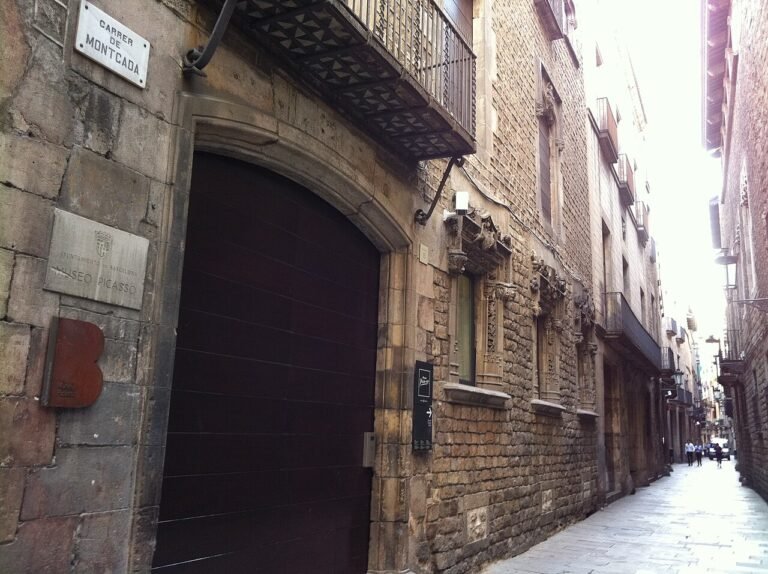
The first-Sunday rule runs all year, but October’s edition might be its best value: the summer crowds that turned free Sunday into a queueing sport have gone home, the light coming through the museum courtyards is autumnal, and 3 October 2027 is a Sunday in the month’s mildest week. The roster is the strong one: the Museu Picasso in its Gothic palaces on Carrer de Montcada, the MNAC up on Montjuïc with the city at its feet, the Fundació Joan Miró, the CCCB and MACBA for contemporary work, the Maritime Museum in the medieval Drassanes shipyards, the City History Museum (MUHBA) with Roman Barcino under its floor, and the Born Cultural Centre — free all day on first Sundays, and free every Sunday after 15:00 for most of the rest.
Run the same discipline as always: one headline museum plus one small one, entry booked or arrived early even now, and the afternoon given to the free city rather than a third queue. October adds a refinement — the Montjuïc museums (MNAC, Miró, the castle above them) reward a morning start, because the hill’s terraces and gardens in October light, with the first leaves turning, are half the visit. The Fundació Miró’s roof terrace, with its sculptures against the whole city, is the free Sunday’s best free view.
Our free things to do in Barcelona guide holds the full list, the timings and the booking rules — October is simply the month where the system works most comfortably.

2. The Gaudí Sights in Their Gentlest Month
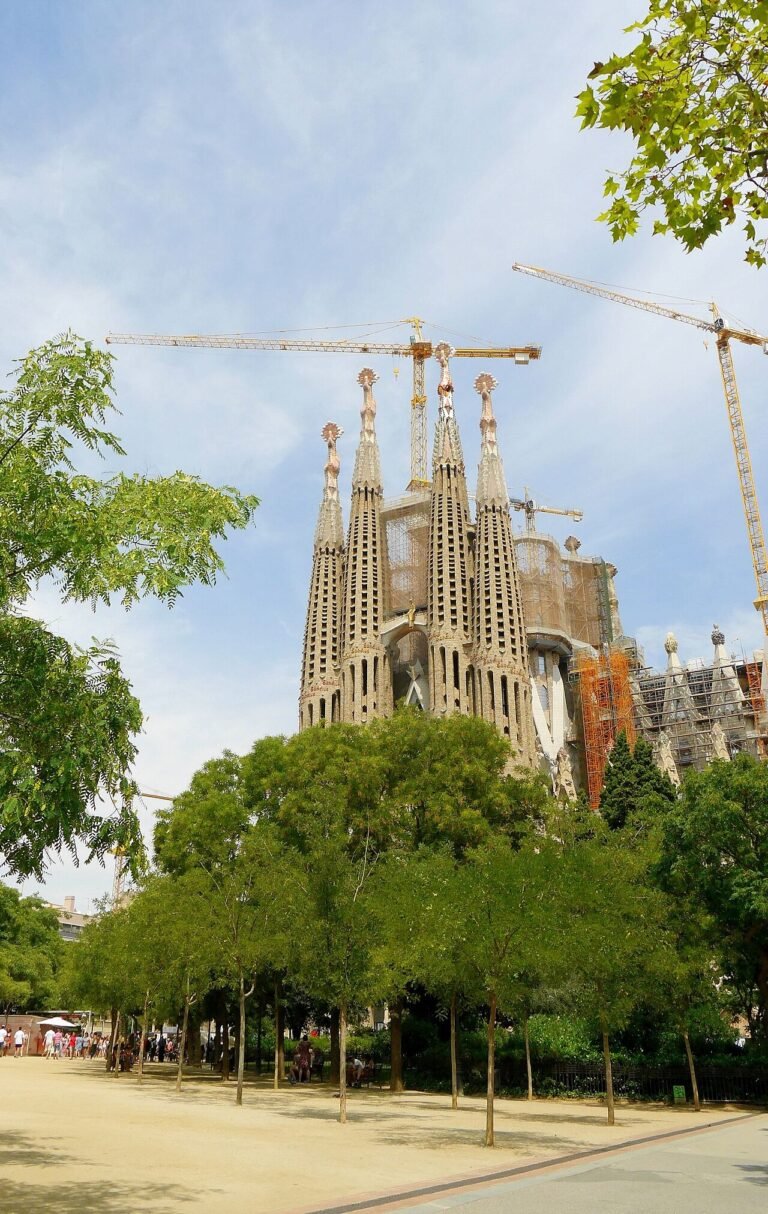
If the Gaudí circuit has a best month, a strong case says October. The reservation system still rules — timed tickets, booked ahead — but the crush inside the Sagrada Família eases to the point where you can stand in the forest of columns and simply look up, Casa Batlló’s dragon-back roof comes without the August shuffle, and Park Güell’s monumental zone returns to something like the park its neighbours use. Temperatures help too: the basilica’s towers and the Pedrera’s warrior-chimneyed roof terrace are pleasant in 21 °C in a way they never are at 31 °C.
Keep the strategy from the warmer months, relaxed a notch. Book the Sagrada Família first, morning light if you can — October’s lower sun rakes through the west windows earlier in the afternoon, and the amber-and-red hour now lands around 17:00 rather than evening. Pair Casa Batlló with the Block of Discord at a stroll, take La Pedrera at opening or in the late afternoon, and give Park Güell a weekday morning, when Güell’s plaza belongs to dog-walkers and the odd school group.
What changes most is the margin for error: sold-out slots still happen at weekends and across the 12 October puente, but midweek October mornings are the forgiving end of the Gaudí year. Our inside Sagrada Família guide has the tower, museum and timing tactics that carry over unchanged.

3. The Last Swims: The Sea in October
October is two beach months in one. The first week or two still belong to the swimmers: the sea holds around 21–22 °C, the sand is warm, the chiringuitos that stay open do so to half-empty terraces, and a midday dip followed by lunch in the sun is a completely honest plan. Then, somewhere mid-month, the season audibly ends — the last beach bars fold their terraces, the volleyball nets thin out, and the beach becomes the city’s long promenade again, with the swimmers reduced to the year-round regulars and the pleasantly stubborn.
Two honest warnings define October swimming. The lifeguard and buoyed-zone season ends in mid-September, so every October swim is unguarded — swim inside the old zone lines, never alone in rough water, and respect any posted flags or warnings exactly as you would in August. And the month’s weather can turn a beach day in an hour when a front comes through; check the forecast the same morning, and swap in a museum day without regret when the wind picks up. None of that cancels the pleasure: an October sea swim, with the beach to yourself and the water still warmer than May’s, is one of the month’s quiet luxuries.
Bogatell and Nova Icària stay the grown-up choices, Barceloneta the lively one, and the full rundown of sand, access and facilities is in our Barcelona beaches guide — just read its summer logistics through October’s quieter lens.

4. Day Trip: Sitges and Its Fantastic Film Festival
For eleven days in early-to-mid October, the elegant beach town 40 minutes south of Barcelona becomes the world capital of horror, sci-fi and fantasy cinema. The Sitges Film Festival — running since 1968 and the leading festival of its kind anywhere — screens hundreds of films (442 in the 2026 edition, which ran 8–18 October) across the Auditori, the Retiro and the Prado, fills the old town with genre fans, and saves its strangest hour for the Zombie Walk, when thousands of the made-up undead shuffle through the streets to general applause. ⚠ The 2027 dates — the festival’s 60th edition — were unpublished when this guide was prepared; the established pattern is early-to-mid October, so check the festival site when you book and aim a Sitges day at its window.
Outside the screenings, festival-week Sitges is simply Sitges at its best: the Fragata beach under the Sant Bartomeu church, the Maricel museum’s sea-facing rooms, the old town’s white lanes, and long lunches that the summer crowds no longer contest. Go by train (about 40 minutes from Sants or Passeig de Gràcia) for the festival itself, so your hours bend around screenings and the Walk.
Or let someone else drive the coast road’s other half. The same Tarragona & Sitges day tour from the intro pairs the two towns in one small-group day — Tarragona’s Roman aqueduct, walls, cathedral quarter and circus passageways in the morning, then Sitges from mid-afternoon with free time for the beach and the old town, back in Barcelona by about 19:30, with free cancellation up to 24 hours before if the festival dates move your plans. More options for days out are in our day trips from Barcelona guide.

5. 12 October: The National Holiday
Tuesday 12 October is the Fiesta Nacional de España, Spain’s national day — the date marks Columbus’s first landfall in the Americas in 1492 — and it is a public holiday in Barcelona as across the country. Know its shape and it becomes an asset rather than a surprise. Most shops close, from the Passeig de Gràcia flagships down to the neighbourhood stores (the Maremagnum mall by the port is the standing exception, open on holidays). Museums, the Gaudí sights and the big attractions open as normal — many run Sunday hours — and restaurants fill at lunch with families doing the holiday properly.
The sharper effect falls on the weekend around it: with the holiday on a Tuesday, half the city takes Monday 11 October as a puente, a bridge day, and disappears to family houses and second homes — while visitors arrive for a long weekend of their own. Book the headline sights, the Sitges trains and any famous lunch table for 9–13 October with the same care you would give a festival weekend, and expect the centre to feel busy while the residential neighbourhoods go village-quiet.
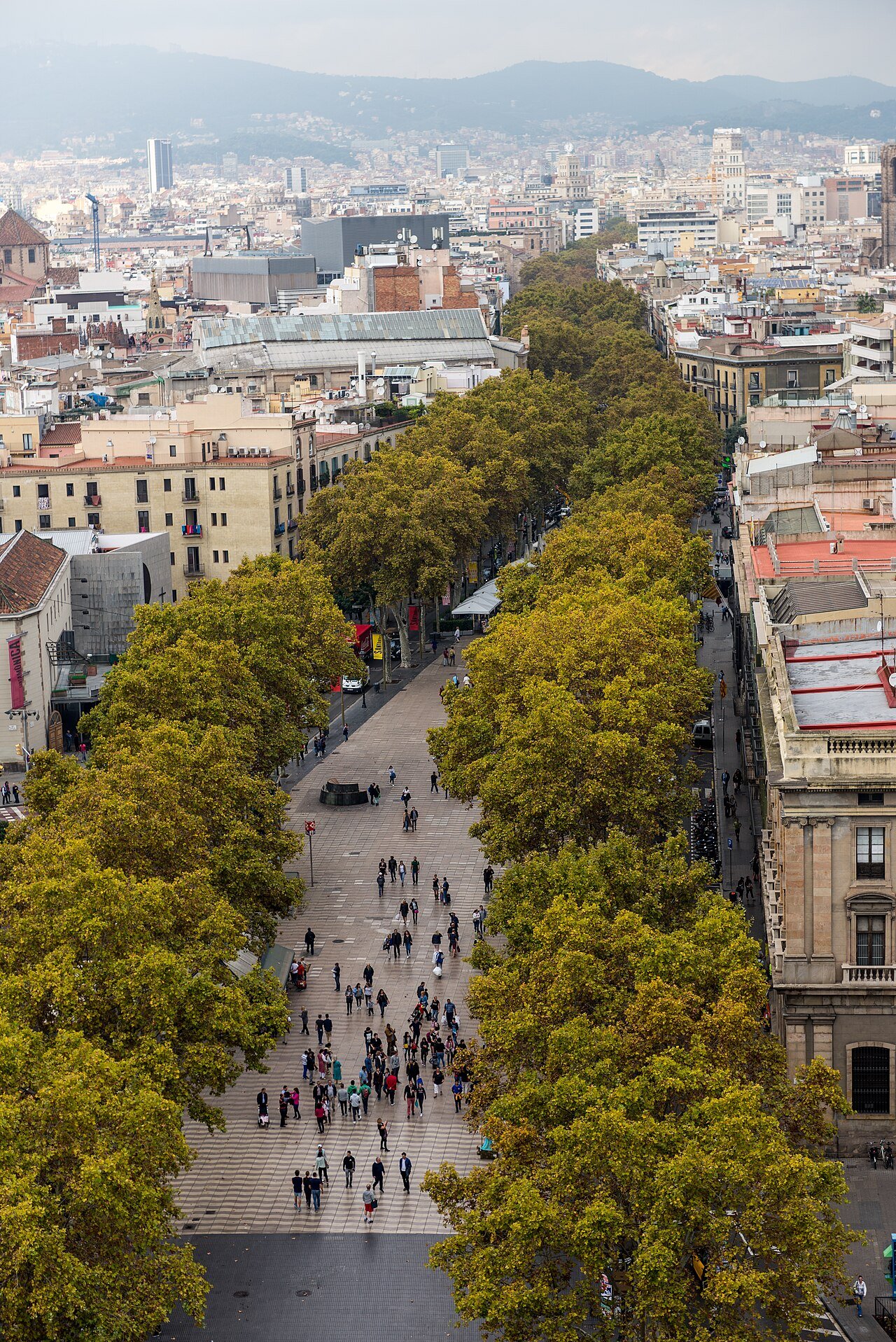
The day itself has a fitting local pilgrimage: Barcelona’s own Columbus monument, the 60-metre column at the foot of La Rambla where the admiral points out to sea, raised for the 1888 Universal Exposition on the spot where he returned to Spain after that first voyage. The little lift inside the column runs to a viewing platform 51 metres up — on the holiday, the queue is the price; on the quiet Tuesday morning after, the view down the Rambla is yours. Note the day is marked differently in Catalonia than in Madrid — there is no big military parade here; Barcelona treats it mostly as a day off in fine autumn weather, which is exactly how a visitor should take it too.

6. Festa Major Season: Les Corts and Sarrià
October is when the festa major calendar reaches the city’s western districts. Sarrià — the old village swallowed by Barcelona a century ago and still stubbornly itself — holds its Festa Major del Roser in the first half of the month, and Les Corts, the district wrapped around the Camp Nou side of town, holds its own festa major in the same early-to-mid-October window. Between them they deliver the full folk programme in its most local register: gegants processing behind a brass band, castellers building human towers in the plaça, sardanes danced in a circle at midday, street dinners, fairground rides for the kids — and at night the correfoc, the fire run, where devil colles swing spark-spitting forks over a crowd dancing underneath in hats and cotton.
These are not spectacles staged for visitors; they are the districts’ own birthdays, which is precisely their charm. Sarrià’s version is the more village-like — its main street and plaça close, the whole programme happens within a few lanes, and the correfoc in the narrow streets is as intense as the form gets. ⚠ The districts publish their exact 2027 programmes in the autumn, close to the dates; the first-half-of-October pattern is reliable, the specific days are theirs to announce — check the district pages when you arrive and fold whichever festa your dates catch into an evening.
Base yourself accordingly: an evening in Sarrià pairs naturally with dinner up in the old village, well away from the tourist centre. Our Sarrià guide covers the village itself — the church square, the market, the pastry shops — festa or no festa.

7. Montserrat in Autumn Quiet
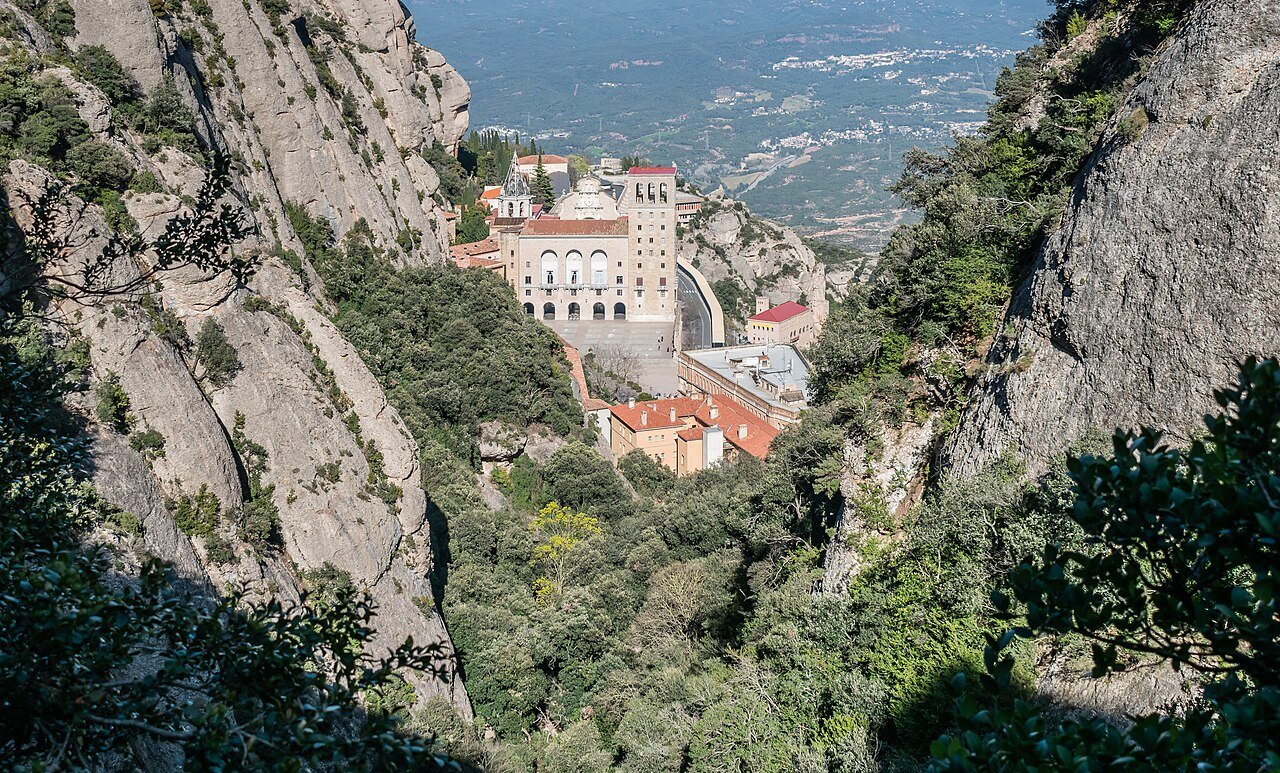
Every month makes its own case for Montserrat; October’s is the walker’s. The serrated mountain an hour inland runs hot and hazy in summer — in October the air goes clear, the paths to the Sant Jeroni summit and the Santa Cova are a pleasure at midday rather than a punishment, and the day-trip crowds thin back to a level where the basilica’s atrium and the Black Madonna’s chapel move at a contemplative pace again. The monastery sits at 720 metres, so take the layer the city didn’t need: expect it a good five degrees cooler than Barcelona, with mornings that can start in mist and burn off into the year’s sharpest views across Catalonia.
The month’s colour helps too. The holm oak and pine forest stays green, but the maples and vines on the lower slopes turn, the light comes in low and golden by mid-afternoon, and the farmers’ market stalls by the station sell the autumn version of the mountain — mató cheese with honey, dried figs, and the first chestnuts appearing as the month runs on. Time the rack railway or cable car down for late afternoon and the whole Llobregat valley is lit like a painting.
Go on a weekday if you can, Sunday last of all — Montserrat is a pilgrimage place, and October’s Sundays still draw the faithful in numbers. The full logistics — train plus rack railway or cable car, the funiculars, the Escolania choir’s singing (they pause during some holiday periods, so check the schedule) — are in our Montserrat Monastery guide.
8. 48h Open House: The City’s Locked Doors Open
One weekend a year, Barcelona unlocks itself. 48h Open House Barcelona — the local edition of the worldwide Open House movement — opens more than 200 buildings that are normally closed, ticketed or simply invisible: Modernista mansions and their courtyards, medieval palaces, working factories, water towers, private libraries, architects’ studios, the interiors you’d walked past a hundred times wondering about. In 2026 the festival ran Saturday 24–Sunday 25 October with 217 buildings, all of it free, much of it explained by volunteer guides and the architects themselves.
⚠ The 2027 dates were unpublished when this guide was prepared; the festival’s established pattern is the last full weekend of October, which in 2027 means the weekend of 23–24 October — confirm on the festival site nearer the time. Practical rules from past editions: the famous names (big Modernista interiors, landmark towers) draw queues from before opening, so pick one headline and be at its door early; the lesser-known buildings — a guildhall, a reservoir, a restored factory — often deliver the better hour, queue-free. Programmes list which sites need prior registration; the rest are walk-in across both days.
Strategically, the festival is the connoisseur’s counterpart to the free-museum Sunday: that one opens the permanent collections, this one opens the city itself. If your October holds both weekends, you are doing the month exactly right — and if it holds only this one, spend the Saturday in the Eixample’s golden square and the Sunday in whichever district’s buildings catch your eye.
One more fieldcraft note: the programme drops online a couple of weeks ahead and repays an evening’s study. Mark your buildings on a map by district rather than by fame — the festival rewards clusters, three or four doors in one neighbourhood, over a heroic zigzag across town. Take the guided tours where they’re offered; half the pleasure of Open House is hearing a building explained by someone who works in it, restores it or simply loves it, and several sites run architect-led visits in English. Buildings with lifts and step-free routes are flagged in the programme for visitors who need them.

9. Eat October: Bolets Season in the Markets
October is the month the market stalls change colour. The summer fruit stands down — figs finish, grapes thin — and the autumn cast arrives: pomegranates split open to show their seeds, quince, persimmons, the first mandarins, sweet potatoes for roasting. And after the month’s first real rains, the headline act appears: bolets, wild mushrooms, piled in crates at the specialist stalls — camagrocs in yellow drifts, llenegues, ceps, and above all rovellons, the saffron milk caps Catalonia loves most, grilled with garlic and parsley in every traditional kitchen and priced like the seasonal treasure they are.
Eat them where the locals do. The market bars put rovellons a la brasa on as a seasonal plate the moment the crates arrive; traditional restaurants run mushroom menus through the month, folding bolets into rice dishes, fricandó stews and scrambled eggs (rovellons amb ou ferrat is the home-style classic). Supplies are rain-dependent — a dry October means fewer crates and higher prices, a wet one a glut — so treat any mushroom plate you find as the season offering itself, and order it there and then. Late in the month the sweet shops join in: panellets appear in the pastry windows (see §12) and the first chestnut carts set up on their corners, trailing woodsmoke across the evening streets.
The hunting grounds are the great halls — La Boqueria for spectacle and its market bars, Santa Caterina and Sant Antoni for the working-city version — and our Barcelona markets guide maps them all; October is the month they most reward a slow lap with a basket.

10. The Cultural Season Restarts
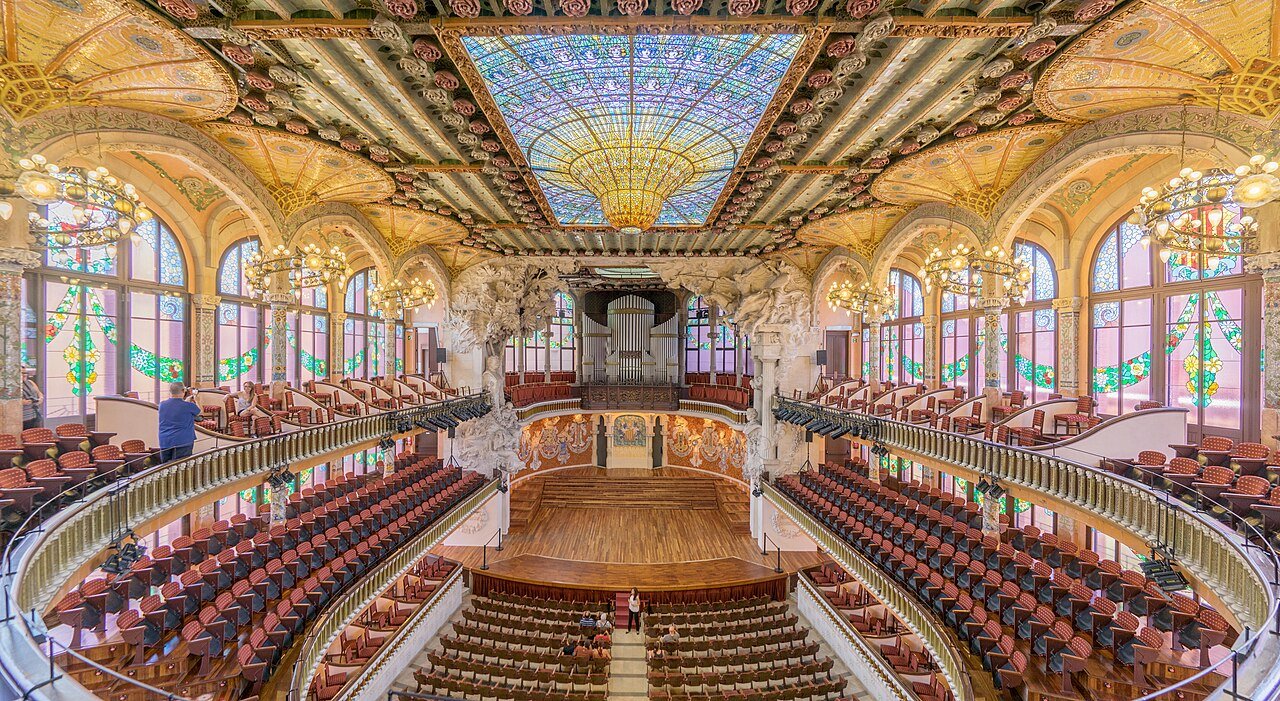
Summer in Barcelona happens outdoors; October is when the city’s indoor culture switches back on at full power. The concert season at the Palau de la Música Catalana runs in earnest — orchestras, chamber series and the Palau’s own cycles filling that stained-glass hall several nights a week — the Liceu opera house on La Rambla is into its autumn programme, and the big theatres along Paral·lel are running new productions after the August dark. After months of open-air festivals, there is a distinct pleasure in joining the city’s subscribers in a velvet seat as the light outside fails.
No 2027 programmes are published this far ahead, and this guide invents none — the pattern is the point: in October you will find full listings whatever week you land. Book the Palau and the Liceu through their official sites when the season pages open, aim for a midweek performance for the best seats, and consider the guided morning tour of whichever hall you miss at night — both buildings deserve seeing lit by day and by evening. Prices vary by production; a good concert seat bought direct is usually the best-value evening of the trip.
Beyond the grand halls, the month stacks smaller stages: jazz clubs in session, the foundations’ autumn exhibitions in full run (the autumn blockbusters open in October at the big museums), and bookshops and civic centres running the season of talks and film cycles. Our guide to things to do in Barcelona at night maps the after-dark city — October is when its indoor chapters take over from the beach clubs.
11. Halloween, Barcelona Style (31 October)
Halloween arrived in Barcelona as an import and has been enthusiastically naturalised. It will never be the city’s own festival — that honour, on the very same night, belongs to the Castanyada (§12) — but the two now run in parallel so comfortably that locals have coined a merged name for the weekend: the Castaween. Expect costume parties across the Eixample and Poblenou bar strips on the night of Sunday 31 October, horror marathons in the original-version cinemas, fancy dress in the clubs, and shops — chocolatiers very much included — stocking skeletons, pumpkins and witches from mid-month.
For families, the heavy hitters are out of town and in town respectively: PortAventura, an hour away, runs a full Halloween season of scare zones and shows across October weekends in the established pattern, and the Poble Espanyol on Montjuïc has built an annual family Halloween of costume contests, trick-or-treat routes and themed workshops. ⚠ The 2027 editions’ exact dates and programmes are announced closer to the autumn — both follow the same late-October shape every year, so plan the slot and confirm the details in September.
The grown-up way to do the night is to let the two festivals share it: panellets and chestnuts from a street stall early, the Castanyada dinner with moscatell, then — if the energy holds — the costumed city after midnight, with the clocks going back at 03:00 and handing everyone a bonus hour. Barcelona has had centuries of practice at feasting its dead, and one century-old imported ghost night was never going to disturb it.

12. La Castanyada and All Saints (31 October – 1 November)
And so to the month’s own feast. La Castanyada is Catalonia’s All Saints’ celebration: on the night of 31 October families and friends gather over the autumn table — roasted chestnuts, roasted sweet potatoes (boniatos), panellets by the plate, and sweet moscatell wine poured from the porró. The panellets are the jewel: small marzipan sweets made with almond, sugar and potato or sweet potato, rolled in pine nuts for the classic version and in coconut, coffee, chocolate or quince for the rest — sold by weight in every pastisseria in the city from mid-October, and priced like the little luxuries they are.
The street version of the feast is the castanyera: the chestnut stalls that set up on Barcelona’s corners from mid-October onward, part brazier, part street theatre, wrapping hot chestnuts in paper cones as the evenings draw in. You will smell them before you see them. Buy a cone, eat them walking, and you are doing the Castanyada exactly as the city does. The night carries an older layer too — it was traditionally the evening for remembering the dead, with the theatrical tradition of performing Don Juan Tenorio, literature’s great seducer meeting his ghosts, still kept by some theatres around the date.
Monday 1 November, All Saints (Tots Sants), is a public holiday and the feast’s solemn second half: families take flowers to the cemeteries — Montjuïc’s great hillside necropolis and Poblenou’s old cemetery, with its famous Kiss of Death sculpture, both draw their largest, gentlest crowds of the year — masses are said, and the city runs at half-speed until evening. For a visitor it is a day for the quiet city: the holiday-morning streets, a cemetery visit made respectfully, one last panellet with coffee. A gentler, older ending to October than any firework could give it.

Which October Week Suits You?
The month runs in three registers: summer’s tail, the festival fortnight and the autumn close. Pick by temperament:
| If you want… | Come… | Because |
|---|---|---|
| The last swimming days | 1–10 October | The sea is at 21–22 °C early on, the beach bars are still open and the beach is half-empty |
| Film-festival Sitges | Early-to-mid October (⚠ 2027 dates pending) | The Sitges Film Festival takes over the town for eleven days, Zombie Walk included |
| A holiday-week buzz | Around 12 October | The Fiesta Nacional and its puente fill the city with a long-weekend energy |
| Neighbourhood life at its most local | The first half of October | Sarrià and Les Corts hold their festes majors — gegants, castellers and correfocs |
| The city’s interiors, free | The last full weekend (pattern) | 48h Open House opens 200+ normally closed buildings across the weekend |
| Chestnuts, mushrooms and the quiet city | 29 October – 1 November | Bolets season peaks, the Castanyada lands and All Saints slows everything down |
What Does a Day in Barcelona in October Cost?
October is shoulder-season pricing with high-season content — the city’s best value-for-money month by many reckonings. Hotel rates step down from their summer and September peaks, though the 12 October long weekend and Open House weekend firm them up again — book those early. Realistic 2027 per-person planning figures:
| Item | Cost |
|---|---|
| Coffee and a croissant | €3.50–4.50 |
| Menu del día lunch | €13–17 |
| Tarragona & Sitges small-group day tour (11 hours) | From $111 per person |
| Return train to Sitges | Around €10 |
| Panellets, by the quarter kilo | €9–13 |
| A cone of roasted chestnuts | €4–5 |
| Rovellons at a market bar, seasonal plate | €10–16 |
| Castanyada weekend total damage | Priceless, and mostly edible |
Final Thoughts
Barcelona in October is the locals’ favourite argument made visible: the same great city as August, with a third of the pressure and twice the programme. Swim while the sea lets you, take the free Sunday and the open doors as the gifts they are, eat mushrooms while the rains provide them, and let the month end the Catalan way — chestnuts in a paper cone, panellets on the table, moscatell in the glass, one candle of a night for the dead — before the clocks and the city turn toward winter. God willing, there is no better month to see it breathe.

Barcelona in September: 12 Things to Do, From La Diada to La Mercè — Plus the Harvest, the Beaches and the City’s Reset
Travel insurance, sorted
Whether it is a two-week holiday or a longer move, travel insurance is not the most glamorous part of a trip — but it is the one booking you want to have in place before a trip, and while you are already away. Get a quote from SafetyWing
FAQs
Is October a good time to visit Barcelona?
It is one of the best months of the year. The heat and the worst crowds are gone, the sea is still swimmable in the first half, prices step down from their summer peak, and the festival calendar is at its richest — a free-museum Sunday, the Sitges Film Festival, a national holiday, two festes majors, Open House weekend and the Castanyada all fit inside one month. The trade-offs are shorter days, occasional heavy rain and cool evenings late in the month.
Can you swim in Barcelona in October?
Yes, especially in the first half, when the sea sits around 21–22 °C — it cools to about 19–20 °C by month-end. Go in with open eyes: the lifeguard and buoyed-zone season ends in mid-September, so October swims are unguarded. Swim in the old supervised zones, never alone in rough weather, obey any posted warnings, and check the forecast — an October front can turn a beach day quickly.
What happens in Barcelona on 12 October?
12 October is the Fiesta Nacional de España, a public holiday. Most shops close (the port-side Maremagnum mall is the exception), while museums and the big sights open as usual and restaurants do a busy holiday lunch. In 2027 the day falls on a Tuesday and many locals bridge the Monday into a four-day weekend, so book sights, trains and tables for 9–13 October early. Barcelona marks it quietly compared with Madrid — no big parade here.
What is the Castanyada, and when is it?
The Castanyada is Catalonia’s All Saints’ feast, held on the night of 31 October and into All Saints’ Day, 1 November — a public holiday (in 2027, a Monday, making a long weekend of it). Its foods are roasted chestnuts from street stalls, roasted sweet potatoes, panellets (marzipan sweets, the pine-nut ones the classic) and sweet moscatell wine. On 1 November families visit cemeteries with flowers and the city runs at half-speed. It shares its night with a growing Halloween, a pairing locals call the Castaween.
What should I pack for Barcelona in October?
Layers that span two seasons: T-shirts and light trousers for the warm first half, a proper mid-weight jacket and closed shoes for late-month evenings, plus a compact umbrella — October rain averages around 40 mm and tends to arrive in short, heavy bursts. Keep swimwear if you’re coming before mid-month (the sea holds 21–22 °C early on), and add one smart layer: October’s concert season and feast-day dinners reward dressing up a touch.
When are the Sitges Film Festival and Open House Barcelona in 2027?
Neither had published 2027 dates when this guide was prepared, and both follow firm patterns. The Sitges Film Festival runs eleven days in early-to-mid October (the 2026 edition ran 8–18 October) — 2027 is its 60th edition. 48h Open House Barcelona falls on the last full weekend of October, which in 2027 means 23–24 October, opening 200-plus buildings free. Confirm both on the official sites when you book; the rest of this guide’s dates are fixed.