Fundació Joan Miró: The Complete Visitors’ Guide
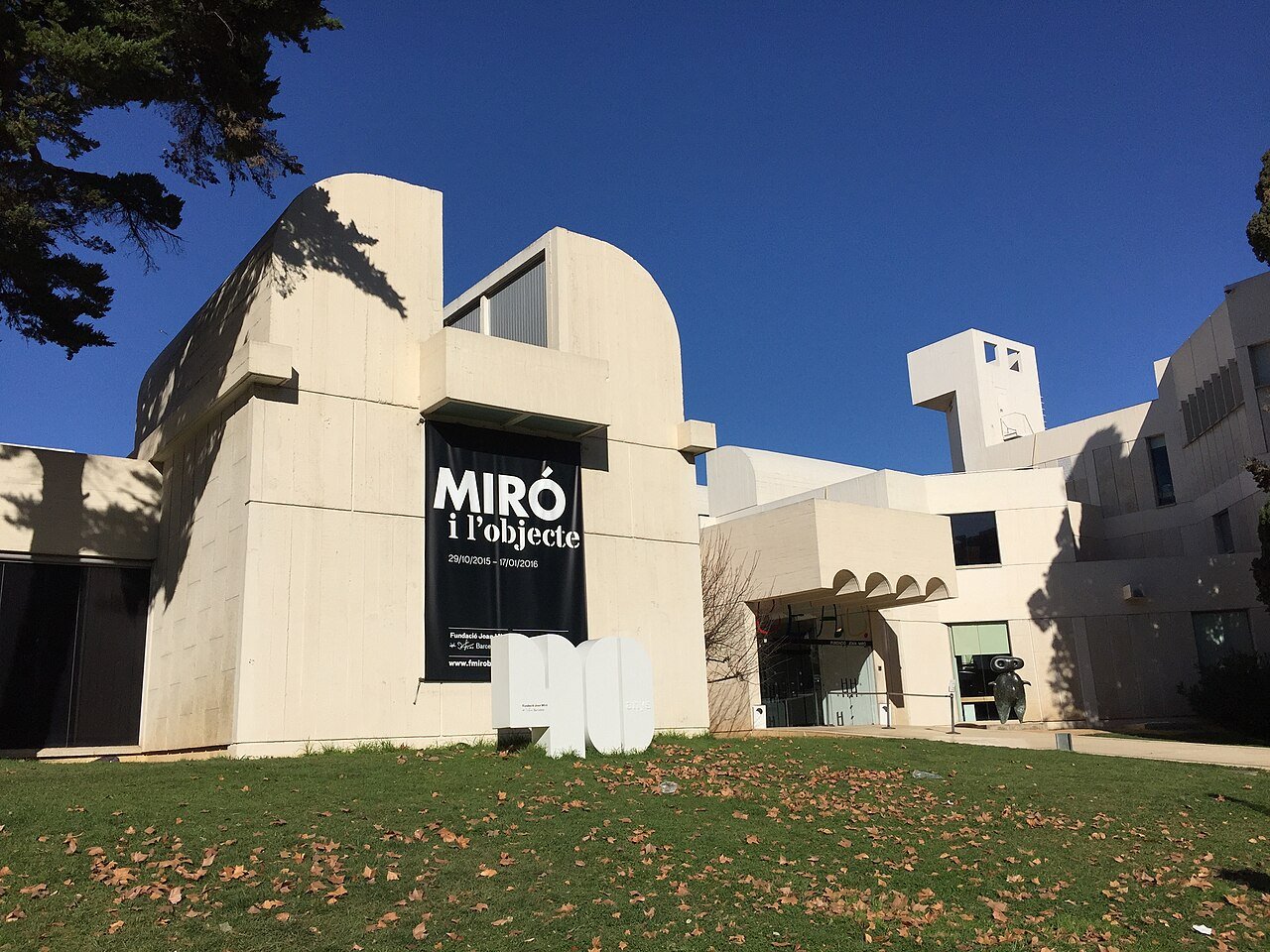
Most museums are built about an artist. This one was built by one — and by his best friend. Halfway up Montjuïc, in a white village of courtyards, vaults and terraces designed by the architect Josep Lluís Sert, the Fundació Joan Miró holds the largest collection of Miró’s work anywhere on earth: some 14,000 pieces, from the first careful landscapes of a teenage painter from the Barri Gòtic to the vast, sign-scrawled canvases of his eighties. Miró planned it as a gift to his home city and insisted it be more than a shrine — a living centre where young artists could experiment, argue and fail in public. Fifty years on, it is still doing exactly that.
This guide walks the whole visit in the order the building intends it: Miró himself, Sert’s architecture — a masterpiece in its own right — the collection room by room, Calder’s impossible Mercury Fountain, the experimental Espai 13, and the roof terrace and sculpture garden where the visit exhales. The foundation is one of the essential stops in our Best Things to Do in Barcelona guide, and the calmest great museum in the city.
The Short Answer
Yes — the Fundació Joan Miró is one of Barcelona’s essential museums: the world’s deepest Miró collection inside one of the finest museum buildings of the twentieth century, still working as the living art centre its founder demanded. Allow two to three hours. Inside one continuous circuit you get the paintings, drawings, sculptures and the great Tapestry of the Fundació, plus Alexander Calder’s Mercury Fountain — a fountain that runs on liquid mercury, behind glass, and exists nowhere else. Go in the morning for the quietest galleries, keep the roof terrace for the end, and pair it with the rest of Montjuïc: MNAC is a few minutes’ walk away and the Magic Fountain performs below the hill in the evening. Book ahead on busy weekends — the Sunday-morning entry queue is real.
Table of Contents
- The Short Answer
- Miró’s Gift: A Museum the Artist Built for His City
- The Building: Sert’s White Village of Light
- The Collection: Stars, Birds and Signs
- The Mercury Fountain: Calder’s Impossible Fountain
- Espai 13: A Place to Be Wrong
- The Roof Terrace and the Sculpture Garden
- The Library and the Archive
- Combining the Foundation: A Montjuïc Day
- Practical Info
- Tips for Visiting
- Final Thoughts
Miró’s Gift: A Museum the Artist Built for His City
Joan Miró was born in 1893 in the Passatge del Crèdit, a lane off the Barri Gòtic, and he carried Barcelona with him through everything that followed: Paris and the Surrealists, the Civil War, exile, fame on a scale no Catalan artist had ever reached. By the 1960s his work was in every great museum in the world — except, in any depth, in his own city. The foundation was his correction of that. The idea took shape in 1968, with his friend Joan Prats; what Miró wanted was not a mausoleum but a Centre d’Estudis d’Art Contemporani — a Centre for the Study of Contemporary Art, the CEAC whose letters still greet you at the door — where his own work would be permanently public and younger artists would be given room to experiment.
He put his money where his manifesto was. The core of the collection is Miró’s own donation, and the first board was a gathering of friends: the photographer Joaquim Gomis as first president, Miró himself among the trustees. The doors opened on 10 June 1975, months before the end of the Franco dictatorship, and the timing was not incidental: a museum built by a living artist, dedicated to experiment and run on democratic lines, was itself a statement about the Spain that was coming. Miró kept giving — works, and his archive of drawings and studies — until his death in Palma de Mallorca on Christmas Day 1983, and the collection has grown ever since through his family, his friends and collectors, among them the Japanese collector Kazumasa Katsuta, whose great Miró holding is kept here.
The scale of what he left is worth a number: around 14,000 works — paintings, sculptures, ceramics, textiles, prints and, most precious to scholars, more than 8,000 drawings and preparatory studies, nearly everything Miró ever sketched before committing to canvas. No other institution can show you the artist whole like this, because no other institution has the workings.
The Building: Sert’s White Village of Light
If the collection is the argument, the building is the proof. Josep Lluís Sert was Miró’s friend of forty years: the two had first worked together on the Spanish Pavilion at the Paris International Exposition of 1937 — the pavilion Sert designed, which in a single summer showed Picasso’s Guernica, Miró’s The Reaper and Calder’s Mercury Fountain to the world — and in 1956 Sert built Miró’s studio in Mallorca. Exiled after the Civil War, Sert became dean of Harvard’s Graduate School of Design; the foundation was designed across an ocean, in years of letters between Cambridge, Massachusetts and Mallorca, and it is the masterpiece of his maturity.
What he built is a Mediterranean village turned into a museum. White concrete volumes step down the slope of Montjuïc around a chain of interior courtyards, so the visit alternates — deliberately — between art and daylight, gallery and patio, picture and view. An old olive tree presides over the central courtyard. Above the galleries, great quarter-circle vaults — the building’s signature, borrowed from Catalan farmhouses and churches — scoop the southern sun and pour it into the rooms as soft, indirect light: the paintings are lit the way Miró painted them, by the Mediterranean sky. The route is a single continuous circuit of ramps and stairs; as Miró wrote to Sert, partway round the visitor would be tired, so there had to be a terrace at exactly that point to sit down, look at the city and write a postcard. He got his terrace.
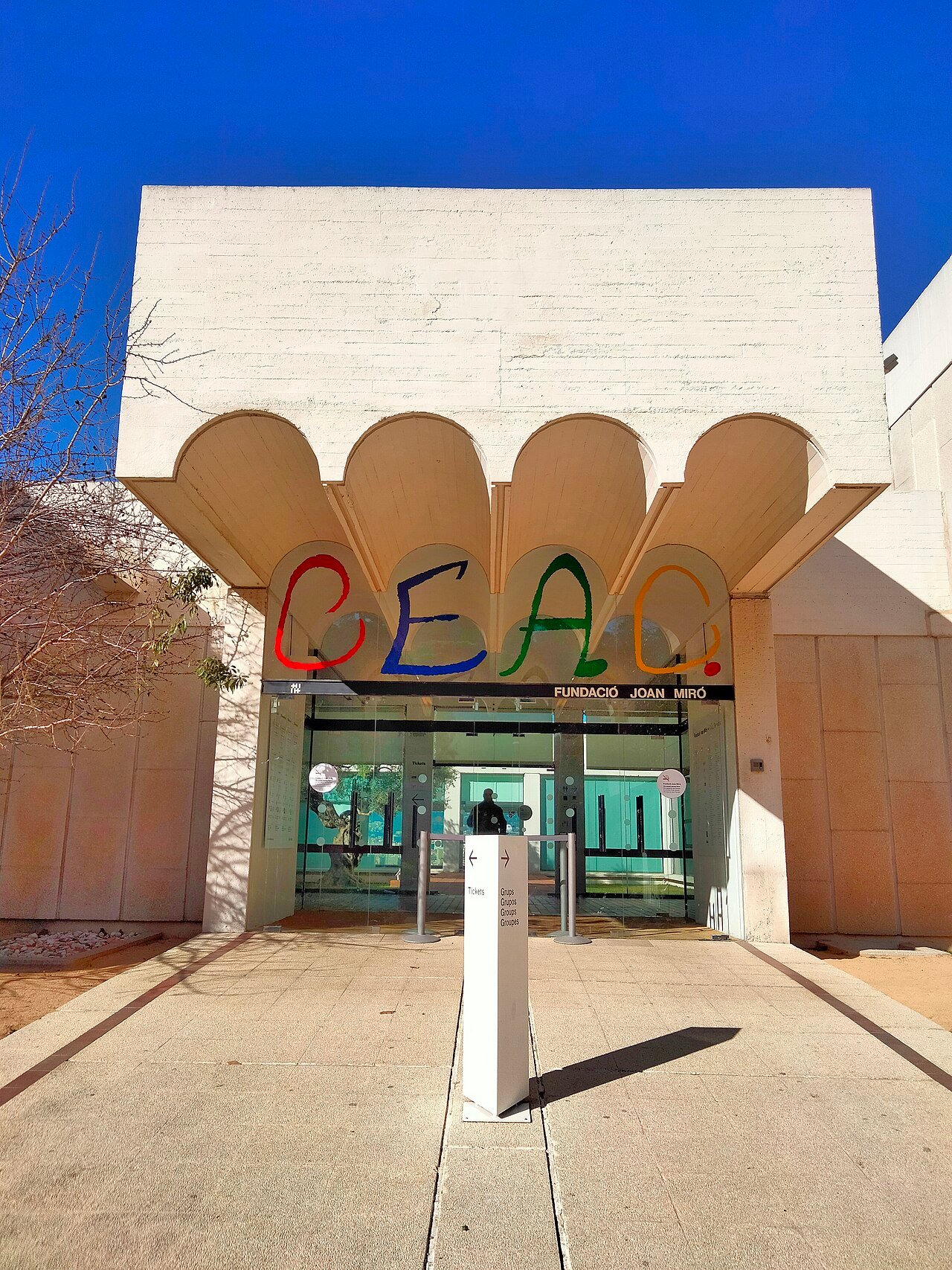
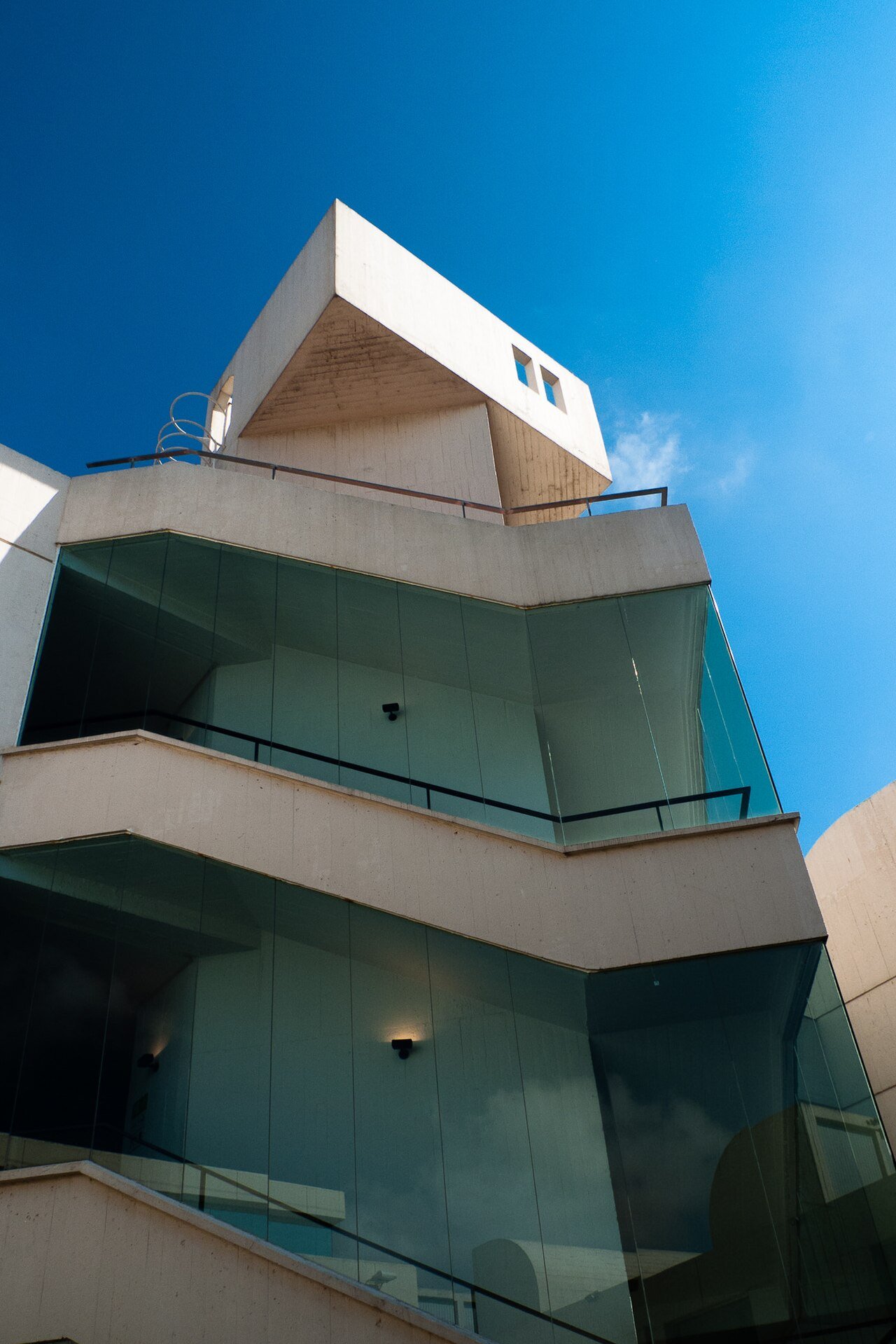
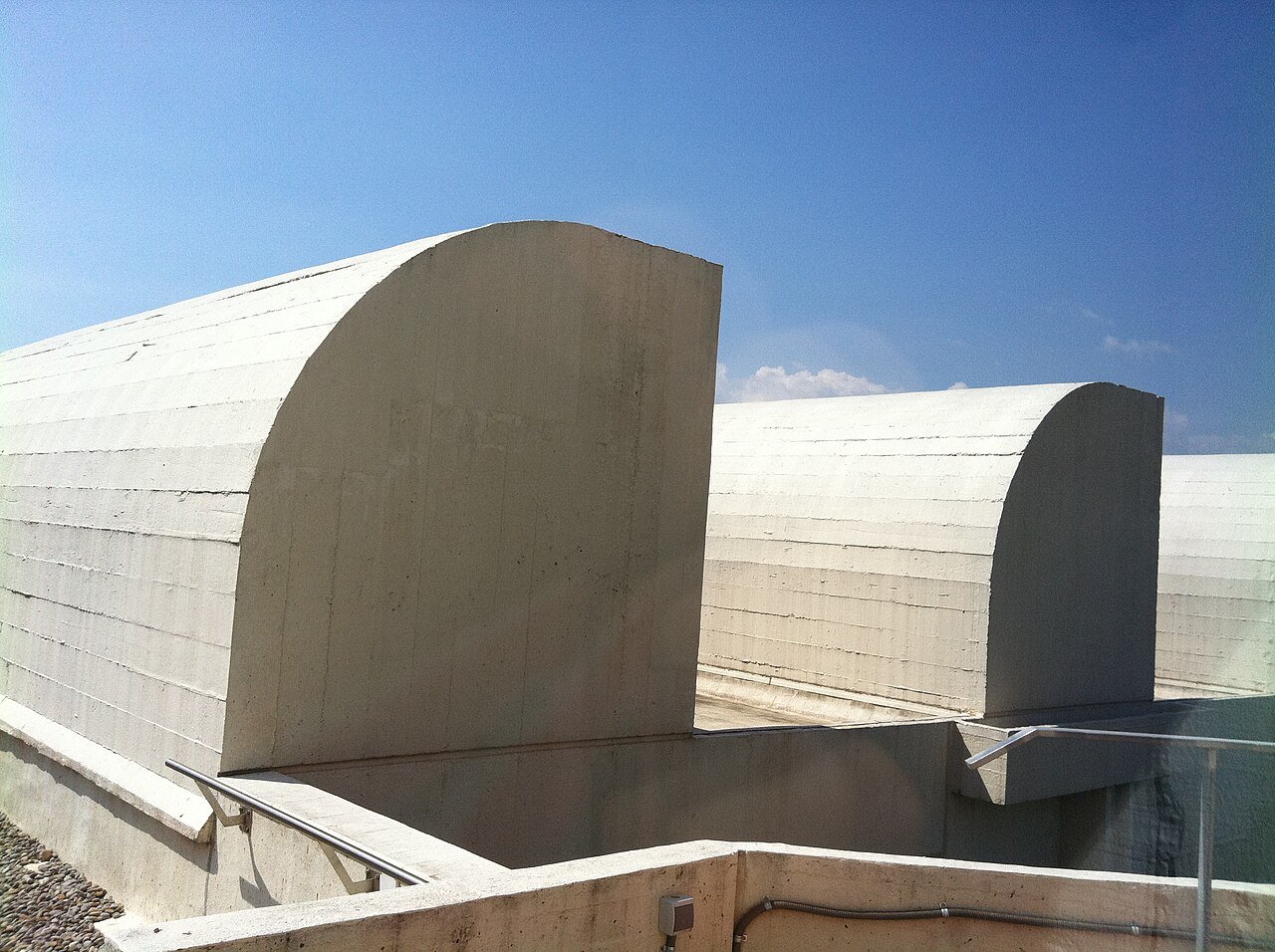
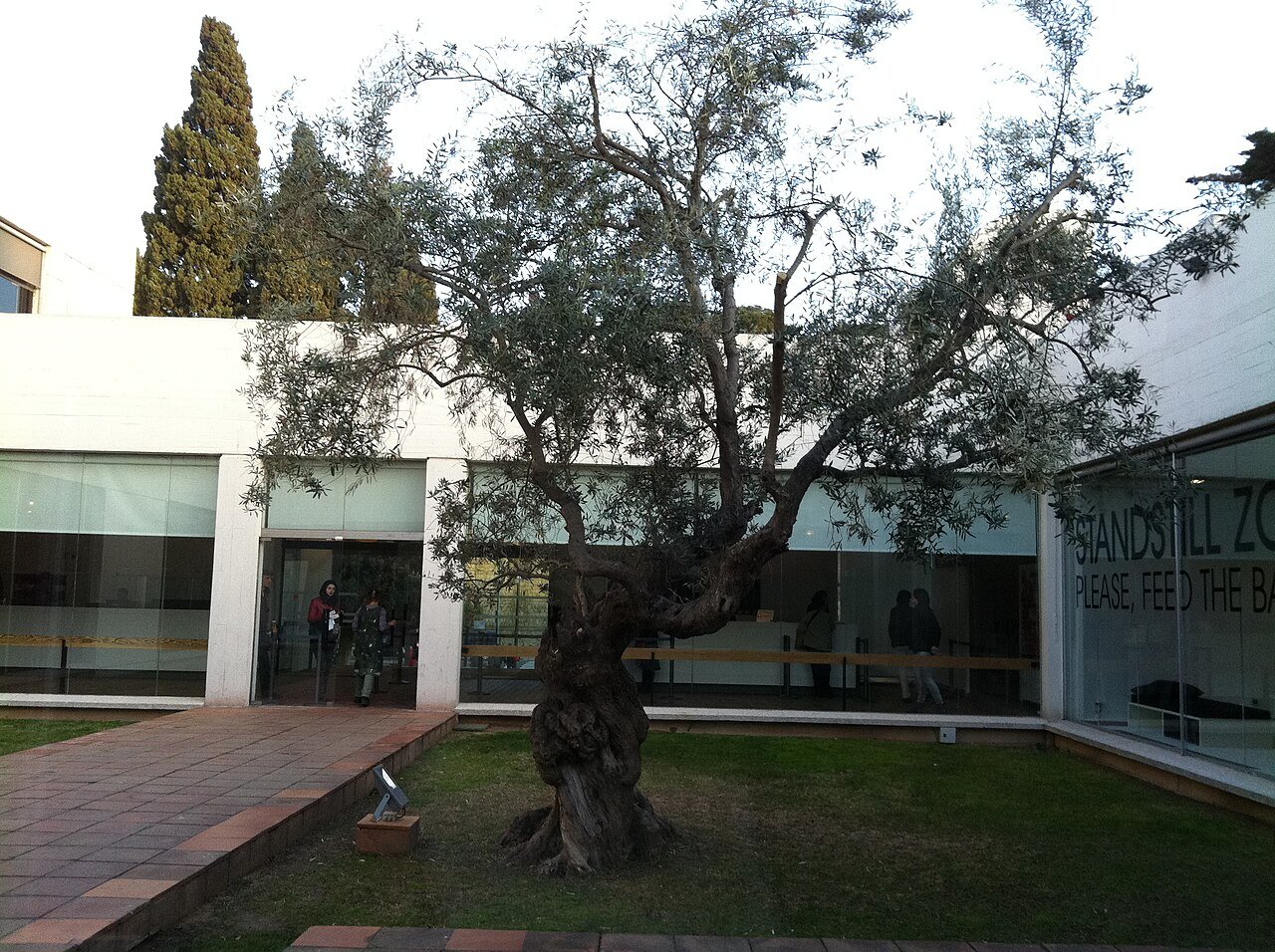
The profession noticed. The building won the Council of Europe Museum Prize in 1977, and in 2002 the American Institute of Architects gave it the Twenty-five Year Award — the prize for a building that has proved itself over a generation. In the 1980s Sert’s former collaborator Jaume Freixa extended the museum with the same vocabulary, adding the auditorium and the library. Read the building as you walk it: it is the third artist in the show.
The Collection: Stars, Birds and Signs
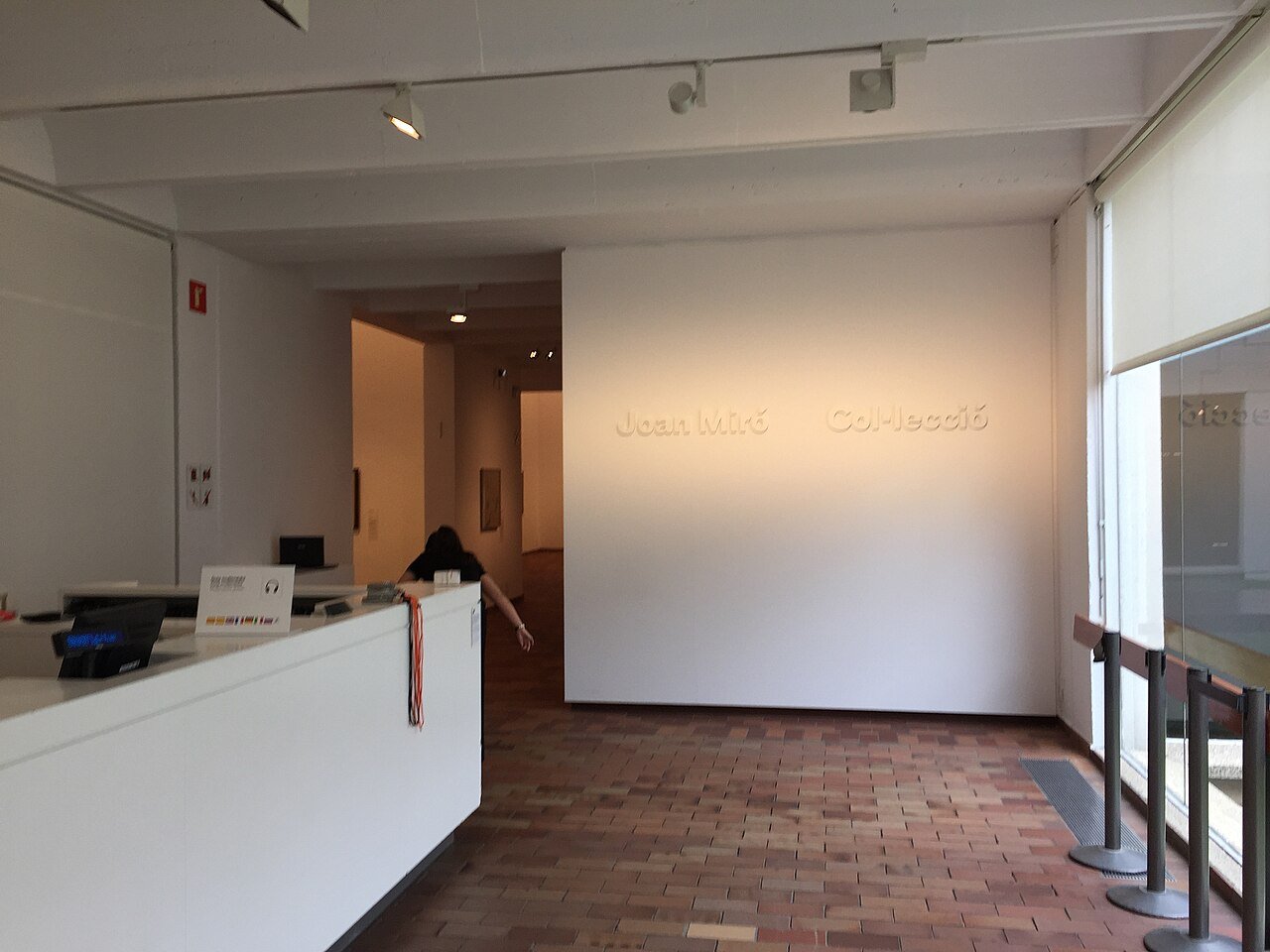
The circuit begins at a wall that simply says Joan Miró — Col·lecció, and then unrolls the whole career in one rising line. The early rooms are the surprise for visitors who know only the famous signs: meticulous young landscapes and portraits from 1917 onwards — the chapel at Sant Joan d’Horta, a boy’s portrait — painted under Fauvism and Cubism by a bank clerk’s son teaching himself to see. Then, room by room, the world dissolves into the language he invented: the sign-system of stars, moons, birds, women and ladders of escape that he would refine for sixty years.
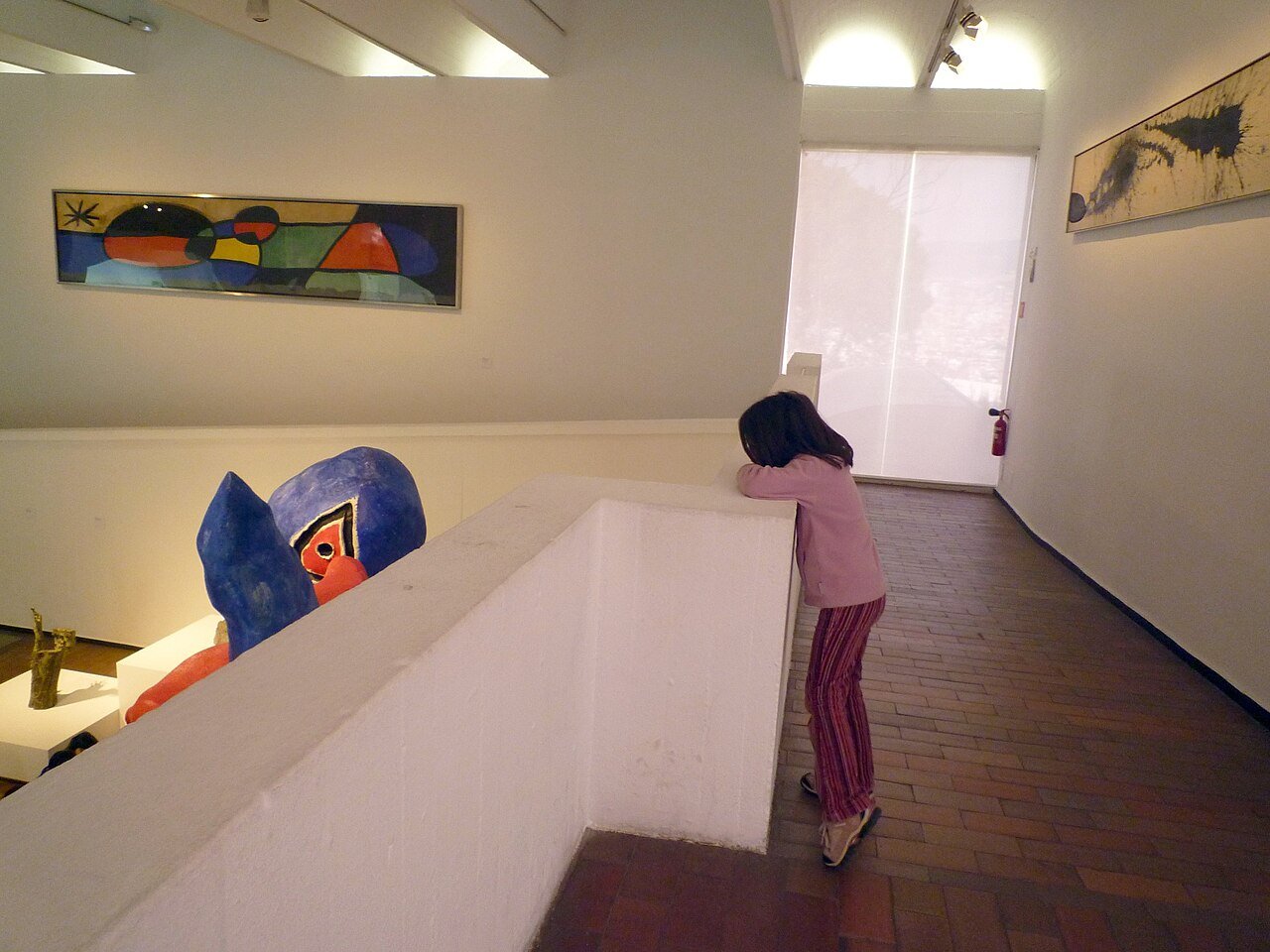
The war years darken the palette and sharpen the politics. Man and Woman in Front of a Pile of Excrement (1935) is exactly as bleak as its title — Miró called works like these his “savage paintings” — a warning painted before the catastrophe. The answer comes five years later: fleeing through France in 1939–41, Miró painted the Constellations, twenty-three small works on paper of impossible delicacy — night skies crowded with stars, birds and figures, made in the middle of a collapsing world. The Morning Star (1940), here in Barcelona, is one of the set, and seeing it at reading distance is worth the whole climb up the hill.
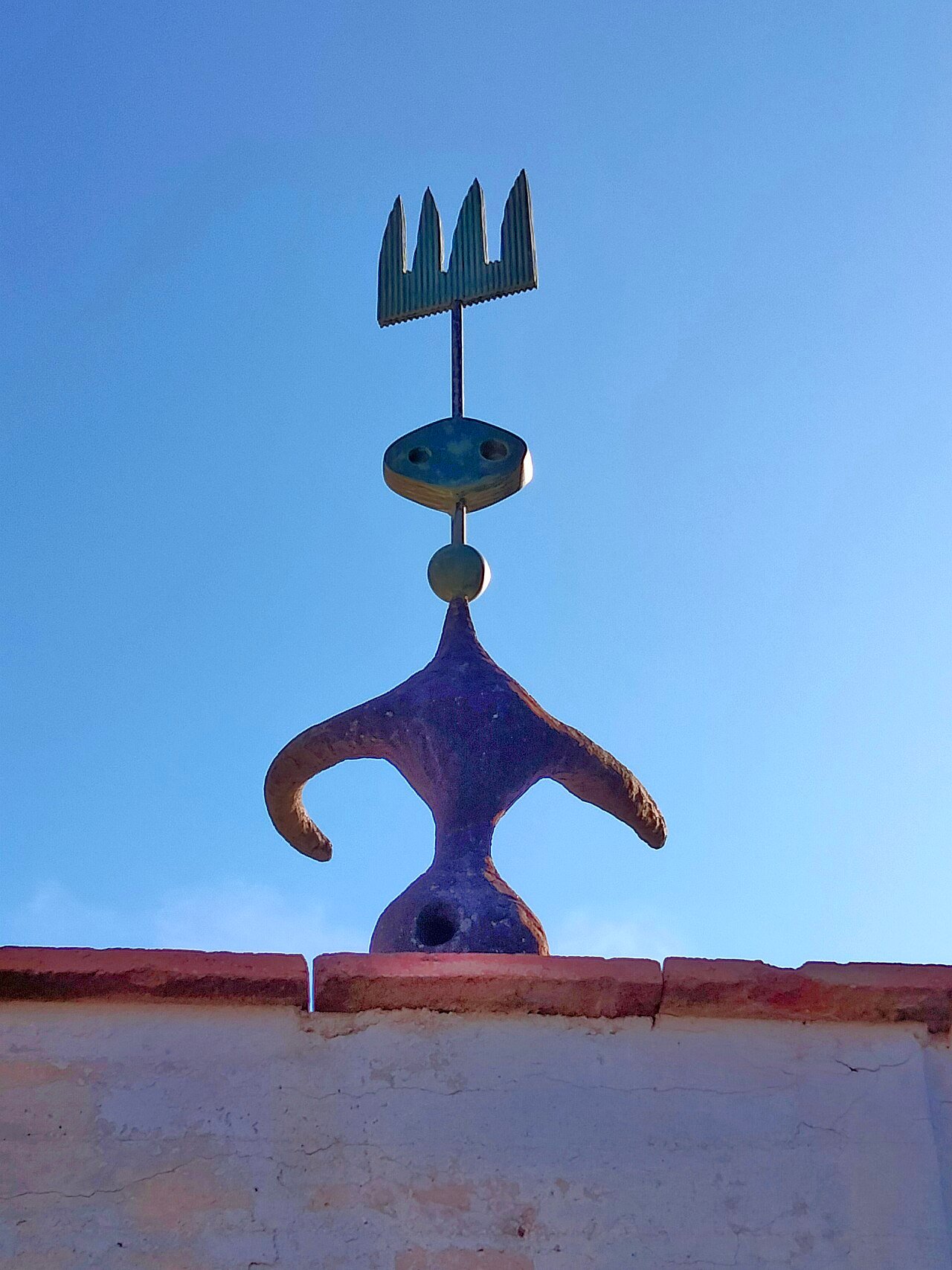
Scale takes over in the late rooms: the serene blue fields of The Gold of the Azure (1967), the huge canvas of May 1968, painted across the years of protest, the black calligraphy of the triptych Painting on White Background for a Solitary Cell (1968), and the ceramics and painted bronzes he took up with renewed joy in his seventies — figures assembled from found objects, cast and painted in the primary colours of his signs. One of them, the ceramic Woman, Bird and a Star, stands over the entrance court like a weathervane of his whole vocabulary.
The Tapestry of the Fundació
The circuit’s climax is a room built around a single work. The Tapestry of the Fundació (1979), woven in wool by Josep Royo to Miró’s design, fills its wall — a painting translated into textile, some seven metres across, with the familiar population of star, moon, woman and bird worked in thick, painterly wefts of red, blue, green and black. Miró made it for this space at the end of his life, and it has a gravity the canvases don’t: the signs slowed down to the speed of weaving, monumental and warm at once. Stand back at the far wall first, then go close — the surface rewards both distances, which is more or less the foundation’s whole lesson about Miró.
Free Barcelona travel guide
Planning a trip to Barcelona? Get our free one-page Barcelona checklist: what to book ahead, what to skip, and how to build the perfect Montjuïc day of museums, gardens and fountains.
The Mercury Fountain: Calder’s Impossible Fountain
In a glazed corner of the circuit, behind protective glass, stands the most quietly astonishing object in Barcelona: a fountain that flows with liquid mercury. Alexander Calder built the Mercury Fountain for Sert’s Spanish Pavilion at the Paris Exposition of 1937, where it stood a few metres from Guernica — a deliberate piece of Republican symbolism, since the mercury came from the mines of Almadén and the pavilion’s floor spelled it out: Mercure Espagnol. Calder, Miró’s close friend, gave the fountain to the foundation in 1975, and it has run here ever since — the only mercury fountain on public display in the world.
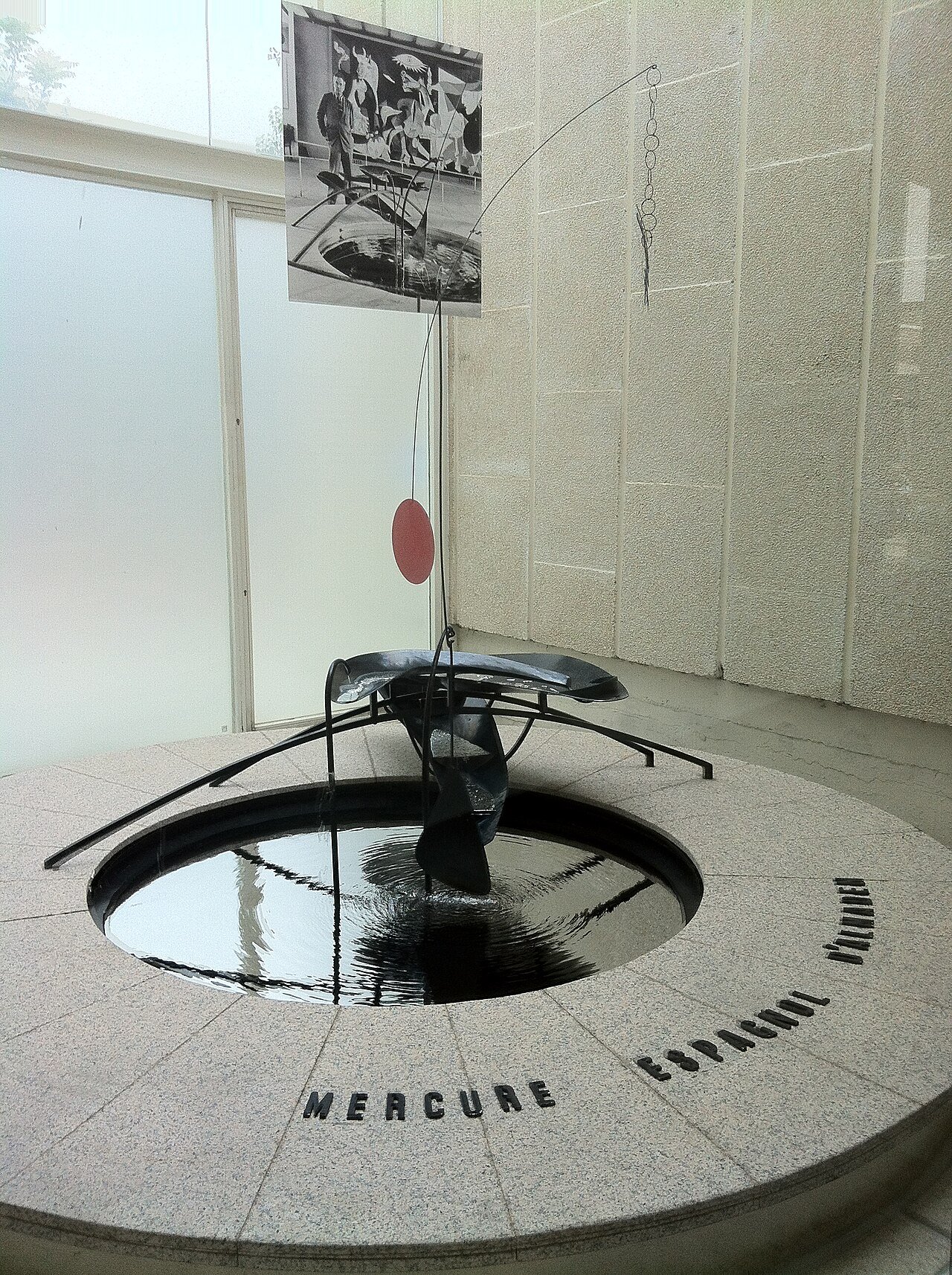
Watch it properly. The mercury does not behave like water: it moves in heavy, mirror-bright sheets and beads, breaking into perfect silver spheres that race, merge and vanish over the black iron pans, while Calder’s little mobile turns above it. It is beautiful and it is poisonous — mercury vapour is why the glass is there, and why this impossible object sits sealed in its vitrine like a specimen of another physics. The 1937 photograph on the wall above — Calder by the fountain, with Guernica behind him — closes the circle.
Espai 13: A Place to Be Wrong
Miró’s will for the foundation had a sting in it: the place must not become a temple to himself. The Espai 13 is where that instruction lives. The programme began in 1978 as Espai 10, a single room off the foyer given over to young artists; when Freixa’s extension opened in the late 1980s it moved and took its present name and space. Across more than four decades it has run over 250 exhibitions and shown nearly five hundred emerging artists — a laboratory whose history was celebrated in an exhibition titled, perfectly, A Place Where Artists Have the Right to Fail. Today’s format: each season an invited curator builds a cycle of solo shows around a single theme. Whatever is on when you visit will be new, probably strange, and exactly what the founder ordered.
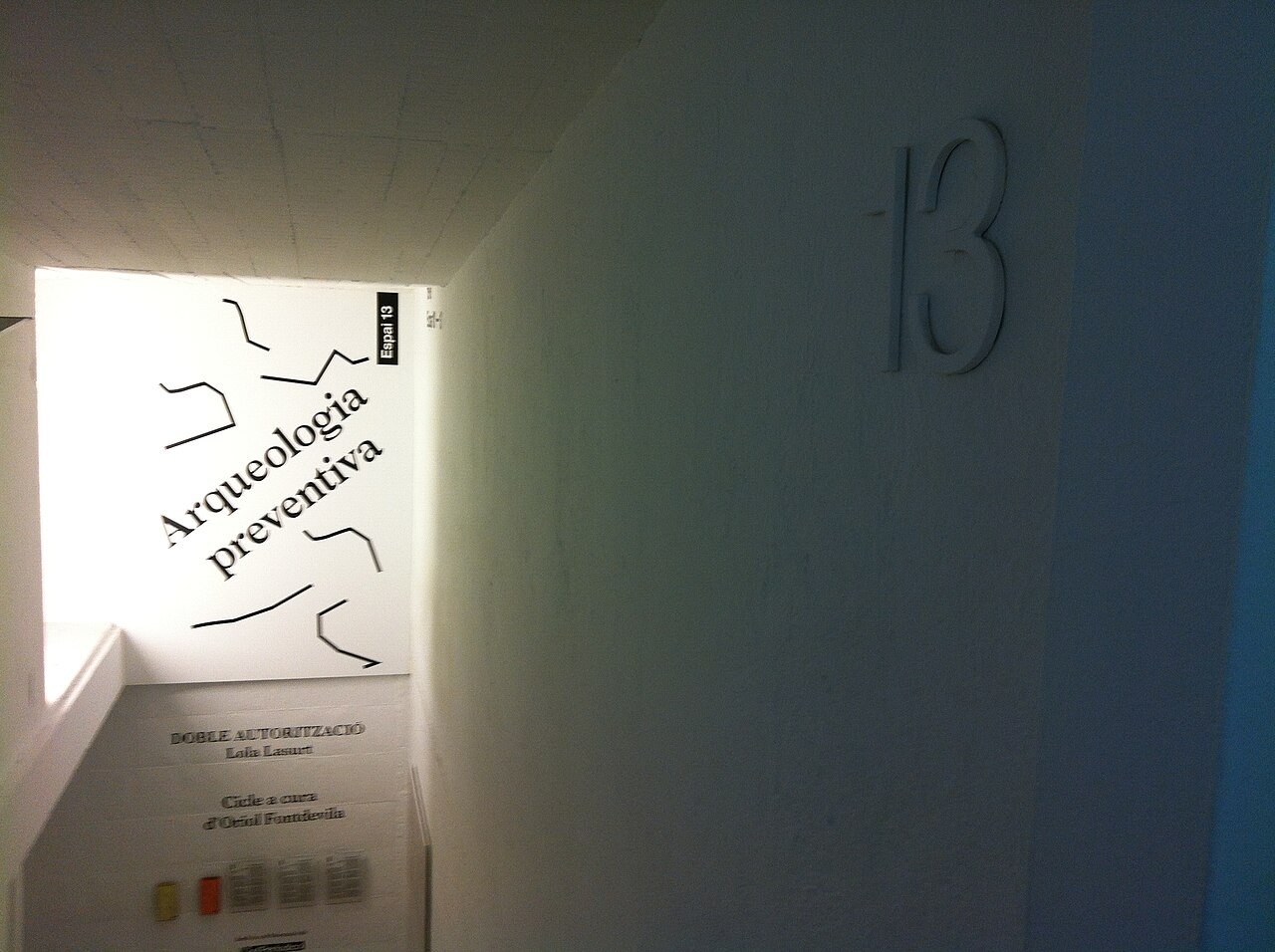
The same forward-looking brief produced the Joan Miró Prize, awarded every two years since 2007 and worth €70,000 plus a monographic exhibition here — one of contemporary art’s most generous prizes. The roll of winners is a syllabus of twenty-first-century art: Olafur Eliasson, Pipilotti Rist, Mona Hatoum, Roni Horn, Ignasi Aballí, Kader Attia, Nalini Malani and Tuan Andrew Nguyen. If a winner’s exhibition is on during your visit, it will be in the temporary galleries — build time for it.
The Roof Terrace and the Sculpture Garden
Sert planned the visit to breathe, and its lungs are outdoors. Partway round the circuit the North Patio opens — a tiled terrace with a long reflecting pool, benches, and the whole city laid out beyond the trees. In the pool stands the model for The Sun, the Moon and One Star, the monumental sculpture Miró later raised in Chicago, silhouetted against the Eixample and the Collserola hills: a postcard-writing spot designed by letter, exactly where Miró asked for it.
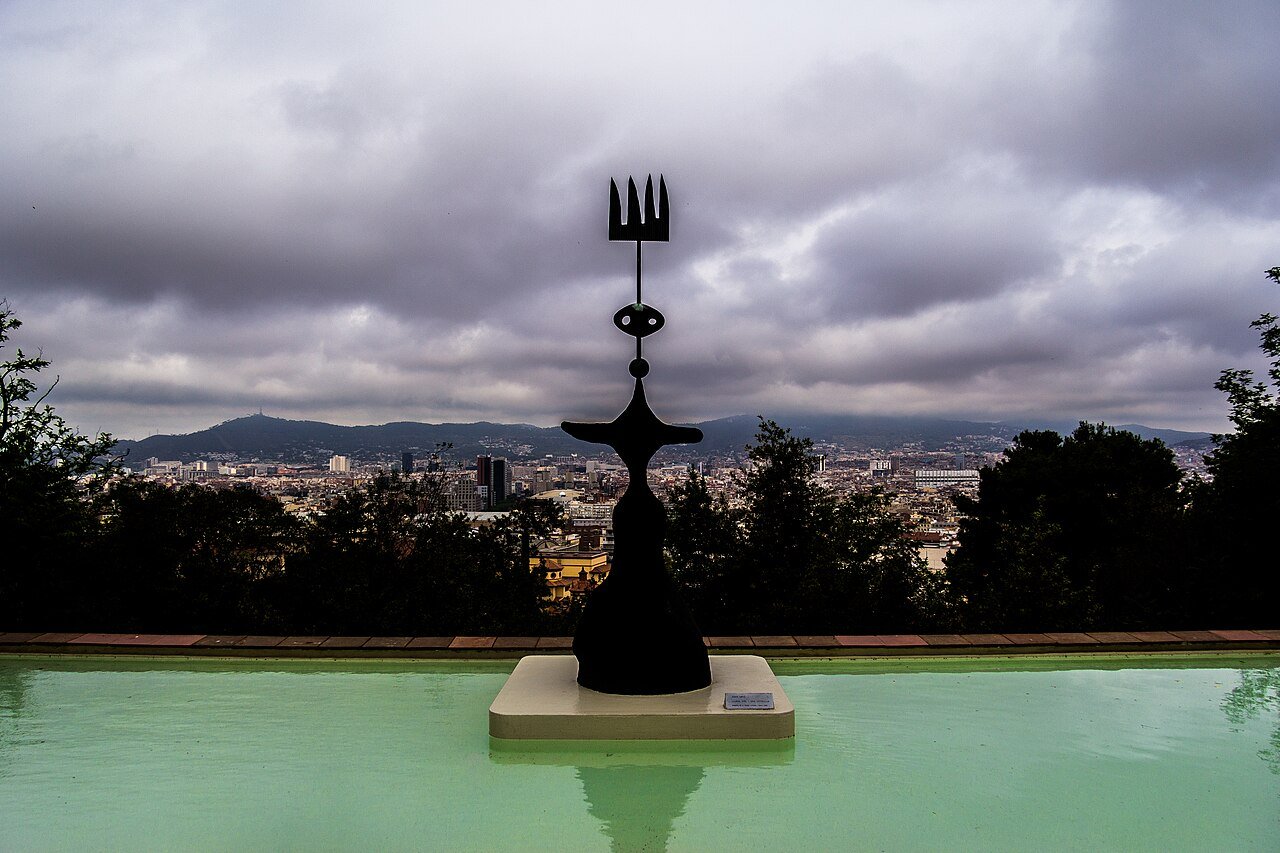
Up on the roof terrace the sculpture collection takes the air: the late bronzes, assembled from the foundry of Miró’s old age, playful and profound at once. Look for The Caress of a Bird (1967), a painted bronze in which a little blue bird perches on the figure’s head — the tenderest joke in the building — and give the others the slow orbit they ask for; these are works that change completely every two steps.
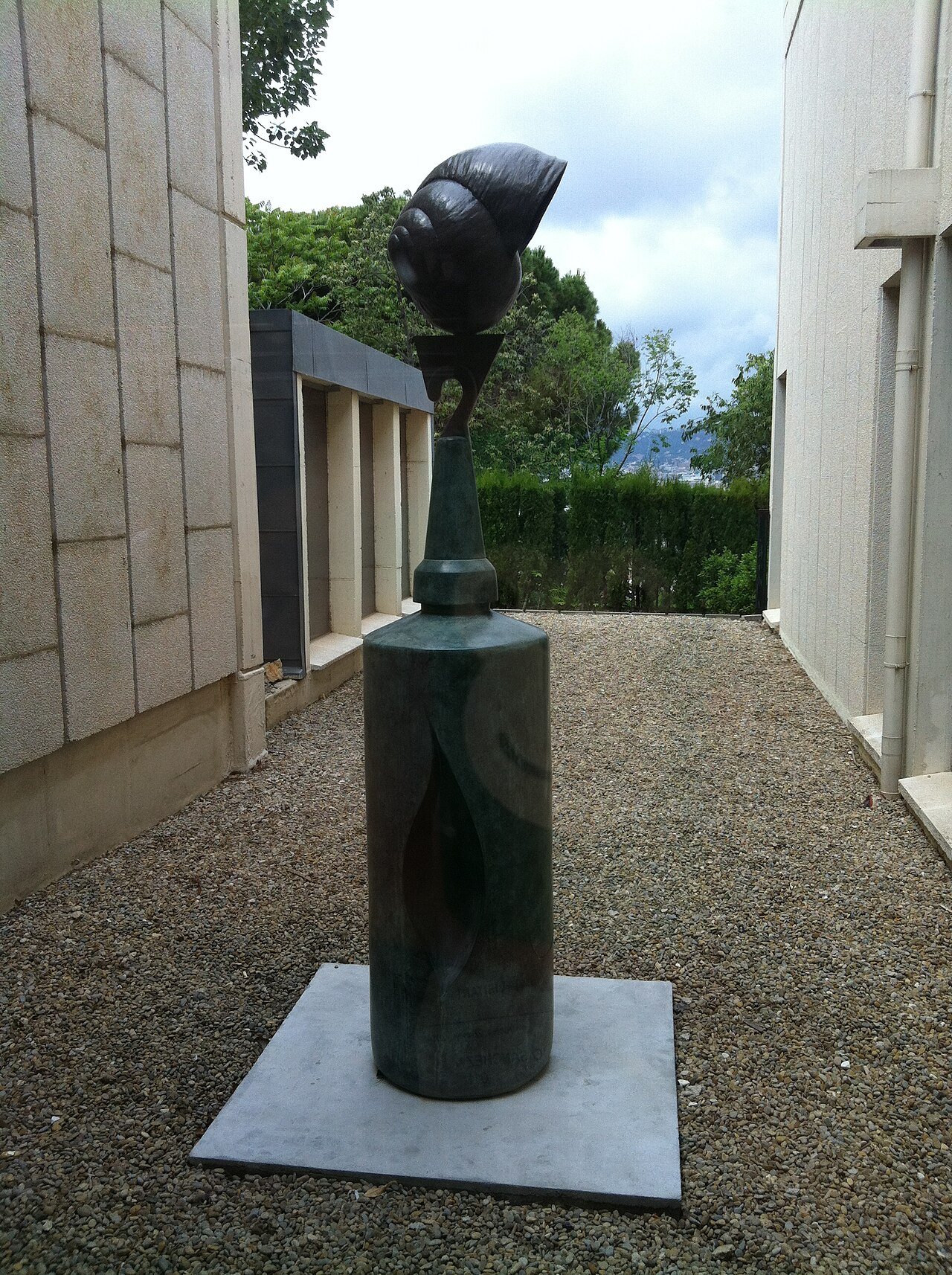
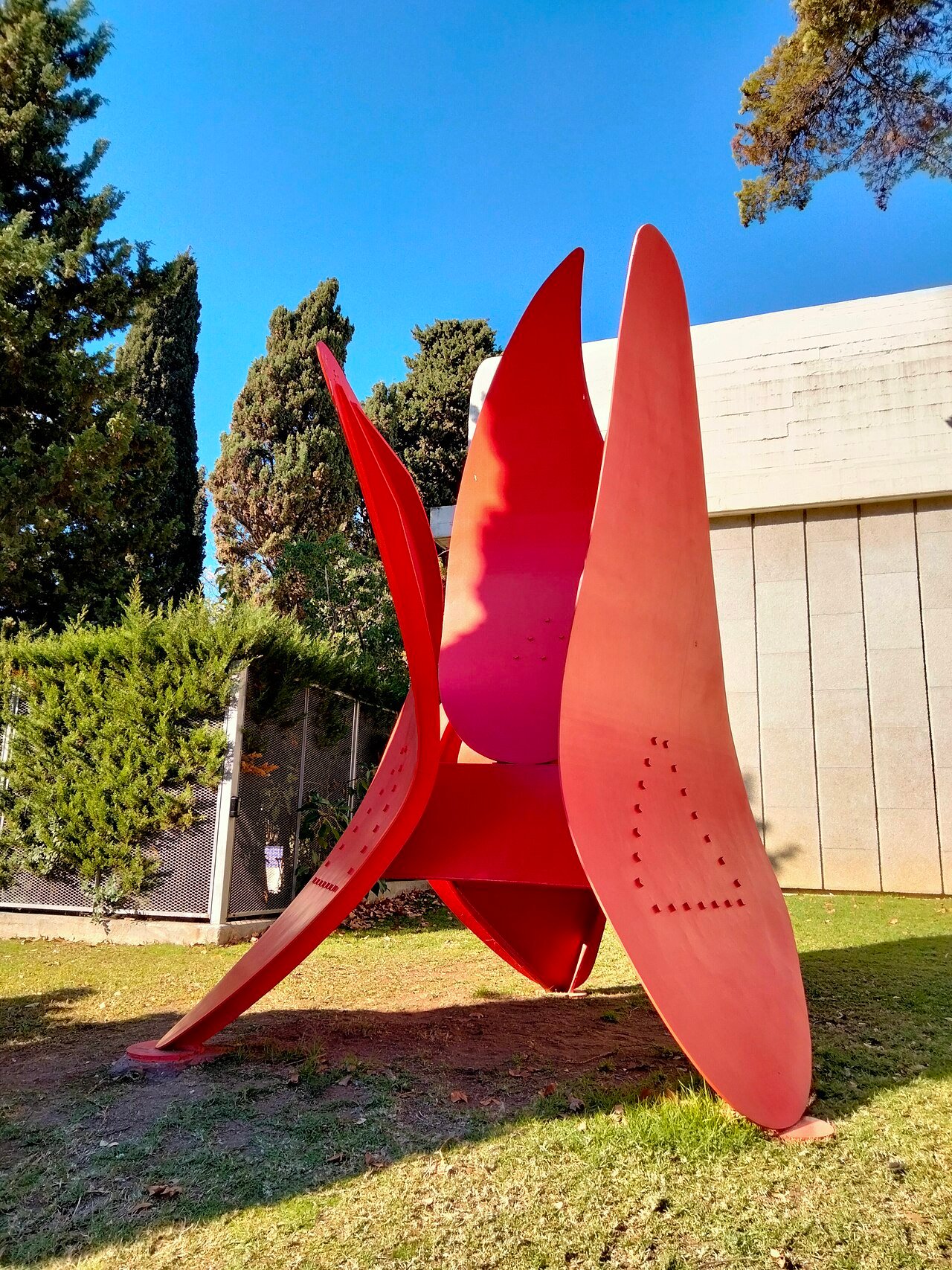
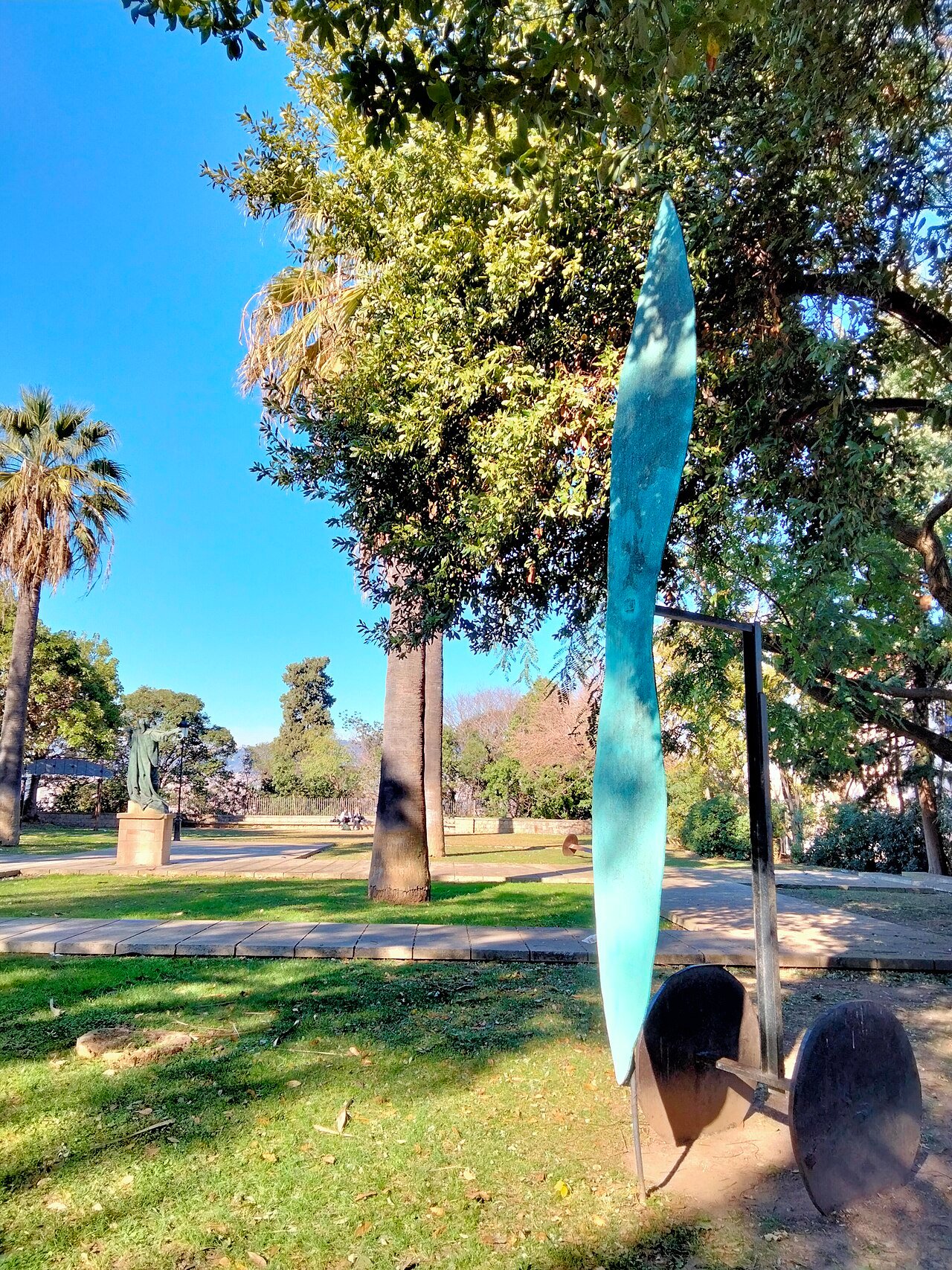
Below, the art escapes the building altogether. In the garden in front of the foundation, Calder’s great red stabile 4 Wings opens its four steel sails over the grass — the two friends, Miró and Calder, still sharing the site fifty years on. And next door, free to everyone and open all day, lies the Jardí de les Escultures, a public sculpture garden created with the foundation, where works by artists who passed through Espai 10 and Espai 13 stand permanently among the pines — the foundation’s experiment, rooted in the park.
The Library and the Archive
One part of the foundation most visitors never see is the reason scholars cross oceans for it. The library and archive — in Freixa’s extension, open to researchers — guard the paper Miró: his correspondence (including the letters to Sert that designed this building), his notebooks, and the thousands of preparatory drawings through which every painting can be traced from first scribble to final canvas. You feel its presence anyway: the studies displayed beside the finished works are the archive leaking, usefully, into the museum — and the foundation lends and exhibits from the drawings constantly.
Combining the Foundation: A Montjuïc Day
The foundation sits in the middle of Barcelona’s museum hill, and a full Montjuïc day assembles itself around it. Five minutes’ walk down the slope stands the Palau Nacional and MNAC, the thousand-year survey of Catalan art — our MNAC guide walks it room by room — and the two divide a day perfectly: Miró in the morning light, the Romanesque apses after lunch on the palace terrace. Above the foundation, the Olympic Ring and the gardens climb towards Montjuïc Castle guide at the summit, reachable by the cable car.
End the day at the foot of it. As dark falls, the Magic Fountain guide performs below the Palau Nacional — check the official schedule for your date, as drought and season rule its calendar — and the sequence writes itself: the artist’s white village in the morning, the palace in the afternoon, coloured water at night. It is the most civilised day Barcelona offers.
Practical Info
Getting there. The address is Parc de Montjuïc, s/n, 08038 Barcelona. The classic approach is the Funicular de Montjuïc from Paral·lel metro station (L2/L3) up to Parc de Montjuïc station, a few minutes’ walk from the door — the fare is integrated in a normal metro ticket. From Espanya (L1/L3) it is a fifteen-to-twenty-minute uphill walk past MNAC, or the 150 bus, which climbs the hill; bus 55 also serves the foundation. The Montjuïc cable car passes the neighbourhood of the museum on its way to the castle.
Tickets and timing. Opening hours vary by season and the foundation closes on Mondays (public holidays excepted) — confirm the current schedule on the official website before you set out. General admission is in the mid-teens of euros, with the usual concessions; the foundation is also on the ArticketBCN pass. You can book the Fundació Joan Miró entry ticket ahead of time, worth doing for weekend mornings and holiday periods. Allow two to three hours for the collection, Espai 13 and the terrace; add an hour if a Joan Miró Prize exhibition is running.
Access and facilities. The circuit is step-free in essence — ramps are the building’s native language — with lifts between levels; the terraces and garden are level. There is a café with a terrace, a well-stocked shop at the entrance, and lockers. Photography without flash is generally permitted in the permanent collection.
Tips for Visiting
- Go early, and go up by funicular. The galleries are quietest in the first hour, and the funicular-and-walk arrival puts you at the door already inside the Montjuïc mood.
- Follow the circuit in order. Sert choreographed a single rising route from the 1917 landscapes to the late bronzes; drifting against it scrambles the story the building is telling.
- Give the drawings their time. The studies and the Constellations are small, quiet works in a museum of big statements — they are also the deepest Miró here. Sit with The Morning Star.
- Book the Fundació Joan Miró entry ticket for Sundays. Weekday visits rarely queue; Sunday late-morning is the exception that proves the rule.
- Do not skip the terrace. The North Patio’s pool, the Chicago model and the panorama are half the architecture lesson, and the roof bronzes are a gallery in themselves.
- Finish with Miró in the wild. The city keeps three of his public works as arrivals halls: the ceramic mural at the airport, the mosaic set into La Rambla at Pla de l’Os, and the towering Woman and Bird in the park near Plaça d’Espanya. All free, all unmissable once you know they’re his.
Travel insurance, sorted
Whether it is a two-week holiday or a longer move, travel insurance is not the most glamorous part of a trip — but it is the one booking you want to have in place before a trip, and while you are already away.
Final Thoughts
There are richer museums and older ones, but nothing else quite like a great artist designing his own afterlife and getting it right. Miró could have built a monument; instead, with Sert, he built a tool — a white village of light on a hill, stocked with everything he had made, and deliberately left unfinished, with a room by the stairs where the next generation is invited to have the right to fail. Go for the paintings, stay for the building, and leave by the garden, past Calder’s red wings. It is still working, exactly as intended.
¡Buen viaje!
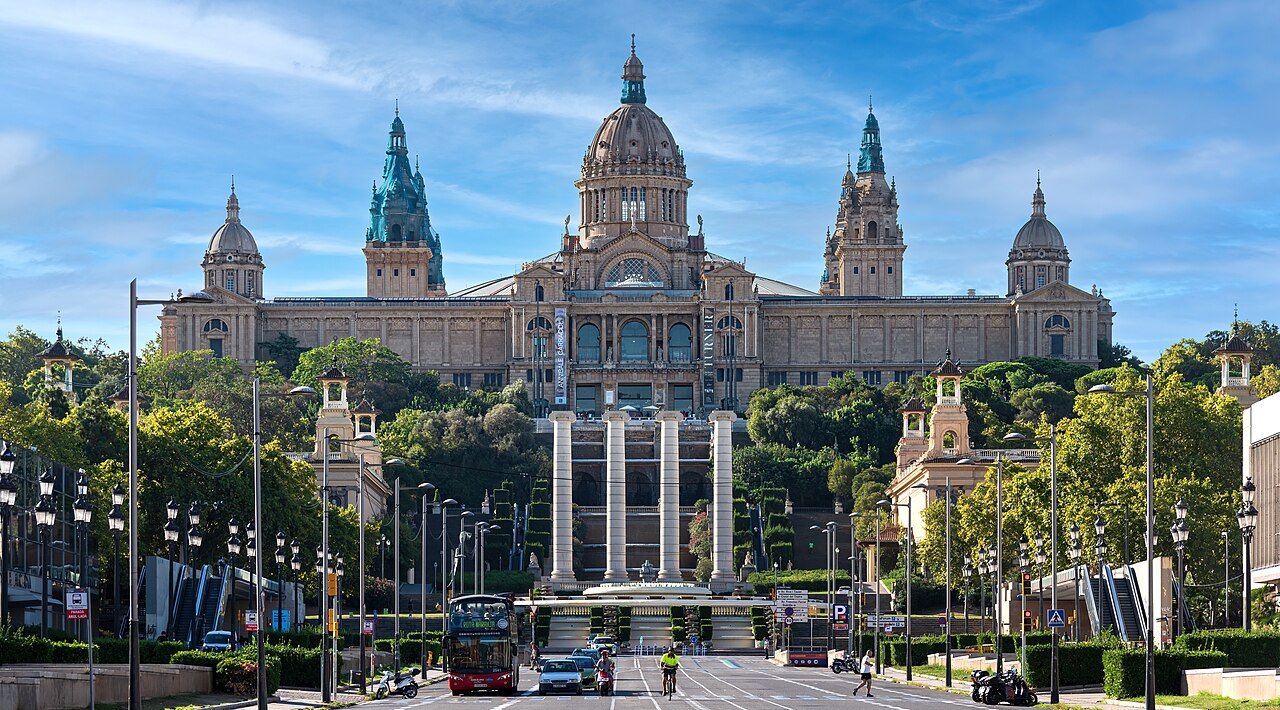
Photo credits: The foundation from its lawn — Kippelboy, CC0 · The entrance to the permanent collection — Kippelboy, CC0 · The CEAC entrance, the ceramic Woman, Bird and a Star, Calder’s 4 Wings and the Sculpture Garden — Enric, CC BY-SA 4.0 · The tower and its glass — Thomas Roessler, CC BY-SA 3.0 · The roof vaults and the courtyard olive tree — Kippelboy, CC BY-SA 3.0 · Inside the galleries — matilde.m.s, CC BY-SA 2.0 · The Mercury Fountain and a terrace bronze — Kippelboy, CC BY-SA 4.0 · The model for The Sun, the Moon and One Star over the city — Andrew Moore, CC BY-SA 2.0 · Espai 13 — Kippelboy, CC BY 4.0. All via Wikimedia Commons.