Andorra Day Trip from Barcelona: How to See Three Countries in One Day
Breakfast in Spain, a mid-morning wander round a French village, lunch at 1,000 metres in a country most people cannot place on a map, and back in Barcelona in time for dinner. The Andorra day trip is the only excursion from the city that crosses two international borders in a single day, and it exists because of a geographic accident: a tiny Catalan-speaking principality, wedged into the high Pyrenees between Spain and France, with no airport, no railway station and exactly two roads in — one from each neighbour.
That isolation is the point. Andorra kept its own parliament, its own tax regime and its own strange double-headed monarchy while the empires around it rose and fell, and it is now a one-day journey from Barcelona’s main station. This guide explains how the trip actually works: the route the tours take, what you see in each country, how long you honestly get in the capital, what the famous duty-free shopping is really worth once customs allowances bite, and the three gotchas — passports, phone roaming and mountain weather — that catch people out. If your list of things to do in Barcelona is already full, this is the day trip worth stealing a day for.
One booking warning before anything else. This is a 12-hour day with an early start, and the good small-group tours sell out in ski season and around holidays. Barcelona: 3 Countries in One Day — Spain, France & Andorra Through GetYourGuide the original three-countries tour is rated 4.6/5 from more than 3,000 reviews, with free cancellation up to 24 hours in advance — worth having on a trip whose star attraction is a mountain pass.
Table of Contents
- The Quick Verdict
- 1. What Andorra Actually Is: A Country Primer
- 2. The Route: Three Countries in Twelve Hours
- 3. Bagà: Medieval Spain Before Breakfast
- 4. Into France: Catalunya Nord and a Famous Supermarket
- 5. Port d’Envalira: 2,408 Metres Up
- 6. Andorra la Vella: Europe’s Highest Capital
- 7. Casa de la Vall and the Old Town
- 8. Shopping and the Duty-Free Question
- 9. If You Stay Longer: Spas, Churches and Viewpoints
- 10. Andorra in Winter: The Ski Version
- 11. Going It Alone: Driving or the Bus
- The Honest Downsides
- When to Go
- Andorra Day Trip Costs, Honestly
- Final Thoughts
- FAQs: Andorra Day Trip from Barcelona
The Quick Verdict
Yes — if you have a spare day and any curiosity about the Pyrenees, this is one of the most rewarding excursions in Catalonia, and it earns its place on our round-up of the best day trips from Barcelona. The honest shape of it: roughly six of the twelve hours are driving, broken into scenic legs with real stops — a medieval Catalan village, a French border town, the highest paved pass in the Pyrenees — and you get about two hours in Andorra la Vella itself. Treat it as a mountain journey with a bonus country attached, not as a city break, and you will love it. Take the organised tour unless you genuinely enjoy mountain driving; the pass road is superb and much better watched than driven.
1. What Andorra Actually Is: A Country Primer
Andorra is a real, sovereign country — just a very small one. It measures 468 square kilometres (you can drive across it in under an hour), holds fewer than 90,000 people, and is divided into seven parishes strung along the valleys of the Valira rivers. Its official language is Catalan — the only country in the world where Catalan is the state language — and its head of state is not one monarch but two co-princes: the Bishop of Urgell, in Spain, and the President of France, an arrangement settled in 1278 and never since undone. A first written constitution arrived only in 1993.
Three facts shape any visit. First, Andorra is not in the European Union or the Schengen zone: it uses the euro under a monetary agreement, but its borders are real customs borders, with everything that means for passports, shopping allowances and phone bills (see the downsides and FAQs below). Second, it has no airport and no railway — every visitor arrives by road, which is why a day trip is a road trip. Third, it sits high: the capital is the highest in Europe, the valleys start where most mountains finish, and the weather can change by the hour.
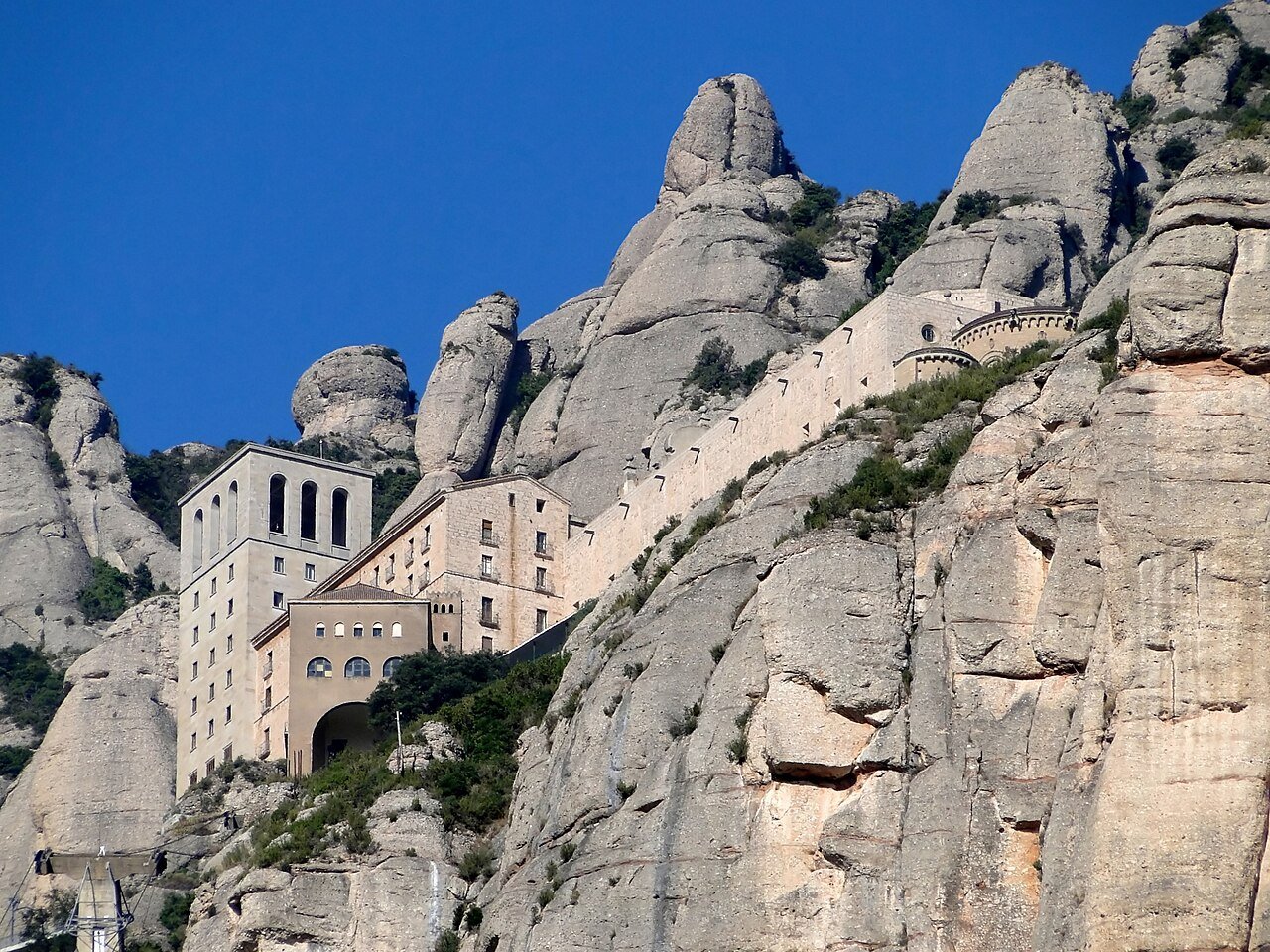
Most Barcelona visitors who take a mountain day trip head for Montserrat — and should; the abbey is magnificent. But Montserrat is an hour away and unmistakably Catalonia. Andorra is three hours away and unmistakably abroad: different flag, different tax receipts, a parliament in a sixteenth-century manor house and a national shrine to the Virgin of Meritxell, whose slate arches by Ricardo Bofill guard the valley road. That difference is the whole appeal.

2. The Route: Three Countries in Twelve Hours
The classic itinerary runs north-west out of Barcelona on the C-16, through the Túnel del Cadí and into the high Berguedà, where the first stop is the medieval village of Bagà. From there the road crosses into France — the Cerdanya valley was split between the two kingdoms in 1659, and the border is still just a sign between Catalan-speaking villages — for a stop around Latour-de-Carol and a browse of the famous French supermarket at Ur. Then comes the climb: instead of the tunnel, the tours take the old road over the Port d’Envalira, at 2,408 metres the highest paved pass in the Pyrenees, pausing at the border post for the all-important passport stamp. The descent runs through the ski stations of Grau Roig and Pas de la Casa and down the Valira valley to Andorra la Vella, where you get around two hours — a guided look at the old town, then free time for lunch and the shops. The return is the cleverest part: the coach drives straight through Andorra and out the Spanish side, so you cross the entire country, border to border, in a single afternoon, and re-enter Spain at La Seu d’Urgell for the run home.
It adds up to roughly 400 kilometres and about six hours of driving, in legs of one to two hours. That sounds like a lot; in practice the scenery does the entertaining, and the guides earn their money on the history of a border that moved over people’s heads. Barcelona: 3 Countries in One Day — Spain, France & Andorra The GetYourGuide version of this route runs 12 hours in a small group with an English-speaking guide, and that 4.6/5 rating across 3,000-plus reviews is built mostly on those two things: the driving is broken up well, and the day never feels like a bus ride with stops — it feels like a journey with a bus attached.

3. Bagà: Medieval Spain Before Breakfast
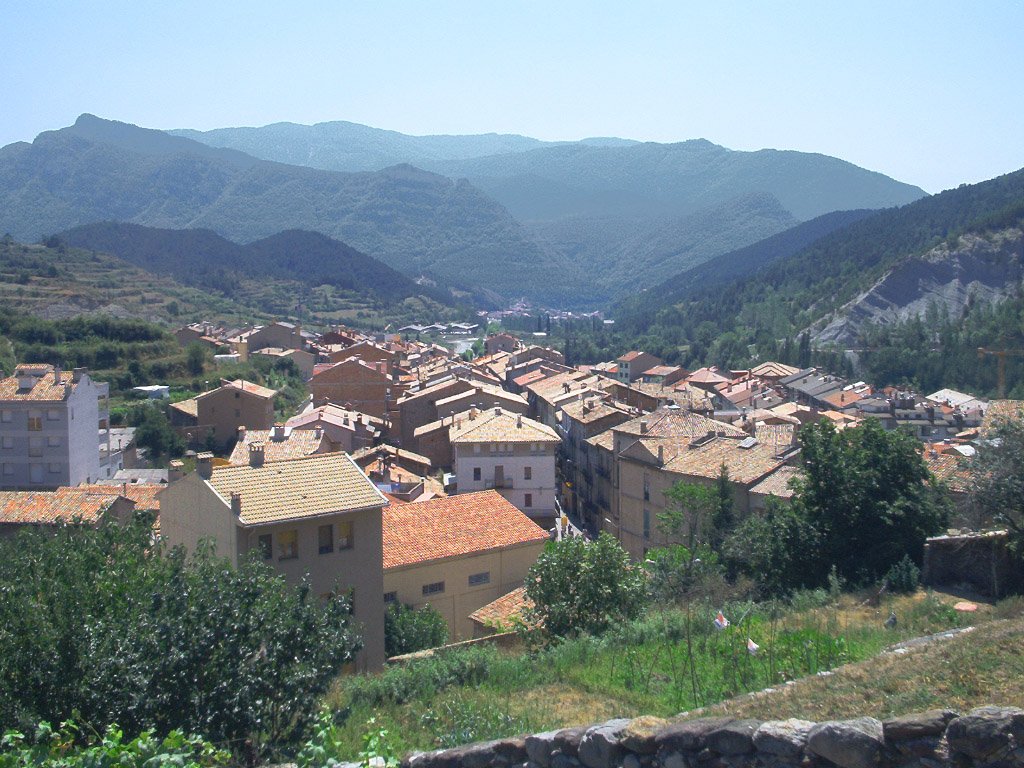
The day’s first country sets the tone quietly. Bagà, about two hours out of Barcelona, is a small stone village in the foothills of the Cadí-Moixeró Natural Park, famous in Catalan history as the seat of the Barons of Pinós and built around a thirteenth-century arcaded square, the Plaça Porxada. The tours pause here for coffee and a short guided walk: the square, the church of Sant Esteve, and streets that have barely changed shape since the village was a staging post on the road over the Pyrenees.
It is a gentle start, deliberately so — twenty or thirty minutes to stretch your legs in mountain air while the guide explains the world you are driving into: the Catalan counties, the old smugglers’ paths, and why this valley spoke Catalan on both sides of a border that had not been drawn yet. By the time you re-board, Barcelona feels a long way behind you, which after barely two hours is a small magic trick in itself.
Bagà also quietly introduces the day’s recurring theme: this whole route was a working borderland long before it was a tour. The Pinós barons taxed the traffic over the passes, mule trains carried salt, iron and cloth through villages like this one, and the smuggling that the high valleys later became famous for was simply the family business continuing by other means. Keep that in mind at the Envalira summit, where the coach parks a few metres from paths that were contraband motorways for centuries.
4. Into France: Catalunya Nord and a Famous Supermarket
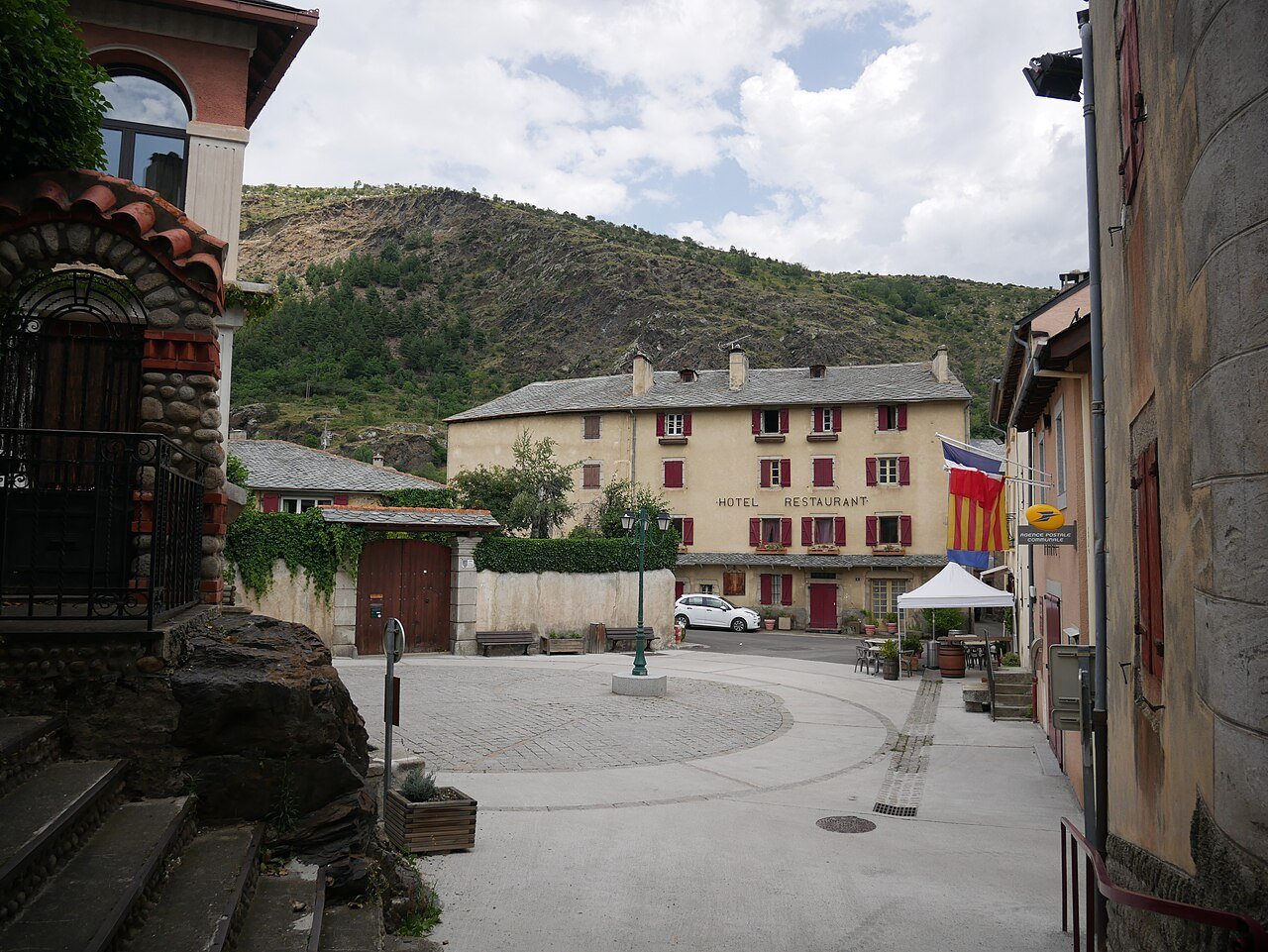
North of the Cadí tunnel, the road drops into the Cerdanya, a wide sunlit valley that the Treaty of the Pyrenees cut in half in 1659: the south stayed Spanish, the north became French, and the villages on both sides went on speaking Catalan and intermarrying regardless. Guides call the French side Catalunya Nord, Northern Catalonia, and you can still see the senyera flying beside the tricolore over the mairie at Latour-de-Carol, the quiet border village where the tours pause.
France’s contribution to the day is knowingly unglamorous, and all the better for it: twenty minutes in the Carrefour at Ur, a mountain supermarket so woven into local life that it flies a bear mascot at the door and hangs ski gondolas from the ceiling, while locals from three countries stock up on French wine, cheese and pâtés at prices Spain rarely matches. It is the most honest stop on the itinerary — this is what the border actually means to the people who live on it — and your bag will be heavier afterwards. Consider yourself warned.
5. Port d’Envalira: 2,408 Metres Up
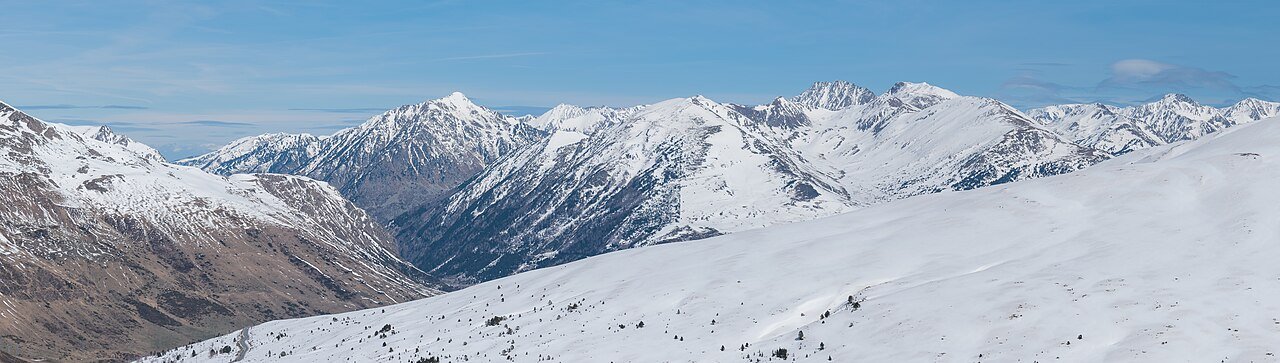
Then the road starts climbing in earnest. The tours skip the Envalira tunnel and take the pass road instead, hairpin by hairpin, to the Port d’Envalira at 2,408 metres — the highest paved road pass in the Pyrenees and a legendary Tour de France climb. For scale: Tibidabo, the mountain that towers over Barcelona, tops out at 512 metres. Envalira is nearly five Tibidabos stacked up, and the views from the top — a sea of snow-streaked peaks in winter, high green pasture in summer — are the visual peak of the whole day.
At the summit sits the border post, where the coach stops and passports come out. Checks are usually brief, but this is a genuine external EU border, and the stamp — Principat d’Andorra — is a souvenir people plan trips around. The descent on the Andorran side passes Grau Roig and skirts Pas de la Casa, the duty-free ski town that clings to the French border, before the road unspools down the Valira d’Orient valley towards the capital. In winter this whole section is a white corridor of pistes; in summer the same slopes are cow pasture and hiking country.
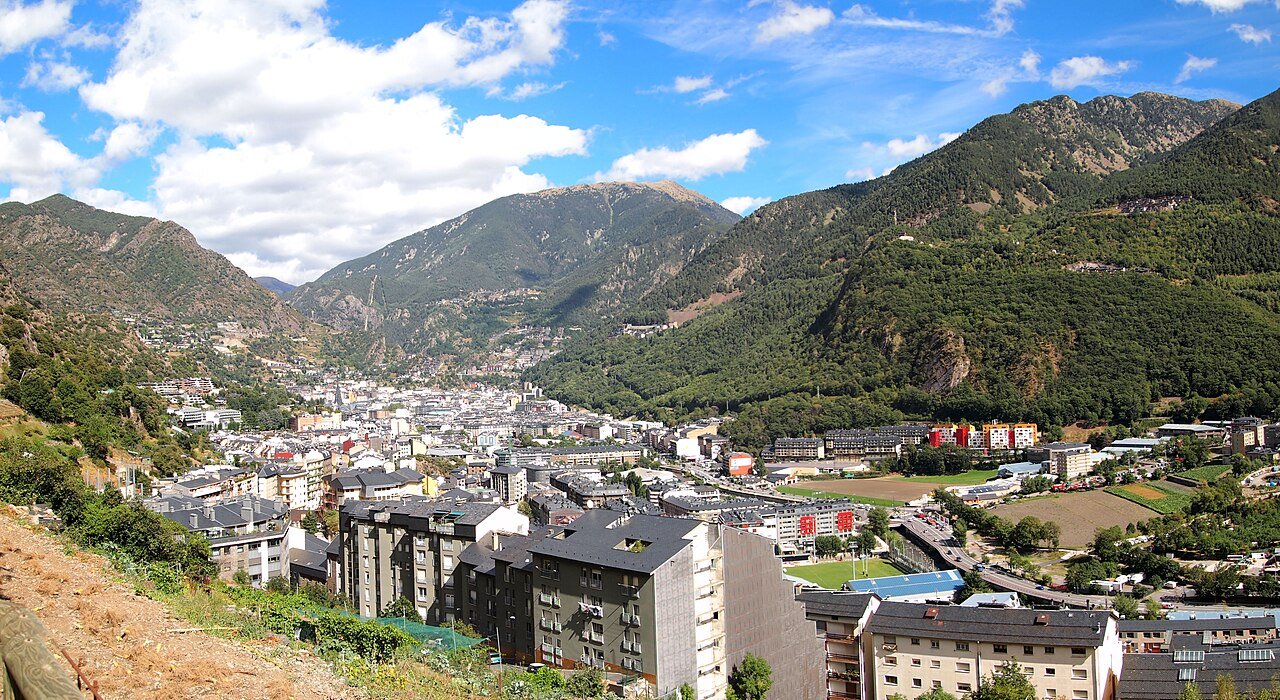
6. Andorra la Vella: Europe’s Highest Capital
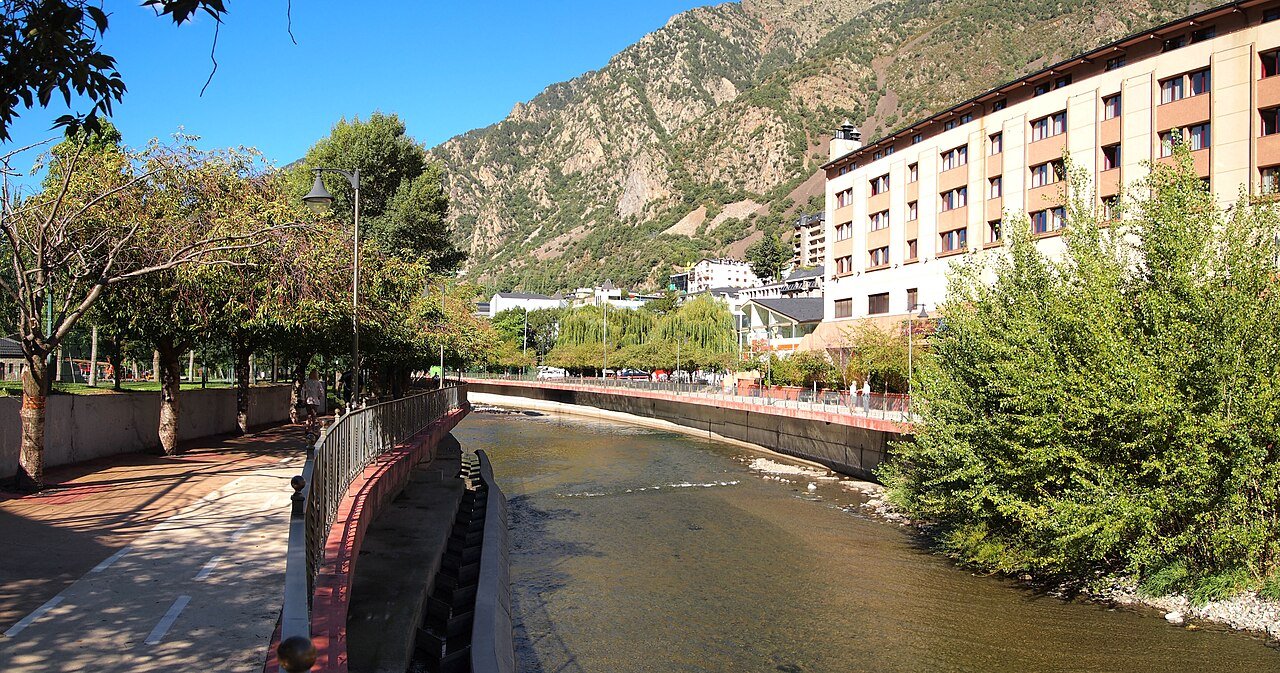
Andorra la Vella sits at 1,023 metres, which makes it the highest capital city in Europe — the only one more than a kilometre above the sea — and one of the smallest, with barely 24,000 residents in a valley that funnels every road in the country through its streets. It is not a grand capital. It is a mountain town that happens to run a country, and its charm is exactly that collision: a medieval old town on one bank of the Gran Valira river, and on the other, a kilometre-long shopping avenue built on the country’s second national industry, selling things cheaply.
Your two hours here divide naturally. The guided part covers the Barri Antic, the old town: the parliament house, the church of Sant Esteve, the stone lanes around Plaça Príncep Benlloch. The free part is yours — lunch in a borda-style restaurant (order the escudella stew or grilled Pyrenean trout if they appear), a sprint through the perfume and electronics shops on Avinguda Meritxell, or simply a coffee by the river watching a capital city behave like a village. Two hours is enough for the old town and a taste of the shops; it is not enough for everything, and the costs section below is honest about what to prioritise.
Prioritise like this. Old town first, while the guide’s commentary is fresh — Casa de la Vall’s square and Sant Esteve take twenty minutes and are the part of Andorra you cannot buy anywhere else. Then one street of shopping, not five: Avinguda Meritxell’s perfumeries all sell much the same thing, so pick your target (fragrance and spirits give the biggest savings), buy it, and stop. And resist Caldea, however tempting the glass spire looks from the street: the spa is a three-hour experience wearing a two-hour disguise, and sprinting it is the one reliable way to spoil both. It is the first item on the stay-longer list in section 9, quite deliberately.
7. Casa de la Vall and the Old Town
The one building in Andorra you should not skip is Casa de la Vall. Built in 1580 as the fortified manor of a wealthy family — note the little defensive turrets on the corners — it was bought by the Consell de la Terra in 1702 and served as Andorra’s parliament house for three centuries, until the modern Consell General building opened next door in 2011. Inside is the Armari de les Set Claus, the Cabinet of the Seven Keys, a chest that held the nation’s founding documents under seven locks, one key held by each of the seven parishes, so it could only be opened with the whole country present. As a symbol of how this place governs itself, it beats any number of marble parliaments.
Visits run as short guided tours for a small fee, on a schedule that will not always line up with a day trip’s free time — check on arrival in the old town, and if the timing fails, the exterior and the square still tell the story. Five minutes away stands the church of Sant Esteve, whose Romanesque apse and granite bell tower date to the eleventh and twelfth centuries, and between the two runs the Barri Antic itself: cobbled lanes, stone houses with wooden balconies, and not a chain store in sight. This is the Andorra that existed for a thousand years before the duty-free shops, and it survives intact a street behind them.


8. Shopping and the Duty-Free Question
Andorra’s low-tax shopping is real, but it is widely misunderstood. The mechanism: Andorra’s general sales tax (the IGI) is 4.5%, against 21% VAT in Spain, so shelf prices — above all on alcohol, tobacco and perfume, where excise does the heavy lifting — can undercut Barcelona’s noticeably. Avinguda Meritxell and the streets around it hold around a kilometre of perfumeries, jewellers, electronics stores and ski shops, and the big savings are genuine on spirits, cigarettes and fragrance.
The catch is the border you recross an hour later. Andorra sits outside the EU’s fiscal territory, so your purchases re-enter Spain under customs allowances — at the time of writing, per the Spanish Tax Agency: goods up to €900 per traveller aged 15 or over (€450 under 15), including up to €300 of food; 300 cigarettes or 400 g of tobacco; 1.5 litres of spirits over 22% or 3 litres of weaker drinks, plus 5 litres of still wine and 16 litres of beer. Allowances are per person and cannot be pooled onto one item; go over, and tax falls due on the goods’ whole value, not just the excess. Border checks are spot checks rather than systematic — but “usually waved through” is not a strategy, and the tour guides will tell you the same. Buy the perfume and the good bottle; think twice about the third carton, keep your receipts, and the duty-free part of the day stays fun instead of becoming a negotiation.

9. If You Stay Longer: Spas, Churches and Viewpoints
A day trip shows you the capital and the road. What it cannot show you is the Andorra that repays a night or two — and the tracker that inspired this guide asked about the weekend version too, so here is the honest case for it. Start with Caldea, in Escaldes-Engordany, a ten-minute walk from the old town: opened in 1994 and billed by its owners as the largest thermal spa in southern Europe, a glass mountain of lagoons and steam rooms fed by hot springs, crowned by an 80-metre spire that is the tallest building in the country. Three hours there after a day on the road is the single best upgrade a longer stay buys; admission varies by season, so check the official site for your dates.
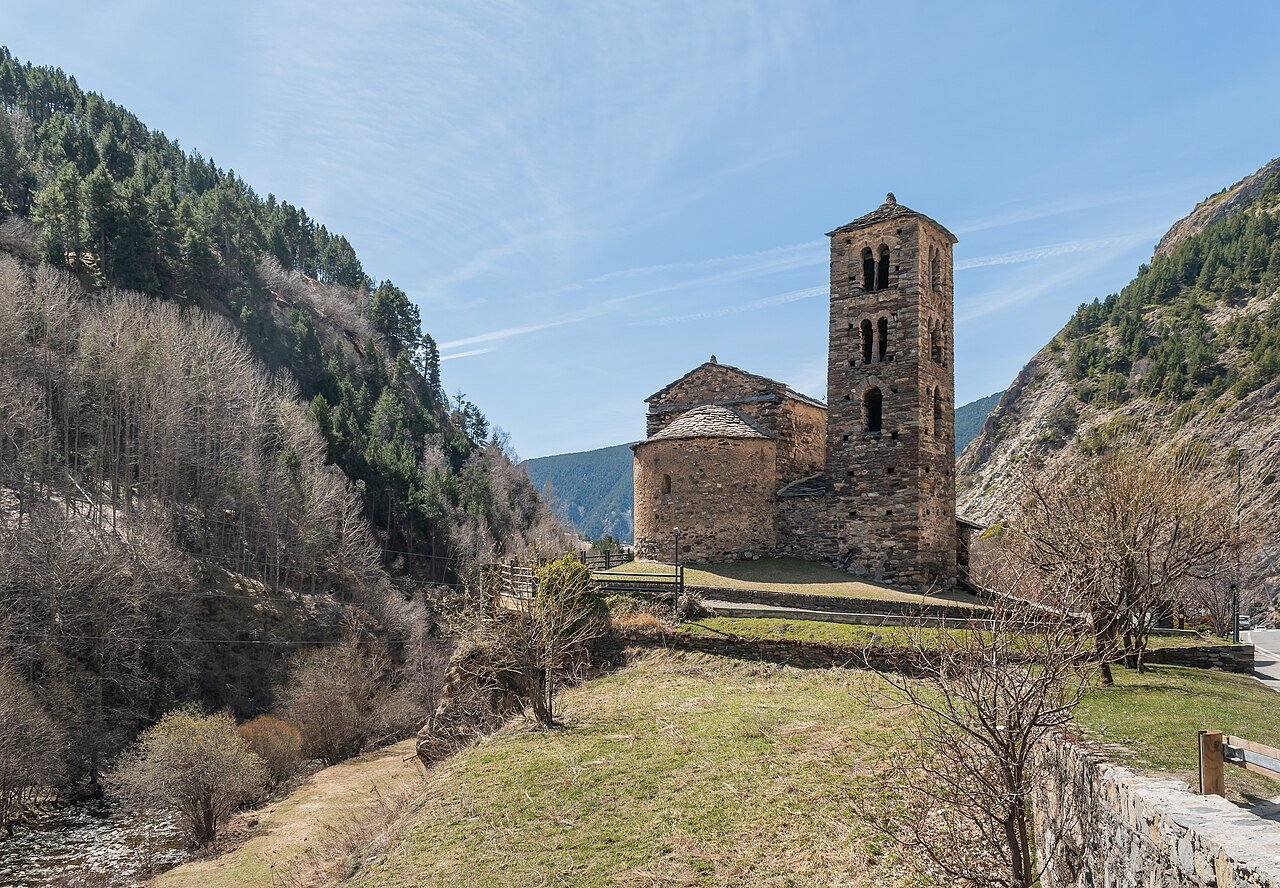
Then there are the Romanesque churches, a dozen tiny stone masterpieces scattered through the valleys. The finest, Sant Joan de Caselles near Canillo, keeps a tall Lombard bell tower and a stucco Christ in Majesty; Santa Coloma, near the capital, has one of the only round bell towers in the Pyrenees. Above Canillo, the Mirador Roc del Quer cantilevers a platform — part of it glass-floored — out over the valley, with a bronze thinker seated at its tip contemplating the view; a small entry fee applies in season. And at Naturland, near Sant Julià de Lòria, the Tobotronc sled run drops 5.3 kilometres through the forest, among the longest alpine coasters in the world. None of this fits a day trip. All of it is an easy second day.


10. Andorra in Winter: The Ski Version
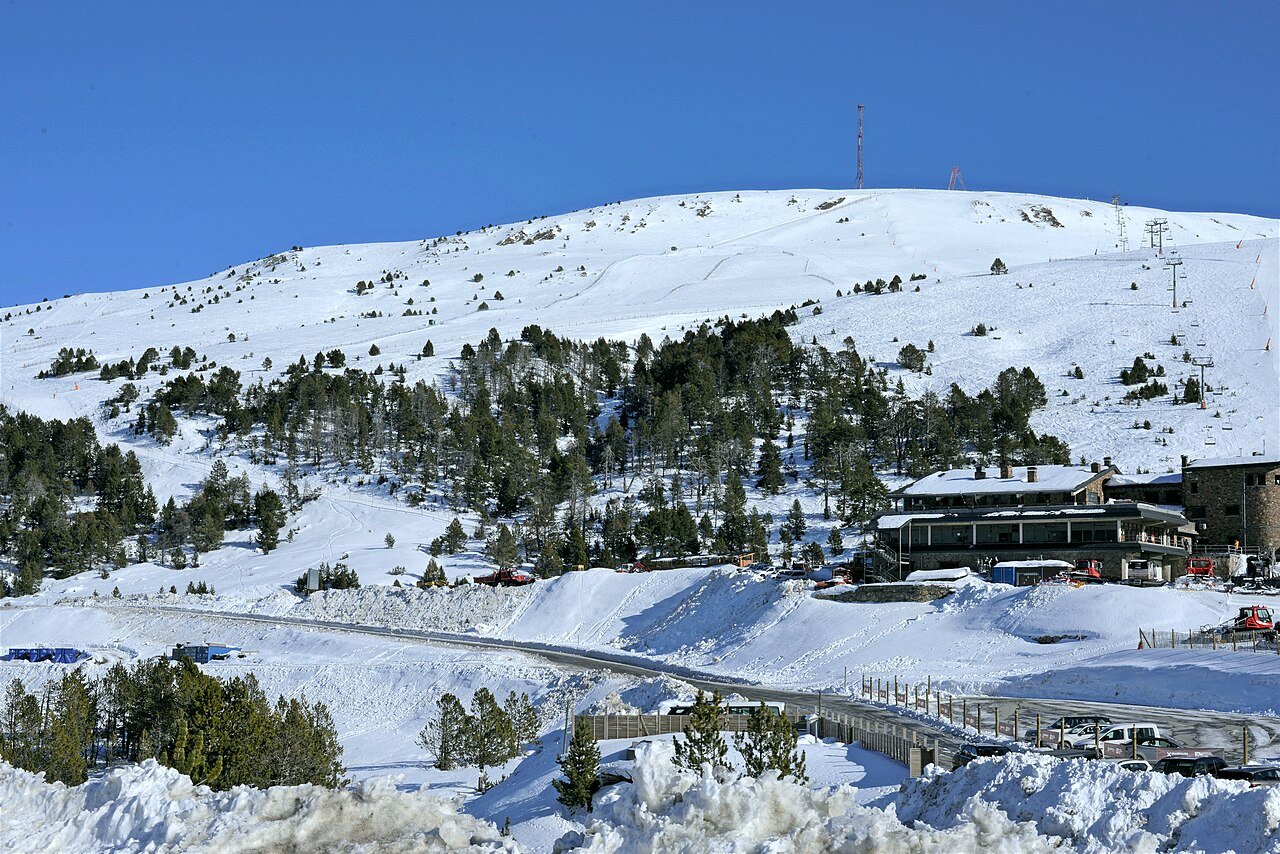
From roughly December to April, Andorra changes personality: it becomes the Pyrenees’ ski capital. Grandvalira, linking Pas de la Casa, Grau Roig, Soldeu, El Tarter and more, is the largest ski resort in the Pyrenees, with 215 kilometres of pistes; the Pal-Arinsal sector above La Massana adds a second, family-friendlier mountain. You will drive through the edge of all this on the day trip — the descent from Envalira is a piste-side road in winter — and for skiers the day trip doubles as a reconnaissance mission.
Could you ski on a Barcelona day trip? Technically the organised excursions run year-round, but two hours in the capital buys no skiing at all, and even driving up independently, Barcelona to the slopes and back is six hours of winter mountain road for perhaps five on snow. The honest version is a weekend: one night in Soldeu or Pas de la Casa, two days on the Grandvalira pass, Caldea on the way down. Winter also sharpens the day trip’s risks — the Envalira road is kept open heroically, but heavy snow can slow the whole itinerary, which is another argument for a ticket you can cancel the day before.
11. Going It Alone: Driving or the Bus
You do not need a tour. The drive from Barcelona is about 200 kilometres and three hours each way: C-16 north through the Túnel del Cadí (a toll of around €13 each way at the time of writing), then La Seu d’Urgell and the CG-1 up the Valira valley. The road is good, the scenery is the same, and a car lets you add the churches and viewpoints in section 9 at your own pace. The costs are concentration — the Envalira pass and the valley roads demand a driver who is not also sightseeing — plus winter rules: between roughly November and mid-May, Andorran law requires winter tyres or chains on board, and rental companies do not always volunteer them. Parking in the capital is plentiful but not free.
The middle option is the direct bus: coaches run from Barcelona (Sants and Nord stations) to Andorra la Vella in about three and a quarter hours, with one-way fares roughly in the €30–40 range depending on the operator and how early you book. That gets you the capital cheaply and leaves the day yours — but note what it misses: no Bagà, no France, no Envalira summit, and no guide stitching the border story together. It is transport, not a tour. Compare it with our Girona day trip, the other great excursion north: Girona needs no passport, no customs talk and half the road time, which is exactly why Andorra feels like the bigger adventure. If you are building a longer stay, our 3 days in Barcelona itinerary shows where a fourth day opens up — Andorra is the strongest candidate for it.
The Honest Downsides
The honest list runs like this, and none of it is a deal-breaker if you know it in advance. It is a long day. Twelve hours, an early start, and roughly half of it on a coach; the stops break it up well, but tired travellers and very small children will feel it. You get about two hours in Andorra itself. Travellers who imagine a leisurely day in the capital sometimes come home annoyed — read section 2 again: this is a journey through three countries whose headline stop is a capital, not a city break. Mountain weather is a co-author of the itinerary. Cloud can erase the Envalira views, snow can slow winter departures, and in heavy weather the pass may be swapped for the tunnel; the day still runs, but the postcard is not guaranteed. And your phone will punish you for forgetting where you are: Andorra is outside the EU’s roam-like-at-home zone, so a Spanish or EU SIM left on mobile data can rack up charges at eye-watering per-megabyte rates. Download offline maps before you cross, switch data roaming off, and treat the capital’s café Wi-Fi as your network. One more seasonal sting: on summer Sunday evenings the return queues at the Spanish border post at La Farga de Moles can add an hour to the drive home, as half of Catalonia brings its shopping back at once — the tours know it and pad for it, but independent drivers should too. Finally, a small one: some operators adjust the French stop on Sundays to dodge traffic, so if Latour-de-Carol matters to you, ask before you book a Sunday.
When to Go
Late spring and early autumn are the sweet spots for the classic day trip: the Envalira road at its most photogenic, green valleys below and snow still on the tops, and the capital’s shops and old town at their calmest. Summer brings the full high-mountain version — the pass pasture-green, the Roc del Quer and hiking trails open, long evenings for the drive home — at the price of August traffic queues at the Spanish border on weekend evenings. Winter is the dramatic one: a white corridor over the pass and a capital dressed for the ski season, balanced against the slowest roads and the real possibility of delays. There is no bad month, but there are two different trips — the green one and the white one — and it is worth choosing deliberately.
Andorra Day Trip Costs, Honestly
The organised tour is the benchmark: Barcelona: 3 Countries in One Day — Spain, France & Andorra — from $86.94 per person at the time of writing on GetYourGuide, with the 4.6/5 rating from 3,076 reviews and free cancellation up to 24 hours ahead. Prices are date-based and discounted fares come and go, so treat that figure as a guide, not a promise. Against it, driving yourself costs fuel plus around €26 of Cadí tolls return and a day of mountain concentration; the direct bus is the cheapest route of all at roughly €30–40 each way, but buys transport only.
On the ground, the capital is kind to wallets: Casa de la Vall’s guided tour costs a small fee, the churches are free or near it, a sit-down lunch of Pyrenean cooking runs no more than Barcelona prices and often less, and coffee is cheap. The one line item that can quietly double your day is the shopping — which is, of course, the idea. Set the budget before Avinguda Meritxell sets it for you, stay inside the customs allowances in section 8, and the most expensive souvenir you bring home will be the passport stamp, which is free.
10 Best Day Trips from Barcelona: Monasteries, Medieval Towns and the Costa Brava
Travel insurance, sorted
Whether it is a two-week holiday or a longer move, travel insurance is not the most glamorous part of a trip — but it is the one booking you want to have in place before a trip, and while you are already away. Get a quote from SafetyWing
Final Thoughts
So, should you spend one of your Barcelona days leaving Spain twice? If you have three days or fewer in the city, no — Barcelona itself wins. With four or more, the Andorra trip becomes something rarer than another museum: a proper journey, over the highest pass in the Pyrenees, into a country that governed itself from a stone manor while empires queued outside, and home again by dinner with a new stamp in your passport. Go in the green season for the views or the white one for the drama, turn your phone’s data off at the border, and let someone else do the driving. Three countries, one day, zero airports — there is nothing else on the Barcelona excursion list quite like it.
FAQs: Andorra Day Trip from Barcelona
Do I need a passport to visit Andorra from Barcelona?
Yes — carry one. Andorra is not in the EU or Schengen, and the border at the Port d’Envalira is a real external border. EU citizens can cross on a national identity card; everyone else needs a passport. Checks are usually brief and the stamp is given at the border post. One important nuance: if you enter Spain on a Schengen visa, you need one that lets you re-enter Spain afterwards, because visiting Andorra means leaving the Schengen area and coming back.
Is Andorra in the European Union?
No. Andorra is an independent principality that uses the euro under a monetary agreement with the EU, but it is not an EU or Schengen member and sits outside the EU’s fiscal territory. That is why the shopping is cheap (its own sales tax is 4.5%), why customs allowances apply to what you carry back into Spain, and why EU mobile roaming does not cover it.
How long does it take to get from Barcelona to Andorra?
About three hours by road each way — roughly 200 kilometres via the C-16 and the Túnel del Cadí. The organised three-countries tour stretches that into a 12-hour day with stops in Bagà, French Cerdanya and at the Envalira summit; the direct bus to Andorra la Vella takes about three and a quarter hours. There is no train and no airport: the road is the only way in.
Can I ski in Andorra on a day trip from Barcelona?
Not sensibly on the organised excursion — it gives you about two hours in the capital and no slope time. Skiers should treat the day trip as a scouting run and come back for a night or two: Grandvalira, the largest ski resort in the Pyrenees with 215 kilometres of pistes, deserves at least a full weekend, and the drive home after a day’s skiing on winter roads is nobody’s idea of fun.
Is the duty-free shopping really worth it?
On the right things, yes: alcohol, tobacco and perfume carry the biggest savings over Spanish prices, thanks to Andorra’s 4.5% sales tax. On electronics and fashion the gap is smaller than the window displays suggest. Either way, the Spanish Tax Agency’s allowances govern what crosses the border back with you — goods up to €900 per adult traveller, 300 cigarettes, 1.5 litres of spirits — so shop to the allowance, keep receipts, and the savings survive the journey home.