Barcelona in June: 12 Things to Do, From Primavera Sound to the Night of Fire
June is the month Barcelona becomes the city people picture. The sea turns properly warm, the sun stays up past half past nine, and the calendar detonates in sequence: Europe’s biggest indie festival in the first week, a bonfire on every corner in the fourth, and a public holiday to recover from it. Where May in Barcelona was the last easy month, June is the first full one — summer at capacity, before August’s heat takes it somewhere harder. Everything the season promises is already here; the prices, while no longer gentle, have not yet peaked.

The practical shape of the month: Primavera Sound takes the Fòrum from 2 to 6 June, free-museum Sunday lands on the 6th, Sitges flies its rainbow 9–13 June, Sónar’s weekend sits — provisionally, and this guide will explain — on 17–19 June, the solstice falls on the 21st, and the Revetlla de Sant Joan burns on the night of Wednesday 23 June, with the holiday on the 24th. For June’s defining pleasure, though, book water: Barcelona: Sunset Catamaran Cruise with Live Music sails a 78-foot catamaran out of Port Vell for 90 minutes of live jazz and the latest sunsets of the year — rated 4.7/5 across 3,589 reviews, from about $31 per person, free cancellation up to 24 hours ahead — in June, the best seat in the city.
What follows is the month in calendar order — the festival first, the bonfires last.
The Short Version
Short on time? Here is June in five lines:
- The shape: Summer at full strength — two giant music festivals, a Pride week down the coast, the year’s longest days and the city’s biggest night.
- The headline night: The Revetlla de Sant Joan, Wednesday 23 June — bonfires, fireworks, midnight swims, and a holiday on the 24th to sleep through.
- The headline week: Primavera Sound, 2–6 June at the Parc del Fòrum — the 25th edition, and the start of the European festival summer.
- The weather: Genuinely hot at last — highs around 25–26 °C, evenings near 18 °C, sunset around 21:30, and a sea past 20 °C.
- The strategy: June plays by summer rules. Book the Gaudí sights weeks ahead, book festival weekends before everything, and keep the siesta hours for the shade.
June’s only real traps are assuming May’s booking habits still work (they don’t) and sleeping through the 23rd (unforgivable).
What June Weather Is Really Like
June is when Barcelona’s summer stops being a rumour — April’s phrase, now retired for good. The month runs on long, hot, dependable days: the last week can touch 30 °C, the sea breeze does its daily rescue work, and rain becomes a rarity you might not meet at all.
| June in Barcelona | The numbers |
|---|---|
| Daytime highs | Around 25–26 °C (about 24 °C in the first days, pushing 28–30 °C by the end) |
| Night-time lows | Around 17–18 °C |
| Sea temperature | About 20 °C at the start, climbing to 22 °C by the end — proper swimming all month |
| Rain | Roughly 4 days in the month — summer storms, brief and dramatic |
| Daylight | About 15 hours; the solstice on 21 June is the longest day of the year, and sunset sits around 21:25–21:30 all month |
Pack for heat: the summer wardrobe, unreservedly — shorts, sandals, swimsuits in plural — plus sun protection you will actually use, a hat for the midday sights, and one light layer for air-conditioned museums and the sea breeze after dark. The behavioural packing matters more: June rewards the Mediterranean rhythm — sights early, shade and long lunches at midday, the city again from six until late. Our best time to visit Barcelona guide sets June against the year; the short version is that June is summer with its best manners still on — July and August drop them.
Contents
- 1. Primavera Sound: The Summer Starts Here (2–6 June)
- 2. Free-Museum Sunday at Full Stretch (Sunday 6 June)
- 3. The Beaches in High Season: Warm Sea, Full Service
- 4. The Gaudí Sights in Summer Mode
- 5. Take to the Water: The Sunset Catamaran
- 6. Day Trip: Sitges in Pride Week (9–13 June)
- 7. Sónar: The Festival That Announced Its Own Death (17–19 June)
- 8. The Longest Days: Solstice Light (Monday 21 June)
- 9. Revetlla de Sant Joan: The Night of Fire (Wednesday 23 June)
- 10. The Grec Opens the Summer Stage (Late June)
- 11. Eat June: Coca, Sardines and the First Melons
- 12. Pride: June Hands the Rainbow to July
1. Primavera Sound: The Summer Starts Here (2–6 June)
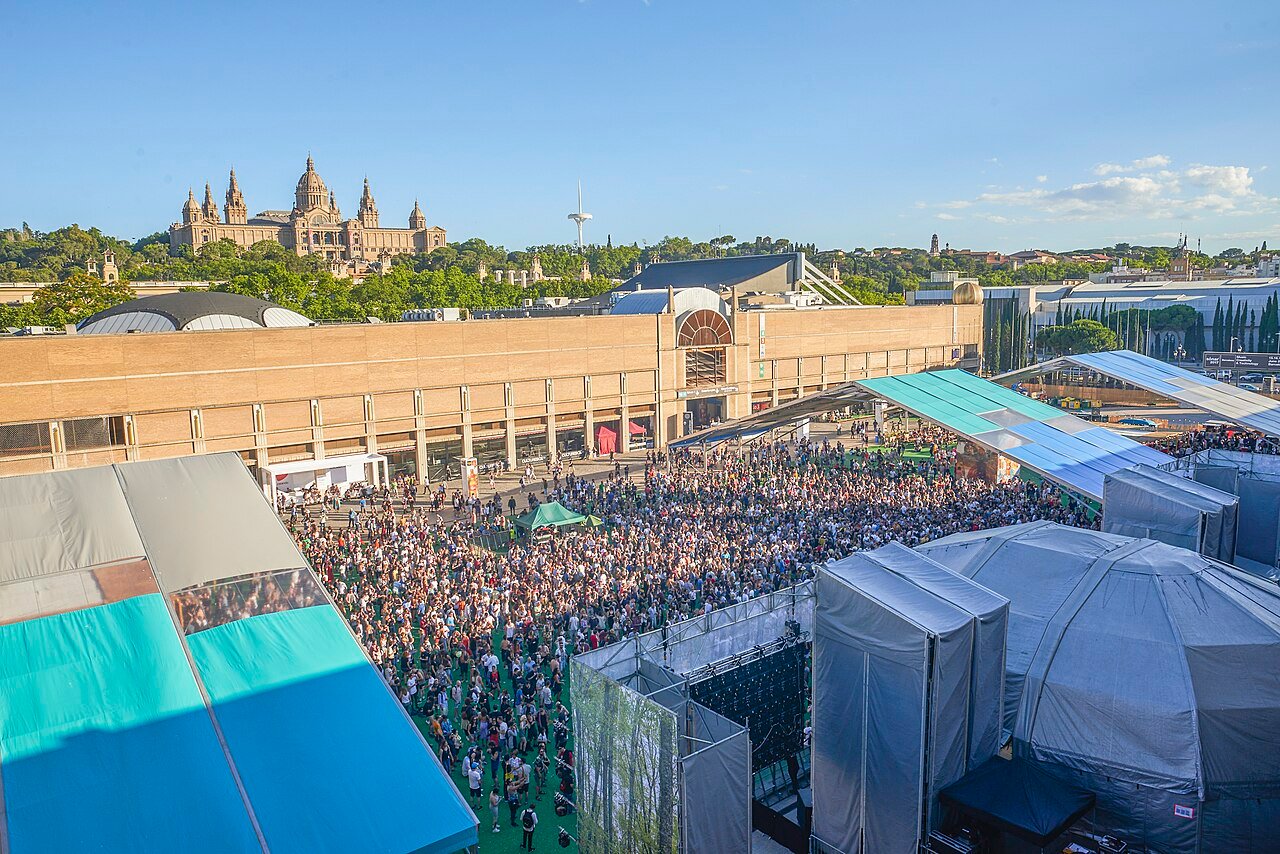
June opens with the loudest possible statement. Primavera Sound runs Wednesday 2 to Sunday 6 June at the Parc del Fòrum, on the city’s north-eastern seafront — the festival’s 25th edition, its lineup already announced. The main days are Thursday 3 to Saturday 5 June, when a dozen-plus stages across the Fòrum’s concrete terraces run from late afternoon to six in the morning: indie rock, pop, hip-hop, electronic and the left-field bookings the festival is famous for, before crowds in the tens of thousands per day.
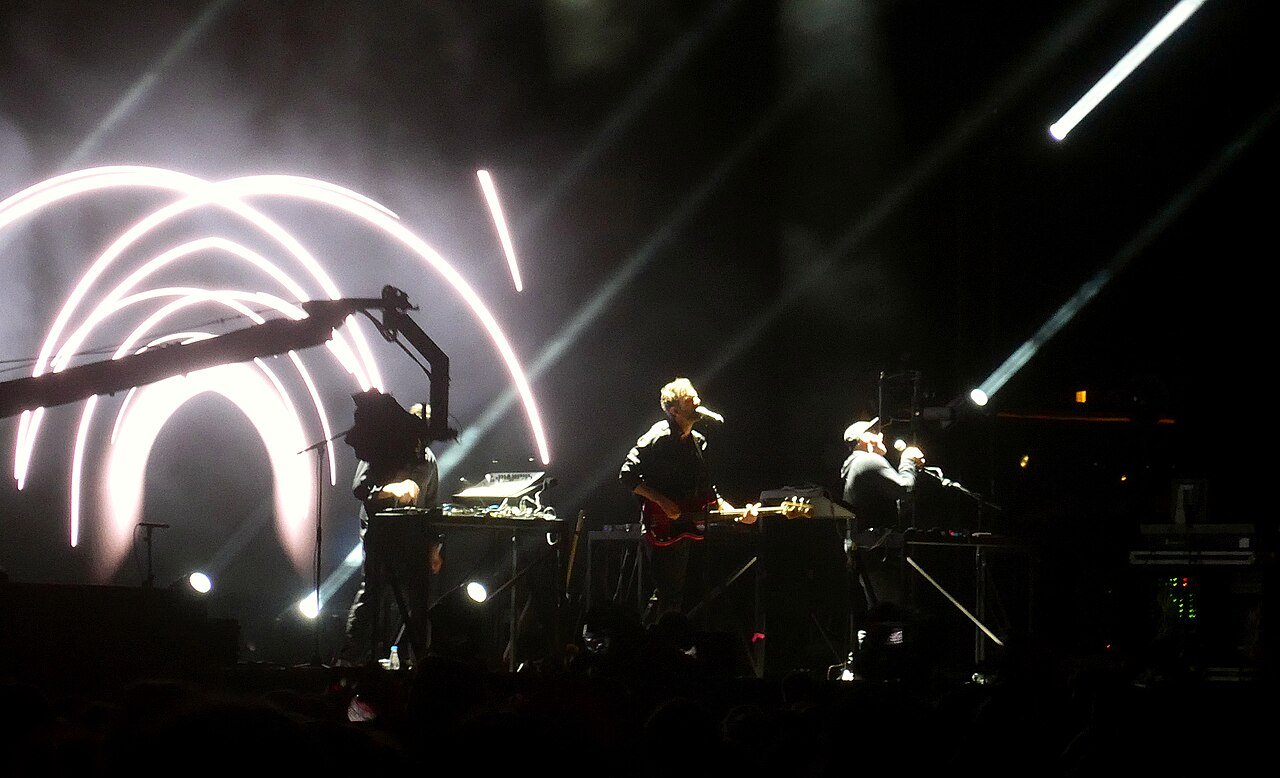
What first-timers underestimate is the shape of the thing. This is a night festival in disguise: headliners peak between midnight and 3 a.m., the city’s hotels fill with people sleeping until noon, and the Fòrum’s saving grace is its setting — a Mediterranean breeze, food courts that run all night, the sea a few hundred metres from the stages. Recent editions have opened with a free Wednesday programme and wrapped the week with Primavera a la Ciutat, satellite gigs in venues across the city — check the 2027 programme before you build around either.
The honest ticket position: full passes in recent editions sold from around €200 in early tiers and are long gone by June; day tickets are the standard late route, alongside the festival’s official resale channel. Anyone selling a wristband outside the gates is selling you a story. If your trip only overlaps the weekend, two days is the sweet spot: one for the headliners, one for the smaller stages, an afternoon at the beach before each.
2. Free-Museum Sunday at Full Stretch (Sunday 6 June)
June’s first Sunday is 6 June — which sets up the month’s finest scheduling trick. While the city’s festival half sleeps off Primavera’s final night, the museums open free: most admit everyone without charge on the first Sunday of the month, many of them all day, and the great civic collections join the separate Saturday-afternoon scheme (free from 15:00) as well.

June changes the free-Sunday calculation in one way: demand. The MNAC — the Romanesque-to-modern sweep inside the Palau Nacional — fills its free morning with festival refugees and summer visitors alike, so arrive at opening, at 10:00, and work the collection top-down against the flow. The Picasso Museum’s free Sunday slots are the month’s most contested booking (its Thursday-evening window, 19:00–21:00, is the gentler route); the Fundació Joan Miró, the CCCB, the Maritime Museum in the Drassanes shipyards and the MUHBA sites complete a circuit that could fill the whole day for nothing.
Time the day in two acts: museums until the heat peaks, a long lunch in the shade, then — since the 6th is also Primavera’s closing day — the beach or the festival’s final programme by evening. The complete scheme, booking windows and arrival tactics are in our guide to free things to do in Barcelona, which June reads as a budgeting tool as much as a sightseeing one: a free Sunday is money handed back for the festival nights.
3. The Beaches in High Season: Warm Sea, Full Service
June is the first month when Barcelona’s beaches run at full specification. By the city council’s standing calendar the high season opens at the end of May and runs to mid-September: lifeguards on duty every day (10:30–19:30), every chiringuito open, showers, toilets, sports zones and buoyed swim channels all in daily service, assisted bathing running at its summer stations. The 2027 calendar confirms its own dates in spring, but the pattern is as fixed as anything in the city’s year.
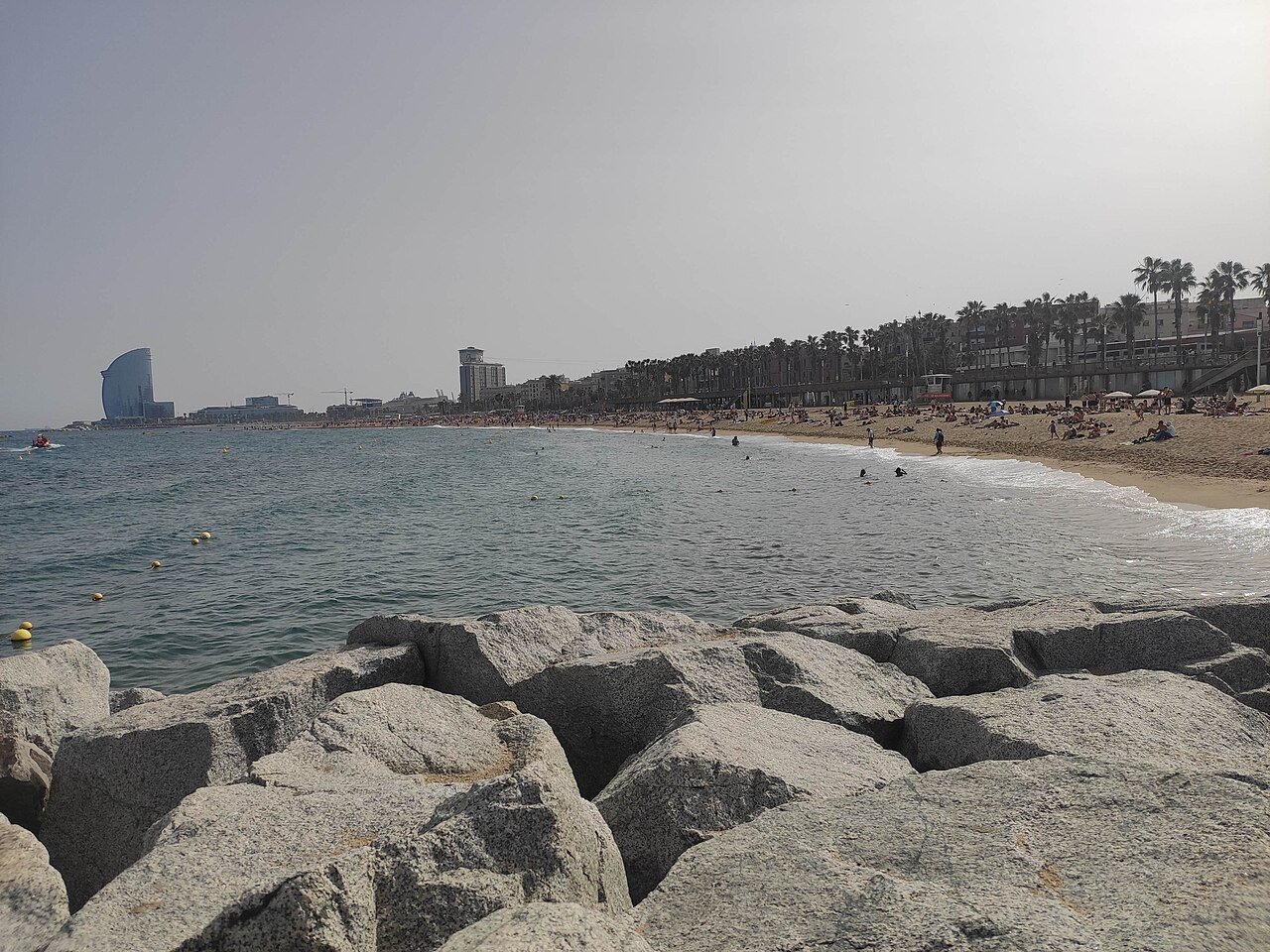
The sea is the real headline: around 20 °C as the month opens and 22 °C by its end — the temperature at which swimming stops being a bracing decision and becomes the day’s default. June’s beaches also hold one advantage July never recovers: until the school year breaks up around Sant Joan, weekday mornings keep a local, unhurried feel, with space on the sand at Sant Sebastià and Nova Icària that August visitors would not believe. From the 24th onwards the city joins you in full — plan the quiet sessions early.
Match the beach to the day: Barceloneta for energy and the old fishing quarter’s seafood behind it, Nova Icària for calm water and families, Bogatell for space, Mar Bella for the young crowd. Our guide to Barcelona’s beaches walks the whole string from the W Hotel to the Fòrum. Two June specifics: the midday hours (roughly 13:00–16:00) are for shade and lunch rather than full exposure, and the flag system deserves respect — the same breeze that cools the beach can build an afternoon chop.
4. The Gaudí Sights in Summer Mode
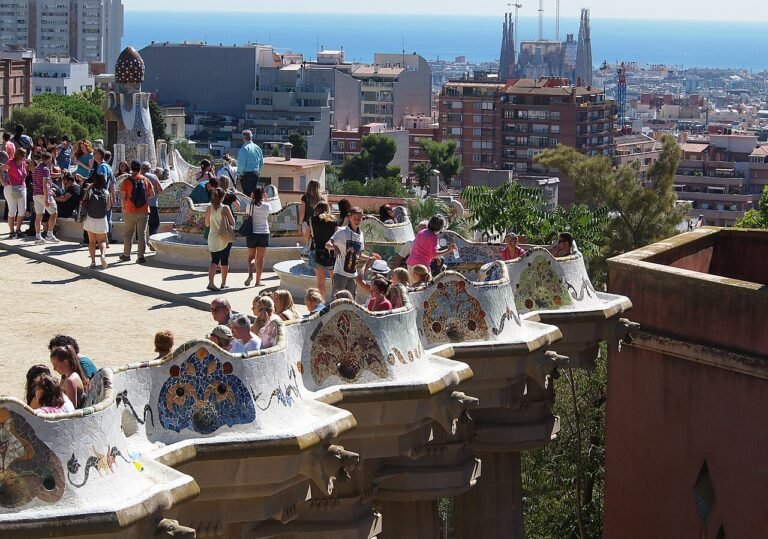
Summer rewrites the Gaudí rules, and June is when to learn them. The sights are at their photogenic peak — the Sagrada Família’s stained glass throws its full summer blaze in the late afternoon, Park Güell’s terrace looks over a city gone deep green and blue — but the crowds are now the season’s defining fact, and the queue you could walk up to in April no longer exists. Timed tickets for both release weeks ahead and the desirable slots vanish in order: first the mornings, then everything.
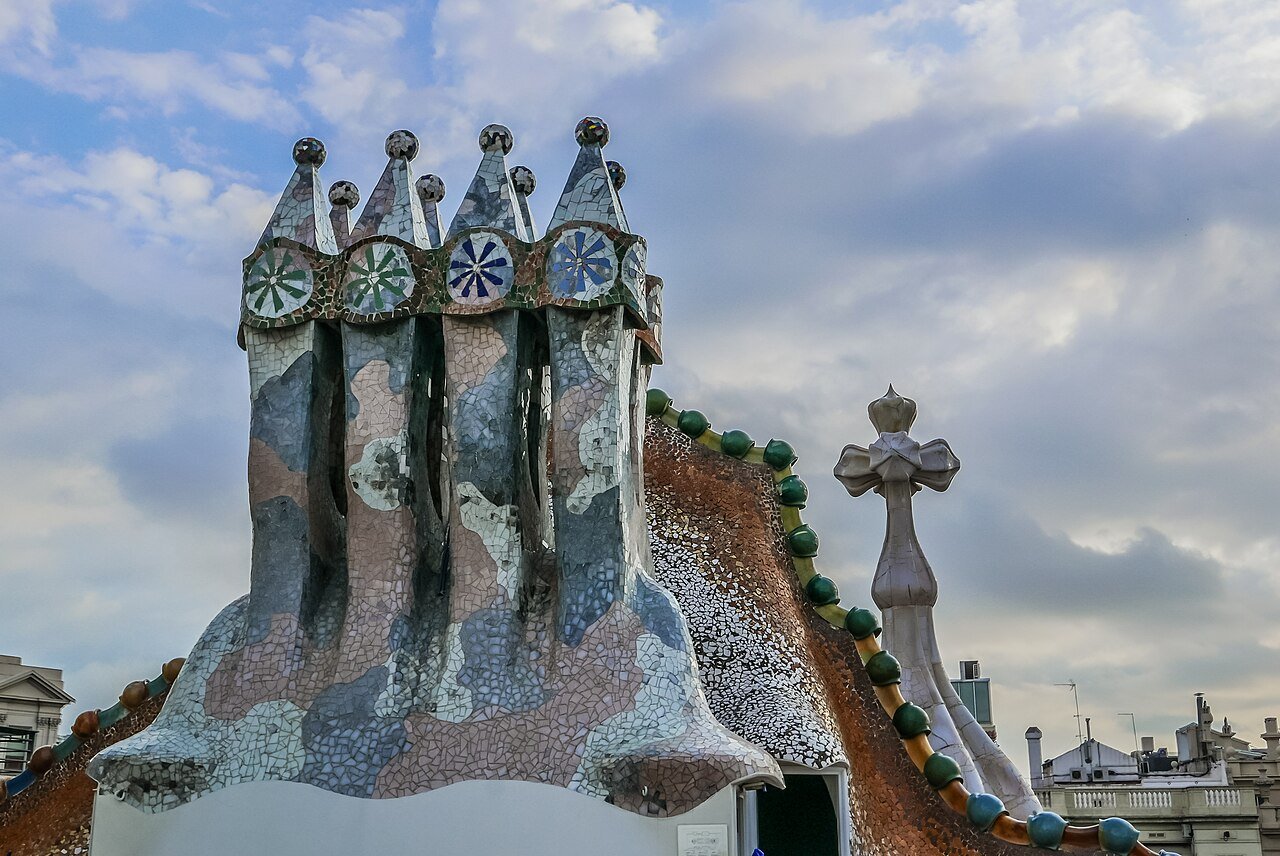
The working strategy is worth stating flatly: book both sights the day your flights are confirmed, take the first entry of the day or the golden last one, and keep the middle of the day for shade. Inside the basilica, our guide to inside the Sagrada Família walks the light, the columns and the museum; the towers add the city’s best summer panorama. In Park Güell, the timed ticket covers the terrace and the dragon stairway, while the wooded park around it stays free — enter early and let the pines do the rest.
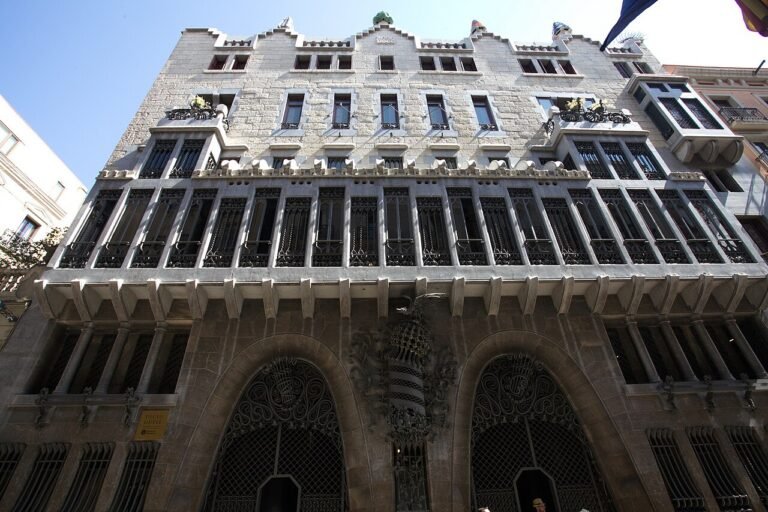
Where April’s guide told you to book ahead, June’s version is blunter: book weeks ahead, or accept the alternatives. The rooftops are the compensation — Casa Batlló’s dragon-back roof and Casa Milà’s warrior chimneys were made for long summer evenings. Gaudí in June is not a walk-up plan; treated as the trip’s fixed points, booked first and built around, it is as good as it ever gets.
5. Take to the Water: The Sunset Catamaran
Every month of this series has its water moment, and June’s is the sunset cruise — because June’s sunsets are the latest of the year. When the light holds until half past nine, a boat leaving Port Vell sails out in gold and comes home in dusk, and the city performs its full skyline turn: the Sagrada’s cranes, the Torre Glòries, the gridded Eixample running down to the sea.
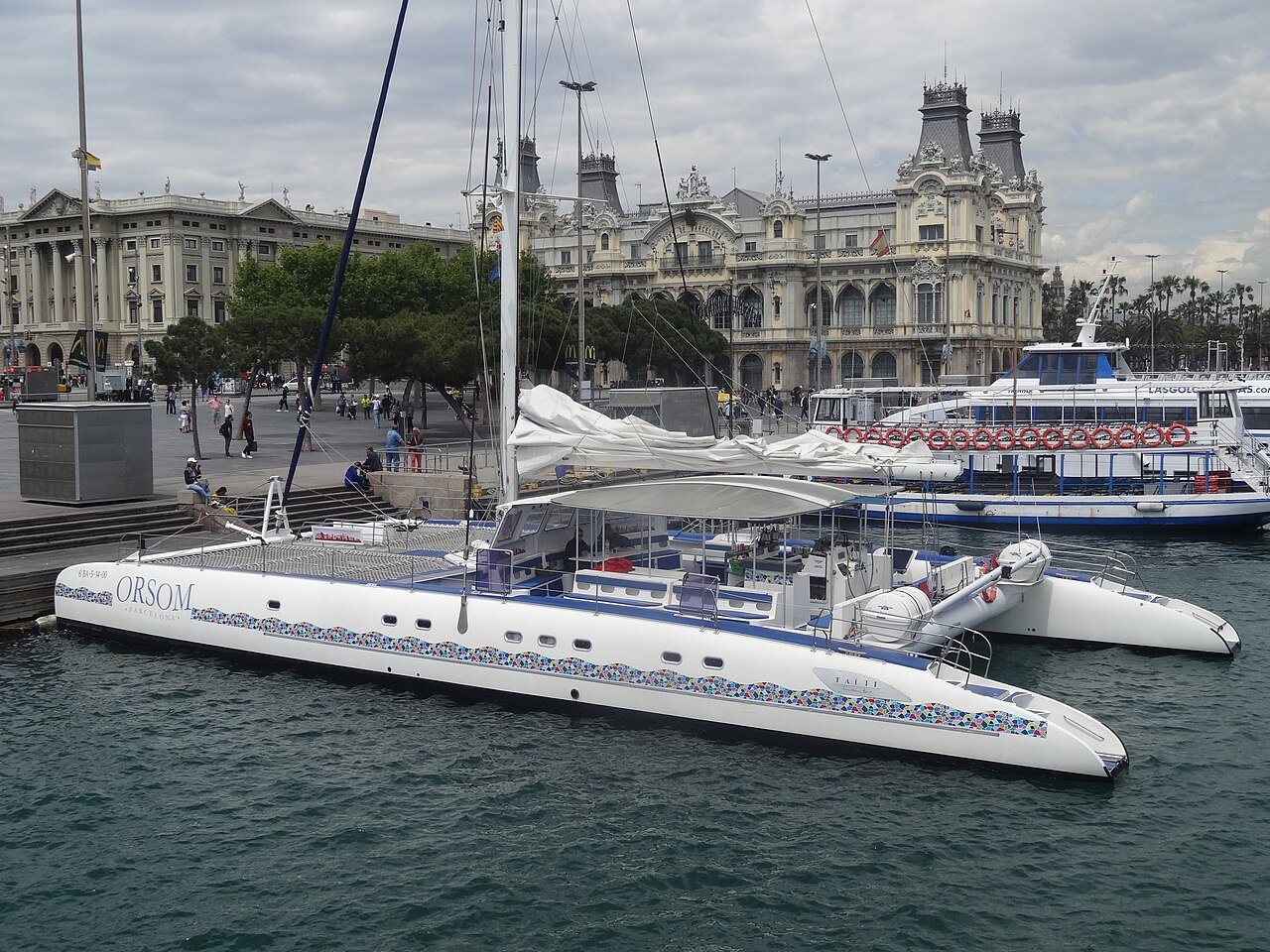
The boat to book is Barcelona: Sunset Catamaran Cruise with Live Music. Catamaran Orsom’s 78-foot sailing catamaran boards at Moll Adossat, at the end of La Rambla opposite the Columbus monument, by the Maremagnum bridge, and takes you out for 1.5 hours with a live jazz band on deck, nets strung a metre above the water to lounge in, and a bar on board (drinks are extra). It is rated 4.7/5 across 3,589 reviews, costs from about $31 per person, and — the detail that matters in a month this scheduled — cancellation is free up to 24 hours in advance, with a reserve-now-pay-later option if you want the slot held first.
Book the sailing for a festival-free evening and treat it as the day’s hinge: beach in the afternoon, the boat at golden hour, dinner at ten like a local. Weekend sailings go first, and the sunset departure is the one everyone wants — reserve it when you book the Gaudí slots, not after. The same boat runs daytime cruises; but in the month of the 21:30 sunset, the evening sailing is the one this guide would spend money on.
6. Day Trip: Sitges in Pride Week (9–13 June)
Forty minutes down the coast, June belongs to Sitges. The whitewashed old town, the church of Sant Bartomeu i Santa Tecla standing over the seafront on its point, a string of beaches running south from the harbour — Sitges is the easiest great day trip Barcelona offers at any time of year. From Wednesday 9 to Sunday 13 June it also hosts one of Europe’s oldest Pride festivals: five days of open-air stages on the promenade, a Pride village on the seafront and parties across the town’s famous bar street, Carrer del Pecat.

The week builds to the parade on Sunday 13 June, when the floats roll the length of the Passeig Marítim and the whole town — residents, day-trippers, drag queens three storeys tall — turns out in fancy dress and flags. Early listings for 2027 put the festival on those dates with the parade closing the week; the town publishes its full programme nearer the time, so check sitgespride.com before you lock the Sunday. Arrive before the crowds do: the Rodalies R2 Sud trains from Sants and Passeig de Gràcia take about 40 minutes, and on parade day the platform fills by midday.
Build the day in layers: swim and the old town in the morning (the Cau Ferrat, Santiago Rusiñol’s house-museum, is the cultural anchor), xató — the local endive, cod and romesco salad — for lunch, the parade in the golden afternoon, a late train home as the parties start. Our day trips from Barcelona guide places Sitges among the coast-and-mountain options; in Pride week it outranks them all — though honestly it needs no festival to justify the train fare.
7. Sónar: The Festival That Announced Its Own Death (17–19 June)
Here this guide has to do something the month series has never had to do: report a festival whose own organisers have publicly wondered aloud whether it still exists. Sónar — the festival of music, creativity and technology founded in 1994, for three decades one of Europe’s defining electronic-music events — announced its 2027 dates at the close of its 2026 edition: Thursday 17 to Saturday 19 June, consolidated at Fira Gran Via after the 2026 move, with Sónar+D at Llotja de Mar in the old town. A SonarPass presale ran in June 2026 at €155. That was the plan. Then, on 27 October 2026, the festival published its own obituary.
The campaign was pure Sónar theatre: a full-page obituary in La Vanguardia signed “your inconsolable fans”, a mock-funeral video through the city’s streets, the festival’s own website replaced by a digital book of condolences beneath the dates 1994–2026. No 2027 lineup has been announced, the dates came off the homepage, the general sale never opened, and the organisers have neither confirmed the festival is over nor explained that it is not. Readings range from an elaborate rebrand — Spanish media reported a possible new format during the 2026 edition — to a genuine ending.
⚠ Stated plainly, because your booking depends on it: as this guide is researched (late October 2026), Sónar 2027 exists as announced dates and a presale — nothing firmer. Treat 17–19 June as pencilled, not inked. Do not build non-refundable travel around it; keep any pass’s cancellation terms, and check sonar.es before committing to anything else that weekend.
What is certain is the week itself. Mid-June is electronic music’s European gathering regardless of any single festival: the club nights, label showcases and Brunch Electronik-style open-air parties that colonise the city in Sónar week run on their own momentum. Come for the week, hold the festival loosely, and if the resurrection is announced you will already be standing in the right city.
8. The Longest Days: Solstice Light (Monday 21 June)
On Monday 21 June the sun reaches its northern limit, and Barcelona gets the longest day of its year: roughly fifteen hours of daylight, sunrise before 6:30 and a sunset that holds off until about 21:30, the latest of the calendar. It is easy to treat this as a weather statistic. In practice it is the month’s operating system — the reason everything in this guide works the way it does.

Fifteen hours of light rearranges the day into the city’s summer order. Sightseeing moves to the morning, when the Sagrada’s glass is cool-toned and the streets are filling with heat rather than people. The afternoon belongs to the beach or the dark of a museum, and the evening simply refuses to end: a swim at eight, a terrace vermouth at nine, dinner at ten, and the walk home along Barceloneta while L’Estel Ferit’s cubes glow on the sand and the W Hotel lights up across the water. Nobody here experiences this as a long day; they experience it as the day finally being the right length.
Use the solstice itself the way the city does — loosely. There is no ceremony to attend; its official form arrives two nights later in the fires of Sant Joan, which exist precisely because these are the shortest nights of the year. If your trip has one evening to spend on a viewpoint, spend it here: Montjuïc Castle, the Bunkers del Carmel or a rooftop above the Eixample, sun at eye level, the whole lit grid below.
9. Revetlla de Sant Joan: The Night of Fire (Wednesday 23 June)
And so to the night the rest of the month is just an overture for. The Revetlla de Sant Joan — the eve of Saint John — falls on the night of Wednesday 23 June, and it is the biggest popular festival of Barcelona’s year: bonfires, fireworks, firecrackers, coca and midnight swimming, followed by the public holiday of Thursday 24 June, when the entire city sleeps in without a shred of guilt. If you take one date from this guide and plan a trip around it, take this one.

The ritual has a choreography. In the early evening the Flama del Canigó — a flame carried down from the summit of the Canigó, the Pyrenean peak Catalans treat as sacred — is received at Plaça de Sant Jaume and carried out to the districts, where it lights the fogueres: bonfires of stacked old furniture and timber in streets and squares across the city. As darkness falls after ten, the fires are lit, the correfoc devils come out with their spark-spitting forks, and the petards — firecrackers of every calibre — begin an artillery that does not entirely stop until morning. Our guide to Barcelona at night covers the city’s after-dark circuit; on this one night, the circuit is the whole city.
Half of Barcelona ends the night at the beach, and the other half joins them. The tradition is the midnight swim — a dip on the Revetlla is said to wash the year clean — and the beaches fill with groups, guitars, cava and coca until the small hours, when the city’s cleaning crews perform their annual miracle and the sand is ready again by morning. Practical notes: the metro runs through the night; restaurants book out; keep a street between you and any firecracker, and do not wear your best shoes. The 24th itself is for survivors: a late vermouth, a slow beach, the deep quiet of a city on holiday.
10. The Grec Opens the Summer Stage (Late June)
As the bonfires cool, the city’s summer of performance begins. The Festival Grec — Barcelona’s great open-air season of theatre, dance, music and circus — centres on the Teatre Grec, the stone amphitheatre built into a Montjuïc quarry for the 1929 exhibition on the model of Epidaurus, and spreads across venues citywide for roughly five weeks. A Grec night is an essential Barcelona experience: warm stone, cypresses, a stage lit against the rock face, an audience that has walked up through the gardens in the last of the light.
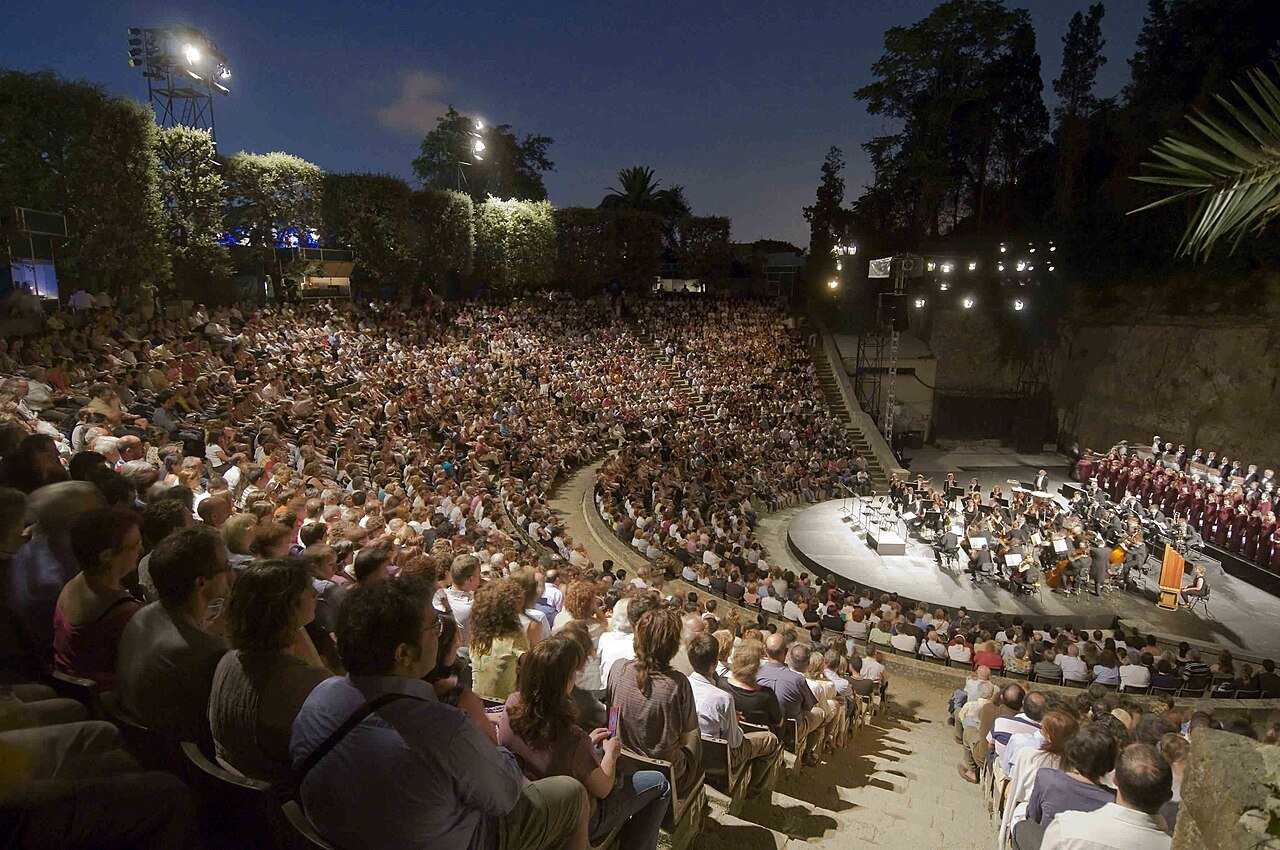
Recent editions have opened in the last days of June — the 2026 festival began on 26 June with Sílvia Pérez Cruz on the Teatre Grec stage — and run to the end of July, with most tickets in a modest €15–30 range that makes the Grec the best-value culture of the summer. The amphitheatre’s gardens are open and free to wander by day all year: even a June trip that misses the festival can take the setting in.
⚠ Dates to confirm: the Grec’s 2027 edition had published neither dates nor programme when this guide was researched. The pattern is dependable — opening night in the final days of June, five weeks of performances into late July — but treat late June as a probability rather than a promise, and if a Grec night matters to your trip, check festivalgrec.barcelona in the spring and keep one evening unbooked until the programme lands. Should your trip slide into July, note the open-air season continues at the castle: Sala Montjuïc’s cinema nights run in the Montjuïc Castle moat through July and into August.
11. Eat June: Coca, Sardines and the First Melons
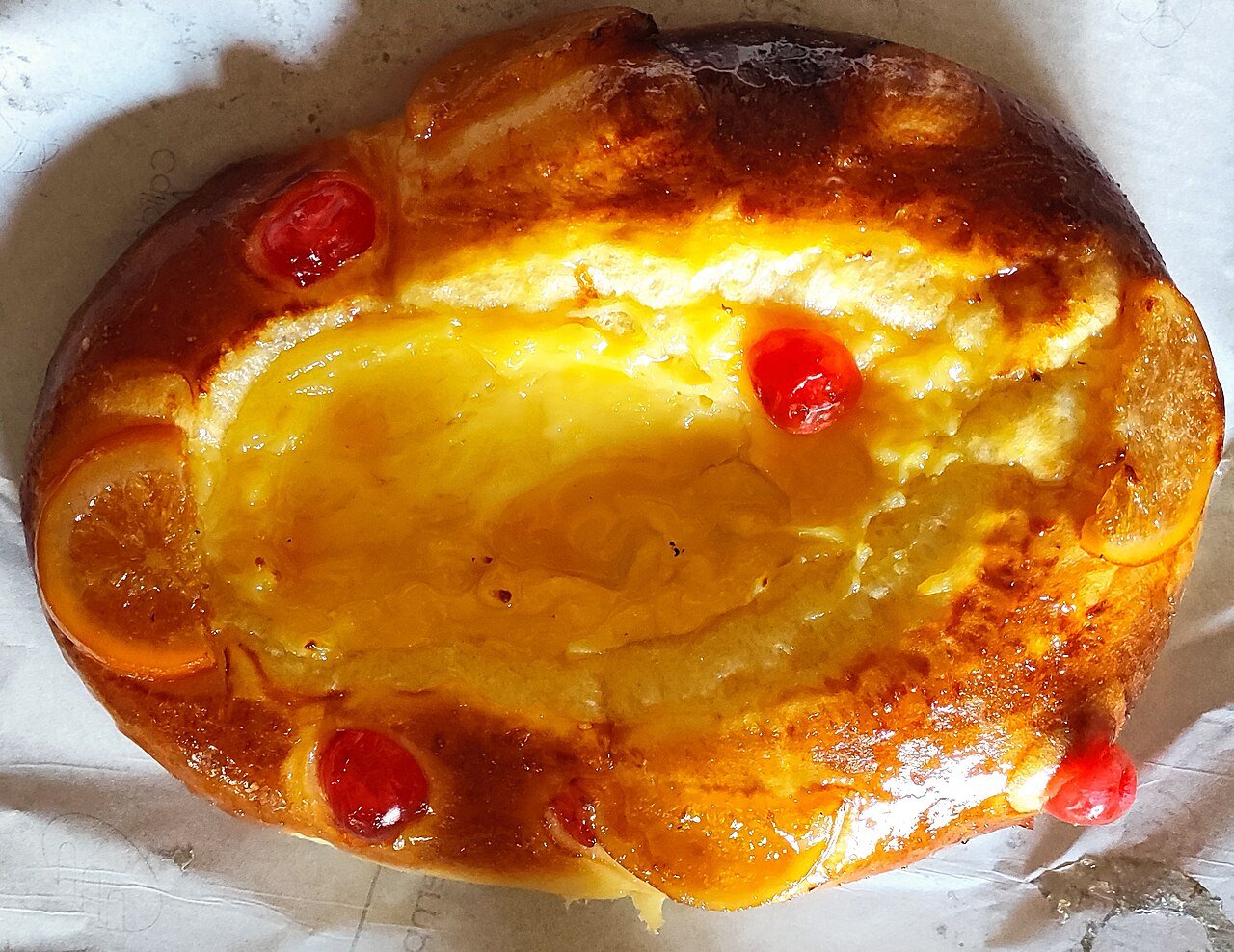
June has a signature food, and it is not subtle. The coca de Sant Joan appears in bakery windows in the run-up to the 23rd and is gone by the 25th: a soft, oval brioche crowned with candied fruit and pine nuts, or split and filled with crema, or — the savoury-sweet Catalan argument-starter, coca de llardons — studded with pork crackling. It is the Revetlla’s official fuel, eaten at the bonfires and on the beach at midnight, priced by weight and filling like the celebration cake it is. Buy yours on the 22nd or the morning of the 23rd; by evening, the windows are empty.
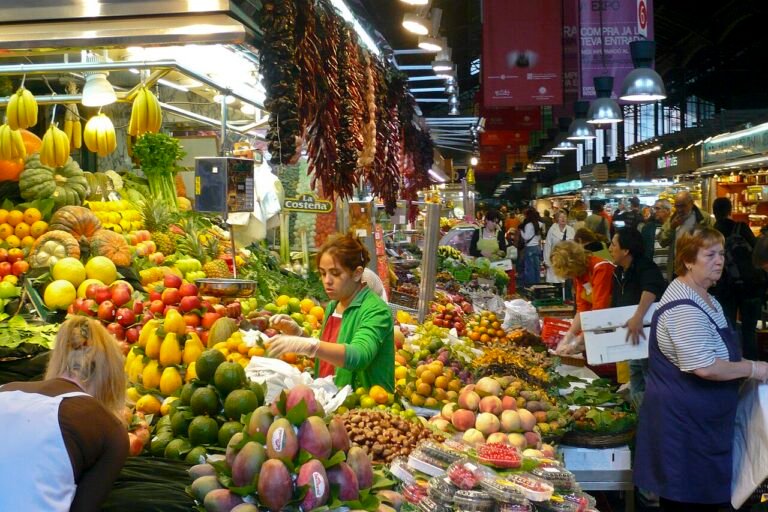
The month’s second fire-food is the sardine. Sardine season opens with the summer, and grilled sardines — at beach chiringuitos, at neighbourhood sardinades, at barbecues across the city — are the taste of the Revetlla as much as the coca is. Around them the markets turn the season: the last cherries give way to apricots, nectarines and plums, the first melons and watermelons arrive, and every stall seems to be competing on tomatoes. Mornings in the city markets are June’s best free entertainment — La Boqueria before nine, or the calmer halls of Santa Caterina, Sant Antoni and the Ninot.
Round it out with the summer table: gazpacho and salmorejo by the glass, esqueixada of shredded cod, grilled vegetables with romesco, gelato shops running their longest hours of the year. June eating is not about reservations at famous rooms — it is about seasonality doing the work. Eat what the market is loud about, and you will not go wrong all month.
12. Pride: June Hands the Rainbow to July
June is Pride month everywhere, and Barcelona wears the rainbow all month — flags across the Gayxample, the Eixample district that has been the city’s LGTBI heart for decades, rainbow crosswalks, and a bar and club scene at full summer strength. Sitges has already held its festival down the coast (§6). But Barcelona’s own Pride plays a longer game than the calendar month suggests, and this guide would rather tell you straight than let the headline plan your trip wrongly.
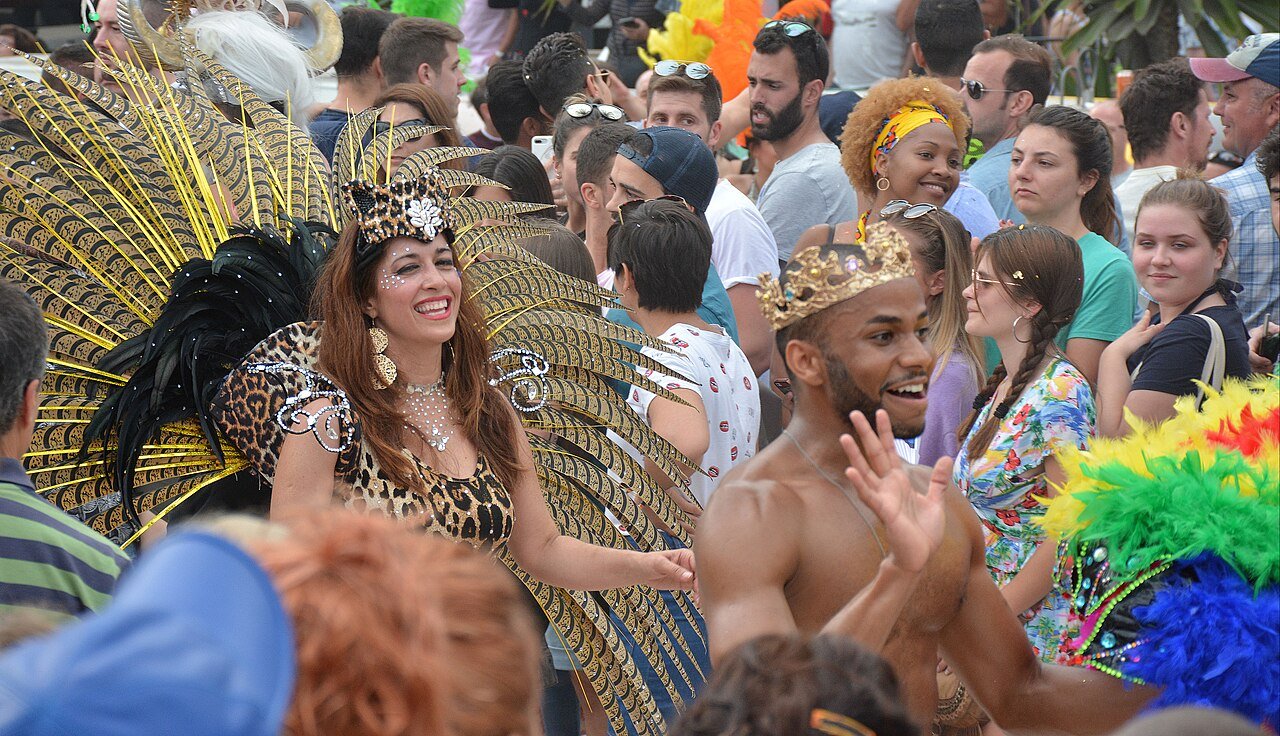
Pride Barcelona is, in its modern form, a July event: the festival village, the concerts and the great parade down Paral·lel belong to the height of summer. In 2026 the programme began in late June and built for three weeks to a parade on Saturday 18 July. What June itself holds is the build-up — Pride-month programming in the city’s venues, events around 28 June, International LGTBI Day, and the Gayxample at its most alive — a genuinely good reason to come, provided nobody promised you a parade.
⚠ Dates to confirm: Pride Barcelona had published no 2027 dates when this guide was researched, and on the established pattern the festival and its parade will sit in July, not June. If Pride is the purpose of your trip rather than a bonus within it, watch pridebarcelona.org through the spring, book the late-June-to-July window with flexible rates, and let Sitges (9–13 June, §6) carry the Pride flag for a June trip — between the two towns, the month is better covered than it first looks.
Which of the 12 Fits Your Trip?
| If your trip is about… | Start with… | Why |
|---|---|---|
| The big festival weekend | 1 (Primavera Sound) | The 25th edition runs 2–6 June and anchors the whole first week — book around it or avoid it knowingly |
| Culture on a budget | 2 (Free-Museum Sunday) | The 6th opens the city’s collections for nothing, opposite a sleeping festival |
| The Mediterranean itself | 3 (The Beaches) + 5 (The Sunset Catamaran) | High season service, a 20–22 °C sea, and the year’s latest sunsets from the water |
| The icons, done properly | 4 (The Gaudí Sights) | Summer light at full blaze — on condition you book weeks ahead |
| A celebration the locals own | 9 (Revetlla de Sant Joan) | The 23rd is the biggest night of Barcelona’s year, with the 24th off to recover |
| A day out of the city | 6 (Sitges in Pride Week) | Forty minutes by train; the parade closes the festival on Sunday 13 June |
| Electronic music | 7 (Sónar’s week) | Come for the city’s electronic week; hold the festival’s own future loosely |
| Nights that never end | 8 (The Longest Days) + 10 (The Grec) | Solstice light, then open-air theatre on Montjuïc as the summer stage opens |
What June in Barcelona Costs
June is high season with two accelerators: the festival weekends (Primavera, Sónar’s week) and the Sant Joan stretch, when the city itself is on holiday. Nothing here is August-priced — but nothing is May-priced either.
| June cost | What to budget |
|---|---|
| Barcelona: Sunset Catamaran Cruise with Live Music | From about $31 per person for 1.5 hours with live jazz — 4.7/5 across 3,589 reviews, free cancellation up to 24 hours ahead |
| A central hotel | Around €170–220 a night ordinarily — and €250+ across Primavera, Sónar week and the Sant Joan days. Festival dates book first, everything else fits around them |
| Primavera Sound | Full passes sold from around €200 in early tiers in recent editions and vanish; day tickets and the official resale are the June routes |
| Sitges for the day | Under €10 return on the Rodalies R2 Sud — the cheapest great day of the month, parade included |
| The Gaudí sights | The Sagrada Família from around €40 — in June the slot is the prize, and it goes weeks ahead |
| A Grec night | Most tickets land between €15 and €30 once the programme opens — the summer’s best-value culture |
| Free-museum Sunday (the 6th) | €0 all day at the big civic museums — the month’s great leveller |
| The beaches | €0 — June’s high season comes with lifeguards and full service at no charge |
| A coca de Sant Joan | Priced by size and filling at the bakery — budget like a birthday cake, and buy it on the 22nd or the morning of the 23rd |
Three money rules for June. First, sequence the booking: festival and Sant Joan hotel nights first, Gaudí slots second, everything else is flexible. Second, let the month’s free architecture work — the free Sunday on the 6th, the free beaches — and spend the savings on the two paid peaks, the boat and a Grec night. Third, protect the Sant Joan plan: whatever the 23rd costs in hotel premium, it returns in kind. It is the one night Barcelona cannot be imitated anywhere else.

Barcelona in May: 12 Things to Do, From Girona in Bloom to the Dancing Egg
Travel insurance, sorted
Whether it is a two-week holiday or a longer move, travel insurance is not the most glamorous part of a trip — but it is the one booking you want to have in place before a trip, and while you are already away. Get a quote from SafetyWing
Final Thoughts
Stack the months up and June is where the series turns from travel advice into something closer to a home fixture: the festival that starts Europe’s summer, a sea finally worth the name, the longest evenings of the year, a night of fire the whole city keeps — and a calendar so full it can afford the honest question marks over Sónar and Pride. Come for Primavera and stay for Sant Joan if you possibly can; come for the beaches if you cannot; but come in June at least once. Barcelona spends eleven months explaining itself. In June it simply shows you.
FAQs
Is June a good time to visit Barcelona?
It is the best-balanced month of the year: full summer weather and a genuinely swimmable sea, the city’s two biggest festival moments (Primavera Sound and the Revetlla de Sant Joan), and the year’s longest days — all before August’s peak heat and crowds. The costs are high-season prices and summer booking discipline: the Gaudí sights and festival weekends must be reserved weeks ahead, not days.
Can you swim in the sea in Barcelona in June?
Yes — properly, all month. The sea runs about 20 °C at the start of June and climbs to around 22 °C by the end, the beaches operate at high-season specification with lifeguards on duty daily (10:30–19:30), and June’s weekday mornings — before the school holidays begin around Sant Joan — are the calmest swimming of the summer.
What happens in Barcelona on Sant Joan?
The Revetlla de Sant Joan, on the night of 23 June, is the city’s biggest popular festival: the Flama del Canigó is received at Plaça de Sant Jaume and carried out to light neighbourhood bonfires (fogueres) across the city, correfoc devils and firecrackers fill the streets, families eat coca de Sant Joan, and half the city takes the traditional midnight swim. The 24th is a public holiday across Catalonia, the metro runs through the night, and the beaches are cleaned before morning.
How do I get Primavera Sound tickets if the passes have sold out?
In that order: day tickets for the individual main days (Thursday to Saturday) through official channels, and the festival’s official resale platform, where pass-holders resell at face value. Avoid street sellers and unofficial resale sites — entry is wristband-based and fakes are a June industry. If your dates only clip the festival, one or two days plus the free opening programme (check the 2027 edition’s shape) is a perfectly good Primavera.
What is actually happening with Sónar in 2027?
The honest answer, as of this guide’s research in late October 2026: nobody outside the organisation knows. Sónar announced 17–19 June 2027 at the close of its 2026 edition and presold passes — then published its own obituary (“Sónar is dead, 1994–2026”), replaced its website with a book of condolences and has made no clarifying statement since. It may be an elaborate rebrand; it may be the end. Check sonar.es before committing money, keep bookings refundable, and know that Barcelona’s mid-June electronic-music week happens around the festival whatever its fate.
What should I book first for a June trip?
Hotels for the immovable dates — Primavera (2–6 June), Sónar’s week (17–19 June) and Sant Joan (23–24 June) — then timed Gaudí tickets for the Sagrada Família and Park Güell, then the sunset catamaran’s evening sailing and, once the programme opens, a Grec night. Everything else fits around those. Pack heat-first (sun protection, swimsuits, one light evening layer) and plan days on the Mediterranean rhythm: sights in the morning, shade at midday, the city again until late.


One Comment