Barcelona Cable Cars: The Complete Guide to the Montjuïc and Port Cable Cars
Short Answer
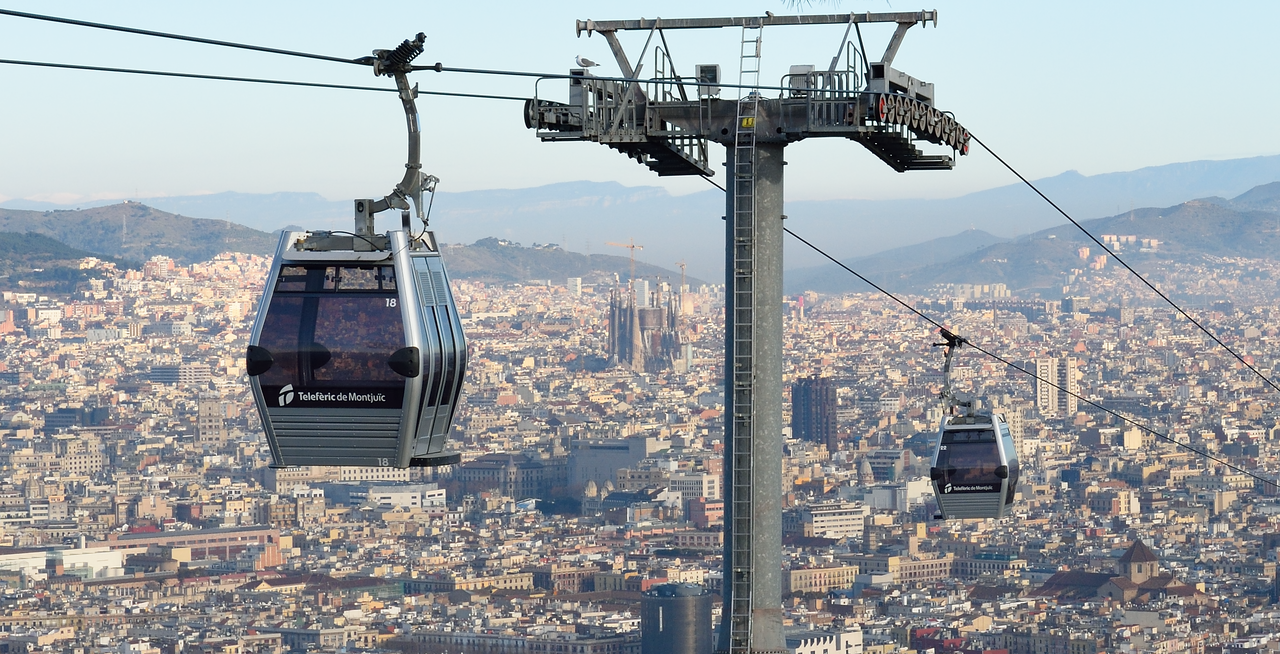
Barcelona has two cable cars, and they are not two versions of the same ride — they are two different centuries, two different machines and two different views. The Telefèric de Montjuïc is a modern gondola lift, opened in 1970 and rebuilt in 2007, which glides up the green hill of Montjuïc from the funicular station to the castle at the top in seated cabins of eight. The Transbordador Aeri del Port — the Port cable car — is a vintage aerial tramway of 1931 that carries standing passengers in two little red cabins across the harbour, between the Montjuïc hillside at Miramar and the Torre Sant Sebastià in the Barceloneta.
If you ride only one, make it the Port cable car for the thrill and the harbour panorama — but know that it cannot be booked in advance and queues on a system with just two cabins. Make it the Montjuïc cable car if you are visiting the castle anyway: it is the easiest, most comfortable way up the hill, and its roundtrip ticket is the one you can book ahead. Either earns its place on any list of the best things to do in Barcelona — and riding both in a single circuit, linked by a short walk along Avinguda Miramar, is one of the great half-days out in the city.
Table of Contents
- The Short Version: Which Cable Car, and Why It Matters
- Two Cable Cars, Two Barcelonas: A Short History
- The Telefèric de Montjuïc: The Ride Up to the Castle
- The Transbordador Aeri del Port: The Flight Over the Harbour
- Head to Head: Which Barcelona Cable Car Should You Ride?
- The Views: What You Actually See
- Riding Both in One Day: The Grand Circuit
- Practical Info
- Tickets and Costs
- Getting There and Getting Around
- When to Go
- How Long You Need
- Tips for Visiting
- What to See Nearby
- Frequently Asked Questions
- Final Thoughts
The Short Version: Which Cable Car, and Why It Matters
The confusion starts with the names. Both rides are called “the Barcelona cable car” in guidebooks, both touch the hill of Montjuïc, and their stations sit barely ten minutes’ walk apart — yet a ticket for one is worthless on the other, because they belong to different operators and different eras. The Montjuïc car is a piece of city transport run by TMB, the metro operator; the Port car is a privately run heritage attraction that has crossed the harbour, with long interruptions, since 1931.
For the Montjuïc car, the simple move is to book the official Montjuïc Cable Car roundtrip ticket in advance: it is the operator’s own ticket sold through GetYourGuide, rated 4.5 out of 5, with free cancellation up to 24 hours before, and you exchange the voucher at the Parc de Montjuïc station before boarding. For the Port car there is no equivalent — no advance ticket exists anywhere, and anyone who tries to sell you one should be treated with suspicion. You simply turn up at either tower, buy at the ticket office, and join the line.
Two Cable Cars, Two Barcelonas: A Short History
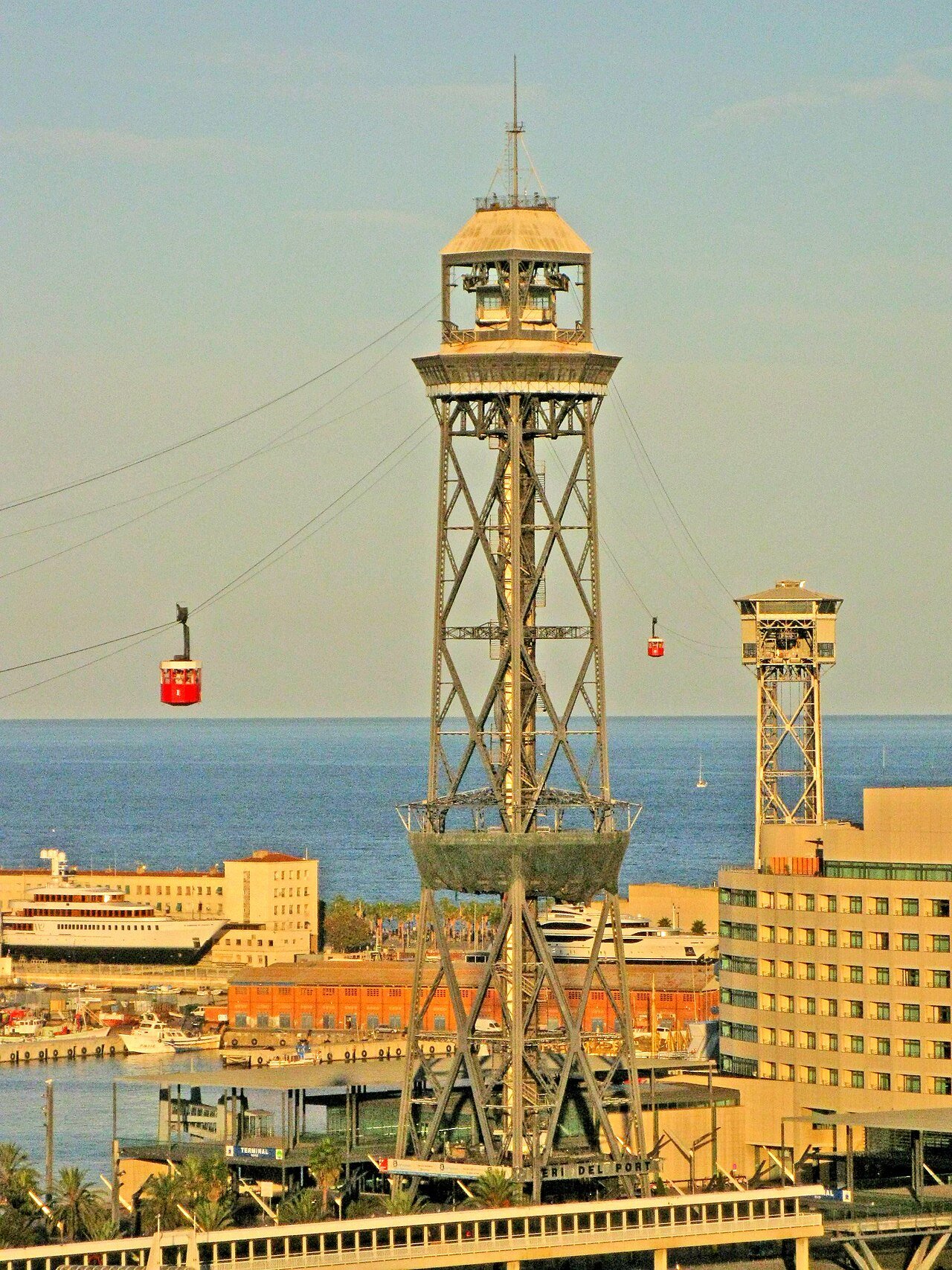
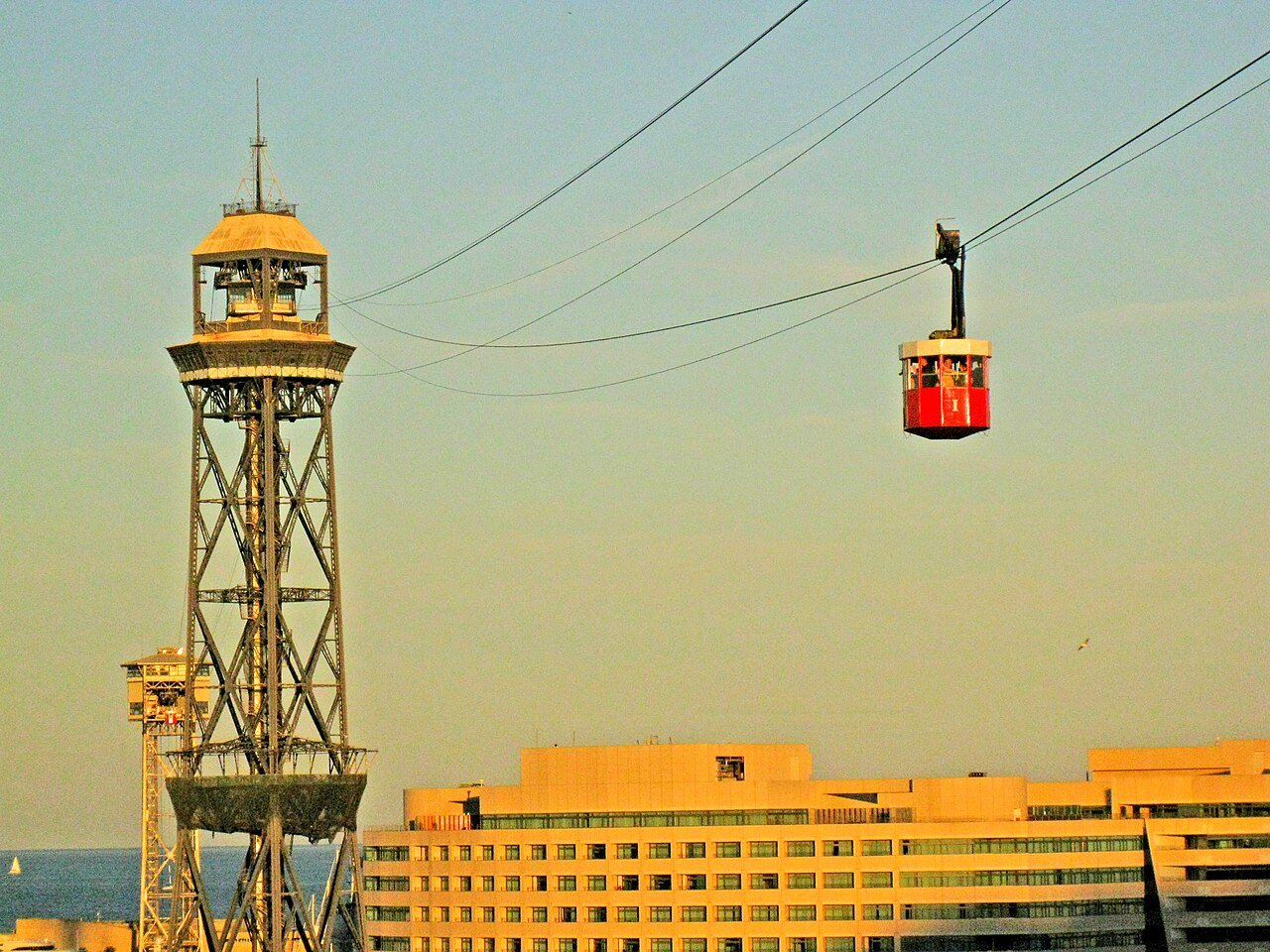
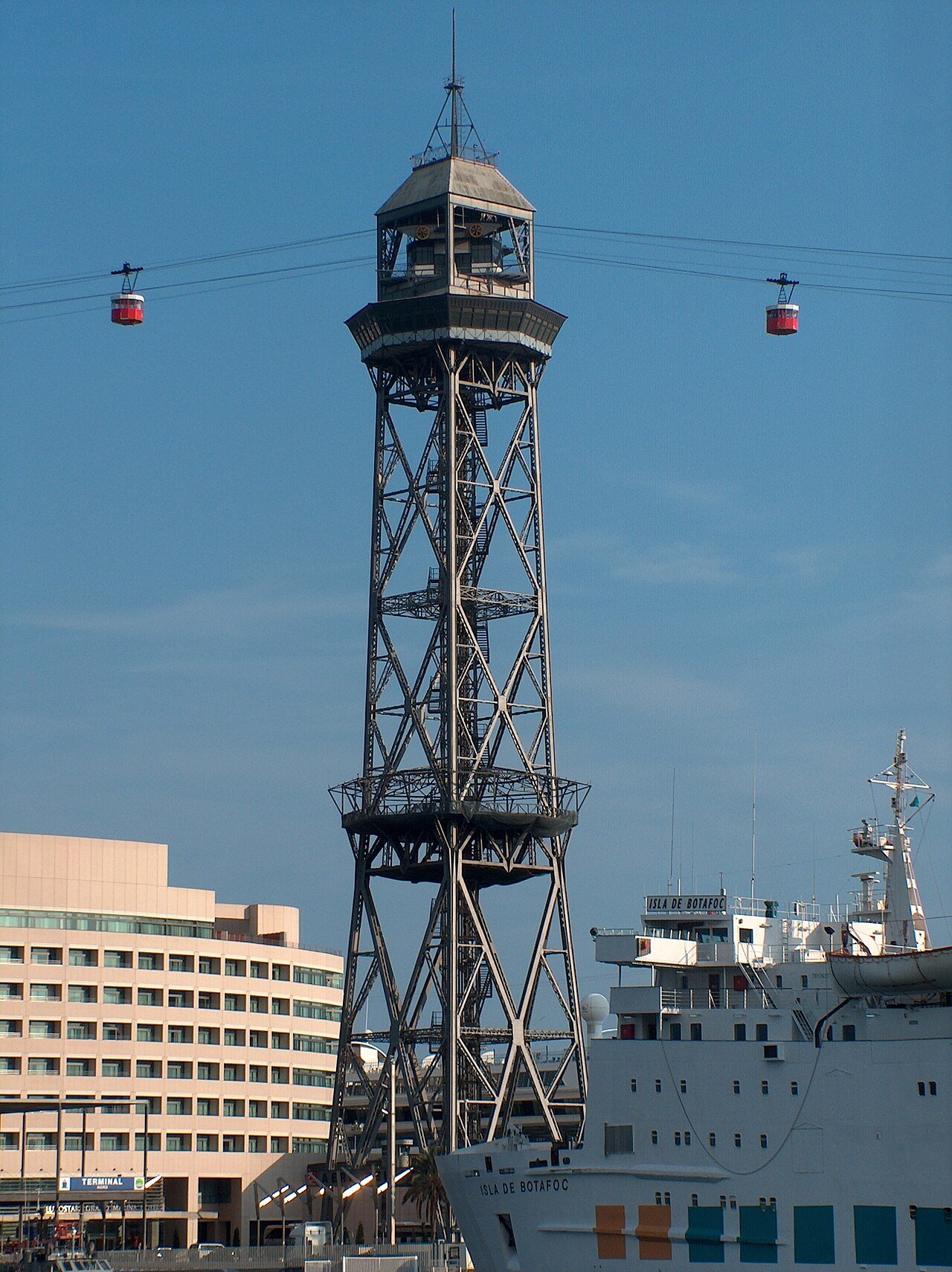
The Port cable car came first, and it was born as a fairground flourish. In 1926 the engineer Carles Buïgas — the man behind the Magic Fountain — designed an aerial tramway to link Barcelona’s 1929 International Exhibition on Montjuïc with the exhibition’s maritime section across the port, working with Ramon Calzada and Josep M. Roda. The money arrived too late: private capital was only raised in 1928, the exhibition opened and closed without its cable car, and Buïgas sold his shares to Roda, who pushed the project through two years of construction and completed it in 1931. The two steel towers he planted in the harbour — Torre Jaume I, 107 metres tall, on the Moll de Barcelona, and Torre Sant Sebastià, 78.4 metres, by the Barceloneta beach — remain among the most recognisable silhouettes in the city, and both are catalogued as historical-artistic heritage.
The Civil War stopped the ride: the cables were taken down and the towers were put to work in the defence of the port. In 1958 the company Teleféricos de Barcelona took over the system, and on 20 May 1963 a new cable car began crossing the harbour, then ran uninterruptedly until 1995. What you ride today is the result of the restoration that followed — more than two years of work on the towers before the service resumed on the same pattern as the 1931 original: two cabins, one in each direction, shuttling over 1,292 metres of harbour air.
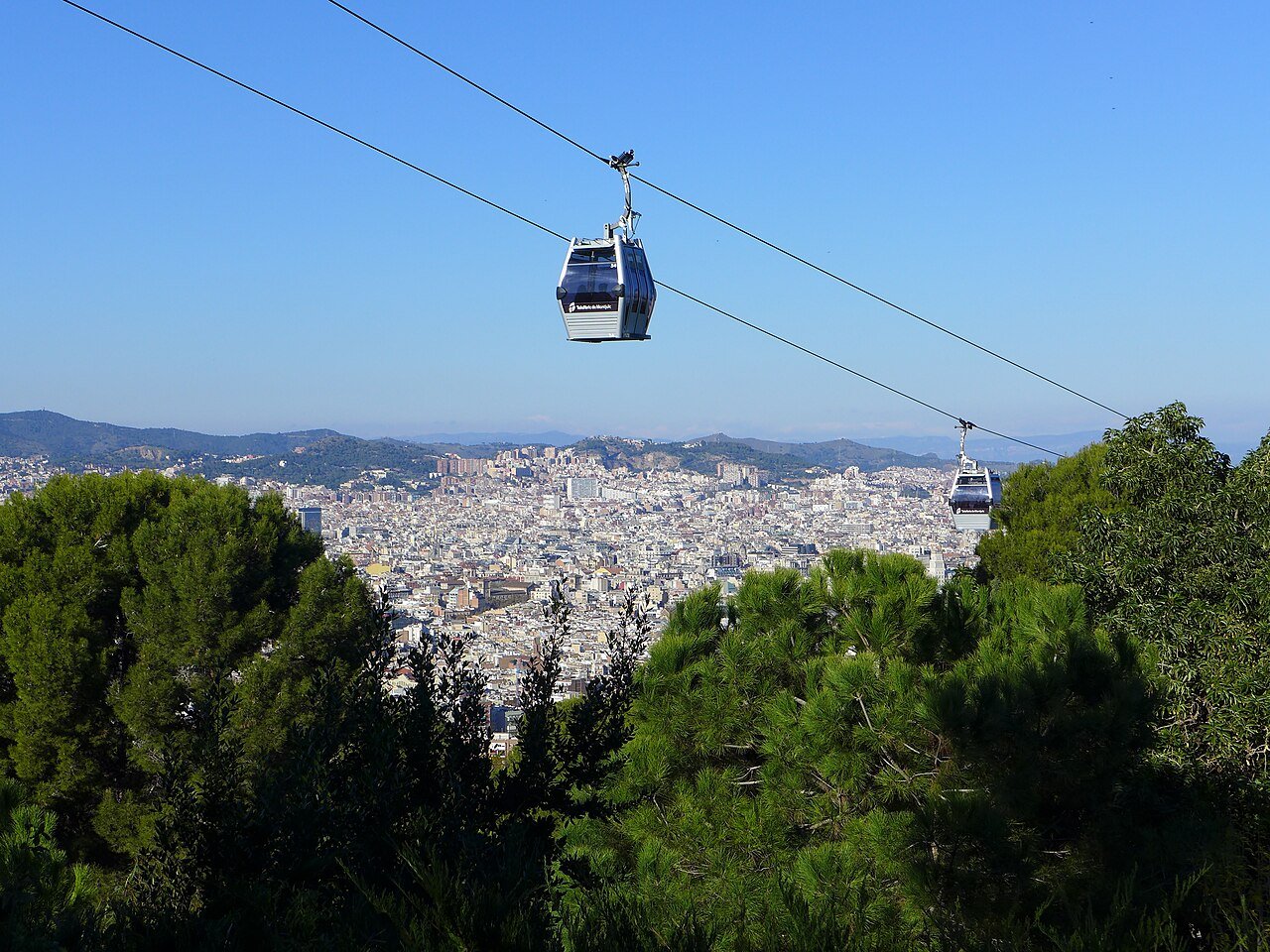
The younger system had a more practical birth. The Telefèric de Montjuïc opened in June 1970, replacing the upper stage of the Montjuïc funicular, and for its first decades it carried visitors in small open cars. Between October 2004 and May 2007 it closed for a complete overhaul, emerging with 55 modern closed cabins, new stations and step-free access — the system you ride today. So the two rides bracket Barcelona’s modern story: a 1931 showpiece built for a world’s fair, and a 1970 workhorse rebuilt for the city the Olympics made.
The Telefèric de Montjuïc: The Ride Up to the Castle
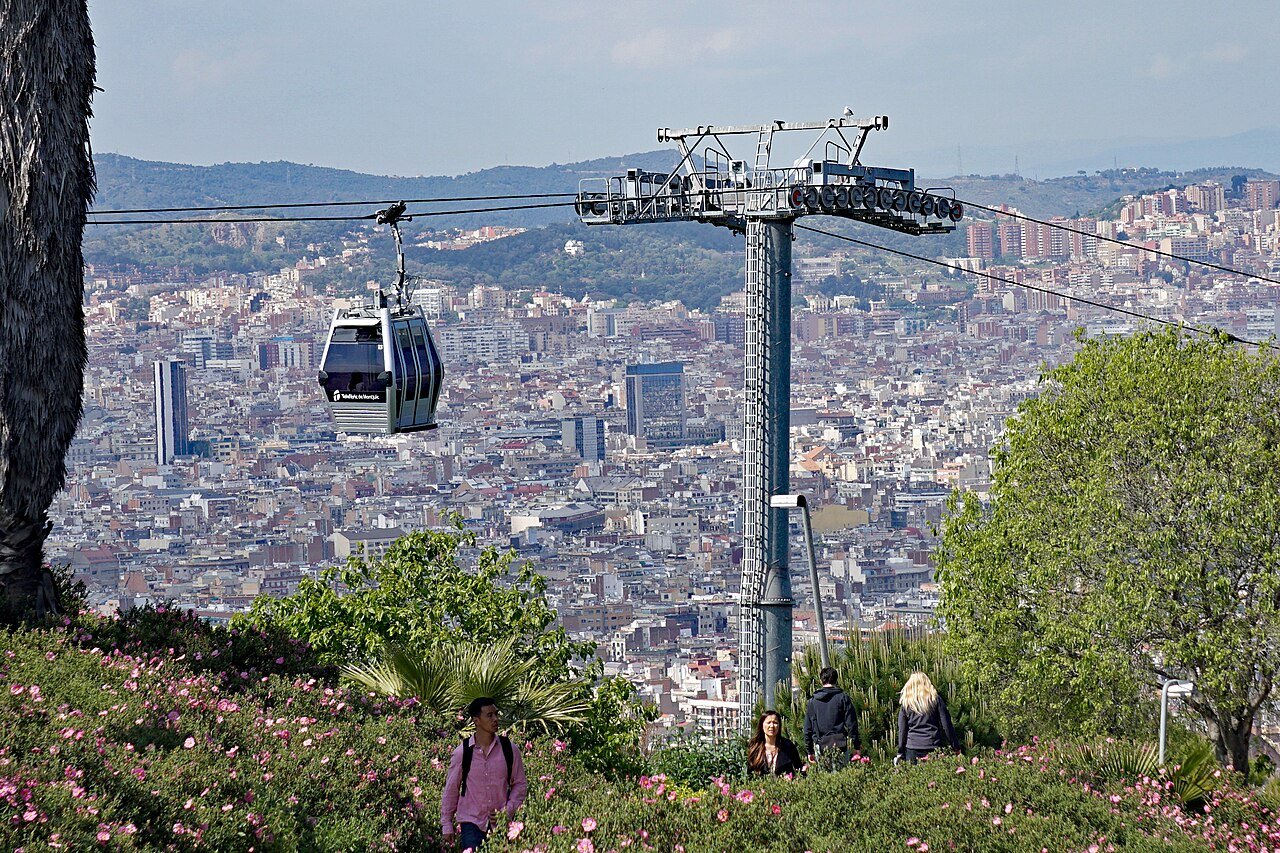
The Montjuïc cable car does one job and does it beautifully: it lifts you the last, steepest stretch of the hill, from the Parc de Montjuïc station — beside the top station of the funicular, at Avinguda de Miramar 30 — to the Castell station just outside the castle walls. The ride covers 750 metres, climbs more than 80 of them, and takes about five minutes, with cabins leaving continuously rather than to any timetable: 55 of them circulate on the loop, each seating up to eight people, and the cabins and stations are adapted for wheelchair users.
The detail every visitor should know is the middle station. Halfway up, the line makes a sharp turn at the Mirador station, above the Mirador de l’Alcalde viewpoint — but uphill cabins do not stop there. You ride straight through to the castle; only on the way down can you choose to break the journey at the Mirador, step out onto the terraced viewpoint with its tiled waterfall and city panorama, and then continue down on a later cabin. Plan your sightseeing around that asymmetry: castle first, viewpoint on the descent.
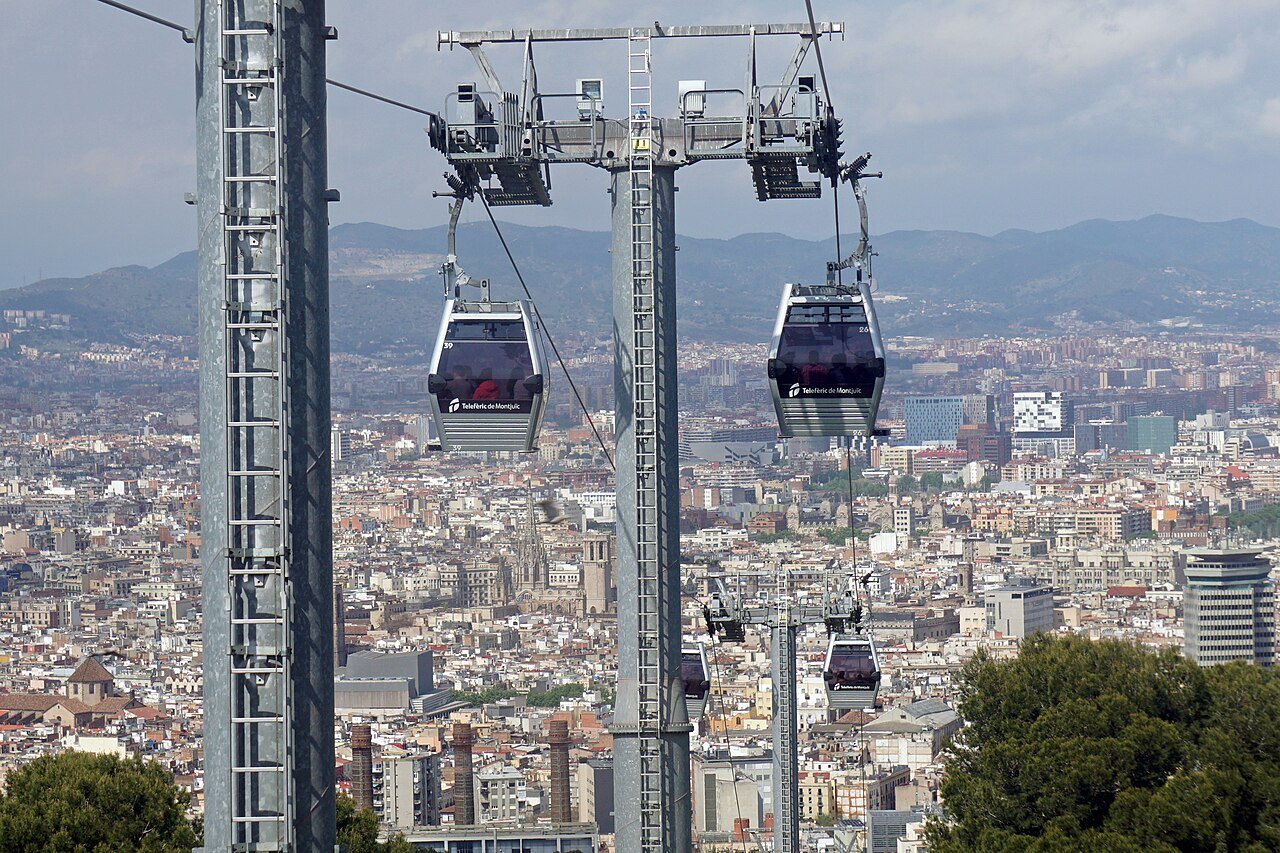
What you are buying, beyond the convenience, is the unfolding view. As the cabin climbs, the Eixample grid drops away, the Sagrada Família and the Torre Glòries pick themselves out of the rooftops, and the harbour and the Collserola hills swing into the same frame. At the top, a two-minute walk brings you to the castle gate — the full story of the fortress is in our guide to Montjuïc Castle — and the ramparts give you the matching panorama from solid ground. Because the cable car is run separately from the metro, note that it is not part of the city’s integrated fare network: your travel card is not valid here, and the cable car needs its own ticket whatever else you hold. The funicular that brings you up from Paral·lel, by contrast, is ordinary metro, and travel cards do work on it.

The Transbordador Aeri del Port: The Flight Over the Harbour
The Port cable car is the opposite of a gondola lift: a true aerial tramway, with just two cabins that pass each other in the middle of the harbour. Each crossing covers 1,292 metres and takes around ten minutes, and you ride standing at the windows of a vintage red cabin that holds 19 passengers — which is precisely why the queues form. Departures run roughly every quarter of an hour, so the line at the tower door moves in pulses, one cabin-load at a time.
The route crosses the whole width of the old port. Cabins leave from the Miramar station on the Montjuïc hillside — the motor station, 56 metres above sea level, tucked beside the Miramar viewpoint and its gardens — and sail out over the cruise terminals and the marinas towards the Torre Sant Sebastià at the far end, passing the Torre Jaume I in the middle of the harbour. One practical point catches people out: although Jaume I looks like the natural city-centre boarding point, its station is currently closed, so all rides run the full Sant Sebastià–Miramar course. The operator advises checking its website before you go, as the closure pattern and occasional maintenance days change.
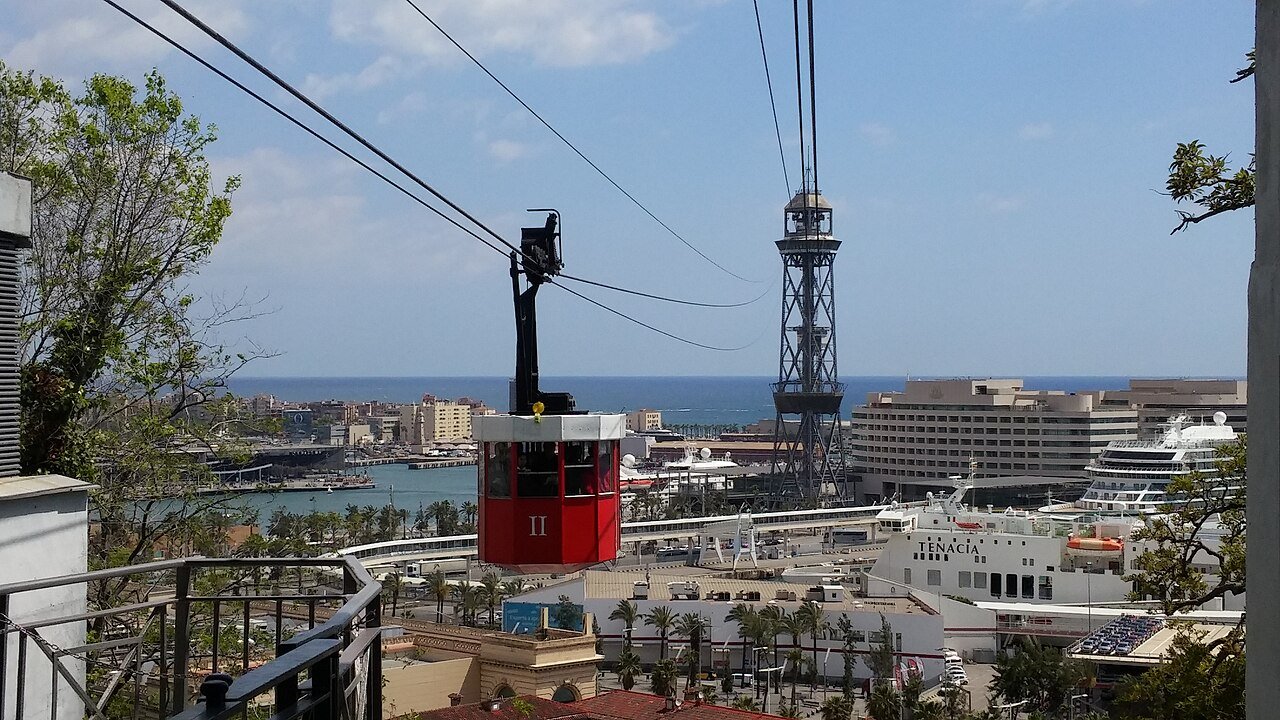
At the Barceloneta end, the cabin docks at the top of the Torre Sant Sebastià, which also houses a restaurant in its upper section — arriving at a beach district 78 metres in the air, then taking the lift down to street level and walking straight onto the Sant Sebastià beach, is one of the great entrances to a neighbourhood anywhere in Spain. Riding the other way is just as good: from the tower you climb out over the water with Montjuïc rising to meet you, and land a short stroll from the funicular and the Montjuïc cable car. There is no way to reserve any of this. The Port car sells its tickets only at its own ticket offices, on the day — turn up, pay, and ride.
Head to Head: Which Barcelona Cable Car Should You Ride?
On price, there is little in it: the Montjuïc roundtrip costs €19 at the ticket office (less online), the Port roundtrip €20, and both sit in the same “one memorable treat” bracket rather than daily transport. On everything else, the two rides diverge.
The Port car wins for spectacle. Nothing else in Barcelona puts you 100 metres over working harbour water in a 1930s cabin, watching cruise ships dock below you — it is the single most dramatic ten minutes in the city. It loses on logistics: no advance booking, two small cabins, and queues that can stretch well past an hour on summer weekends. The Montjuïc car wins for comfort and certainty — frequent roomy cabins, an online ticket with free cancellation, step-free boarding, and a destination, the castle, that justifies the ride on its own. It loses a little on raw wow factor: five gentle minutes over gardens rather than a harbour crossing.
So: first trip to Barcelona with a free morning? Ride the Port car early, before the queue builds. Travelling with children, grandparents or a pushchair, or already planning the castle? Take the Montjuïc car. Short of time but determined? They were almost designed to be combined — the next section shows how.
The Views: What You Actually See
Each ride gives you a different map of the city. From the Montjuïc cabins the view is the urban one: the chequerboard of the Eixample, the Sagrada Família’s cranes, the Torre Glòries, the cathedral towers in the old town and, turning in your seat, the Olympic park and the sea. From the castle end of the line, the panorama from beneath the cables takes in everything from the Collserola ridge to the airport coast.


The Port car gives you the maritime city instead: Port Vell’s marinas, the Maremagnum and the Aquarium across the water, cruise ships the size of apartment blocks, the W Barcelona hotel standing like a sail at the harbour mouth, the Barceloneta’s beach curving away north, and Montjuïc itself growing larger as you approach it. Photographers should note that both rides are shot through glass — clean on the Montjuïc cabins, older and sometimes scratched on the Port cabins — so for the sharpest harbour panorama, the Miramar viewpoint terraces at the Port car’s Montjuïc end do the same job for free.
Riding Both in One Day: The Grand Circuit
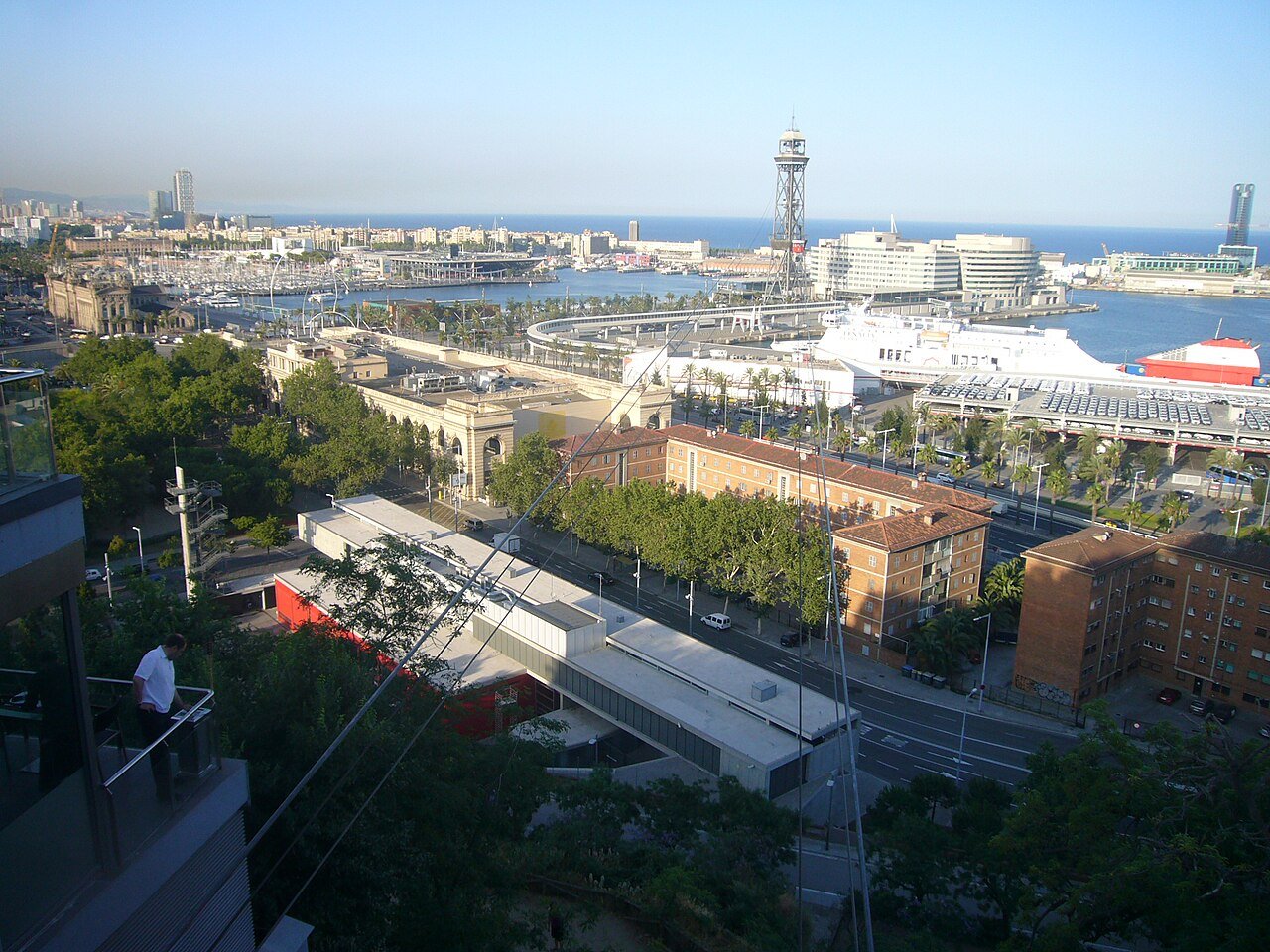
The two systems were never formally linked, but their Montjuïc stations sit a short walk apart along Avinguda Miramar, and a circuit of both makes a superb half-day. Start at Paral·lel metro station (lines L2 and L3) and ride the Montjuïc funicular up the hill — it is part of the metro, so a normal travel card covers it. At the top, walk two minutes to the Parc de Montjuïc cable car station and ride up to the castle; explore the fortress, then ride down, breaking the descent at the Mirador station for the viewpoint if the day is clear. This is where having the Montjuïc roundtrip ticket booked online pays off twice over: you skip the ticket-office line at the bottom station, and the 10% online saving on the fare is automatic.
From the funicular area, stroll along Avinguda Miramar — past the Joan Miró Foundation side of the hill and the Olympic pool terraces — to the Miramar viewpoint and the Port cable car’s Miramar station, roughly ten minutes on foot. Join the queue, ride the red cabin across the harbour, and land at the top of the Torre Sant Sebastià in the Barceloneta. Come down by lift, and the beach, the seafood restaurants of the old fishing quarter and the Barceloneta metro station (L4) are all within a few minutes’ walk.
Do the circuit in this direction and the day flows downhill towards lunch; do it in reverse — Barceloneta first, castle last — if you want the castle ramparts at sunset. Either way, allow three to four hours with the castle included, and never promise yourself a tight connection afterwards: the Port car’s queue is the one variable you cannot control.
Practical Info
- Operators: Telefèric de Montjuïc — TMB (Hola Barcelona), stations at Avinguda de Miramar 30 (Parc de Montjuïc), Mirador (downhill only) and Castell. Transbordador Aeri del Port — Telefèric del Port, stations at Miramar (Montjuïc) and Torre Sant Sebastià (Barceloneta); the Torre Jaume I station is currently closed.
- Montjuïc cable car hours (operator’s published pattern): January–February 10:00–18:00; March–May 10:00–19:00; June–September 10:00–21:00; October 10:00–19:00; November–December 10:00–18:00. On 25 December and 1 and 6 January it runs 10:00–14:30.
- Port cable car hours: first rides from 10:30; the last crossing is at 20:00 in high summer, 19:00 from mid-September, and earlier — around 17:30 — in the winter months. The operator posts schedule changes and maintenance closures on its website; there is also an annual maintenance closure, so always check before a winter visit.
- Weather: both systems can suspend operations in high winds. On a stormy day, check before building plans around either ride.
Tickets and Costs
The Montjuïc cable car’s official fares for 2026 are €19.00 for an adult return at the ticket office — or €17.10 if you buy online, a standing 10% saving — and €13.00 for a child aged 4 to 12 (€11.70 online). One-way tickets are sold only at the ticket office: €12.00 for adults, €10.00 for children. Children under 4 ride free. The one-way fare makes sense in one scenario only: riding up to the castle and walking down through the gardens afterwards. Everyone else should take the return — and take it online. The official roundtrip ticket on GetYourGuide is the operator’s own ticket (provider: Turisme de Barcelona), rated 4.5 out of 5, with free cancellation up to 24 hours ahead; you show the voucher at the Parc de Montjuïc station and exchange it before boarding.
The Port cable car keeps its pricing as simple as its timetable: €12.50 one way, €20.00 return, bought at the ticket office at either end — there is no online booking and no advance ticket of any kind, and children under 6 travel free. Because each direction is priced separately, think before you buy a return: many visitors ride one way (Miramar to the beach, say) and continue on foot or by metro. A return only pays if you genuinely intend to fly back.
One warning worth repeating: third-party websites occasionally advertise “Port cable car tickets” for advance purchase. The operator itself sells only at its towers, so treat any such offer as unofficial. For the Montjuïc car, by contrast, the GetYourGuide ticket above is the operator’s own official product.
Getting There and Getting Around
For the Montjuïc cable car, the classic approach is also the most fun: metro to Paral·lel (L2, L3), then the Montjuïc funicular from inside the station up to its top terminus — the Parc de Montjuïc cable car station is right beside it. Buses 55 and 150 also stop on the hill; the 150 continues up to the castle itself, which is the budget alternative to the cable car in both directions.

For the Port cable car, you have two doors. At the Barceloneta end, the Torre Sant Sebastià stands on the seafront by Sant Sebastià beach, about fifteen minutes’ walk from Barceloneta metro (L4) or a short hop on buses V15 and V19. At the Montjuïc end, the Miramar station sits beside the Miramar viewpoint on Avinguda Miramar: reach it on foot from the funicular’s top station (about ten minutes), or by the same 55 and 150 buses. The Torre Jaume I, by the World Trade Center on the Moll de Barcelona, has no working station at present — do not plan a journey around boarding there.
When to Go
Both rides are at their best on a clear morning, when the air is washed clean and the queue is shortest — the Port car especially rewards an early start, since its two cabins cannot clear a crowd quickly. Late afternoon is the photographer’s slot on both systems, and in spring the Montjuïc ride adds flowering gardens below the cabins. Summer brings the longest hours (the Montjuïc car runs to 21:00 from June to September) but also the longest lines; winter days are quiet, short — the Port car’s last crossing comes around 17:30 — and occasionally interrupted by maintenance closures and high winds.
How Long You Need
The rides themselves are short — about five minutes in each direction on the Montjuïc car, around ten minutes each way on the Port car. The real time goes on everything around them: allow an hour for the Montjuïc car with the castle’s exterior and viewpoint, two hours if you tour the fortress properly; an hour for the Port car once queueing is counted, more on a summer weekend. The combined grand circuit of both cars plus the castle takes three to four relaxed hours.
Tips for Visiting
- Book the Montjuïc car, queue smart for the Port car. The Montjuïc roundtrip is cheaper online and cancellable; the Port car cannot be booked at all, so ride it before 11:00 or in the last hour of operation to dodge the worst of the line.
- Use the Mirador stop on the way down. Uphill cabins pass straight through the middle station; downhill, you may get out at the Mirador de l’Alcalde viewpoint and re-board a later cabin on the same ticket.
- Do not rely on the Torre Jaume I station. It is currently closed — all Port car rides run the full course between Torre Sant Sebastià and Miramar.
- Keep travel cards in perspective. The Montjuïc funicular takes normal metro tickets and passes, but the cable car at its top does not: it is separately ticketed, whatever card you hold.
- Mind the wind. Both systems stop in strong winds, and the Port car’s standing cabins sway noticeably on blowy days — if heights or motion bother you, the seated, enclosed Montjuïc cabins are the gentler ride.
- Ride the Port car one way. At €12.50 single against €20 return, flying from the beach up to Miramar and walking down through Montjuïc (or the reverse) beats retracing your own crossing.
- Photograph from the viewpoints too. Cabin glass dulls photos on both systems; the Miramar terraces and the castle ramparts give the same panoramas unobstructed.
What to See Nearby
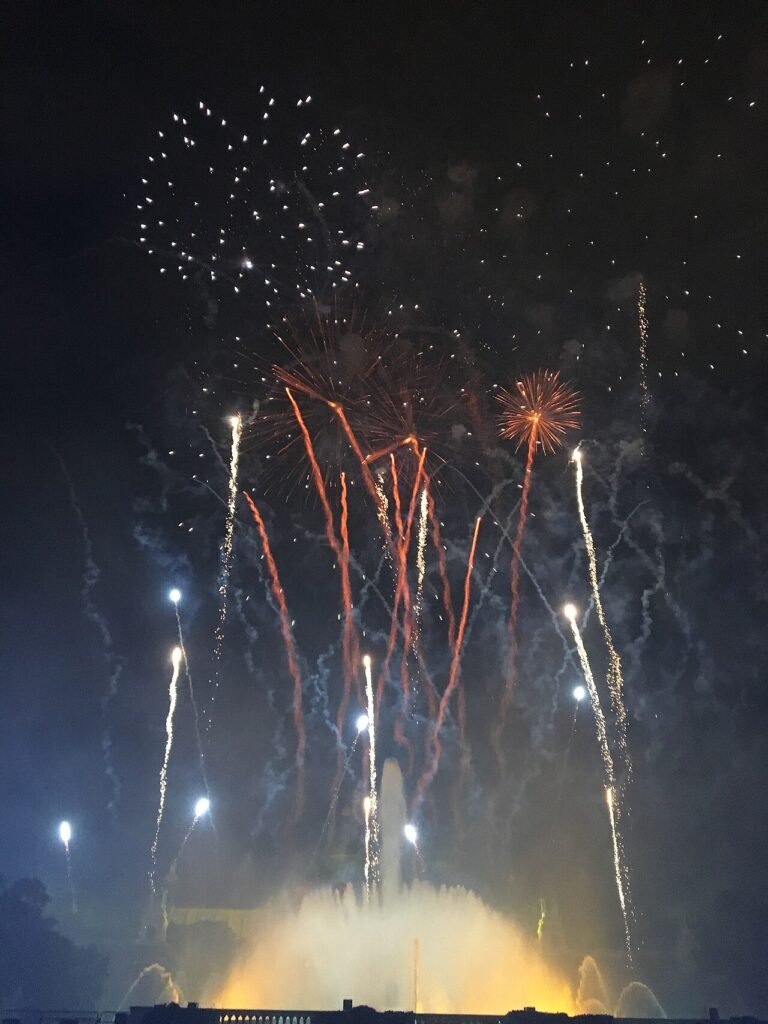
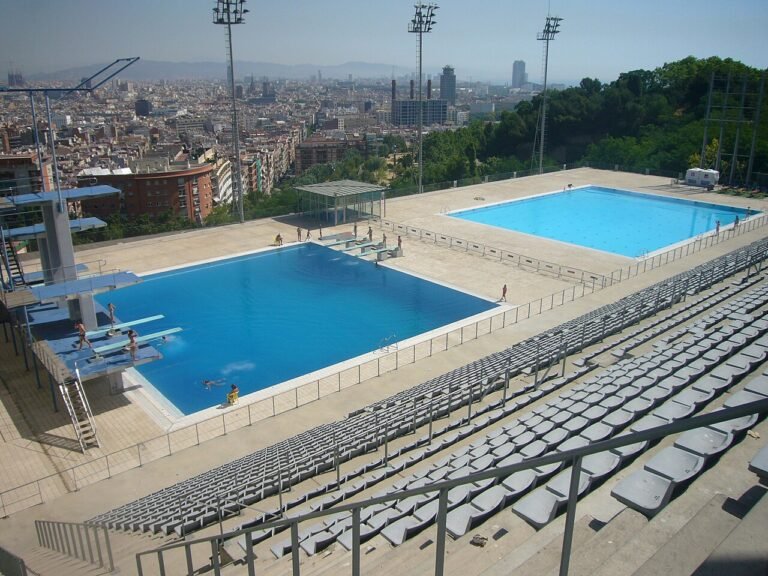
Montjuïc is a half-day of sights in itself. At the top of the hill the castle anchors everything; on the way down you pass the Montjuïc Olympic Pool, whose terrace shares the cable car’s skyline view; the Fundació Joan Miró, five minutes from the lower station; the open-air museum of Poble Espanyol; the Palau Nacional housing the national art museum, above the Magic Fountain of Montjuïc; and the 1992 Olympic stadium and ring. At the Port car’s lower end, the Barceloneta offers the beach, the old quarter’s seafood bars, the harbour front of Port Vell with its aquarium and shopping centre, and the Columbus Monument at the foot of La Rambla.
Frequently Asked Questions
Which Barcelona cable car is better, Montjuïc or the Port?
For spectacle, the Port cable car — a 1931 tramway crossing the harbour at up to 107 metres. For ease, the Montjuïc cable car — bookable online, step-free, and it delivers you to the castle. The head-to-head section above breaks the choice down by traveller.
Can you book the Port cable car in advance?
No. The Transbordador Aeri del Port sells tickets only at the ticket offices at its Miramar and Torre Sant Sebastià stations, on the day. Any website offering advance Port cable car tickets is unofficial.
How much do the Barcelona cable cars cost in 2026?
Montjuïc: €19.00 adult return at the ticket office, €17.10 online; children 4–12 €13.00 / €11.70; one-way €12.00 / €10.00, ticket office only; under-4s free. Port: €12.50 one way, €20.00 return, at the tower ticket offices; under-6s free.
Does a Barcelona travel card or metro pass cover the cable cars?
No for both cable cars — each is separately ticketed. The Montjuïc funicular, which connects Paral·lel metro station to the Montjuïc cable car’s lower station, is part of the metro network and does accept normal tickets and passes.
Can you still board the Port cable car at the Torre Jaume I?
No — the Jaume I intermediate station is currently closed, so all rides run the full course between Torre Sant Sebastià (Barceloneta) and Miramar (Montjuïc). Check the operator’s website before going, as its status is reviewed periodically.
Are the Barcelona cable cars suitable for wheelchair users and pushchairs?
The Montjuïc cable car is: its stations and cabins are adapted and boarding is step-free. The Port cable car is a heritage system with small standing cabins — anyone with limited mobility should check access arrangements with the operator before relying on it.
Travel insurance, sorted
Whether it is a two-week holiday or a longer move, travel insurance is not the most glamorous part of a trip — but it is the one booking you want to have in place before a trip, and while you are already away. Get a quote from SafetyWing
Final Thoughts
Most cities have a cable car; Barcelona, characteristically, has two that refuse to be confused with each other. One is a fairground engineer’s dream from 1931 that still flies over the harbour on two cabins and a prayer to the weather; the other is a smooth modern lift that floats you up a garden hill to a fortress. Ride the Port car for the story and the skyline over the water, ride the Montjuïc car for the castle, and if your day allows, string them together along Avinguda Miramar — few cities let you cross a harbour and climb a castle hill in a single afternoon without once touching the ground for long.

Photo credits: Tim Adams, ChiralJon, Enfo, Mariordo (Mario Roberto Durán Ortiz), Enric, Andrew Bone, João Carvalho, Andy Mitchell, Txllxt TxllxT, Jordiferrer and Celsoazevedo, via Wikimedia Commons.

One Comment