Casa Milà (La Pedrera): The Complete Visitors’ Guide
Most buildings stand still. Casa Milà moves. Its façade is a cliff of pale stone that swells and dips in one continuous wave along Passeig de Gràcia, with no straight line and no corner anywhere in it; the windows are caves punched into the rock; the balconies are tangles of forged iron like seaweed thrown up by the surf; and along the roof, where chimneys should be, stand a row of helmeted warriors keeping watch over the boulevard. Barcelona looked at this cliff in 1912, decided it resembled a quarry, and named it La Pedrera — the stone pit — as an insult. The insult stuck, softened into affection, and is now the name the house answers to around the world. It was Antoni Gaudí’s last private commission, the final house he ever built, and in many ways the most radical: a building with no load-bearing walls at all, held up by a skeleton of stone pillars and iron beams, free inside to become anything.
This guide walks the visit the way it runs: the story in brief, then the wave of the façade, the two great courtyards, the whale’s ribcage of the attic, the recreated apartment of the Milàs’ world, and the warrior rooftop with the Sagrada Família standing on its skyline. It also gives you the honest practical picture — Casa Milà sells timed tickets in several flavours, including a premium tier and a night visit, and they are not all worth the same money. It sits near the top of our Best Things to Do in Barcelona guide — read this, book ahead, and give the quarry the slow look it deserves.

The Short Answer
Yes — Casa Milà is essential, it deserves two hours, and you should book a timed slot online in advance. Where its neighbour Casa Batlló is an intimate jewel-box — one family’s apartment dressed as a fairy tale — Casa Milà is the monumental one: a whole stone mountain of a building, with an attic like the inside of a whale, a recreated bourgeois flat that shows you exactly how Barcelona’s rich lived in 1911. The standard ticket covers all of it. The premium tier mainly buys you a smaller group and a set start time with a guide; the separate night experience trades daylight for projections and an emptier roof. The slot matters more than the tier either way: first entry of the day or the last of the afternoon gives you the attic and the roof at their calmest. Booked ahead GetYourGuide – Casa Milà entry, it is the most complete Gaudí house visit in the city.
Table of Contents
- The Short Answer
- The Story in Brief: The Quarry That Scandalised a City
- What to See: The Façade — A Stone Wave
- What to See: The Courtyards
- What to See: The Attic — Inside the Whale
- What to See: The Pedrera Apartment
- What to See: The Warrior Rooftop
- Practical Info
- When to Go
- Tips for Visiting
- Final Thoughts
The Story in Brief: The Quarry That Scandalised a City
In 1905 the widowed Roser Segimon married the developer Pere Milà, and with her first husband’s fortune the couple bought a plot at Passeig de Gràcia 92, on the corner with Carrer de Provença, and hired the most talked-about architect in Catalonia to build them a spectacular apartment house — their own grand flat on the main floor, and rental apartments above to pay for it all. Gaudí, fresh from Casa Batlló a few streets down, proposed something Barcelona had never seen: a building wrapped in a self-supporting stone skin that rippled like water, wrapped around two huge courtyards, with not a single straight wall or right angle in the place. Construction ran from 1906 to 1912, and it quarrelled with the city the whole way up.
The quarrels were not small. The building broke planning rules on height and volume; a pillar stood further forward than the regulations allowed; the council halted works and fined the Milàs, and at one point Gaudí, refused permission for the colossal Virgin sculpture group he wanted crowning the roof, threatened to leave the whole affair in writing on the façade. The Virgin never went up. Barcelona, meanwhile, laughed: cartoonists drew the quarry as a monstrous Easter cake, a zeppelin hangar, a warship — and christened it La Pedrera. The Milàs themselves grew wary of their architect’s genius, and after Gaudí’s death Roser sold the house and gutted much of his interior decoration from the family’s own flat. But the structure outlasted every argument. Declared a UNESCO World Heritage Site in 1984 and bought and restored by the Fundació Catalunya La Pedrera, the house is today both a museum and a working building — people still live and work in parts of it — and it stands as Gaudí’s last civil work: after La Pedrera he gave himself entirely to the Sagrada Família, and never designed another house.

What to See: The Façade — A Stone Wave
Read the façade from across the boulevard first, because it is one gesture, not a collection of parts: a single wave of warm, cream-coloured stone quarried at Vilafranca del Penedès, rolling around the corner from Passeig de Gràcia into Carrer de Provença without ever breaking. There is no corner — the building turns the street corner the way a cliff turns into a cove. The stone is the structure’s skin, cut into great irregular blocks that ripple in and out, and every opening in it is different: windows like hollows worn by the sea, each one framed in stone that curls and folds instead of meeting at an angle. This is why “quarry” was half right. It does look hewn rather than built — as if the building had been carved out of one boulder and the rooms hollowed inside it.
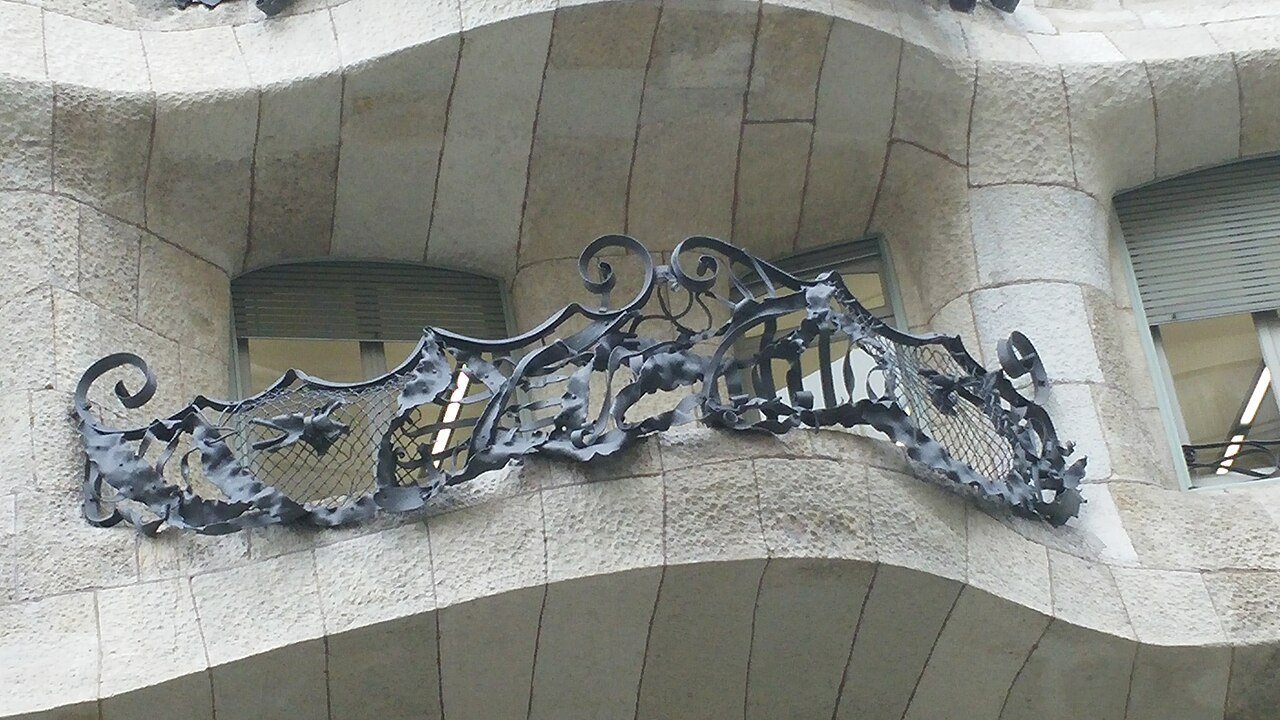
The balconies are the other half of the effect. Forged by Josep Maria Jujol from scrap iron — plates, chains, bars bent and riveted into abstract tangles — they hang off the stone like seaweed and foam: no two alike, none of them a simple railing. Look closer and the wave logic is everywhere, even in the details you could miss from the pavement: the stone curls over the roofline like a breaking crest, and the whole façade is subtly different in the morning and evening light — the city’s architects have a saying that the building is never the same twice, and for once it is simply true. Give it ten minutes from the far pavement before you go in, and come back after dark if you can: floodlit, the wave turns to honey and shadow, and the stone reads deeper than ever.

What to See: The Courtyards
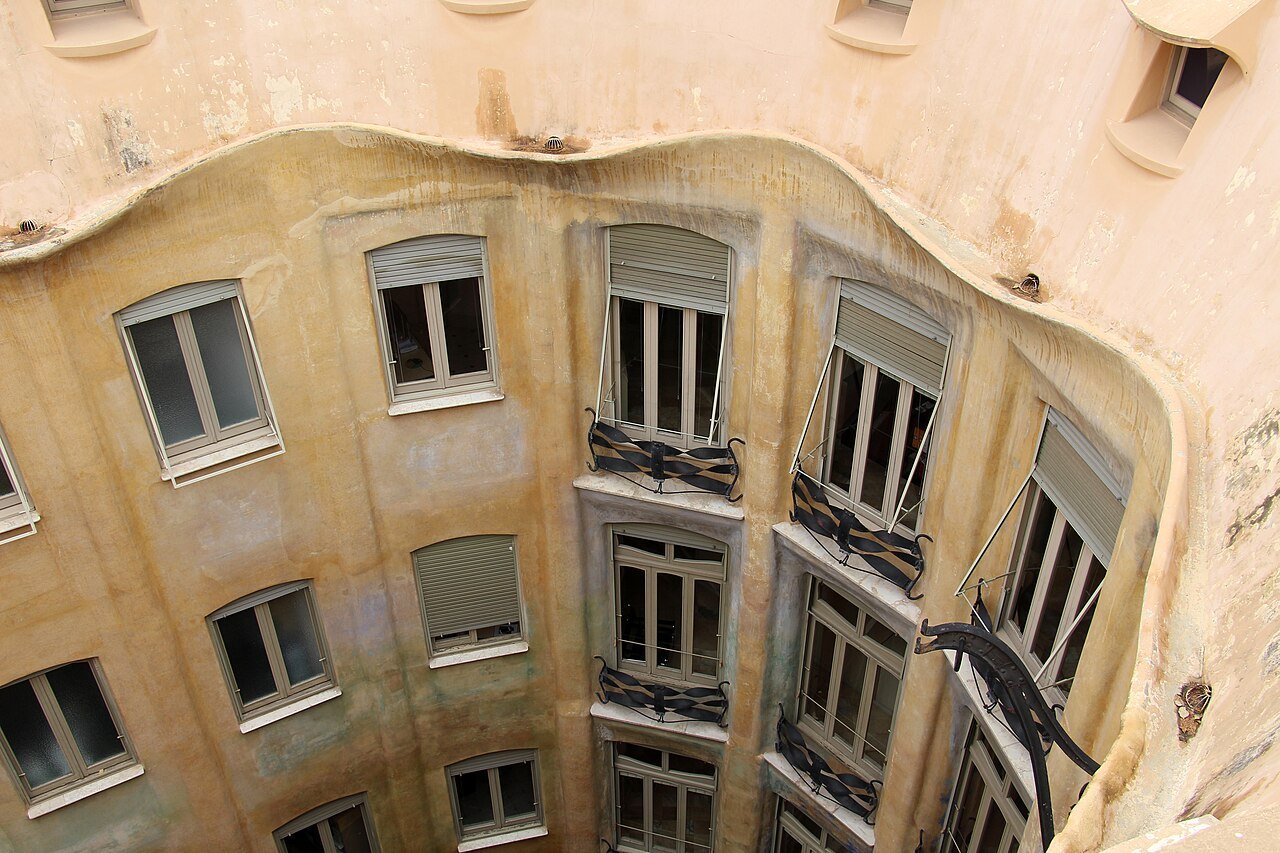
Step inside and the first surprise is air. Because Gaudí refused to strangle the flats around the narrow light wells of the ordinary Eixample block, he organised the whole building around two vast courtyards — the Passeig de Gràcia courtyard and the Provença courtyard — and made them so wide that they are less wells than interior streets, flooded with daylight. The façades that line them are as wavy as the one on the boulevard, and ringed floor by floor with curving walkways and iron railings; stand at the bottom and look up and the building seems to breathe above you, its windows opening and closing like gills. The murals that wash these walls in ochres and greens, with climbing floral motifs, complete the trick: this is a cliff turned inside out, and the courtyards are its sunlit caves.
They are also the building’s engine room, and Gaudí treated them with an engineer’s love. The ramps down to the basement were among the first underground car parks in the city — designed for carriages, ready for the motor age. Every flat in the building faces either the street or a courtyard (most face both), which in 1912 meant light and cross-ventilation that no ordinary Barcelona rental could offer, and the pillars that hold the whole mountain up march through these spaces with their loads made visible. The visit route threads you through the courtyards on your way up; don’t just pass through them. Stop in the middle, look up through the full height of the wave, and you will understand the building faster than any exhibition can explain it.

Free Barcelona travel guide
Planning a trip to Barcelona? Get our free one-page Barcelona checklist: what to book ahead, what to skip, and the tapas bars we actually eat in.
What to See: The Attic — Inside the Whale
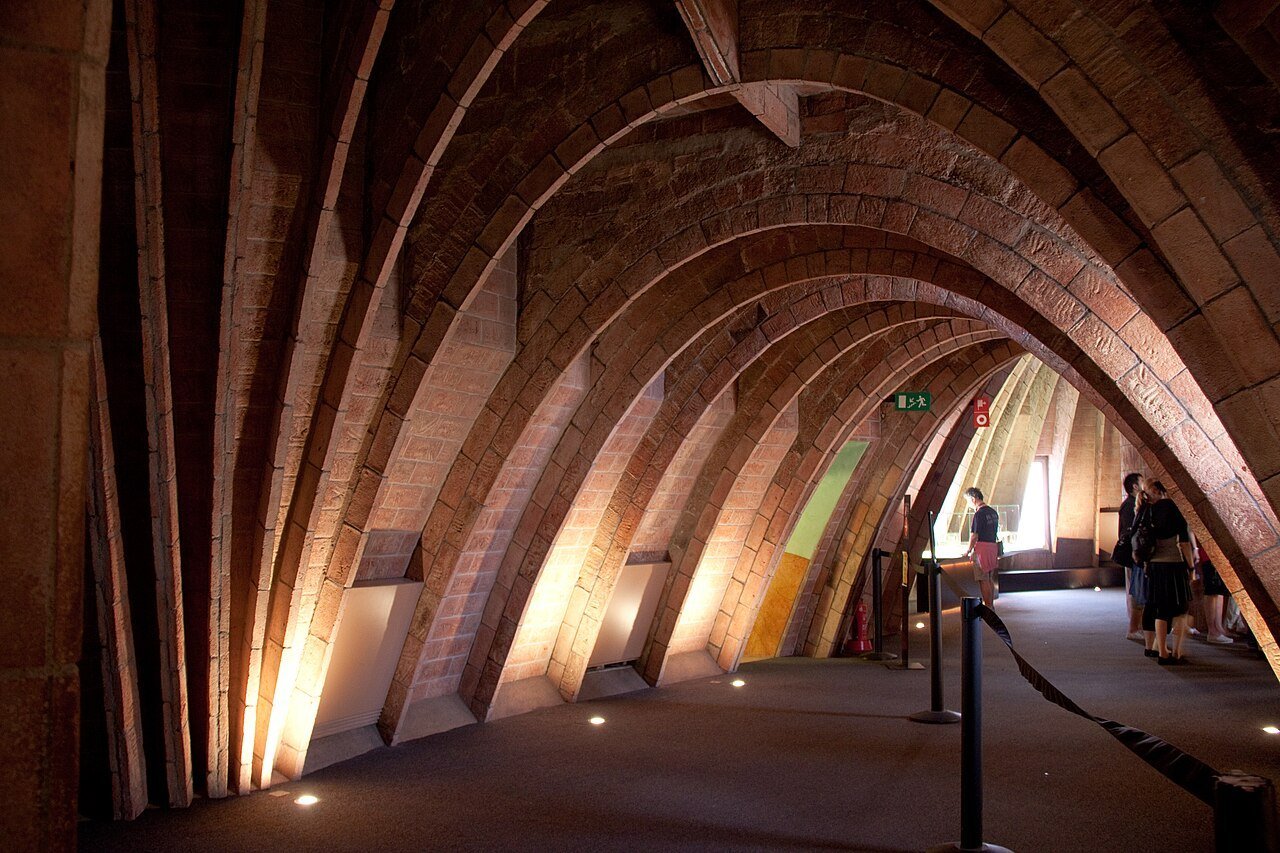
Take the lift to the top of the house and the building turns inside out one more time. The attic — the Espai Gaudí — was the house’s service floor, where the laundry was done and the water tanks stood, and Gaudí built it from some 270 catenary arches of thin brick: the curve a hanging chain makes, flipped upright, repeated rib after rib the length of the floor. Walk down its central corridor and you are walking inside a whale — visitors have called it that for a century, and there is no better description; the ribs arch over you in warm brick, narrowing and widening with the roof they carry, holding up the famous rooftop on nothing but geometry. It is the same trick as Casa Batlló’s white loft, but bigger, browner and wilder — Batlló’s ribs are a drawing room’s whisper of the idea; Milà’s are the full anatomy lesson.
The attic now holds the Espai Gaudí exhibition, the one museum display inside Gaudí’s own architecture, and it earns its place rather than filling space. Here are the hanging-chain models that show how he calculated his structures upside down, the studies of snails, bones, trees and waves that fed his forms, the plans and photographs of the works from Park Güell to the Sagrada Família, and a film that puts the man in his city. Give it proper time — twenty minutes at least — because it unlocks everything you are about to see on the roof above your head: the chimneys’ shapes, the arches’ logic, the whole natural grammar of the building is laid out here in the whale’s belly before you step out among the warriors.
What to See: The Pedrera Apartment
One floor down is the visit’s quiet masterpiece: the Pedrera Apartment, a whole rental flat recreated as a prosperous Barcelona family would have lived in it around 1911. This is the part of the visit Batlló cannot match — Batlló shows you the architect’s family palace; Milà shows you the tenants’ world the palace paid for. The rooms run in a ring around the courtyard, and they are furnished to the last detail of the period: the entrance hall with its telephone and coat stand, the dining room laid for a family dinner, the parents’ bedroom and the children’s room, the sewing room, the kitchen with its coal range, even the maid’s room off the back. Gaudí’s own contributions thread through all of it — the door handles moulded to the hand, the windows that slide and tilt in ways you have never seen, the ceilings that refuse every straight line.
It is also, quietly, the most useful room in the house for understanding why the building matters. The plan of the flat is free — because the façade and the pillars carry the loads, the walls inside could go wherever a family needed them, and could move when the family changed. Gaudí said the house would let its tenants rearrange their lives, and standing in this ring of curved, light-washed rooms you feel what that promise meant in 1911, in a city of dark, rigid tenements. Take the apartment slowly. The crowds hurry through on their way to the roof; the reward for lingering is the sense, rare in a museum, of a front door about to open.

What to See: The Warrior Rooftop
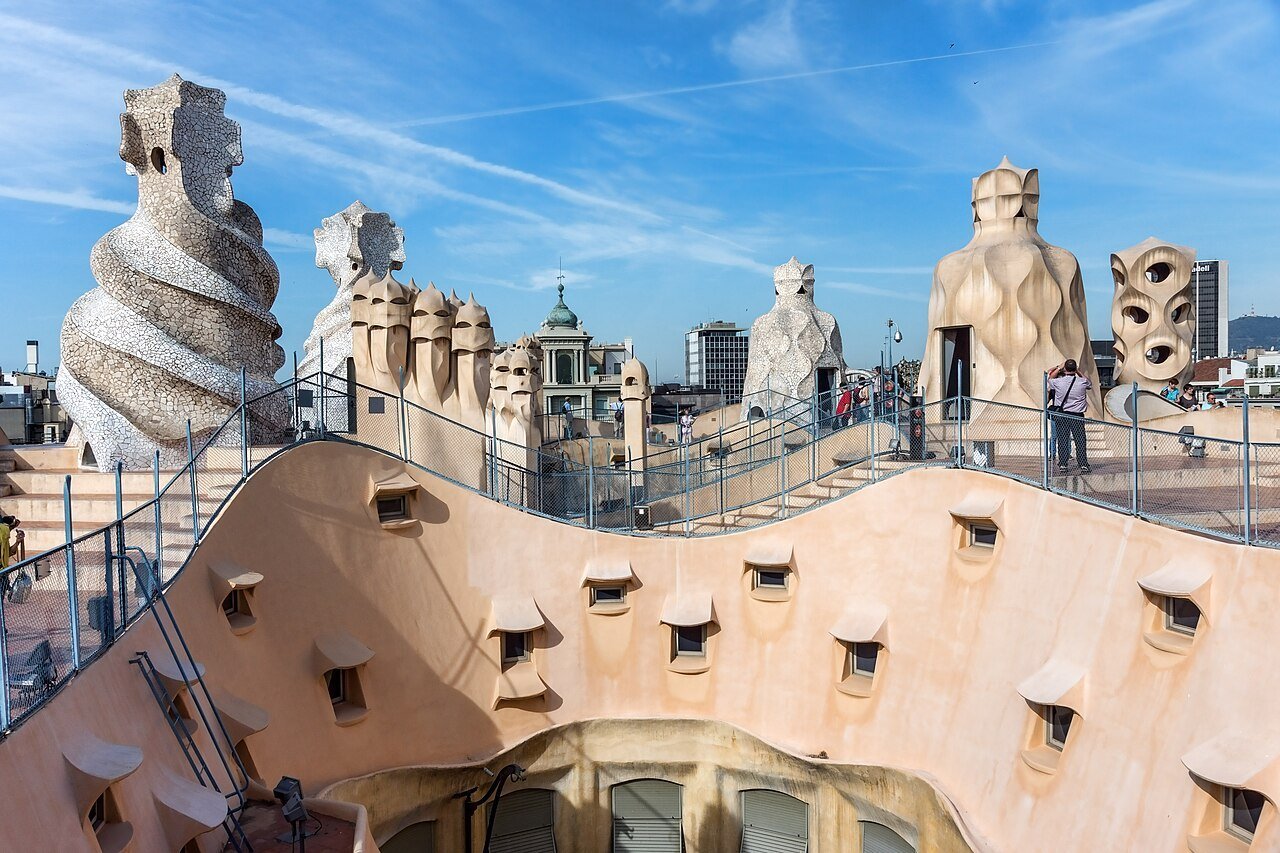
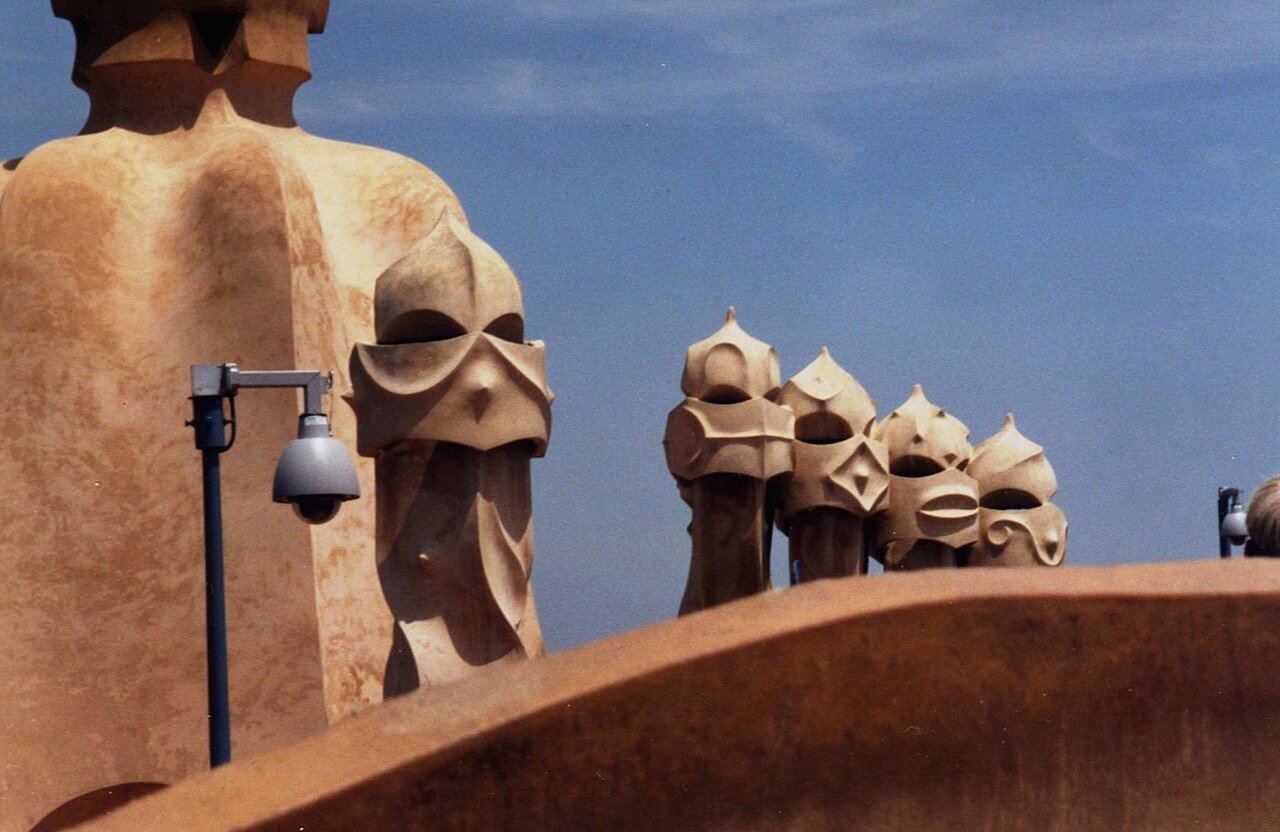
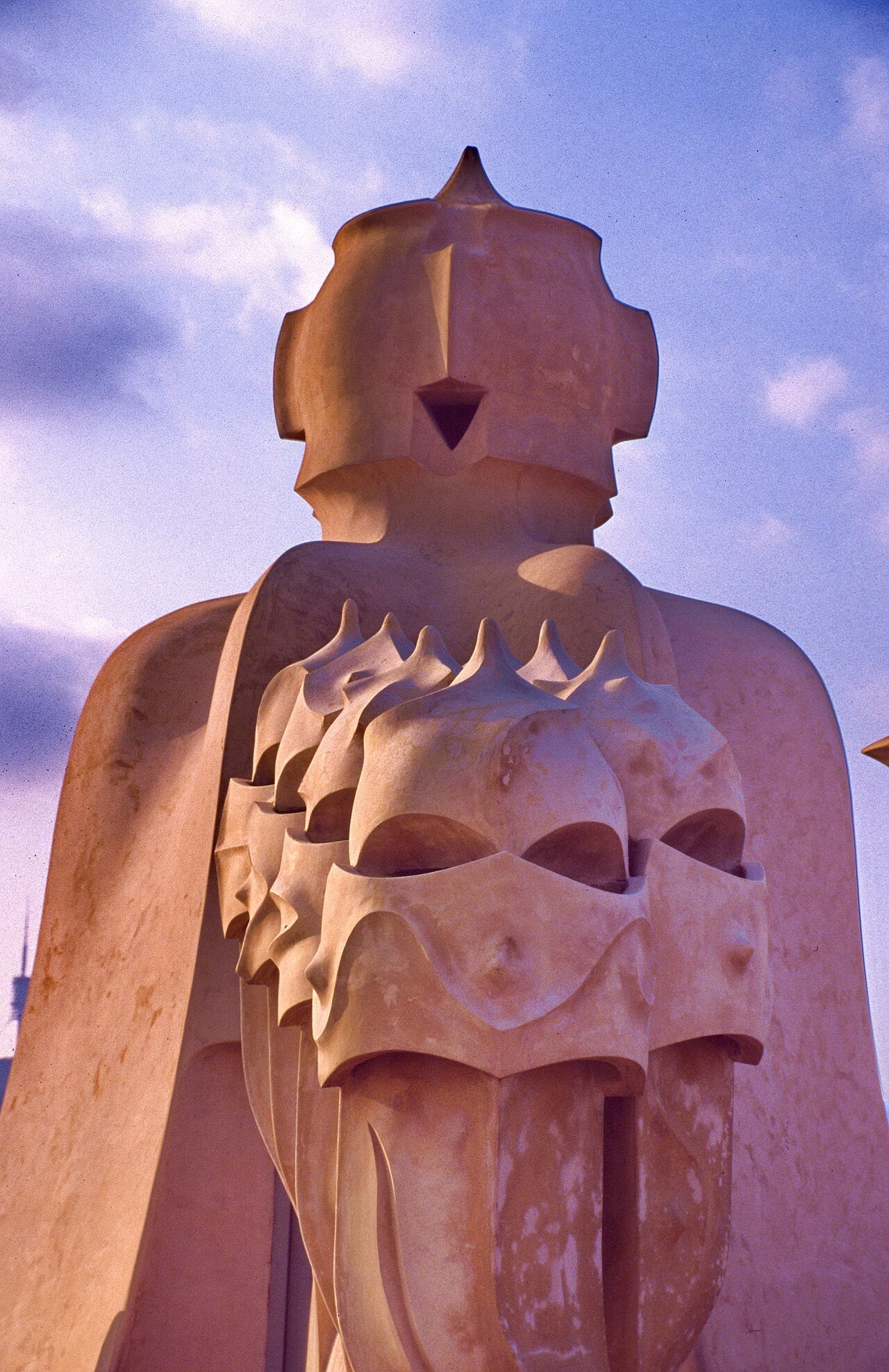
And so to the roof — the rooftop, the one every other rooftop in Barcelona is measured against. It does not lie flat: it rolls. The terrace follows the wave of the attic beneath it, rising and falling in steps and slopes, so that walking it is like walking a stony shoreline above the city. And along it stands the famous population of sculptures that are not sculptures at all. The great twisted chimneys, coated in trencadís of broken marble and tile, rise in groups like helmeted warriors on guard — the city’s favourite reading, and once seen, impossible to unsee. The ventilation shafts swell into smooth, masked towers; the six stairwell exits — the badalots — rear up as hooded giants faced in broken stone, big enough to walk through, each one a small sculpture show of its own. Every functional thing a roof must do, Gaudí turned into a figure in a stone procession.
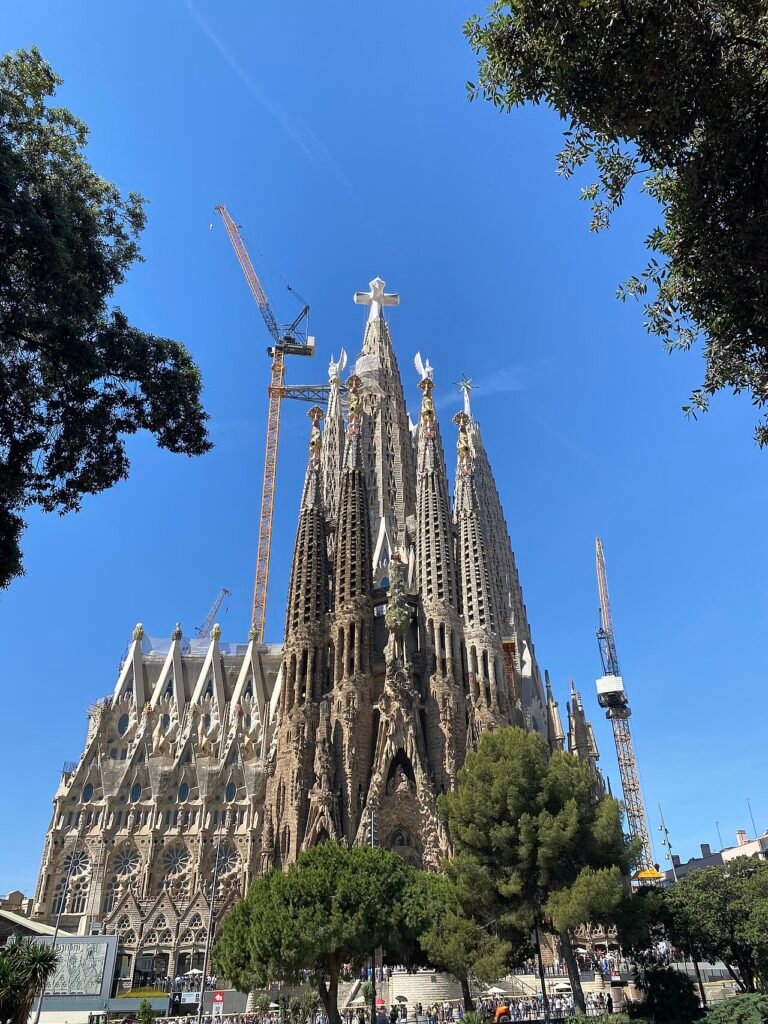
Find the viewfinders, too. The rooftop was designed with framed sightlines across the Eixample, and the finest of them lines up the Sagrada Família — from up here Gaudí’s last work stands clear of the grid, its towers rising over the rooftops he never saw finished. Look the other way for Montjuïc and the sea. On a clear day the whole argument of the man’s life is visible in one turn of the head: the stone wave under your feet, the church on the horizon, and between them the city he changed. If your visit allows only one slow moment, spend it here, at the rail near the warriors, in the last of the light.

Practical Info
Tickets and the options — the honest version. Entry is by timed slot, and the standard ticket (adult prices from around €29 online at the time of writing) covers the full visit: courtyards, the Pedrera Apartment, the attic exhibition and the rooftop, with an audio guide. Above that sits a premium tier — a small-group guided visit capped at a handful of people, at a set time, for roughly double the standard price; it is genuinely pleasanter in high season, but it shows you the same rooms, so buy it for the quiet, not for access. Separate again is the night experience (sold under names like La Pedrera Night Experience): an after-dark visit with projections in the courtyards and on the roof and a glass of cava at the end, at a premium price. It is a lovely evening — the floodlit wave alone is worth seeing — but it is not a substitute for the daylight visit, and if you can only afford one, choose the day. Book any of them ahead GetYourGuide – Casa Milà entry as soon as your dates are fixed: in high season the good slots go days ahead, and the walk-up queue is for what is left.
Getting there. Passeig de Gràcia 92, on the corner of Carrer de Provença in the Eixample. The Diagonal metro station (lines L3 and L5) is a few minutes’ walk along the boulevard; the Passeig de Gràcia station serves the same neighbourhood from below. Casa Batlló stands ten minutes down the same street, and the two pair naturally in one day (see Tips) — but book both, because both are timed. Inside, the visit is a signposted route through the courtyards, attic, apartment and rooftop; the exact order of the floors varies with the day’s flow, so follow the route as your ticket directs. There is a lift, toilets, a bookshop and the inevitable gift shop, and photography is allowed throughout.
How long. Give the house two hours. An hour and a half is the honest minimum — attic, apartment and roof need twenty minutes each and the courtyards are not a corridor — and on a clear evening the rooftop alone can hold you for forty. Rushing La Pedrera is the one real way to waste the ticket.
When to Go
First slot of the day, or the last light of the afternoon. The first entries get the attic’s whale-ribs and the apartment almost to themselves, and the rooftop before the day heats up; by mid-morning the roof is a slow promenade and the apartment a shuffle. The last day slots are the connoisseur’s other choice, putting you on the roof as the light turns gold and the floodlights come up on the wave. Summer is the busiest and hottest the roof ever gets; winter weekdays are the calmest, with the clearest views to the Sagrada Família; spring and autumn split the difference — our Park Güell guide and the Batlló guide set both houses against the city’s seasons, and the same rhythm serves all three.
Tips for Visiting
- Book online and take the first or last slot. The slot decides the visit here as surely as at Batlló; midday in August on the rooftop is magnificent and crowded in equal measure.
- Pair it with Casa Batlló, in this order. Batlló first — the intimate, jewel-box house, best taken fresh — then Milà, the monumental one, whose scale needs your second wind. Ten minutes apart on the same boulevard; book both tickets before you leave home, and see our Casa Batlló guide for the full walk-through of the neighbour.
- Do the attic before the roof, and read the roof through it. The Espai Gaudí explains the chain models and the whale-ribs; step out among the warriors having understood them and the rooftop doubles in value.
- Don’t rush the apartment. It is the visit’s most skippable-feeling floor and its most quietly rewarding one — the only place in either house where ordinary 1911 life, not the architect’s own family, fills the rooms.
- Look for the Sagrada Família from the roof. Follow the framed sightline across the Eixample to the towers — the two ends of Gaudí’s career in one view, and a photograph with an argument in it.
- Come back after dark for the façade. Even without the night ticket, the floodlit stone wave from the pavement is one of the great free sights in Barcelona.
Travel insurance, sorted
Whether it is a two-week holiday or a longer move, travel insurance is the one booking not to skip. We point readers to SafetyWing’s Nomad Insurance — cover built for travellers, remote workers and longer stays abroad, on a flexible monthly subscription you can start before a trip or while you are already away. Get a quote from SafetyWing
Final Thoughts
Casa Batlló is the fairy tale; Casa Milà is the epic. Batlló took one family’s apartment and dressed it in a dragon’s skin — an intimate, jewelled, private joy. Milà is the public, monumental answer: a stone mountain raised on a city corner, holding a whole society inside it — the landlords in their grand flat, the tenants in their rings of light-filled rooms, the servants in the whale’s belly, and an army of warriors keeping the roof. It scandalised its city, ruined its architect’s patience with clients forever, and set him free: when the quarry was finished, Gaudí walked away from private houses and gave the rest of his life to a church. Stand on the rooftop between the warriors, with the Sagrada Família on the skyline, and you are standing exactly where one career ended and the other began. For the park that was his exuberant middle, our Park Güell guide wanders the garden city above Gràcia; for the church itself, our Inside the Sagrada Família guide walks you through the building that consumed him. The quarry won, in the end. Barcelona would not trade it now for anything.
¡Buen viaje!

Photo credits: Casa Milà from Passeig de Gràcia — Rick Ligthelm, CC BY 2.0 · Casa Milà in 1914 — Unknown author, Public domain · Wrought-iron balcony detail — Andrew Bone, CC BY 2.0 · Casa Milà floodlit at night — Marco Almbauer, CC0 · Courtyard, looking up — Mstyslav Chernov, CC BY-SA 3.0 · Courtyard from above — Fred Romero, CC BY 2.0 · The attic (Espai Gaudí) — Tony Hisgett, CC BY 2.0 · Pedrera Apartment bedroom — José Luiz, CC BY-SA 3.0 · The Warrior Rooftop — Jean-Christophe BENOIST, CC BY 3.0 · Warrior chimneys — Error, CC BY-SA 3.0 · Stairwell tower and chimneys — Yann, CC BY 2.0 · Sagrada Família framed from the roof — Tony Hisgett, CC BY 2.0. All via Wikimedia Commons.

One Comment