Oceanogràfic Valencia: The Complete Guide to Europe’s Biggest Aquarium
Every other aquarium you have ever visited started with a corridor and a tank. This one starts with a park: lakes of improbable turquoise, white concrete shells opening on the water like water lilies, flamingos picking through a marsh in the open air — and somewhere below your feet, down in the cool dark under the gardens, a shark is cruising over a tunnel full of people. The Oceanogràfic is the biggest aquarium in Europe, the watery heart of Valencia’s City of Arts and Sciences, and it is built on a scale that keeps surprising you: around 45,000 animals of more than 500 species, a tour of the planet’s waters that runs from the Mediterranean off Valencia’s own beaches to the ice of the Antarctic, most of it arranged outdoors and underground in a park you wander rather than a corridor you shuffle down.
This guide takes it zone by zone — the Oceans tunnel and its sharks, the Mediterranean tanks and the great Wetlands sphere, the beluga whales of the Arctic igloo, the penguins, the dolphinarium, and the second long tunnel through the tropical seas — with the honest practical picture on tickets and timing, because this is a half-day visit wearing the clothes of a quick one. It sits near the top of our Best Things to Do in Valencia guide, and it is the one interiors ticket in the City of Arts and Sciences to sort out before everything else.

The Short Answer
Yes — the Oceanogràfic is worth every cent and worth half a day of your trip; it is the single best family sight in Valencia and the aquarium against which every other European one gets measured. Give it three hours at the absolute minimum and four if you can: the place is a small marine city, and the visitors who rush it in ninety minutes leave having seen the tunnel and missed the point. It is also the priciest ticket in the City of Arts and Sciences — around €40 at the time of writing, so check the current price — and the gate queues in summer and Fallas are the longest in the complex, which makes it the one ticket to buy ahead GetYourGuide – Oceanogràfic entry. Arrive at opening, walk straight to the Oceans tunnel while it is still quiet, and let the day unfold from there.
Table of Contents
- The Short Answer
- The Place in Brief: A Marine City in a Riverbed
- What to See: The Oceans Tunnel and the Sharks
- What to See: The Mediterranean and the Wetlands Aviary
- What to See: Arctic and Antarctic — Belugas and Penguins
- What to See: The Dolphinarium
- What to See: The Red Sea Tunnel and the Rest
- Practical Info
- Tips for Visiting
- Final Thoughts
The Place in Brief: A Marine City in a Riverbed
The Oceanogràfic opened in 2003 as the last and largest of the City of Arts and Sciences’ great set pieces, down at the south-eastern end of the old Turia riverbed — but it is deliberately the odd one out in the family. The eye, the skeleton and the helmet around it are all Santiago Calatrava; the aquarium’s roofs belong to a guest star, the Mexican engineer Félix Candela, the twentieth century’s master of the thin concrete shell. His signature building here opens over the lake like a concrete water lily in mid-bloom, petals of white concrete a few centimetres thick doing the work of a roof — and inside that shell, appropriately, is a restaurant where you dine surrounded by fish.
The layout takes a minute to grasp, and grasping it early saves you an hour later. Think of it as a park of lakes and pavilions above ground — the entrance gable with its crown-and-fish mosaic, the wetlands sphere, the sea-lion islands, the dolphinarium — with the great tank halls sunk below it, so that you keep descending from Valencian sunshine into blue underwater gloom and surfacing again somewhere else entirely. Each pavilion is a sea or an ocean: the Mediterranean, the Oceans, the temperate and tropical seas, the Red Sea, the Arctic, the Antarctic. It is less a single building than a small, watery archipelago, and the walking between zones — outdoors, past the lakes and the birds — is part of the pleasure rather than dead time.
It is worth knowing whose hands made it. Candela built his legend in Mexico on shells like these — concrete poured a few centimetres thick over wooden formwork, curved so cleverly that the shape itself does all the structural work — and the Oceanogràfic was his swansong, completed after his death by the engineers who inherited his drawings. That is why the aquarium feels different from the Calatrava sculptures around it: where they are bones and eyes, all gesture, his buildings are quieter — a lily on a lake, a shell over a doorway — and they sit in the water rather than posing beside it. Valencia put its avant-garde on the outside of this complex and a working ocean on the inside, and the aquarium is where the two finally meet.

What to See: The Oceans Tunnel and the Sharks
Start here, and start early. The Oceans pavilion holds the aquarium’s biggest tank — some seven million litres of Atlantic, the largest single tank in the complex — and through the middle of it runs the aquarium’s signature experience: an underwater tunnel, billed as the longest in Europe at some 70 metres, along which you walk the seabed while the tank’s whole weather system passes over and around the glass. Sand tiger sharks drift overhead with their mouthfuls of needle teeth, nurse sharks rest on the bottom, zebra sharks and rays plane past like slow aircraft, and behind them come the great shoals — thousands of fish moving as one animal, parting around the sharks and closing again behind them. Somewhere in the blue, if you are lucky, is the ocean sunfish, the aquarium’s strangest resident, a fish that looks like a swimming head and weighs as much as a small car.
The tunnel rewards slowness. Halfway along, find a spot against the glass and simply stop for five minutes: the sharks work circuits, the rays work others, and the whole tank’s choreography becomes readable — who patrols, who hovers, who follows whom. Do the tunnel twice if you can, once on arrival when the pavilion is at its quietest and once more before you leave, because by midday this is the most crowded hundred metres in Valencia and the spell is thinner. Honest footnote: the tunnel is the aquarium’s most famous photograph, and it still undersells it. Photographs cannot do the silence.
Look, too, for the tank’s supporting cast, because the Oceans is a cast of thousands. The sawfish — a ray wearing a chainsaw, all but vanished from the wild Atlantic — saws its slow way along the bottom. Guitarfish bury themselves in the sand until only the outline shows. Great schools of jacks and horse mackerel pour through the blue like weather, and now and then the whole shoal changes direction at once, a single thought in five hundred minds. The pavilion is staged as an Atlantic crossing, Bermuda at one end and the Canary Islands at the other, and like a crossing it has a rhythm: the early minutes are all spectacle, and then, somewhere around the second tower, it settles into something closer to peace. That settling is the thing people remember years later, long after the facts have gone.

What to See: The Mediterranean and the Wetlands Aviary
The Mediterranean pavilion is the aquarium’s home sea — the water that starts a few hundred metres from where you are standing — and it is built as a diver’s descent through it: a suite of tanks running from sunlit coastal shallows and seagrass meadows down to the deep, cold floors. This is the connoisseur’s zone, smaller-scaled and quieter than the Oceans, and full of the Mediterranean’s particular characters: groupers louring in their holes, moray eels swaying from the rocks, octopuses doing impossible things with jars, spiny lobsters, red coral, and the gorgeous Mediterranean red sea star glowing orange on the sand. It is also the zone that introduces the aquarium’s second job: the Oceanogràfic’s foundation runs a well-known sea-turtle recovery programme, nursing injured loggerheads back to health and releasing them off the Valencian coast — the turtles you watch gliding through these halls are the charismatic face of a working rescue hospital.


Give the small tanks their due on the way through. The Mediterranean’s pleasures are miniature ones: a cuttlefish rippling its frilled edge like a flamenco hem, changing colour as you watch; seahorses hitched to the seagrass by their tails, swaying in an invisible current; an octopus rearranging its den with the air of a creature that has strong opinions about furniture. None of this photographs as well as a shark, and all of it stays with you longer. This is also the pavilion where the aquarium explains itself best — the panels here tie tank after tank back to the Valencian coast a bus ride away, the fishing ports, the posidonia meadows that shelter half the young fish in the western Mediterranean. You leave it feeling, correctly, that the aquarium begins at the beach rather than at the ticket gate.
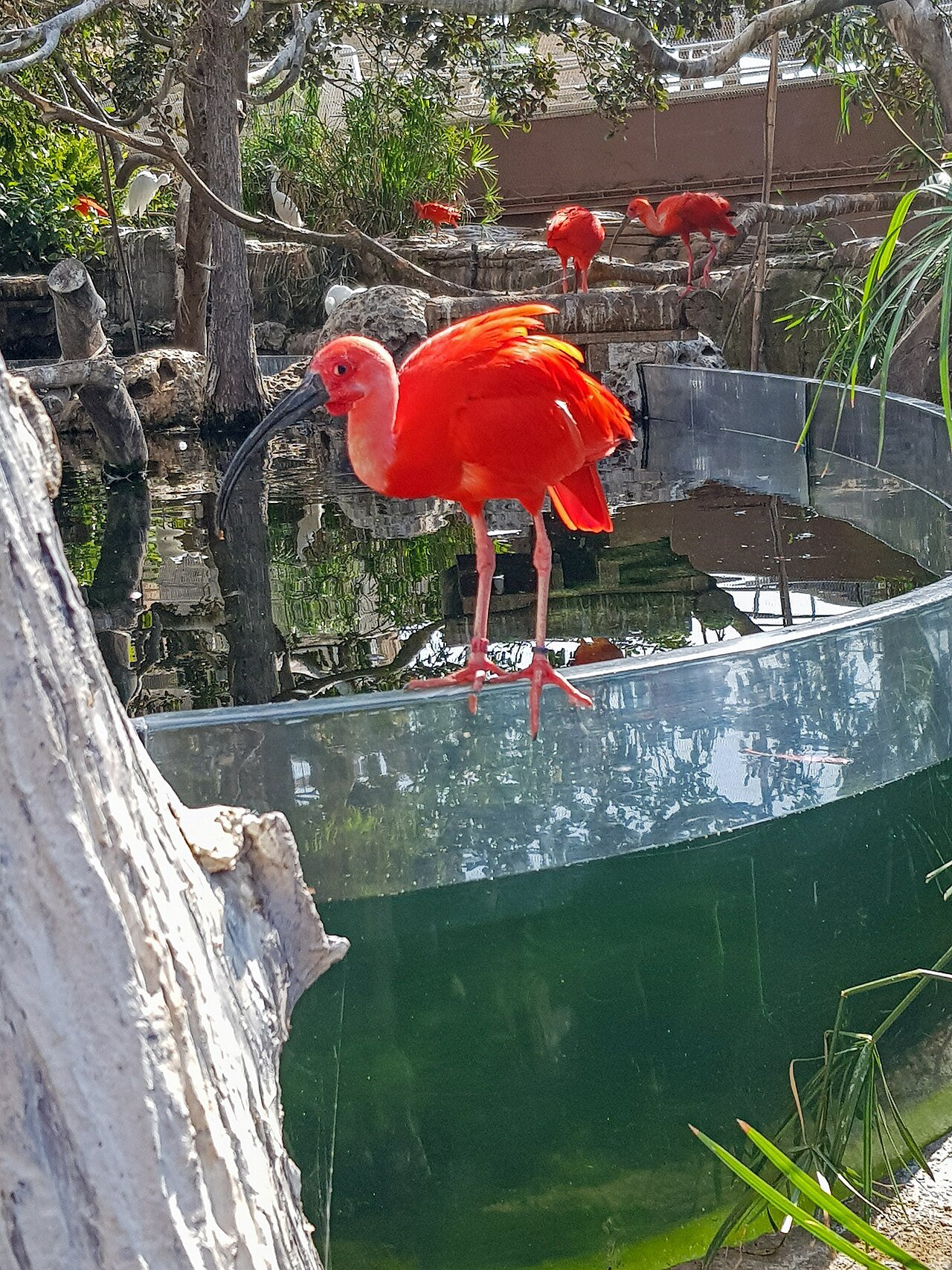
Then surface, and walk into the sphere. The Wetlands aviary is one of the Oceanogràfic’s most original buildings: a latticed sphere some 26 metres high recreating two of the world’s great wetland habitats at once — an American mangrove swamp and a Mediterranean marsh of the Albufera kind. Inside, the birds are not behind glass but around you, in the trees and on the ponds: scarlet ibis burning red against the green, roseate spoonbills, cattle egrets, ducks and stilts, and flamingos doing their slow, improbable ballet in the shallows. It is the zone visitors most often skip on the way to the next tank, and the one that best proves the place is a park and not just a row of windows — warm, loud, feathery and alive. Go in the morning, when the birds are at their busiest.

Free Valencia travel guide
Planning a trip to Valencia? Get our free one-page Valencia checklist: what to book ahead, what to skip, and the paella places we actually eat in.
What to See: Arctic and Antarctic — Belugas and Penguins
The two cold pavilions sit at opposite ends of the park and opposite ends of the Earth, and between them they hold the aquarium’s two most-loved acts. The Arctic is an igloo: a great white dome inside which rocky cliffs and ice blocks ring a deep, blue-green pool, and in the pool, the Oceanogràfic’s celebrities — its beluga whales. Valencia is one of very few places in Europe where you can see belugas at all, and seeing them is genuinely strange and moving: two great white whales, four metres and more of them, rolling and gliding through the cold water with those famously expressive, almost smiling faces, coming to the glass with what looks for all the world like curiosity about you. Stand still and wait. They work slow circuits of the tank, and the moment a beluga materialises out of the blue and passes a metre from your nose is the single most quietly astonishing thing in the whole aquarium.
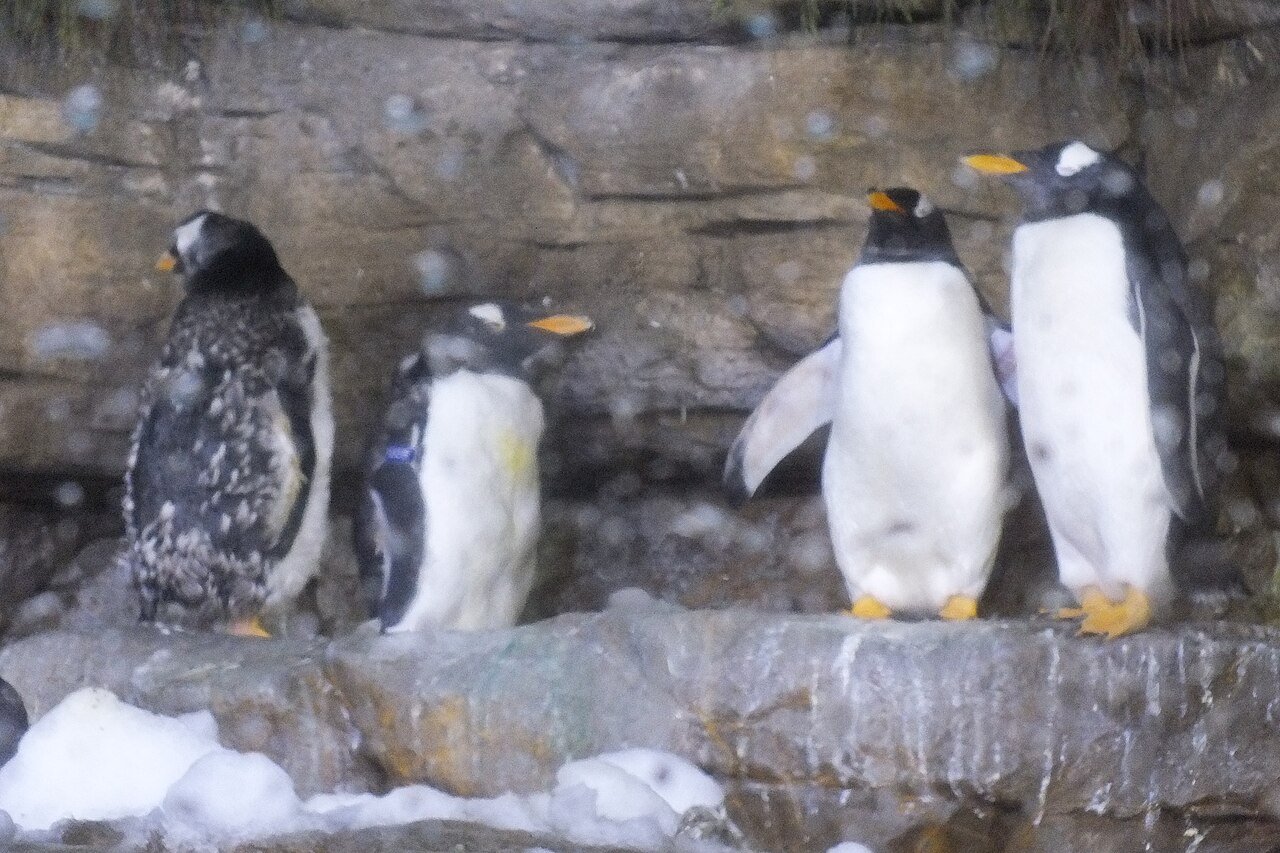
The Antarctic pavilion answers it with comedy. Behind glass, a rocky cliff of fake ice and stone holds the penguin colony — gentoo penguins, with their white bonnets and bright orange bills — waddling, squabbling, tobogganing on their bellies and porpoising through the underwater viewing window in streaks of bubbles. The arrangement is the kind one: watch them clown on the rocks at eye level, then drop to the lower window and watch the same birds transform into underwater torpedoes. Children camp here. So, in our experience, do most adults.
Practical notes for the cold end of the park: both pavilions run feeding and keeper talks at posted times, and they are worth timing — the beluga talk in particular turns a beautiful animal into an understood one, covering the rescue and research work the whales take part in. And dress for the surprise: after the underground gloom of the tanks, the igloo’s cold, bright interior feels like stepping into another latitude entirely, which is of course the idea. The two pavilions are the aquarium’s emotional poles — awe at one end, laughter at the other — and nearly everyone we know rates one of the two animals, beluga or penguin, as the thing they would come back for.

What to See: The Dolphinarium
The dolphinarium is the park’s outdoor stadium — one of the largest in Europe, a great blue amphitheatre of pools and stands — and its presentations are the day’s punctuation marks: several shows a day, times varying by season and posted at the entrance, so check the day’s schedule the moment you arrive and build your route around the one you want. The shows themselves mix the acrobatics you expect — dolphins in synchronised arcs over the pool, trainers carried across the water — with the aquarium’s conservation and biology story told through the animals. Arrive twenty minutes early for a decent seat, and sit a few rows up: the front rows are the splash zone, which is either a warning or a recommendation depending on who you are travelling with.
And the honest sentence this guide owes you: performing dolphins divide opinion, and if captive cetacean shows are not for you, the Oceanogràfic still fills a full visit without this stadium — but it is a modern, conservation-focused aquarium whose foundation does real rescue and research work, and its dolphins are presented as ambassadors for that work rather than as a circus. Judge for yourself; the rest of the park makes no demands either way.

What to See: The Red Sea Tunnel and the Rest
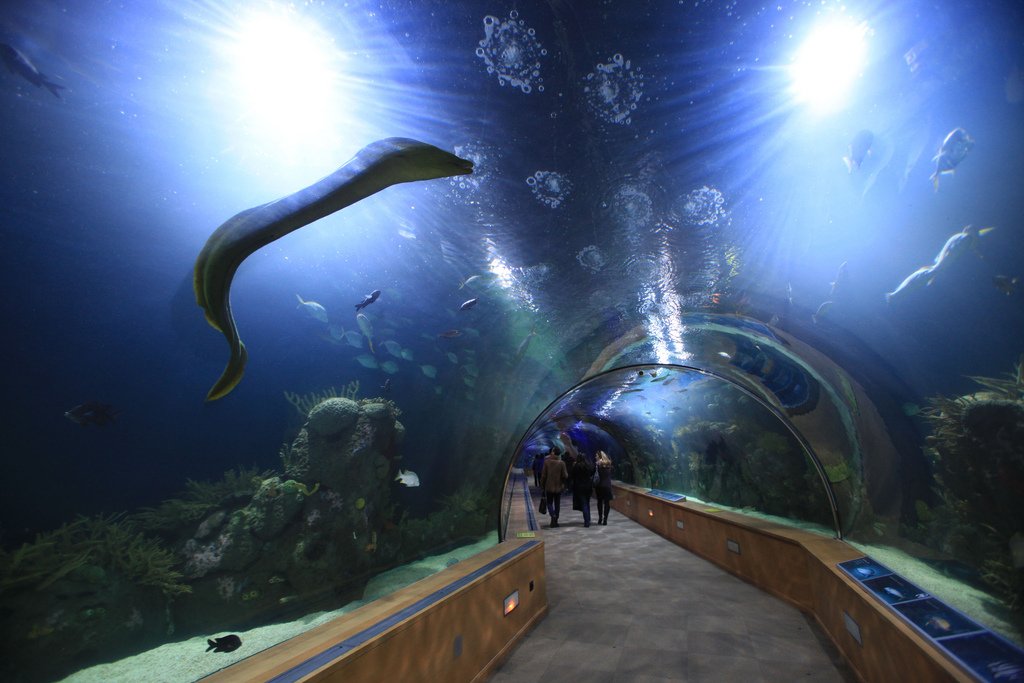
The aquarium has a second great tunnel, and most visitors never learn its name: through the Temperate and Tropical Seas pavilion, where a long underwater passage carries you from the cooler Pacific and Atlantic waters into the tropics — coral gardens, seahorses, clownfish in their anemones, and, in the photograph below, a great green moray eel swimming free over the glass, which is either the best or the worst moment of your visit depending on your feelings about eels. Off this pavilion sits the Red Sea, recreated in a single vast tank you view from tiered seats like a cinema — a deliberate piece of theatre, and a good one: sit down in the cool and let a whole coral sea, sharks and rays included, unroll in front of you like a film.
The aquarium also keeps a working crocodile enclosure outdoors, a reminder that its brief quietly covers the whole watery world and not just the photogenic parts of it — the crocodiles, sunning themselves with the patience of dropped luggage, are the park’s great unbothered residents. Add the 4D cinema and the changing exhibitions in the access building, the seal and walrus talks up at the cold end, and the simple pleasure of the lakes themselves, with their bridges, terraces and drifting birds, and the shape of the place resolves: this is a park that contains an aquarium, not an aquarium with a garden attached.
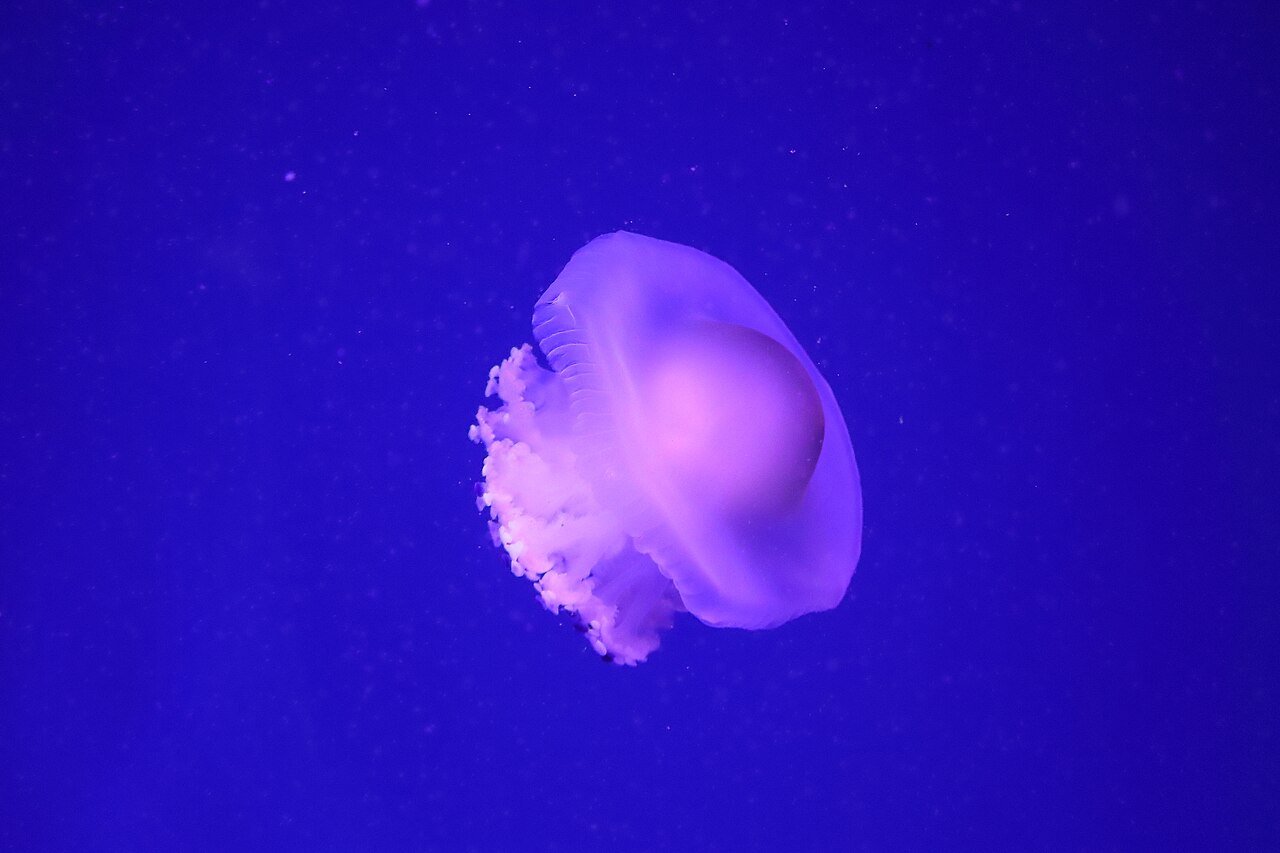
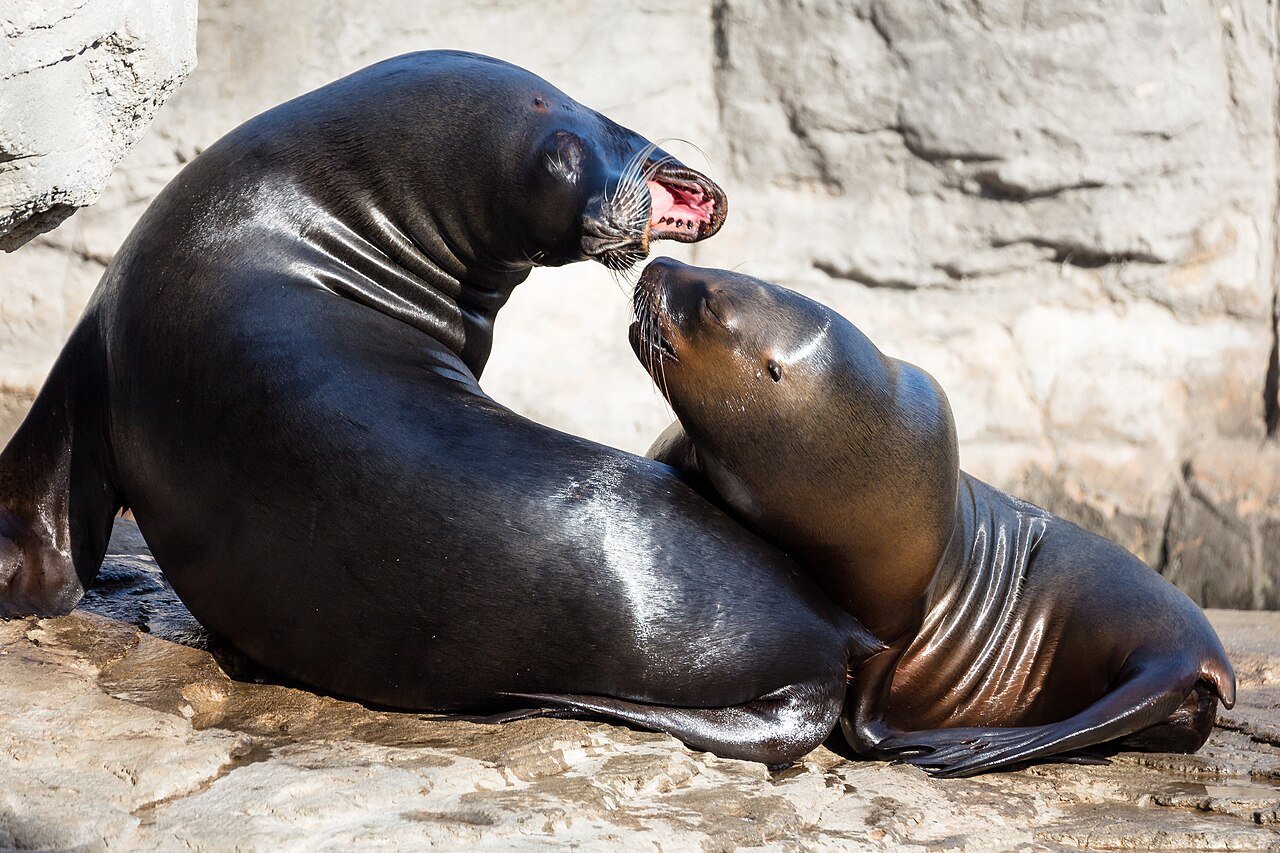
The rest is a constellation of smaller wonders, and the art is not to rush them. The jellyfish — tanks of them threaded through several buildings, in what the aquarium bills as the largest jellyfish display in Europe — are pure hypnosis: barrel jellyfish and sea nettles pulsing through black water lit like a cathedral. Outside, the Islands zone holds a colony of Patagonian sea lions on their rocks, barking and basking; there are crocodiles in their own enclosure, walrus-sized appetites in the Arctic feeding talks, and everywhere the small tanks that children find and adults walk past — seahorse nurseries, cuttlefish, the weird and the tiny. Budget your curiosity accordingly: the headline zones are the tunnel, the belugas and the dolphins, but the Oceanogràfic’s depth is in its corners.
Practical Info
Tickets and timing. The Oceanogràfic is the expensive interior of the complex — around €40 for an adult at the time of writing; check the current price before you go — and combined tickets bundle it with the Museu de les Ciències and the Hemisfèric at a discount, valid across consecutive days so you can spread the complex over two days instead of sprinting it. Buy the aquarium ticket ahead online in summer, at weekends and anywhere near Fallas (19 March and the weeks around it): the walk-up queue is the longest at the complex, and arriving with the ticket on your phone GetYourGuide – Oceanogràfic entry is the difference between walking in and standing in the sun watching other people walk in. Opening hours vary by season — longer in summer, shorter in winter — so check the day’s times rather than trusting anyone’s blog, including this one.
How long. Three hours is the floor; four is honest; families should write off the whole day and feel no guilt. The route is self-guided and mostly step-free, spread between the underground halls and the open-air park — take the map at the gate, because the archipelago layout confuses everyone for the first twenty minutes.
Getting there and eating. The aquarium sits at the south-eastern end of the City of Arts and Sciences; the new metro line 10 stops right outside (Oceanogràfic station), city buses serve the avenues alongside, and the connoisseur’s approach is the walk down the Turia gardens from Alameda station. Food inside is the usual captive-audience fare with one glorious exception: the Restaurante Submarino, inside Candela’s water-lily shell, where you dine ringed by a cylindrical aquarium — book it ahead for the complex’s one genuinely special meal, or picnic on the Turia grass outside and save the money for the gift shop’s shark-related emergencies.
Tips for Visiting
- Arrive at opening and go straight to the Oceans tunnel. The first hour is a different aquarium: the tunnel nearly empty, the belugas active, the light low and blue. By noon the tunnel is a queue with a view.
- Check the dolphin schedule at the gate, then plan backwards. Show times fix the day’s skeleton. Everything else flexes; the presentation does not.
- Spread a combined ticket over two days. Aquarium one day, science museum and Hemisfèric film the next — our City of Arts and Sciences guide walks the whole complex building by building.
- Do the Wetlands sphere in the morning. The birds are busiest early, and the sphere’s warm green calm is the perfect counterweight to an hour in the underground blue.
- Pair it with the old town, not against it. The aquarium is a morning; give the afternoon to Gothic Valencia — our Valencia Cathedral guide for the Grail and the Miguelete, and the silk exchange in our La Lonja de la Seda guide a few streets away.
- Eat the Submarino splurge or eat outside. The one special meal is dinner inside the fish tank; everything between that and a picnic is priced for captives.
- With children, guard the penguins for last. The Antarctic pavilion is the perfect end-of-visit bribe, and nobody has ever extracted a tired child from a dolphin show on time.
Travel insurance, sorted
Whether it is a two-week holiday or a longer move, travel insurance is the one booking not to skip. We point readers to SafetyWing’s Nomad Insurance — cover built for travellers, remote workers and longer stays abroad, on a flexible monthly subscription you can start before a trip or while you are already away. Get a quote from SafetyWing
Final Thoughts
Here is the thing about the Oceanogràfic: it is an aquarium built like a city, in a park built in a river, by a city that decided the answer to a flood was imagination. Come for the shark tunnel — everybody does — but stay for the whole strange, generous archipelago of it: the beluga materialising out of Arctic blue, the ibis burning red in their green sphere, the moray sailing over your head, the jellyfish keeping their slow time in the dark. Europe has bigger tanks on paper and older aquariums in fact, but it does not have another place quite like this: half zoo, half spaceship, entirely Valencian. Give it the half day it asks for. It has never once been the visitors who stayed too long who regretted it.
¡Buen viaje!

Photo credits: The water-lily shells across the lake — Luca Florio, CC BY-SA 3.0 · The access building — Javier Yaya Tur, CC BY 2.0 · A shark over the Oceans tunnel — Javier Yaya Tur, CC BY 2.0 · A Mediterranean red sea star — Marek Ślusarczyk (Tupungato), CC BY 3.0 · A loggerhead turtle — Javier Yaya Tur, CC BY 2.0 · Scarlet ibis in the Wetlands aviary — Derek Rankine, CC BY 2.0 · A scarlet ibis portrait — Rafa Esteve, CC BY-SA 4.0 · A beluga at the glass — Carquinyol, CC BY-SA 2.0 · Gentoo penguins — Brateevsky, CC BY-SA 4.0 · The dolphin presentation — Marek Ślusarczyk (Tupungato), CC BY 3.0 · The temperate and tropical tunnel — Javier Yaya Tur, CC BY 2.0 · A barrel jellyfish — Esniom, CC BY-SA 4.0 · Patagonian sea lions — Rafa Esteve, CC BY-SA 4.0. All via Wikimedia Commons.


One Comment