Gràcia: The Complete Guide to Barcelona’s Village Neighbourhood
Barcelona has grander districts and far more famous ones, but only one that still behaves like a town that never quite agreed to join the city. Gràcia — the Vila de Gràcia — was an independent municipality until 1897, a working town of weavers and workshops standing apart from Barcelona across open ground, and it has kept the habits of that independence ever since: its own squares, its own festivals, its own clock tower, its own stubborn personality. The Eixample’s grid stops at its edge and dissolves into narrow lanes, low houses and a chain of small squares, each with its own temperament and terrace crowd.
This guide walks Gràcia the way locals live it: square to square through the Vila, up to Gaudí’s very first house, through the week in August when its streets dress themselves in fantasy, and on to the markets and cinema streets that keep it a neighbourhood first and a sight second. It is the village chapter of the story told across our Best Things to Do in Barcelona guide — and the part of the city visitors most often miss, because nothing in Gràcia shouts.

The Short Answer
Yes — Gràcia is unmissable and free to wander: Barcelona’s former independent town, a walkable village of small squares, modernista houses, markets and cinema streets tucked between the Eixample and the hills, holding Gaudí’s first house, the city’s most beloved street festival and its most literary square. There is no ticket and no single sight to queue for — Gràcia is an atmosphere, absorbed square by square — but a first visit repays a loose structure: the squares in the morning, Casa Vicens late morning, the markets and Carrer de Verdi after lunch, a terrace on Plaça del Sol towards evening. If you would rather have the layers explained as you go, a Gràcia walking tour threads the squares and the Gaudí house together in a couple of hours. Give it at least half a day — a full one, happily.
Table of Contents
- The Short Answer
- The Story in Brief: The Town That Joined Barcelona Late
- The Squares: Gràcia’s Living Rooms
- Casa Vicens: Gaudí’s First House
- The Festa Major de Gràcia: The Week the Streets Dress Up
- Park Güell at the Top Edge
- Local Life: Verdi, Terraces and the Morning Round
- The Markets: Llibertat and the Abaceria Reborn
- Where to Eat and Drink
- Practical Info
- Tips for Visiting
- Final Thoughts
The Story in Brief: The Town That Joined Barcelona Late
Gràcia began as farmland and a convent. A Carmelite house — Santa Maria de Gràcia — gave the settlement its name in the 17th century, and around it grew a town of masies, workshops and textile workers, close enough to Barcelona to sell to it and far enough to govern itself. Through the 19th century the Vila was a real municipality with its own town hall, markets and fierce politics — and its own bell. When, in 1870, the town rose in the Revolta de les Quintes against military conscription, it was the clock-tower bell — La Marieta, the Graciencs call her — that called the town out and kept ringing while the army shelled the Vila for days. The tower survived; so did the attitude.
Annexation came in 1897, and the city duly filled the fields between the Vila and Barcelona with the Eixample’s grid. But the grid stopped at the Vila’s edge, and inside it the old town plan survived entire: short streets, human scale, some thirty squares. The 20th century layered on modernista houses, cinemas, air-raid shelters and literary fame; the 21st has added rising rents and a beloved local life under pressure. What has not changed is the unit of life here: not the avenue, but the square. Walk Gràcia square to square, as this guide does, and you are walking it correctly.
The Squares: Gràcia’s Living Rooms
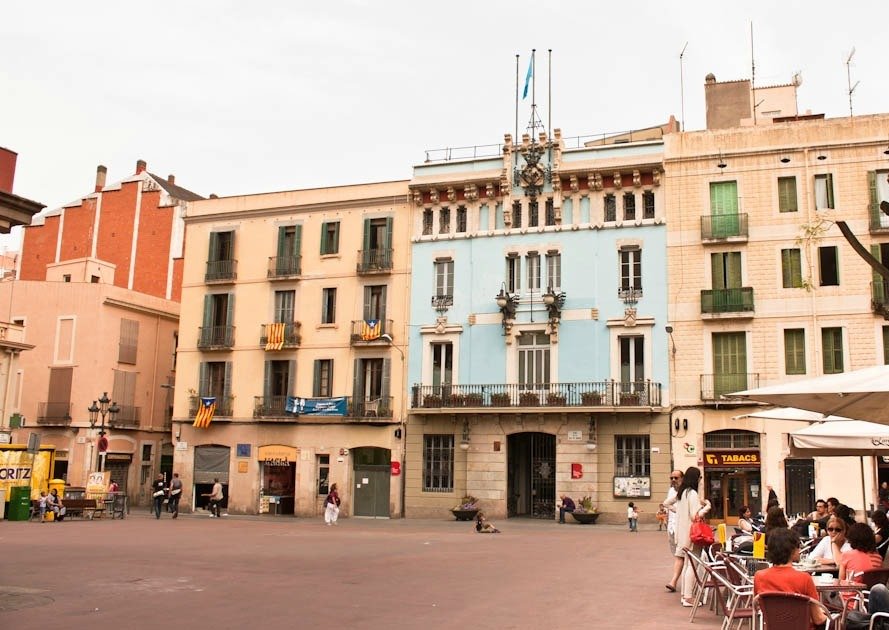
Start at the heart. Plaça de la Vila de Gràcia — long known as Plaça de Rius i Taulet — is the Vila’s front room: the old town hall stands on it, cafés ring it, children colonise its centre, and above everything rises the Torre del Rellotge, the 33-metre clock tower built in 1862–64 that is Gràcia’s emblem and meeting point (“at the tower” is the neighbourhood’s default arrangement). Read it as you stand there: the stone base carries the Vila’s coat of arms and reliefs of the zodiac, the brick shaft climbs to the clock, and at the top hangs La Marieta, the bell of 1870. It is not a church campanar — it is a civic tower, a town’s declaration that it could tell its own time. That declaration turned out to be permanent.

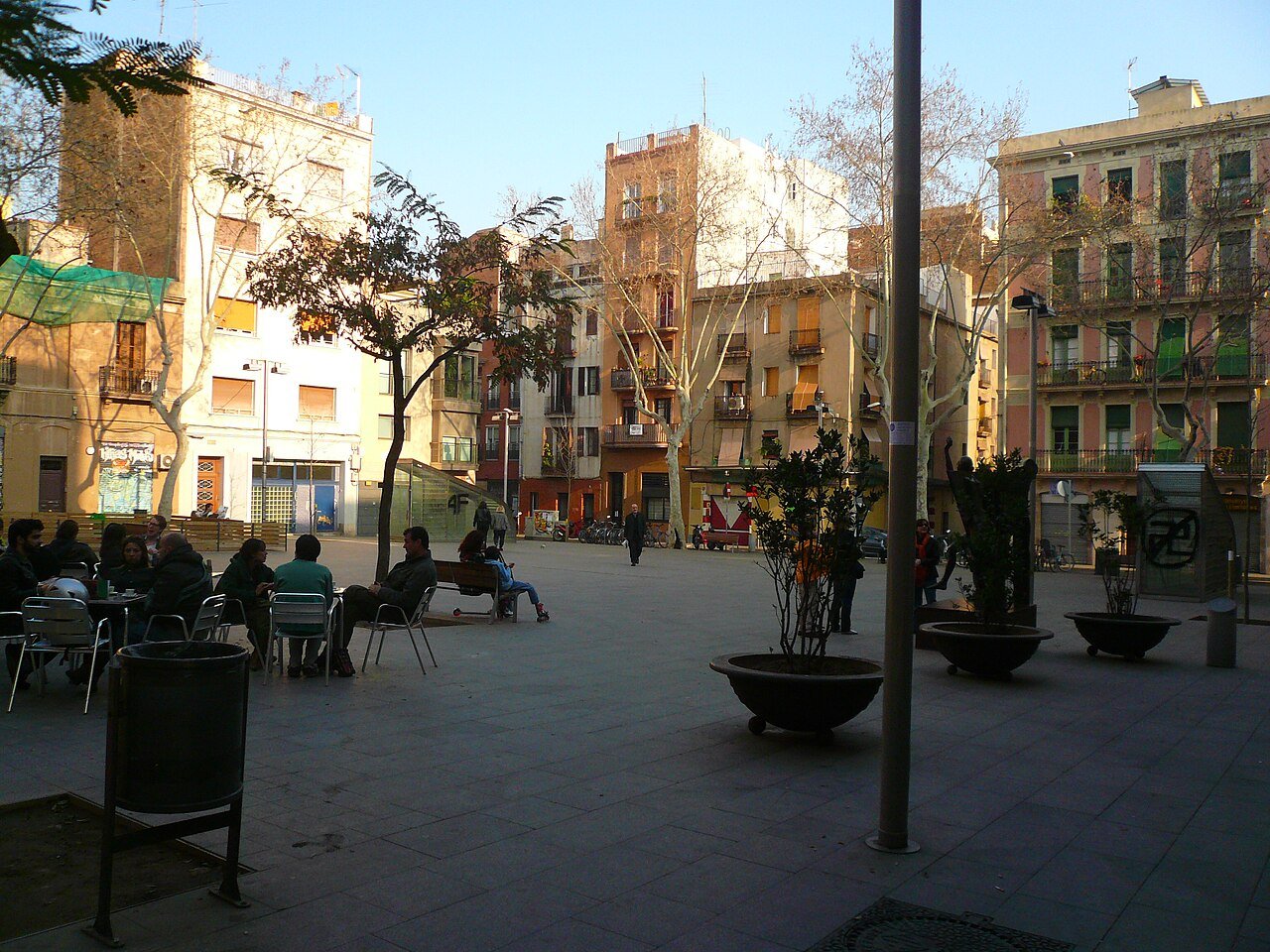
From the Vila, the squares unfold in every direction, each tuned differently. A few minutes north-west, Plaça del Sol is Gràcia’s evening square: a broad, sloping, tree-lined room of terraces where the neighbourhood takes its vermouth at midday and its drinks after dark, sociable and slightly bohemian. East, Plaça de la Revolució de Setembre de 1868 — the name itself a piece of the town’s radical history — is plainer and more local: benches, grandparents, children, Gràcia without an audience.
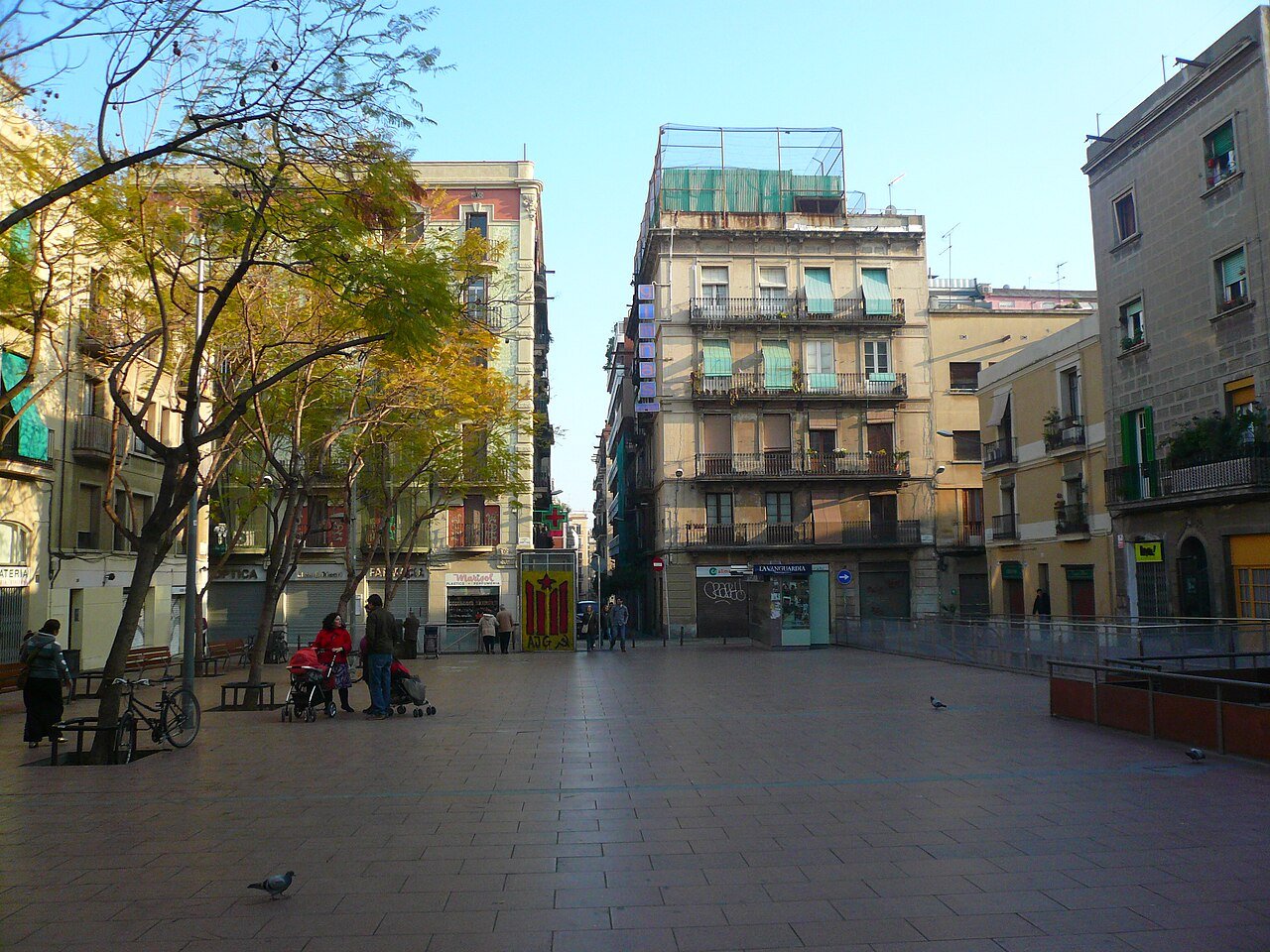
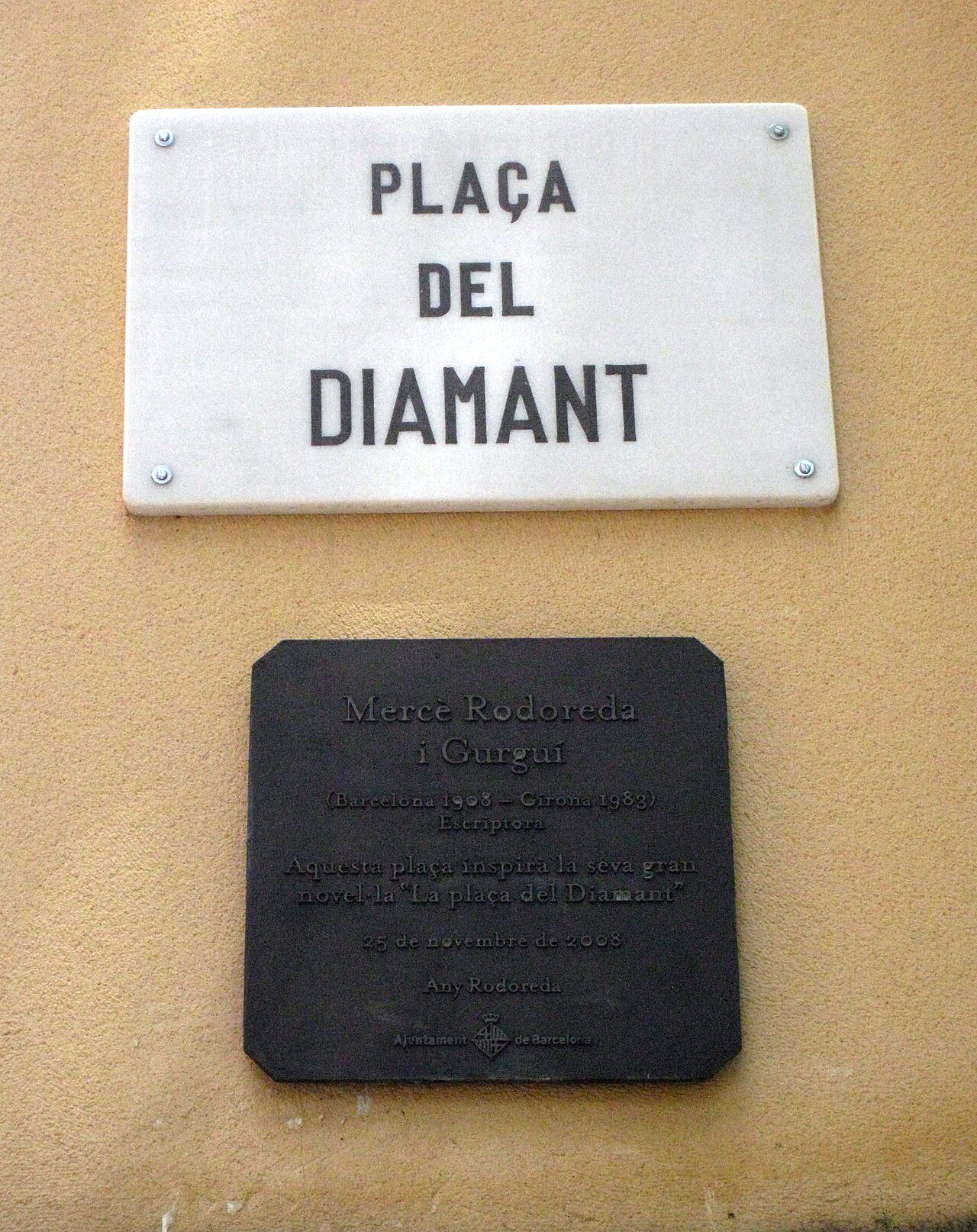
And then, south of the Vila’s centre, the square with a novel in it. Plaça del Diamant is modest to look at — a quiet, paved square of trees and benches — but it carries more literary weight than anywhere else in Barcelona: Mercè Rodoreda, Catalonia’s great 20th-century novelist, set her masterpiece here and named it for it. La plaça del Diamant (1962) — translated into dozens of languages, often as The Time of the Doves — follows its heroine, Colometa, through love, war and survival in this neighbourhood; a statue of her releasing her doves stands in the square, and beside the street sign a plaque put up in 2008 says it plainly: this square inspired her great novel. Under your feet lies the square’s other story: a Civil War air-raid shelter, the Refugi 232, its galleries open on guided visits. Buy a coffee, sit where Colometa sat in fiction, and let the square be quiet around you.
Free Barcelona travel guide
Planning a trip to Barcelona? Get our free one-page Barcelona checklist: what to book ahead, what to skip, and the neighbourhoods we actually send friends to.
Casa Vicens: Gaudí’s First House
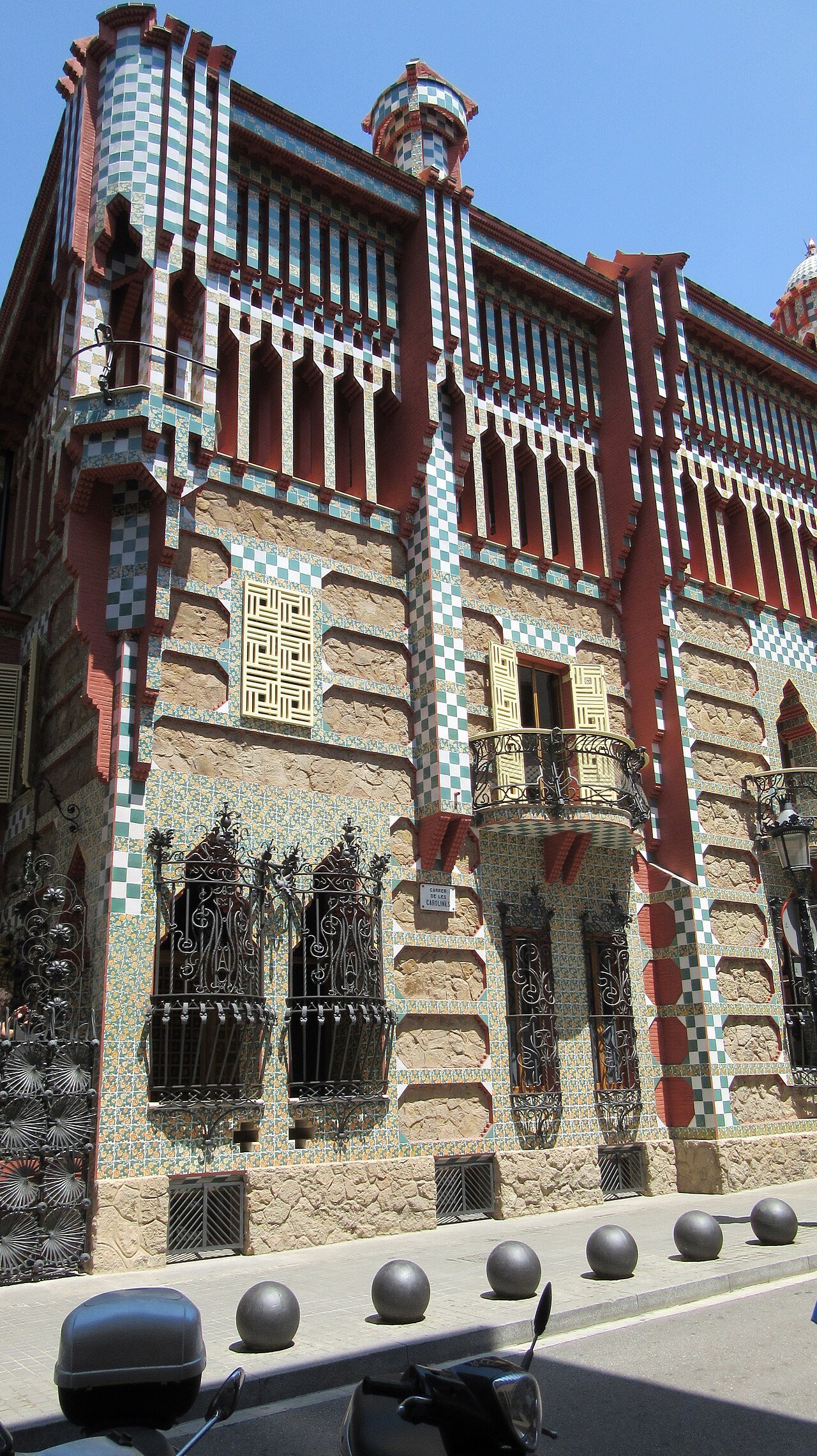
Gràcia holds the beginning of the most famous career in Barcelona’s architecture. On Carrer de les Carolines, a quiet street in the Vila’s north-west, stands Casa Vicens — the first house Antoni Gaudí ever built, designed when he was barely thirty for the stockbroker Manuel Vicens and finished in 1885. Everything that came later starts here, and the shock is how complete the imagination already is: a summer house wrapped in green-and-white chequered tiles and marigold ceramics, rough stone and red brick, Moorish echoes everywhere, and at the gate the famous palm-frond iron fence — the margalló leaves that turn a railing into sculpture.
The house spent over a century as a private home, which is why many visitors still miss it; it opened as a museum in 2017, impeccably restored, and it is now the most instructive Gaudí visit in the city — small enough to take whole, early enough to show the ideas forming, quiet where the later masterpieces are mobbed. Our Casa Vicens guide gives it its full visit — rooms, garden, tickets and timing. Book ahead in season; the house is small and entry is timed.
The Festa Major de Gràcia: The Week the Streets Dress Up
Every neighbourhood in Barcelona has a festa major; Gràcia’s is the one the whole city talks about. For roughly a week around 15 August, the Vila closes its streets and transforms them — literally. Around twenty streets and squares are decorated by their own residents, who spend months building themed worlds out of papier-mâché, recycled plastic, paint and string: a street becomes an Egyptian temple, a jungle, a fairground, roofed over with colour so that walking it feels like walking through someone’s imagination. The decorations are judged and prizes awarded — Carrer de Verdi’s creations are the stuff of local legend — but the point is not the winning. The point is that the street did it itself.


Around the decorated streets runs the festival proper: concerts on the squares (Plaça del Sol becomes the folk stage), giants and castellers on Plaça de la Vila, communal street dinners where whole streets sit down together, and a warmth of neighbourhood pride that visitors are welcomed into — as guests. That word matters. The festa is made by residents, in a residential district, and its survival depends on visitors behaving like guests in someone’s home: admire, photograph, join the concerts — and keep the late-night noise in the squares, not the side streets. Practicalities: it is very crowded at night and the famous streets queue at peak hours. Any other week, the traces remain: plaques on the winning streets, and a neighbourhood already talking about next year.
Park Güell at the Top Edge
Climb from the Vila’s northern lanes and the houses thin, the streets steepen — and you arrive at the work of the same architect, a generation later and a world more famous. Park Güell, Gaudí’s mosaic-draped city park of 1900–14, stands on the hill above Gràcia — officially in La Salut, a neighbourhood of the Gràcia district — close enough that Graciencs have always treated it as their back garden on the hill. From the Vila it is a fifteen-to-twenty-minute climb, or a short hop from Lesseps metro station; the reward is the famous terrace and the whole of Barcelona — Gràcia’s rooftops first of all — laid out below to the sea.
The park is a set piece of our Park Güell guide, which covers its tickets, entrances and timing in full; the Gràcia note is how to join the two: a morning in the park while it is quieter, then the walk back down into the Vila for lunch — the hill gives you the postcard, the village below gives you the city as it is actually lived. Come down hungry. Gràcia is waiting.

Local Life: Verdi, Terraces and the Morning Round
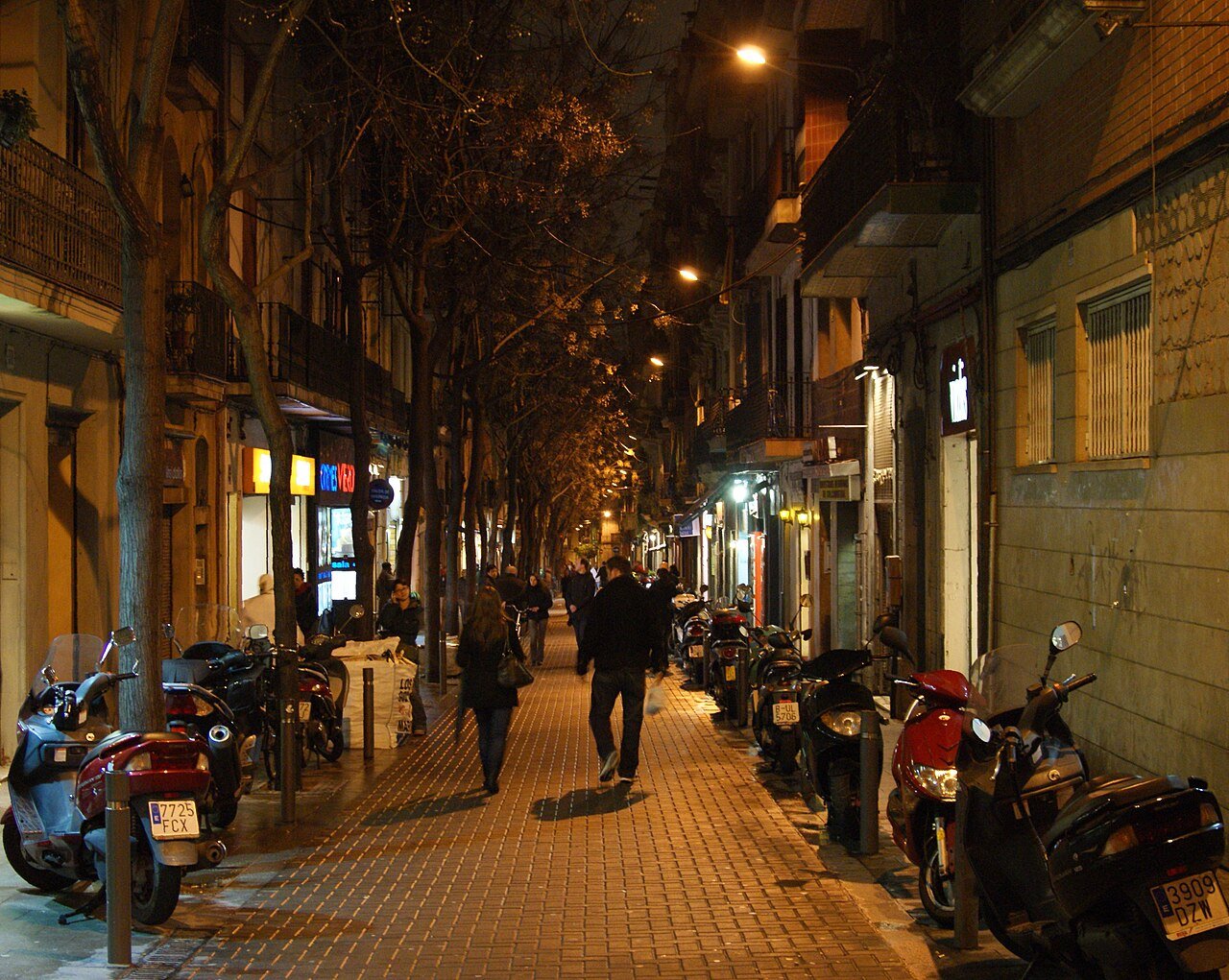
What makes Gràcia more than a pretty quarter is the completeness of its ordinary life, and its main street of pleasures is Carrer de Verdi, running down the Vila’s western side. Verdi is the high street in the village sense: independent shops rather than chains, bakeries and bodegas, small restaurants filling at two and at nine, and — at its heart — the Cinemes Verdi, Barcelona’s best-loved arthouse cinema, famous for showing films in their original version. A film at the Verdi, with dinner on the street before or after, is as authentic a Barcelona night as the city offers.
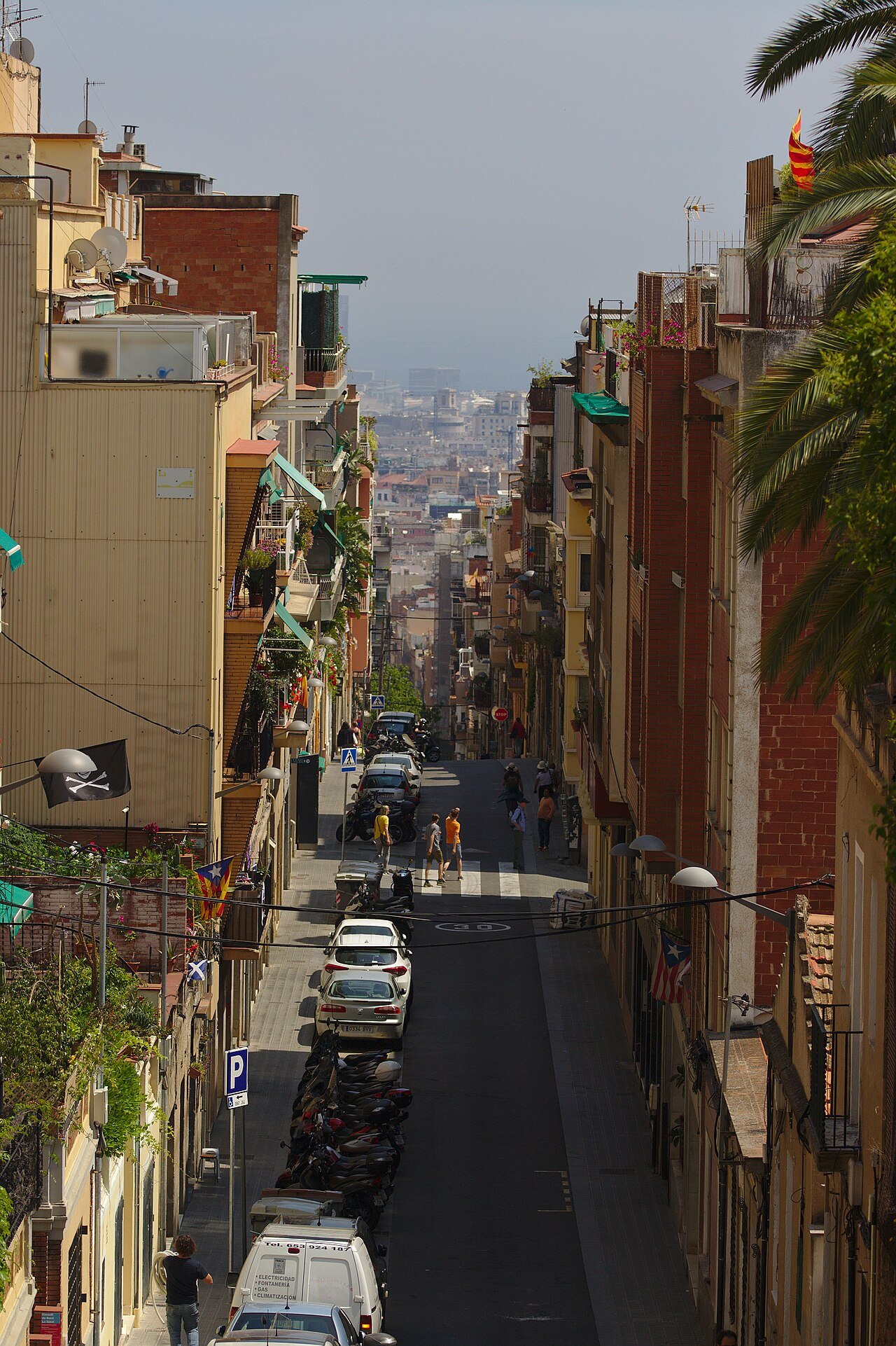
The rest of the round writes itself. Mornings belong to the squares and the market run, grandmothers with trolleys setting the pace; midday is for the vermouth hour — Plaça del Sol is the classic address; afternoons quieten in the heat; and from seven the Vila fills again, terraces first, then the little bars of the side streets, the cinema crowds spilling out between sessions. None of this is performed for visitors. Gràcia lets you borrow its routines for a day — which is why it pairs so well, in one trip, with the monumental city of our Gothic Quarter guide: there, Barcelona shows you its past in stone; here, its present at a café table.
The Markets: Llibertat and the Abaceria Reborn
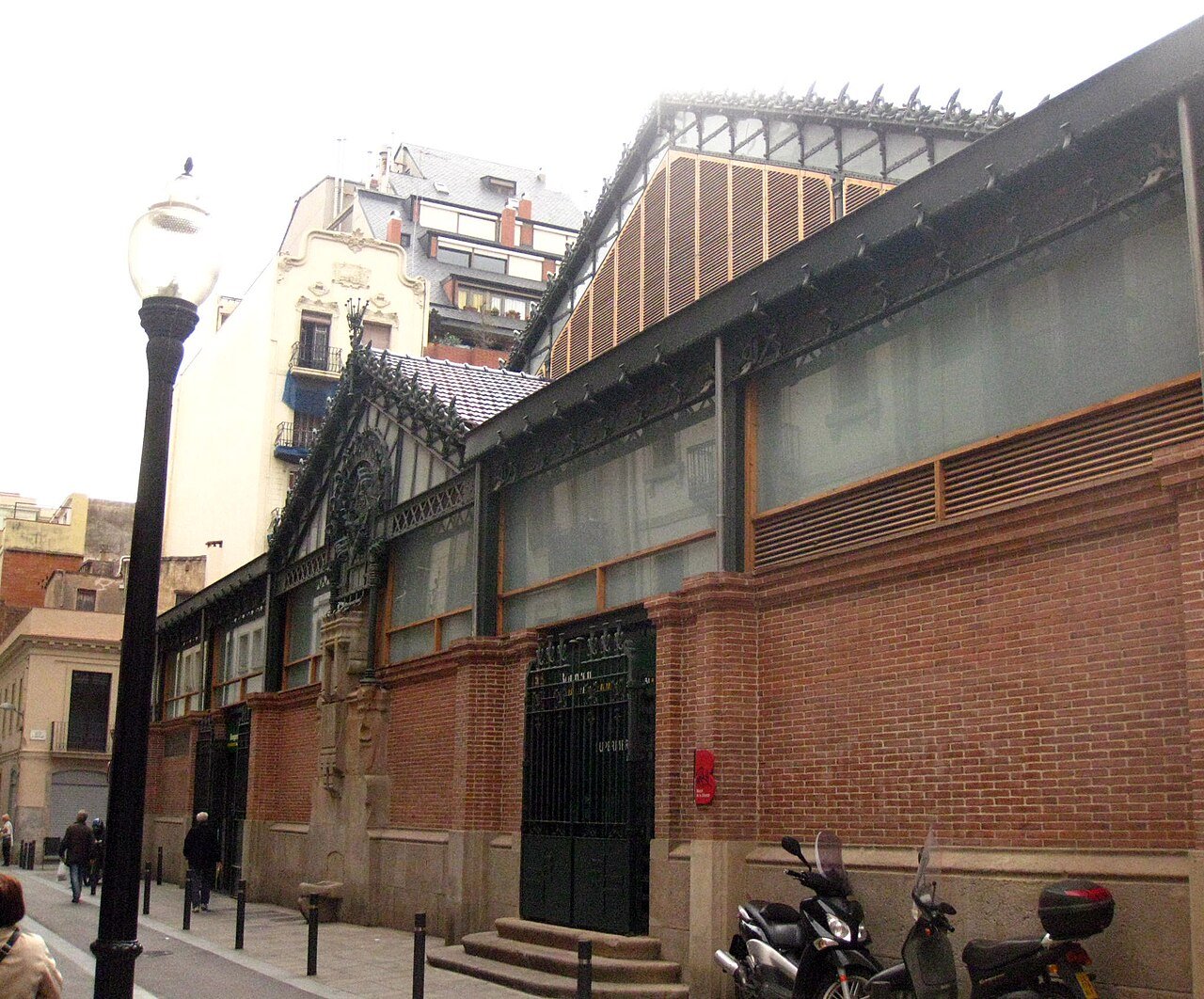
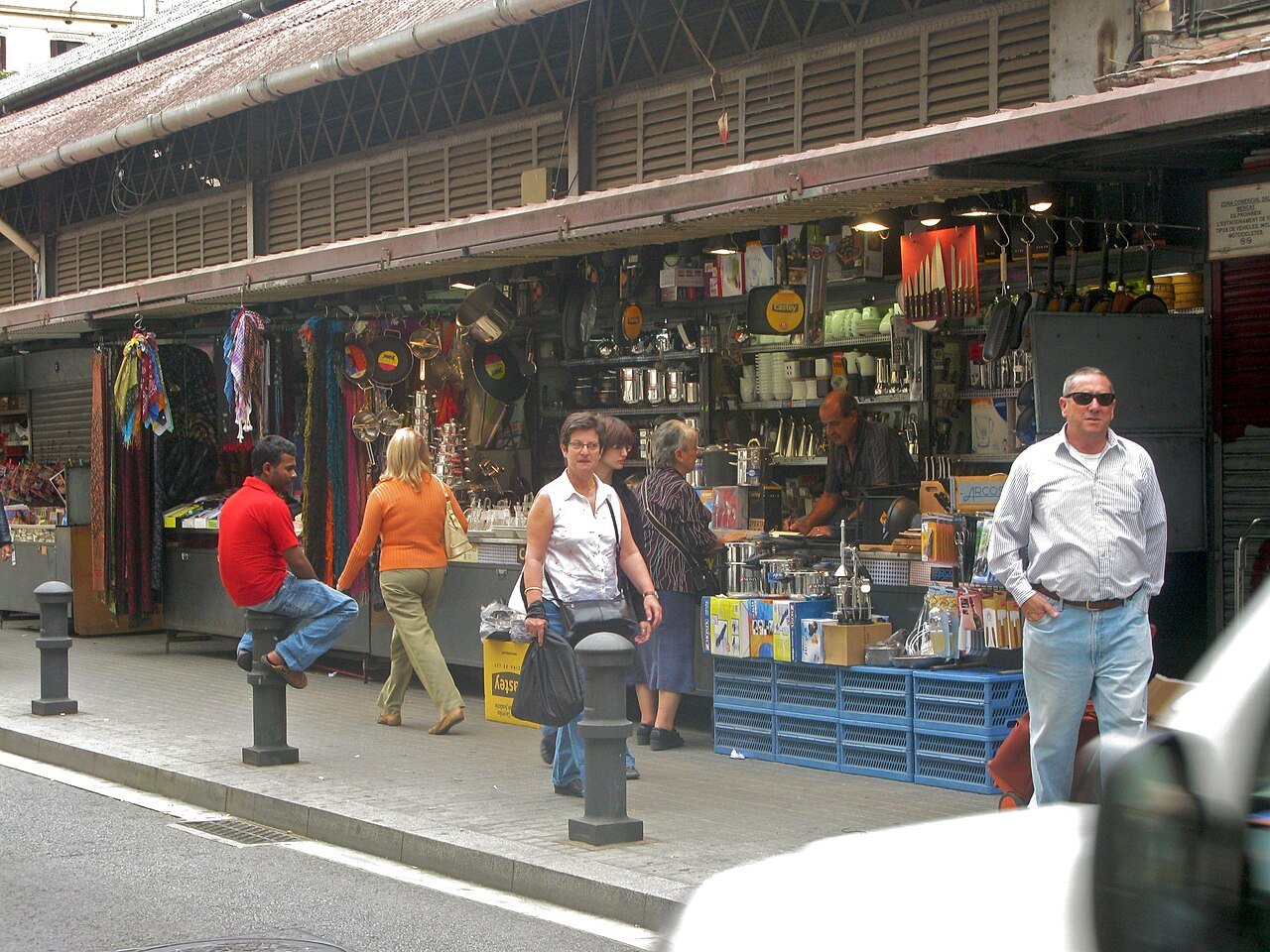
A village needs its markets, and Gràcia has two — one in full working order, one mid-rebirth. The Mercat de la Llibertat, on its own square at the Vila’s western edge, is the neighbourhood’s larder and a small modernista jewel: opened in 1888, built in iron and brick to a design by Francesc Berenguer — Gaudí’s closest collaborator — and crowned with wrought-iron ornament and the Vila’s coat of arms. Inside is a complete Catalan food market: fish from the coast, meat and charcuterie, cheese, olives, and bars where the market breakfast — a plate, a small glass, the day’s news — is a ritual. Come in the morning, buy like a local even if it is only fruit for the park, and read the building as you shop.
The Vila’s second market tells a longer story. The Mercat de l’Abaceria Central, on Travessera de Gràcia, has fed the neighbourhood since 1892 — but go looking for its hall today and you will find a market mid-rebirth. The old building’s walls have come down while its beautiful iron skeleton — the arched trusses of 1892 — is being restored as the frame of a new market on the same site; meanwhile the stalls trade from a provisional market on Passeig de Sant Joan. It is a very Gràcia story: the structure is heritage, the stalls are life, and the village insists on keeping both. Check locally for the latest on the works — the Llibertat’s market breakfast will more than cover you meanwhile.
Where to Eat and Drink
Gràcia feeds its own first, which is exactly why eating here is good. Copy the local pattern: a market breakfast or a midday menú del día around the squares — three courses at a neighbourhood price; a vermouth with olives on a terrace at the sacred hour before lunch, Plaça del Sol and Plaça de la Vila leading the field; and in the evening, tapas along Carrer de Verdi, where the bars fill with the cinema crowd. The Vila is also one of the city’s best districts for food from elsewhere — small Japanese, Middle Eastern, Italian and Latin kitchens settled here long ago alongside the Catalan bodegas. Two cautions: the famous squares’ terraces are priced like the neighbours’ living rooms they are, and the best-value eating hides one street back. Follow the queues of locals at two o’clock, and you will eat well.
Practical Info
Getting there. Gràcia sits directly above the Eixample, and walking in is half the pleasure: fifteen to twenty minutes uphill from Passeig de Gràcia until the streets narrow and you are in the Vila. By metro, line 3 (green) frames the neighbourhood — Fontana lands you at its southern edge, two minutes from Carrer de Verdi’s lower end, and Lesseps at its top, the station for Casa Vicens and the climb to Park Güell. The FGC station called simply Gràcia, on Plaça de Gal·la Placídia at the Vila’s western edge, connects to Sarrià and the Collserola side of the city. Do not bring a car: the Vila’s streets are narrow and parking belongs to the residents.
How long, and how to shape the day. The Vila is compact — ten minutes’ walk across — but dense: half a day covers the squares, Casa Vicens and a market; a full day adds the climb to Park Güell and an evening on Verdi; and a Gràcia walking tour typically threads the squares and the Gaudí house in two to three hours. Time the pieces: markets and squares in the morning, Casa Vicens on a booked slot late morning, terraces and Verdi into the evening.
Costs and opening notes. The neighbourhood, its squares and streets are public and free. Casa Vicens is a ticketed museum with timed entry — book online ahead, especially in season. Park Güell’s monumental zone is ticketed and timed; the rest of the park is free. The Mercat de la Llibertat keeps market hours — mornings into mid-afternoon, closed Sundays — and the Abaceria’s provisional market likewise; the Refugi 232 shelter opens on guided visits only — verify before planning around it. In mid-August, everything bends around the Festa Major: streets close, crowds peak at night, and booking anything — beds above all — needs to happen early.
Tips for Visiting
- Walk the squares as a chain. Vila, Sol, Revolució, Diamant — then Casa Vicens and back down Verdi: civic heart, evening room, everyday square, literary shrine.
- Look for the tower. The Torre del Rellotge is visible down half the Vila’s streets; use it as your compass, and “meet at the tower” as your plan.
- Book Casa Vicens; everything else, just wander. It is the one timed ticket in the neighbourhood proper — the rest of the Vila rewards turning up.
- Time the market for the morning. The Llibertat is a working market: fullest, freshest and most itself before two; go late and you will find shutters.
- Do the vermouth hour properly. Midday, one small glass, something pickled, a terrace on Plaça del Sol — the neighbourhood’s daily ceremony.
- In August, be a guest. At the Festa Major, admire the streets, join the concerts, spend in the local bars — and keep the side streets quiet after midnight.
- Pair the hill with the village. Park Güell in the morning, down into Gràcia for lunch: postcard above, real city below.
Travel insurance, sorted
Whether it is a two-week holiday or a longer move, travel insurance is not the most glamorous part of a trip — but it is the one booking you want to have in place before a trip, and while you are already away.
Final Thoughts
Gràcia is the answer to a question every Barcelona visitor eventually asks: where does the city actually live? It lives here — in a town that joined the city late and on its own terms, kept its bell, its squares, its markets and its festival, and arranged its life at walking pace around them. Nothing in the Vila is the biggest or most famous thing in Barcelona, and that is precisely its charm: the city with its guard down, doing the shopping on the same few squares it has used for two hundred years. Walk it slowly, sit in its squares — and when the clock tower delivers you back to the Eixample grid, you will understand the rest of Barcelona better for having seen its village.
¡Buen viaje!
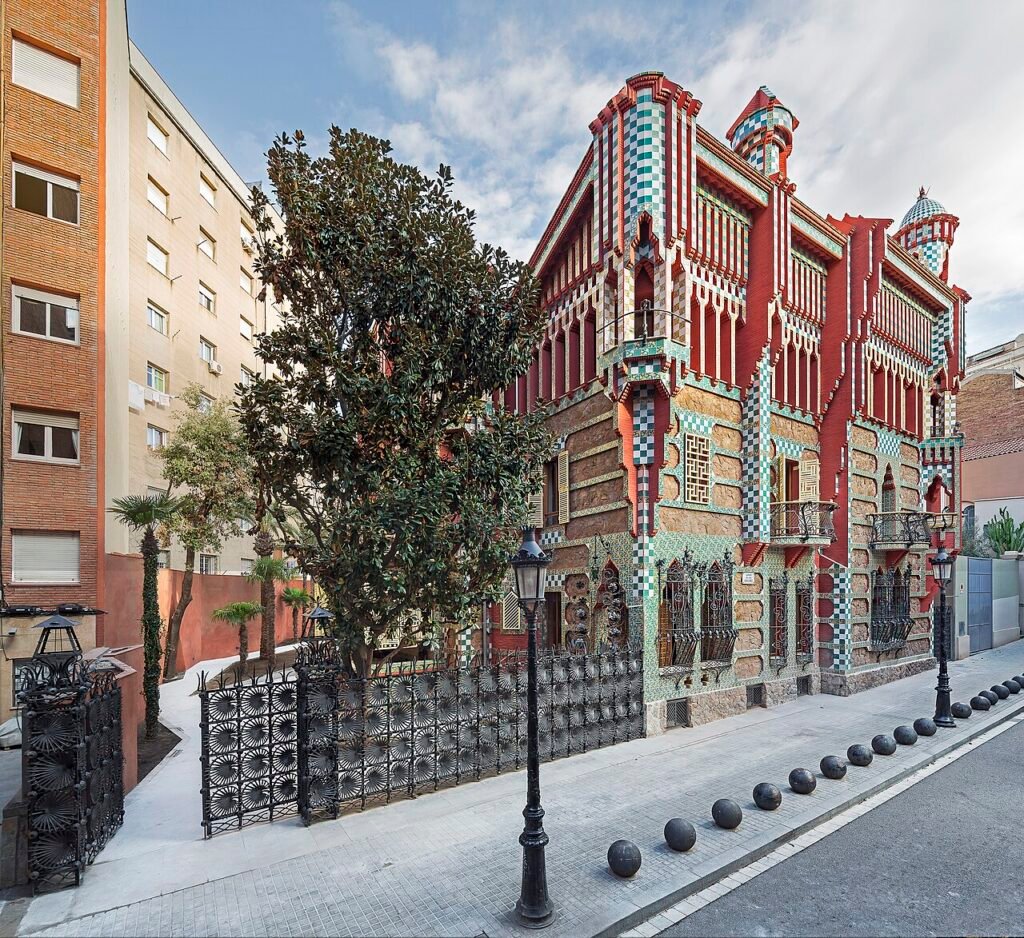
Photo credits: The Plaça de la Vila terrace and the Plaça de la Vila town hall — OK Apartment, CC BY 2.0 · The clock tower (Torre del Rellotge) — Enric, CC BY-SA 4.0 · Plaça del Diamant and Plaça de la Revolució — Pere López, CC BY-SA 3.0 · The Plaça del Diamant Rodoreda plaque — Enfo, CC BY-SA 3.0 · Casa Vicens — Ailna, CC BY-SA 4.0 · The Festa Major decorated streets (Carrer Puigmartí and Carrer de Verdi) — KRLS, CC BY-SA 4.0 · The view from Park Güell — Joe Mabel, CC BY-SA 4.0 · Carrer de Verdi from above — KPFC, CC BY-SA 3.0 · Carrer de Verdi at night — Jens Cederskjold, CC BY 3.0 · The Mercat de la Llibertat — Enfo, CC BY-SA 3.0 · The Mercat de l’Abaceria stalls — Alain Rouiller, CC BY-SA 2.0. All via Wikimedia Commons.


2 Comments